
 By Ananya Sharma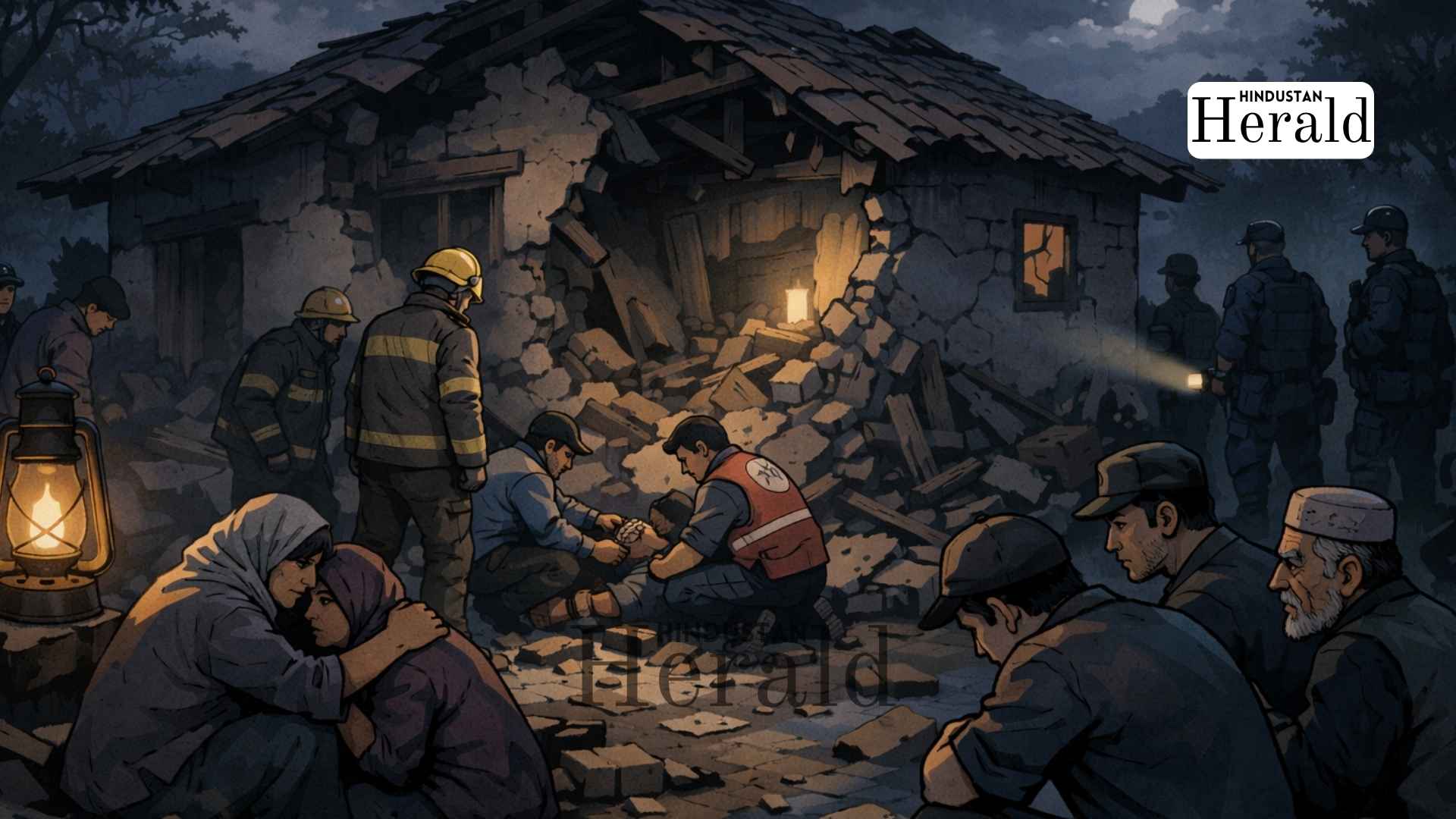
Imphal, April 8: The images are unbearable. A house ripped apart from within. A mother fighting for her life in an ICU. Two children, a five-year-old boy and his infant sister, barely five months old gone before sunrise, were killed in their sleep by an explosive projectile that tore through the family’s bedroom in Tronglaobi Awang Leikai, a village in Bishnupur district, Manipur, at roughly 1 AM on April 7.
Their father, an Indian Border Security Force personnel, was deployed outside the state at the time. He had no idea what was happening at home.
This is not a war zone. This is a neighbourhood. And yet, that distinction has barely held in Manipur for nearly three years now.
A Family Asleep, A Bomb in the Night
The blast killed a five-year-old boy and a six-month-old girl inside their bedroom. Their mother, who was also present in the room, sustained injuries in the attack. According to multiple reports, a projectile, believed to have been fired from nearby hill areas, struck the residence of Oinam Malemnganba, a Border Security Force personnel currently deployed outside the state. At the time of the blast, his wife, 37-year-old Oinam Ongbi Binita, and their two children were inside the house. The explosion caused severe structural damage and left all three critically injured. The two children died during treatment, while Binita is undergoing treatment for splinter injuries.
The Tronglaobi village, where the attack took place, lies in the peripheral belt of Bishnupur district, close to the elevated hill areas of the Kuki-dominated Churachandpur district. Locals allege that the rocket was fired from hilltop positions reportedly held by armed Kuki groups, at a range of three to four kilometres. Chief Minister Y. Khemchand Singh described the act as “barbaric.”
That single word barely scratches the surface of what happened in that bedroom.
What Followed Was Not Peace
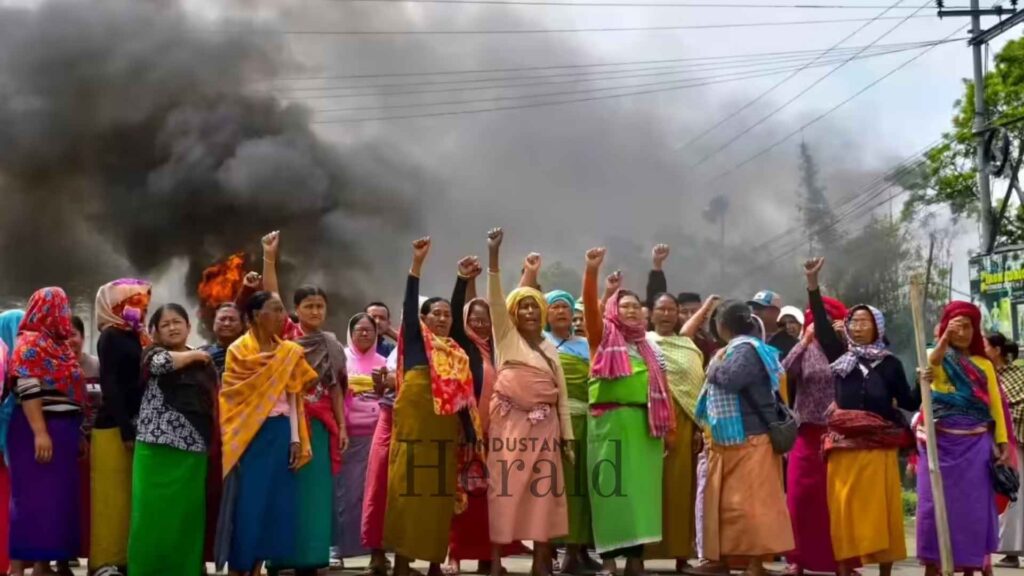
The news broke across Bishnupur and the valley like a second detonation. Hundreds of people poured out onto the streets, grief and rage intertwined in impossible ways, and perhaps unfair, to fully separate.
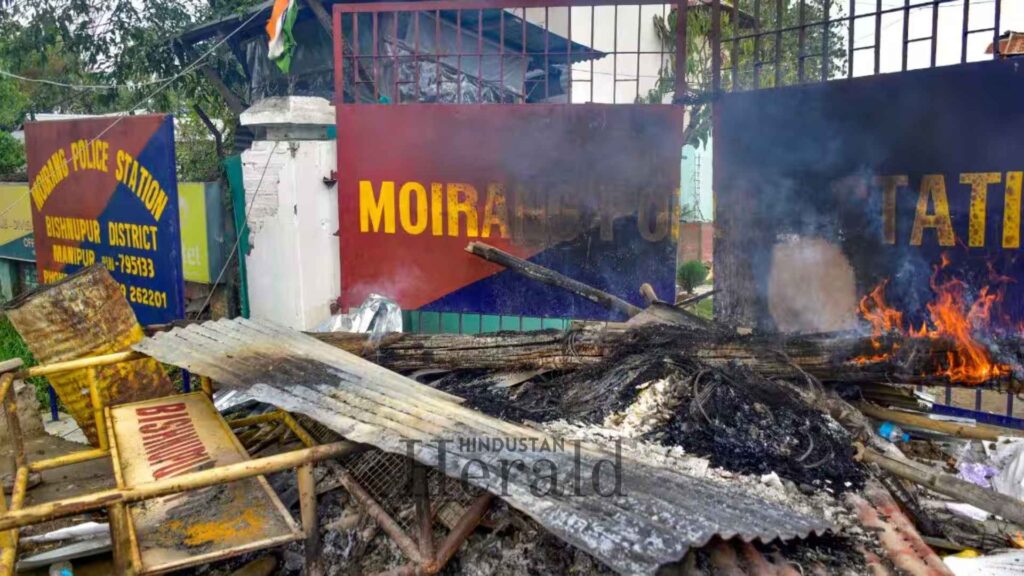
The incident sparked widespread protests in Bishnupur, with demonstrators attempting to storm a post of the Central Reserve Police Force, blaming security forces for failing to protect civilians. An angry mob stormed a Central Reserve Police Force camp at P Gelmol village, located along the Churachandpur-Bishnupur border. The mob set fire to CRPF vehicles and equipment at the camp. In response, CRPF personnel opened fire to disperse the crowd. The incident left 2 dead and 26 people injured, including five with bullet wounds.
By the time Tuesday night fell, the death toll from a single morning’s horror had climbed to four. Two children were gone in a midnight attack. Two protesters were shot dead by security forces in the chaos that followed. A state convulsing in grief.
Angry locals also set fire to two oil tankers and a truck passing through Bishnupur, reportedly headed towards Churachandpur. The burning trucks were a message, even if a destructive one, the fury of a community that has absorbed three years of violence and feels it is still absorbing more.
The Government Responds But Quietly, And Carefully
Manipur Chief Minister Yumnam Khemchand Singh on Tuesday announced that the investigation into the bomb attack would be transferred to the National Investigation Agency (NIA). He said the decision was made after extensive discussions with Home Minister Konthoujam Govindas Singh and several MLAs. Multiple security units, including the Police, Assam Rifles, and CRPF, have been deployed for the search operation. Helicopters have also been pressed into service.

Home Minister Govindas Singh described the perpetrators as “peace disruptors” who attempt to derail normalcy whenever the situation begins to improve. Security forces were instructed to launch an intensive combing operation to capture those responsible, dead or alive.
Late on Tuesday night, Chief Minister Singh chaired an all-party meeting that condemned the attack as a “cowardly act.” Representatives of various political parties expressed deep concern over the deteriorating law and order situation and emphasised the urgent need to maintain peace, unity, and communal harmony.
Still, as of Wednesday morning, the Prime Minister’s office had issued no direct public statement on the deaths of these two children.
Centre’s Silence And the Opposition’s Challenge
That absence has not gone unnoticed. The most pointed public challenge came from Congress leader and Leader of the Opposition in the Lok Sabha, Rahul Gandhi, who took to X with a stark message directed at the central government.
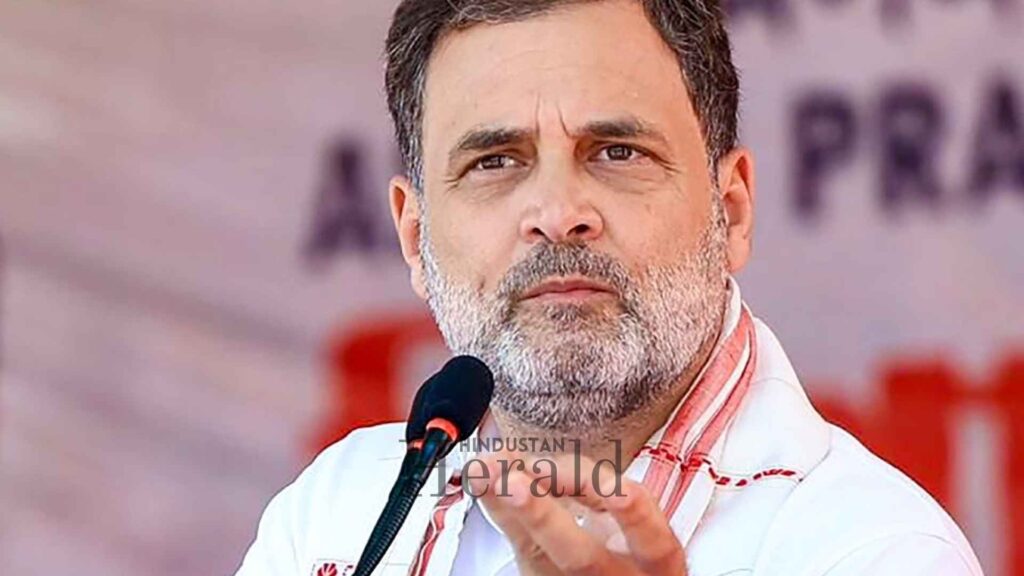
Gandhi wrote that the news of the killing of two tiny children sleeping in the home of a BSF jawan in Manipur was “heart-wrenching,” adding that even three years later, innocent children continue to burn in the smouldering fire of violence, with no sign of peace visible anywhere. He accused the Modi government of having become “so desensitised and stone-hearted” that it seems to have forgotten that Manipur’s children are also the nation’s children.
He pushed further, directly addressing the Prime Minister: “Manipur is not just a state; it is a responsibility. A mere statement in name is not enough, a mere showy visit is not enough. You will have to take concrete and immediate steps before the situation spirals completely out of control.”
The question Gandhi is raising is one that a growing number of citizens, civil society voices, and opposition parties across the political spectrum have been raising for nearly three years: why has the most powerful political office in India consistently struggled to convert condemnation into resolution in Manipur?
A Voice from Manipur’s Children
Licypriya Kangujam, the 14-year-old Meitei activist from Manipur known internationally for her climate advocacy, shared a video of the attack’s aftermath on her X account on April 8, amplifying the outrage from within the community. Licypriya has previously drawn both national and international attention to the Manipur crisis, particularly the violence directed at Meitei civilians, often calling on world leaders and the United Nations to intervene. Her posts routinely reach hundreds of thousands of followers worldwide.
The presence of a child activist herself from Manipur, herself a Meitei, holding up images of dead children to the world carries a particular, painful weight. Whether one agrees or disagrees with every position she holds, the urgency of her platform on days like April 8 is difficult to argue with.
Internet Blackout and Curfew Again
Following the violence and subsequent unrest, the Manipur government suspended internet and mobile data services across five districts for three days. The five districts are Imphal West, Imphal East, Thoubal, Kakching, and Bishnupur. Officials said the suspension was necessary to curb the spread of misinformation and maintain law and order.
An indefinite curfew has also been imposed in Imphal East, Imphal West, Bishnupur, and Kakching following the widespread protests.
This is, tragically, a pattern that Manipur’s residents know by heart. Violence. Protest. Internet shutdown. Curfew. The cycle has repeated so many times since May 2023 that it has acquired a terrible routine. Residents cannot share what is happening. Journalists struggle to report from the ground. And the information vacuum meant to prevent rumours often breeds more.
As of Wednesday morning, the situation remained tense but calm across five valley districts, with no fresh violence reported. However, overnight clashes between security forces and protesters broke out in some areas of Imphal East and West, with police firing tear gas to disperse demonstrators who burnt tyres on the streets and demanded action against those responsible for the children’s killing.
The Kuki-Zo Denial and Why It Complicates Things
Not everything in this story is clean. The Kuki-Zo Council, representing the tribal community in Manipur, issued a statement condemning the attack but firmly rejecting allegations against their community.

The Indigenous Tribal Leaders’ Forum, a Kuki organisation, said the incident should not be automatically attributed to the Kuki-Zo people without proper investigation. It further stated that buffer zones between Kuki-Zo and Meitei areas are heavily guarded by security forces, making it virtually impossible for Kuki-Zo individuals to cross undetected to carry out any form of attack or plant explosive devices in Meitei localities.
The Kuki-Zo Council statement also condemned the subsequent burning of three petroleum trucks at the Moirang Oil Pump Station, saying the supplies were meant for residents of Churachandpur.
These denials will not satisfy those who lost children on Tuesday morning. But they matter for the investigation, and they matter for any eventual peace process. The NIA has a mandate now. Whether it produces credible, evidence-backed results or whether the investigation quietly recedes as so many before it have will say a great deal about what the central government actually intends to do here.
Three Years, 260 Deaths, 60,000 Displaced
Violence in Manipur first broke out in May 2023 between the predominantly Hindu Meitei community and mainly Christian Kuki-Zomi tribes over issues including economic benefits and job quotas. Since then, the violence has left around 260 people dead and displaced more than 60,000 others.
Of displaced children assessed in relief camps, 30 to 35 per cent suffered from severe mental health issues. United Nations experts raised alarms about serious human rights violations in the conflict, including acts of sexual violence, extrajudicial killings, and forced displacement.
And just days before this attack, a seven-year-old internally displaced girl was found dead in Imphal East district. The girl, who had been living with her family at a relief camp since May 3, 2023, went missing on Sunday and was found dead beneath a bridge. Police suspected she was sexually assaulted before being murdered.
Two toddlers were killed in a midnight bomb blast. A seven-year-old girl was found dead under a bridge. Four total deaths in a single 24-hour stretch. This is the state of a state that has been “under watch” from New Delhi for going on three years.
The Real Question the Nation Must Ask
There is a version of this story that gets filed as a regional conflict update in northeast India, ethnic tensions, and an ongoing situation. It gets a paragraph in the national press and moves off the scroll within hours. And then comes the next attack. And the next funeral. And the next internet blackout.
But the deaths of a five-year-old boy and his five-month-old sister in their own bedroom, in the middle of the night, while their father was away serving the nation in a security force, should not be a regional story. It is a national failure. The failure of the state to protect the most vulnerable. The failure of political leadership to convert three years of outrage into any durable solution. The failure of a country that prides itself on its democratic traditions to hold its government accountable for what is happening openly, repeatedly, and lethally in one of its own states.
Manipur deserves better than curfews and internet shutdowns. Its children deserve more than condolences and NIA referrals. They deserved to wake up on Tuesday morning.
Stay ahead with Hindustan Herald — bringing you trusted news, sharp analysis, and stories that matter across Politics, Business, Technology, Sports, Entertainment, Lifestyle, and more.
Connect with us on Facebook, Instagram, X (Twitter), LinkedIn, YouTube, and join our Telegram community @hindustanherald for real-time updates.

Covers Indian politics, governance, and policy developments with over a decade of experience in political reporting.
- Ananya Sharma

- Ananya Sharma
- Ananya Sharma
- Ananya Sharma




 Ayesha Khan