
 By Ananya Sharma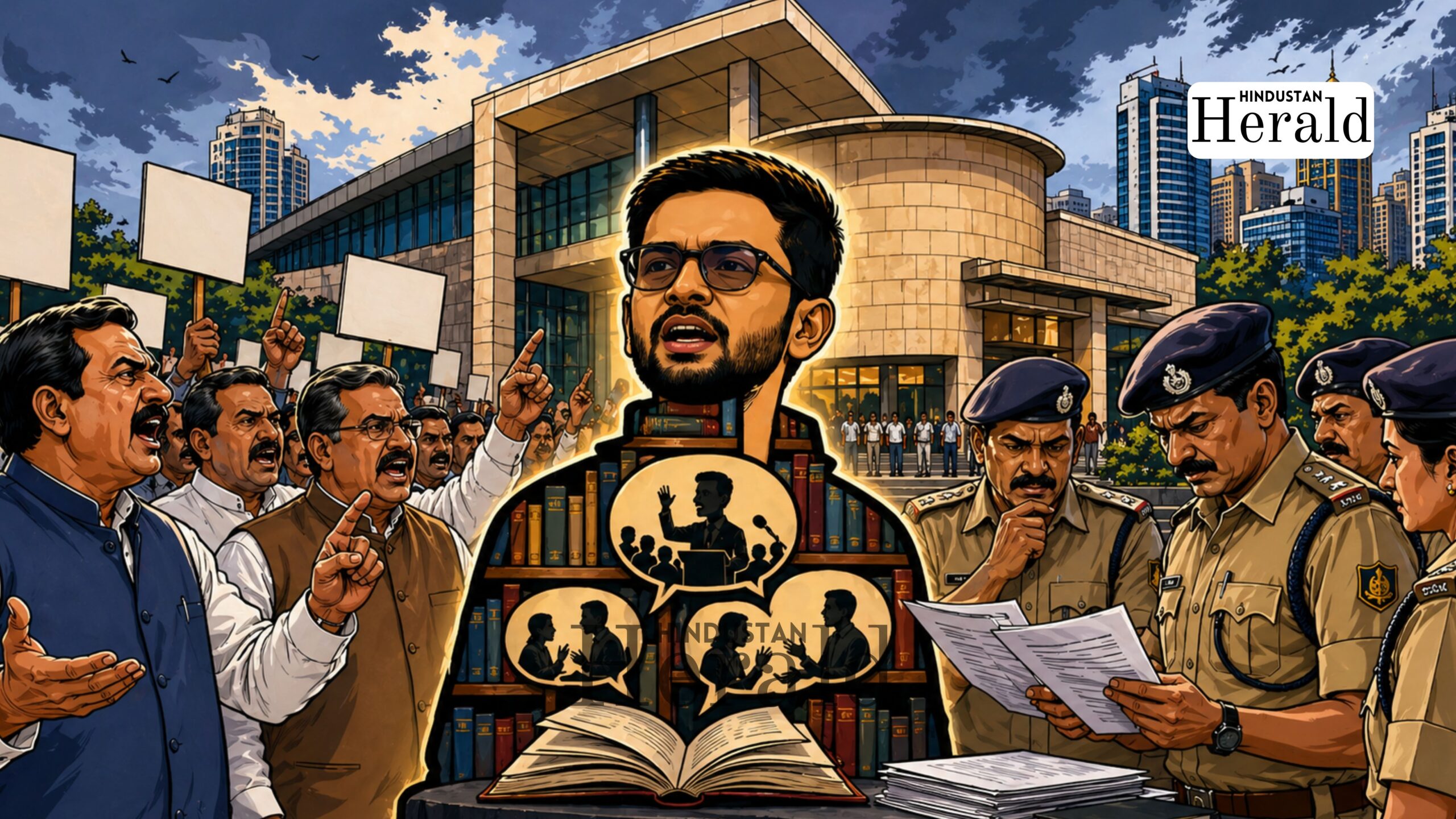
Bengaluru, April 27: A sharp political standoff is building in Bengaluru over a literary and discussion event centred on jailed activist Umar Khalid, with the Bharatiya Janata Party formally demanding its cancellation and the city police now weighing a final call on whether to let it proceed.
The event, titled “Umar Khalid and His World,” is scheduled for April 28, 2026, at the Bangalore International Centre in Domlur, running from 6:00 PM to 8:00 PM. It is reportedly organized by AILAJ and PUCL, and the programme includes book readings and panel discussions featuring historians, activists, and public intellectuals, with a senior legal professional serving as moderator.
That has proved sufficient to ignite a full-scale political confrontation.
BJP Takes the Fight to the Commissioner
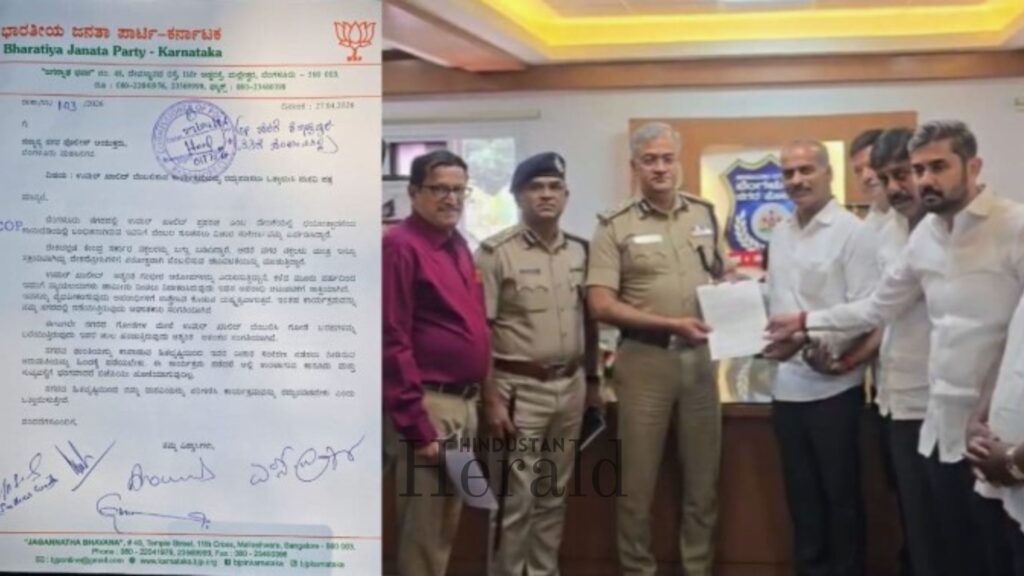
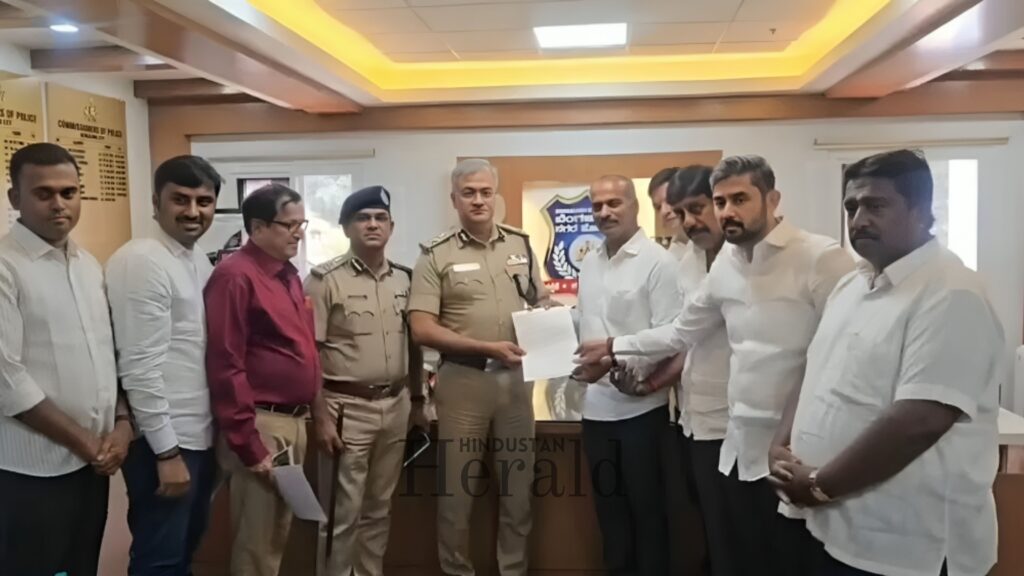
The Karnataka BJP petitioned Bengaluru Police Commissioner Seemant Kumar Singh to cancel the event, with a delegation of party leaders headed by Bengaluru Central MP P. C. Mohan meeting the Commissioner and submitting a formal memorandum.
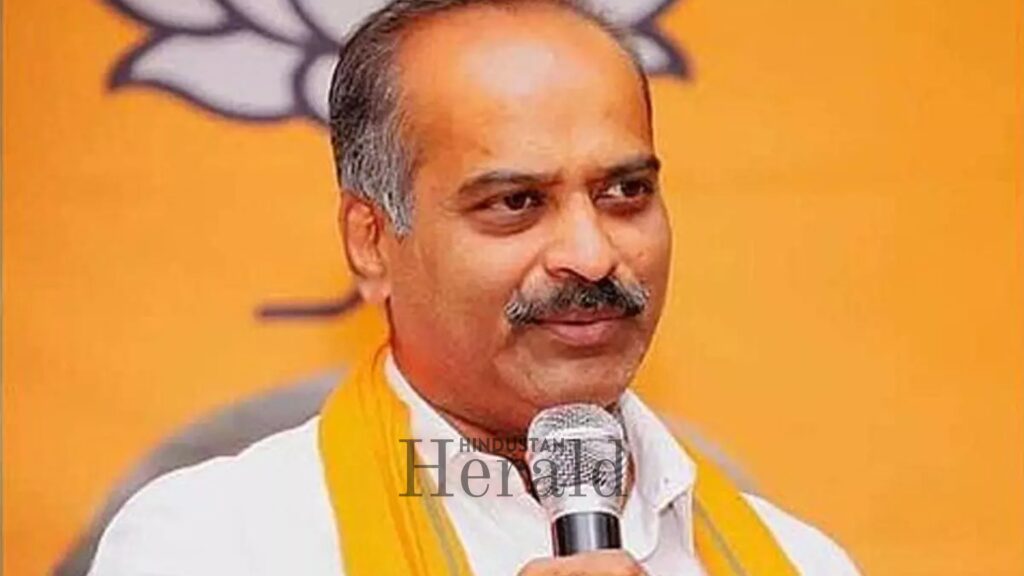
The BJP’s memorandum described the event as one “organized under the platform Umar Khalid Prapancha to express support for Khalid, who is currently under arrest under anti-terrorism laws,” and further alleged that “glorifying such an individual would amount to encouraging criminal elements.”
The party did not stop at objecting to the symposium alone. The memorandum pointed to what it called a troubling development already unfolding on the streets, stating that “pro-Umar Khalid slogans and wall writings have already appeared across the city, indicating the spread of such networks.” BJP leaders argued that this visible presence on Bengaluru’s walls indicated the event was not simply an academic exercise but part of a coordinated campaign to shift public perception.
The memorandum made the party’s position blunt, “In the interest of maintaining peace in the city, we request that the permission granted for this event be withdrawn. If the event proceeds and any law and order situation arises, the BJP will not be responsible for it.”
Who Is Umar Khalid, and Where Does His Case Stand
For readers unfamiliar with the background, some context is essential here.
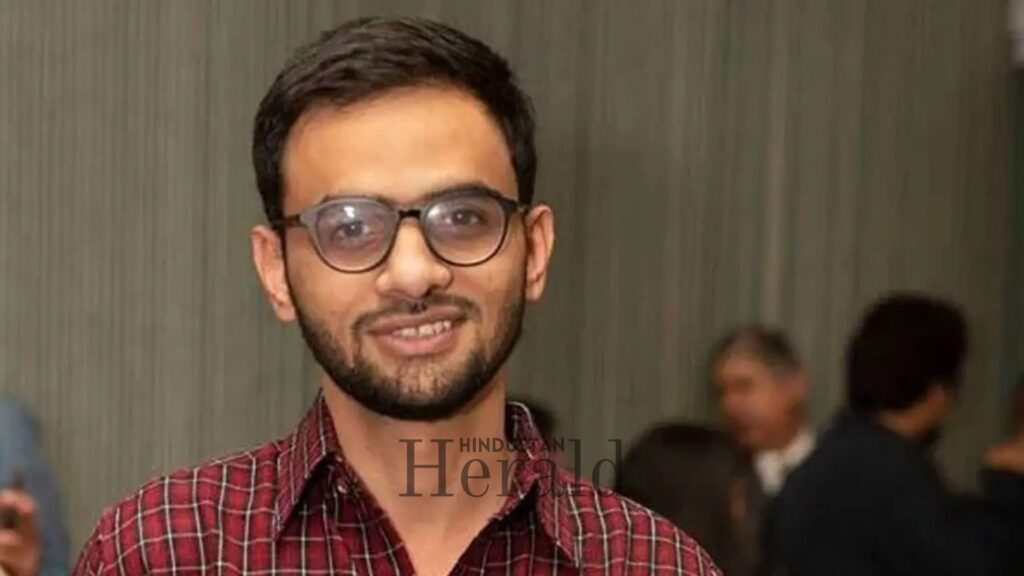
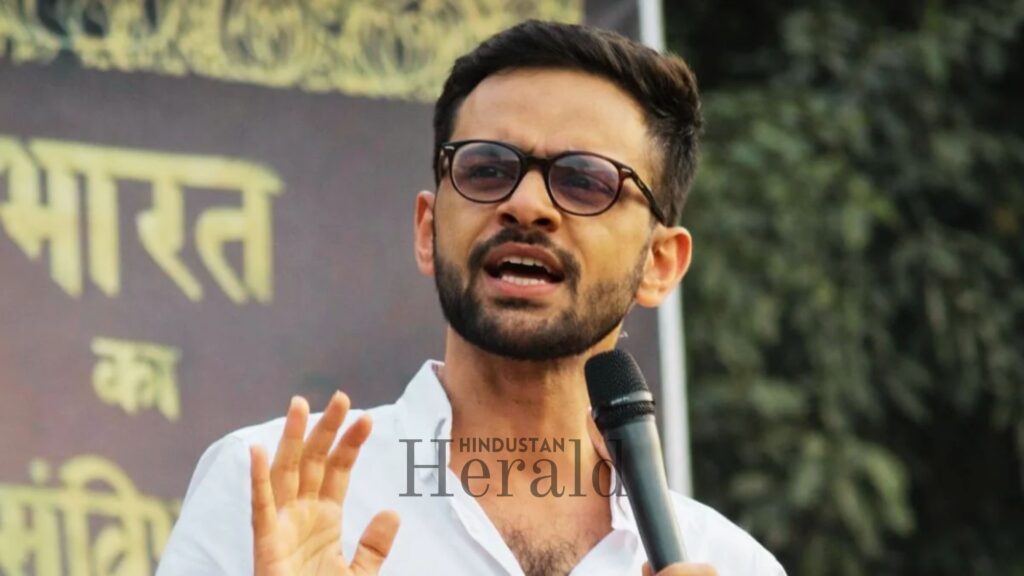
Umar Khalid was re-arrested in September 2020 for his alleged involvement in the 2020 Delhi riots and has since been imprisoned in Tihar Jail, consistently denied bail, with his court trial yet to begin. He is charged under the Unlawful Activities (Prevention) Act in connection with what the Delhi Police described as a larger conspiracy behind the riots.
The 2020 Delhi riots saw Hindu right-wing mobs attack peaceful sit-ins in the eastern part of Delhi, triggering violence in which more than 50 people, most of them Muslims, were killed in what became the worst violence in Delhi since the anti-Sikh riots of 1984. Delhi Police filed 758 criminal cases and arrested more than 2,000 people.
The police blamed peaceful protest leaders, many of them young Muslim activists, of hatching a conspiracy to create religious tensions and topple the elected government, a claim that legal and rights experts have strongly contested.
The legal situation around Khalid has grown significantly bleaker in recent weeks. The Supreme Court on April 20 dismissed Khalid’s plea seeking a review of an earlier verdict denying him bail, observing that there are reasonable grounds to believe the allegations levelled against him in connection with a conspiracy behind the 2020 Delhi riots.
In January 2026, the Supreme Court’s two-judge bench had also rejected a bail plea for Khalid while granting conditional bail to five co-accused in the same case. The judges drew a clear distinction, holding that the allegations against those five were “limited” and “ancillary” in nature, whereas Khalid and Sharjeel Imam faced allegations of a “larger conspiracy.”
It is within this legal context that the Bengaluru symposium is being organized, and it is precisely this context that makes the BJP’s objections and the organizers’ defence so politically charged.
HJS Adds Its Voice to the Opposition
The BJP was not alone in raising an alarm. The Hindu Janajagruti Samiti filed a separate formal complaint with the Bengaluru City Police Commissioner, urging immediate cancellation of the same event. The organization argued that hosting such a programme at a prominent urban venue could potentially lead to social tensions and disturb public harmony, and expressed concern that discussions lacking legal balance or context could influence public perception in ways that amount to endorsing an individual facing serious charges.
HJS requested the Bengaluru police to take preventive measures, including close monitoring of the event and, if necessary, intervention under public order laws.
Two formal objections, from two different organizations, landing on the police commissioner’s desk within days of each other, significantly raised the political temperature around what the organizers had framed as a civil liberties discussion.
What the Organizers Say
The organizers, according to reports, have maintained that the event is an intellectual and democratic exercise, not a political one. The programme is described as a book reading and panel discussion featuring historians and public intellectuals, and civil liberties groups involved in its organization have argued that discussing the legal situation and circumstances of an undertrial is entirely within the bounds of democratic engagement.
PUCL, the People’s Union for Civil Liberties, is among India’s oldest civil liberties bodies. Its participation signals that the symposium is, at least in part, being framed as a platform for discussing judicial delays, UAPA’s impact on undertrial prisoners, and broader questions of constitutional rights.
That framing is, predictably, one the BJP refuses to accept.
P. C. Mohan, “A Dangerous and Misleading Message”
At a media interaction after the police commissioner meeting, P. C. Mohan elaborated on the BJP’s concerns. He argued that projecting individuals facing serious charges in a sympathetic light risks sending a “dangerous and misleading message” to society, particularly to younger people forming opinions about what constitutes acceptable public discourse.
Mohan also flagged the pattern he said he sees in such events, suggesting that the repeated organization of symposiums around controversial figures represents a deliberate effort to normalize narratives around individuals accused of serious crimes. He pointed to the graffiti and wall writings seen in parts of Bengaluru as evidence that the event is not an isolated, purely academic exercise.
The Bengaluru Central MP’s intervention carries some weight in this debate. As a sitting Lok Sabha member from the constituency in which the Bangalore International Centre sits, his formal objection to the Commissioner is not just political noise. It is an official communication that puts the police on notice that the BJP is watching their response closely.
Congress Government in the Crossfire
The BJP has used the controversy to attack Karnataka’s ruling Congress government, accusing it of applying insufficient scrutiny to events it describes as part of “urban Naxal” networks. The memorandum itself invoked the Centre’s ongoing crackdowns against Naxalites, contrasting that with what the BJP called the Congress government’s permissiveness in Karnataka.
The Congress administration has not issued a detailed rebuttal. Sources indicate that the government is expected to leave the decision on permissions to the administrative and law enforcement machinery rather than make it a political intervention. That approach, while constitutionally sound, also hands the BJP a ready argument that silence amounts to endorsement.
The Wider Question, Speech, Sympathy, and the State
Whatever the Bengaluru police ultimately decide, the row over this symposium touches a live wire that runs through Indian democratic life right now.
The Delhi riot conspiracy case has become emblematic of deeper debates about institutional power and the use of anti-terror laws against activists, with legal and rights experts consistently contesting the prosecution’s framing of the conspiracy. Outside India, the case has drawn international attention. In January 2026, eight US lawmakers wrote to Indian Ambassador Vinay Mohan Kwatra, demanding that Khalid be granted bail and assured a free trial in line with international norms.
Against that backdrop, an event discussing “Umar Khalid and His World” in Bengaluru is not simply a local law-and-order matter. It is a microcosm of a much larger national argument about who gets to shape public memory around contested prosecutions, and whether the state has the authority to determine which conversations may happen in public venues.
The BJP’s position is clear: the charges are serious enough, and the pre-trial public sentiment volatile enough, that the event should not proceed. The civil liberties perspective is equally clear the fact that a person has been in jail for years without trial being completed is precisely the kind of situation that demands open public discussion.
Decision Now With Bengaluru Police
As things stand on the morning of April 27, the Bengaluru Police Commissioner is sitting with at least two formal objections, a BJP delegation’s memorandum, and an event scheduled for tomorrow evening. The Commissioner, Seemant Kumar Singh, has indicated that inputs from intelligence agencies and a security assessment of likely public reaction will inform the final call.
If the permission is withdrawn, expect civil liberties groups to mount legal challenges and political protests. If the event is allowed to proceed, expect the BJP to escalate its campaign against the Congress government and the organizers.
For now, Bengaluru waits. The city’s cosmopolitan reputation and its real political tensions are both on the line in a decision that, on its surface, is about a two-hour literary event, but in practice is about something far larger.
Stay ahead with Hindustan Herald — bringing you trusted news, sharp analysis, and stories that matter across Politics, Business, Technology, Sports, Entertainment, Lifestyle, and more.
Connect with us on Facebook, Instagram, X (Twitter), LinkedIn, YouTube, and join our Telegram community @hindustanherald for real-time updates.

Covers Indian politics, governance, and policy developments with over a decade of experience in political reporting.
- Ananya Sharma

- Ananya Sharma
- Ananya Sharma
- Ananya Sharma


 Arun Upadhayay