
 By Sandeep Verma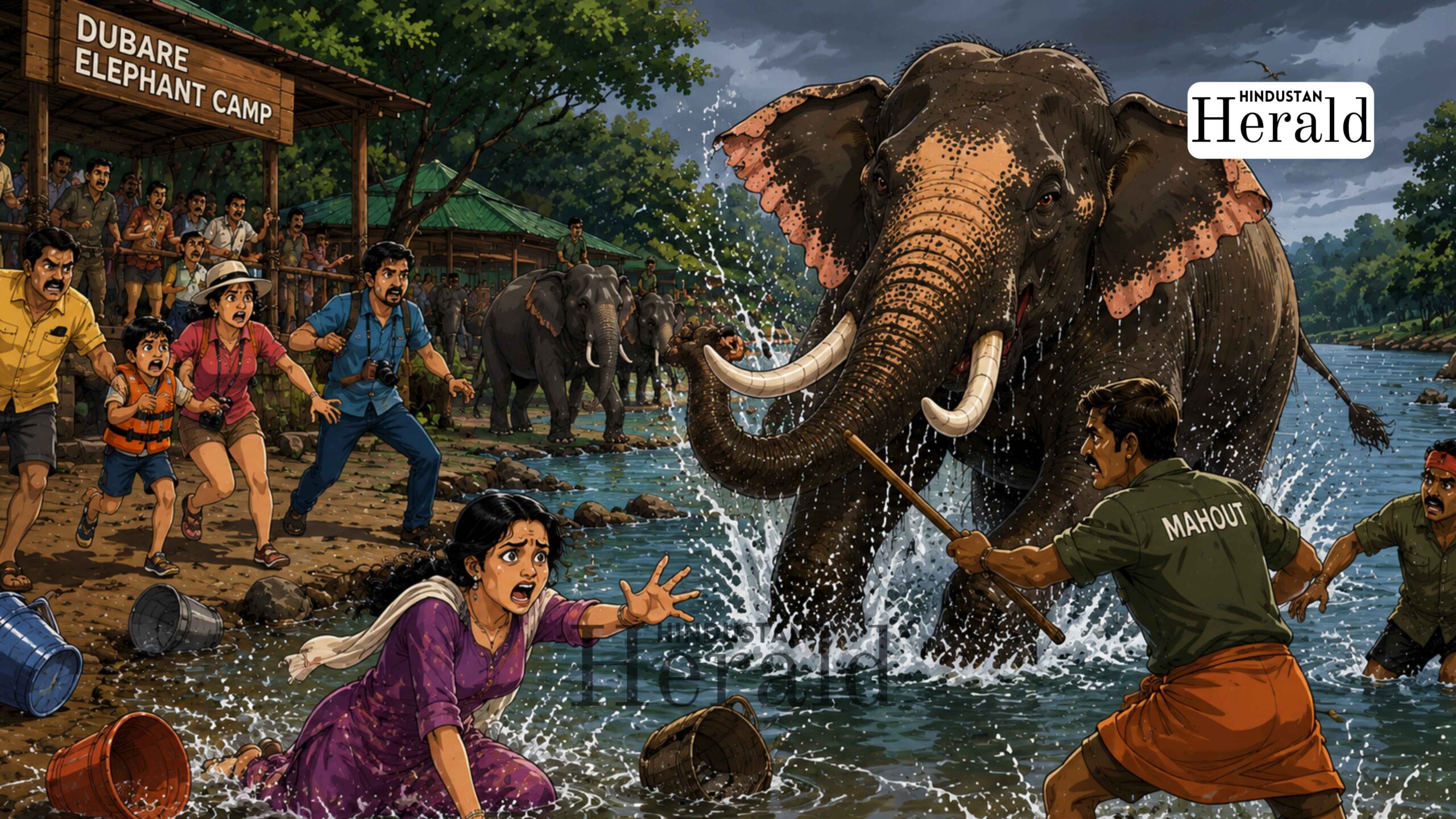
Kushalnagar, May 18: Tulasi had come to Dubare to give an elephant a bath. That was the plan. A Monday morning trip to one of Kodagu’s most-visited wildlife spots, the kind families make all the time. Her husband was there. The river was flowing. The elephants were being brought in for their daily routine. And for a few minutes, it must have looked exactly like it looks in the photographs on every travel website that recommends the place.
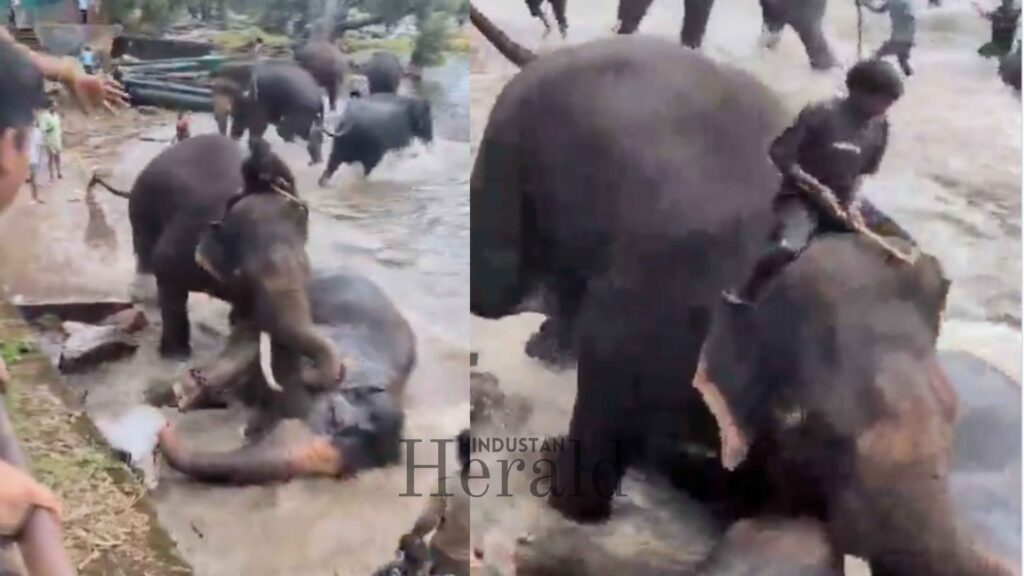
Then elephant Kanjan attacked Marthanda. And in the chaos that followed, Tulasi, 33, from Chennai, never made it out of the water.
A Morning That Turned in Seconds
The bathing session at Dubare Elephant Camp starts around noon. A group of elephants is brought to the Cauvery riverbank, mahouts guide them in, tourists gather at the edges. Some of them step closer. Some of them want to participate, to pour water, to touch the animals, to have the kind of story they can tell when they get home.
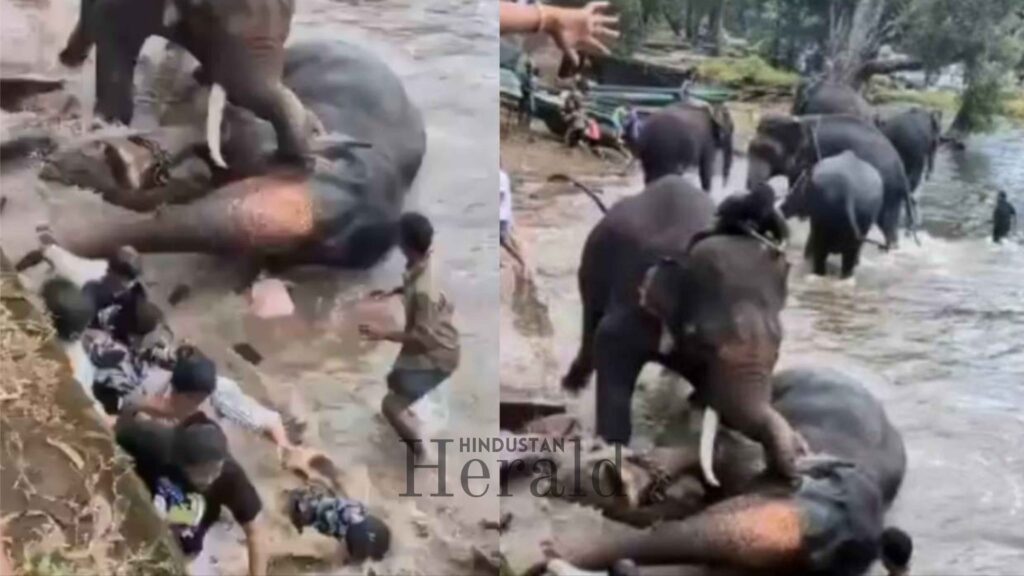
Tulasi was standing next to Marthanda when Kanjan came at him. As per reports, Kanjan was in musth at the time, a condition in bull elephants marked by a violent spike in hormones and near-total behavioural unpredictability. The fight broke out in a fraction of a second. The other elephants panicked and bolted. Mahouts ran toward the animals trying to regain control. Everyone who could move, moved.
Tulasi was too close. She was inside the water next to Marthanda when the elephant lost his footing and came down on her. Camp staff tried immediately to pull her free. They could not. Kanjan was still attacking, positioned over Marthanda, and there was simply no way to reach her from underneath.
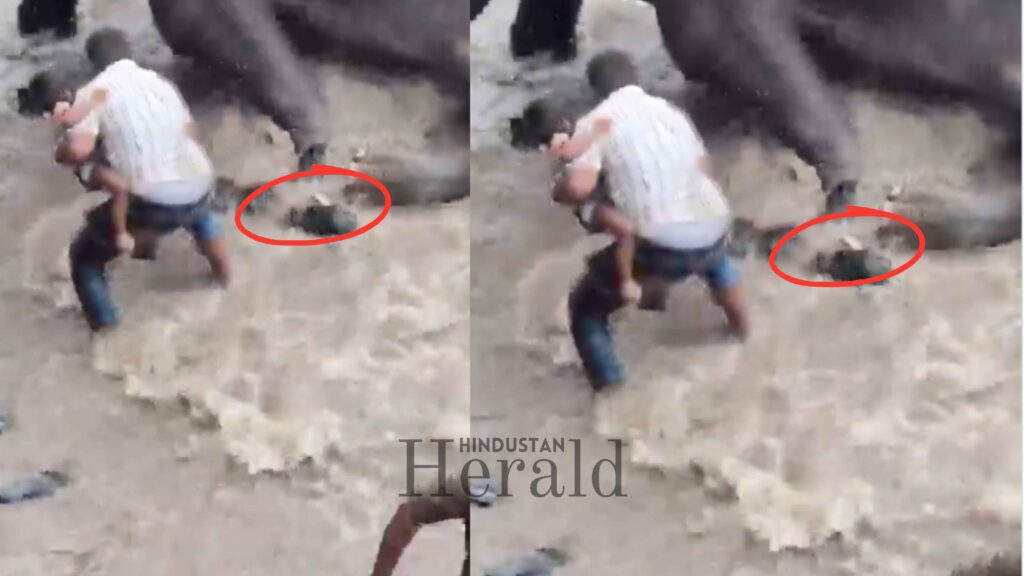
A tourist caught it on video. In the footage, a man is visible holding a toddler while trying to help rescue her. Both of them in danger. The child too.
Tulasi was rushed to hospital. She did not survive.
Kanjan Was Not an Unknown Quantity
Here is the part that will be harder for the Forest Department to explain away.
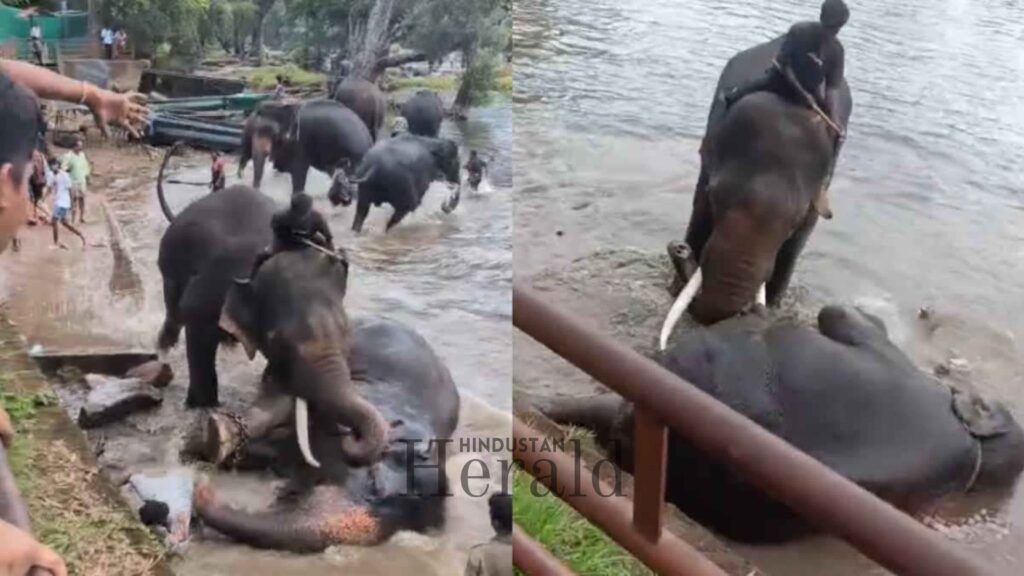
Kanjan is a Dasara elephant. He was sent to Mysuru for the 2025 festivities and, according to the Free Press Journal, caused panic twice during his stay by attacking other elephants at the palace camp. After returning to Dubare, he clashed again with another elephant, Dhananjaya, inside the camp premises. He was injured in the leg during that fight. Public TV English reported on that incident separately.
So this was an elephant with a documented pattern of aggression, brought into a bathing session on a narrow riverbank where tourists were standing within touching distance of the animals. He was apparently in musth that morning. Musth is not invisible. The physical signs, temporal gland secretions, swollen temples, behavioural agitation, are things trained mahouts are specifically supposed to watch for.
Whether anyone flagged those signs before the session began is a question that has not yet been answered.
The Minister Moved Fast. The Harder Questions Will Take Longer.
Karnataka’s Forest and Environment Minister Eshwar B Khandre offered his condolences and announced a set of new restrictions within hours. No more touching elephant trunks. No posing too close for photographs. No tourist participation in bathing sessions. Visitors to be kept at a safe distance from the animals at all times.
He also said, and this is worth sitting with, that although captive elephants undergo training, animal behaviour can never be fully predicted.
He is right. But that acknowledgement cuts both ways. If elephant behaviour cannot be fully predicted, and if Kanjan in particular had already shown what he was capable of more than once, then the question of why he was in that bathing session at all, with tourists standing in the water beside him, is not a minor administrative footnote. It is the central question.
The new rules Khandre announced are sensible. They are also, largely, things that probably should have been standard practice before Monday.
What Dubare Actually Is
People who have not been to Dubare sometimes picture a zoo, or a sanctuary with viewing platforms and safety railings. It is neither. The Dubare Elephant Camp is a Forest Department facility that doubles as a tourist attraction, and its entire appeal is built on closeness. You do not watch the elephants from a distance at Dubare. You stand next to them. You feed them. You pour water on them. You take photographs with your face next to theirs.
That proximity is the product. It is what brings the visitors. And for a long time, it worked, in the sense that no tourist had died there before. The camp has had its tragedies; mahouts were killed by elephant Karthik in 2017, two of them within weeks of each other. But the paying visitors always went home.
Until Monday.
The riverbank at Dubare during a bathing session is not a wide or forgiving space. There are no physical barriers between the tourists and the animals. When a five-tonne elephant goes down in that space, the margin for human survival depends entirely on where you happened to be standing and how fast you could move. Tulasi was in the wrong position at the wrong moment and she had less than a second to realise it.
The Harder Conversation
Wildlife tourism in India has spent years making itself more immersive. The logic is partly economic, more intimacy means more visitors, more revenue, more case for conservation. But intimacy with animals that weigh several tonnes and whose behaviour has hard limits of predictability carries a cost, and for the most part that cost has been passed silently onto the visitors themselves.
Dubare is not an outlier. Across the country, elephant camps and wildlife centres offer similar experiences. Most days nothing happens. The elephants are calm, the tourists go home happy, the revenue flows. The risk is always there, sitting just below the surface of the promotional brochure, but it rarely makes itself visible.
On Monday morning it did.
Tulasi’s husband was present. He watched all of it happen. The man with the toddler in the video has probably not slept since. The mahouts who could not get her out in time, they will carry that too.
Dubare is shut to visitors for now. An inquiry will happen. Some protocols will be tightened. And at some point, presumably, the camp will reopen, because it is a popular destination and there is money in it and one incident, however terrible, rarely changes these things permanently.
What would actually make a difference is a formal, enforced protocol for isolating bulls showing signs of musth from any tourist-facing session. A physical separation between visitor areas and the zones where bathing actually happens. Regular third-party safety audits. Clear, public accountability when those protocols are not followed.
Whether any of that comes out of this, honestly, remains to be seen.
For now, a family from Chennai is grieving. A 33-year-old woman went to see the elephants and did not come back. And the river at Dubare is moving the same as it always has.
Stay ahead with Hindustan Herald — bringing you trusted news, sharp analysis, and stories that matter across Politics, Business, Technology, Sports, Entertainment, Lifestyle, and more.
Connect with us on Facebook, Instagram, X (Twitter), LinkedIn, YouTube, and join our Telegram community @hindustanherald for real-time updates.

Regional journalist bringing grassroots perspectives and stories from towns and cities across India.
- Sandeep Verma

- Sandeep Verma
- Sandeep Verma
- Sandeep Verma




 Ananya Sharma