 By Neeraj Kapoor
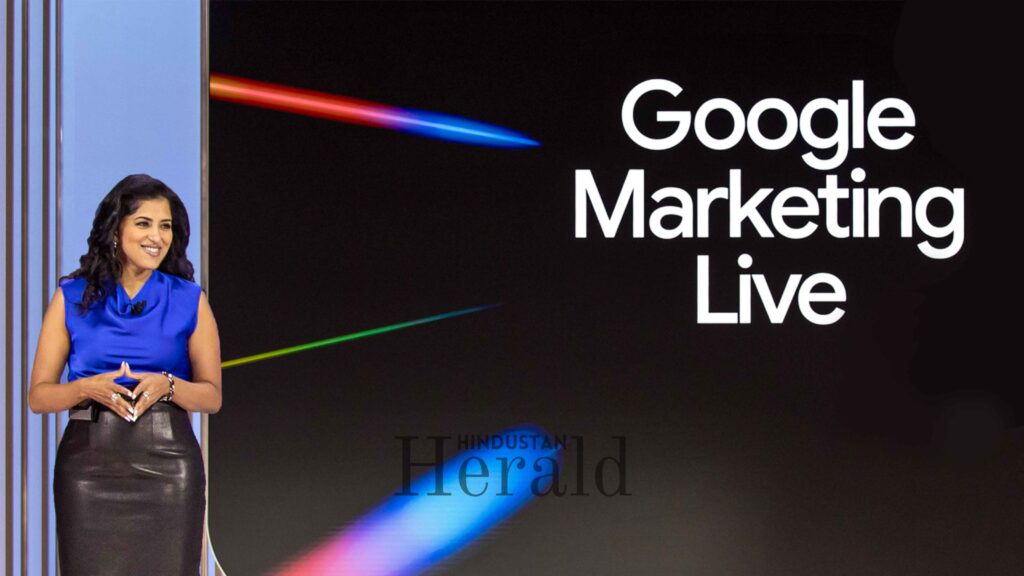
New Delhi, May 22: Google just rewrote the rules of the internet at its 13th annual Google Marketing Live, and most of India has no idea it happened.
Held on May 20, 2026, at the Bay View campus in Mountain View, California, the event was streamed to over 100 countries but landed with barely a whisper in Indian digital and marketing circles. That silence is going to be expensive. What Google unveiled at GML 2026 is not a collection of feature updates. It is a fundamental restructuring of how commerce, advertising, and AI-powered search will function for the next decade. Four announcements in particular deserve serious attention the Universal Commerce Protocol, the Universal Cart, Ads in AI Mode, and Ask Advisor.
Each of these shifts the game. Together, they change the playing field entirely.
The Universal Commerce Protocol: Google Builds Its Own Internet of Commerce
At its core, the Universal Commerce Protocol, or UCP, is an open industry standard that Google has been building with retail and payment partners across the ecosystem. According to Search Engine Land, UCP allows retailers to connect product catalogs, checkout workflows, and payment experiences across Google surfaces including Search, AI Mode, and Gemini without building custom integrations each time.
Think of it as a universal language for commerce. A retailer using UCP does not have to build separate pipes for Google Search, the Gemini app, YouTube Shopping, and Google Pay. One integration handles all of it. Inventory levels, pricing, loyalty benefits, and account information can flow seamlessly between platforms and surfaces in real time.
What makes this significant is the structural implication. As reported by PPC Land, Google is no longer positioning itself only as a discovery engine where users find something and then leave to buy it elsewhere. With UCP, Google is building the transactional layer of online shopping the rails on which the entire purchase journey will eventually run.
The comparison that keeps surfacing in analyst commentary is Amazon. Amazon’s checkout ecosystem is famously closed. You cannot take your Amazon cart and check out on a third-party site. Google’s pitch with UCP is the opposite an open protocol that any merchant, payment provider, or agent can plug into. The initial UCP partners include some of the biggest retail names in the world Nike, Sephora, Target, Walmart, Wayfair, and Shopify merchants like Fenty and Steve Madden. Buy-now-pay-later providers Affirm and Klarna have also been integrated directly inside Google Pay through UCP infrastructure.
For Indian businesses, this matters because UCP’s architecture is explicitly designed for cross-border expansion. Google has already signalled it is expanding UCP beyond retail into hotel booking and food delivery. Per Search Engine Land, future experiences will allow users to book hotels directly from AI Mode and order food from inside Google Maps conversations. Any Indian e-commerce brand, D2C startup, or hospitality business looking at global markets will eventually have to align with this protocol or accept reduced discoverability across Google’s entire surface.The Universal Cart One Cart to Rule Every Platform
The Universal Cart is the consumer-facing expression of UCP, and it is arguably the most immediately visible shift announced at GML 2026.
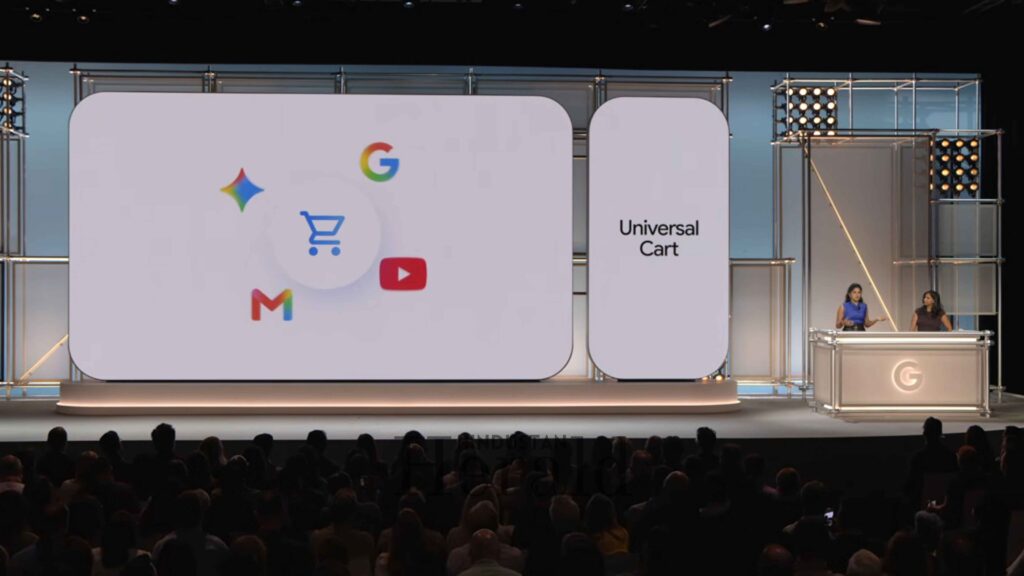
As reported by The Keyword and confirmed in Google’s own official blog, the Universal Cart allows shoppers to save products from multiple retailers and complete purchases either through Google Pay or directly on the retailer’s website, across Search, the Gemini app, YouTube, and Gmail. The retailer remains the merchant of record throughout.
What this solves is cart fragmentation, a problem anyone who shops online will immediately recognise. Today, you might find a product on Google Search, add it to a wishlist somewhere, lose track of it, and either never buy it or spend time hunting it down again. The Universal Cart creates persistence. You find a product in an AI Mode conversation, add it to your cart, and that cart follows you across every Google surface until you check out.
The UX implication here is enormous. Google is embedding the purchase decision inside the research moment, rather than treating them as two separate steps. Historically, search led to a website where the actual conversion happened. Now, search or increasingly an AI conversation can itself become the point of sale.
As per WordStream’s GML recap, the Universal Cart is backed by what Google has called an Agent Payments Protocol, or AP2, which allows AI agents to handle transactions autonomously on behalf of users. This is the early architecture of agentic commerce a world where an AI assistant can not only recommend a product but buy it on your behalf.
For Indian brands targeting international consumers, the message is clear if your product catalog is not discoverable through UCP-compatible feeds and your checkout is not Google Pay-enabled, you may effectively be invisible to a growing segment of high-intent shoppers who never leave the Google ecosystem to buy.
Ads in AI Mode: The Most Disruptive Shift in Search Advertising in Two Decades
Search advertising as we have known it since 2000 is built on a simple model. A user types a keyword. Google matches that keyword to advertiser bids. An ad appears next to the result. The advertiser pays when someone clicks.
AI Mode breaks every assumption in that model.
According to Google’s own data cited at GML 2026 and reported by Design Rush, AI Mode has now crossed one billion monthly active users globally. Queries in AI Mode are more than doubling every quarter since launch, and they average three times the length of traditional search queries. People are not typing three words. They are having conversations with Google, asking layered questions, describing contexts, and expecting comprehensive answers in return.
Ads had to change to survive in this environment. They did.
Google unveiled three new Gemini-powered ad formats at GML specifically designed for AI Mode. The first is Conversational Discovery ads. As described in Search Engine Land’s coverage, when someone asks an exploratory question in AI Mode, Gemini analyses the deep context of the query and generates customised ad creative from a relevant business. The example Google itself used was a user asking how to make their home smell like “fancy spas or a rainy forest using low-maintenance solutions.” Gemini doesn’t just pick a keyword match. It reads the intent, the mood, the lifestyle aspiration and builds an ad around that specific person’s specific query.
The second format is Highlighted Answers. When AI Mode generates a recommendation list in response to a query, this format surfaces relevant ads within that list not above it or below it, but inside it, with appropriate labelling.
The third is AI-powered Shopping ads, which generate a custom explainer for why a specific product is a fit for what the user is searching for, using the same Gemini models.
Both Conversational Discovery ads and Highlighted Answers include what Google is calling an “independent AI explainer” a Gemini-synthesised note that evaluates a product or service alongside the ad creative. This is Google’s attempt to maintain user trust the AI is not just presenting an ad, it is contextualising it.
All three formats are currently being tested in the United States on mobile and desktop. For advertisers in India, this is the most critical window of preparation time. These formats will come to other markets. When they do, campaigns built around legacy keyword logic will underperform against competitors who have already restructured their strategy around conversational intent.
That said, the implications go beyond format adjustments. Measurement itself becomes more complicated in an AI Mode world, as Search Engine Journal’s coverage noted. Queries are longer, less predictable, and far less tied to traditional keyword behaviour. Attribution models built around last-click or short conversion windows are going to produce misleading data.
Ask Advisor: One AI Agent to Run the Entire Marketing Operation
The fourth shift is arguably the one with the most practical day-to-day impact for marketing teams and business owners.
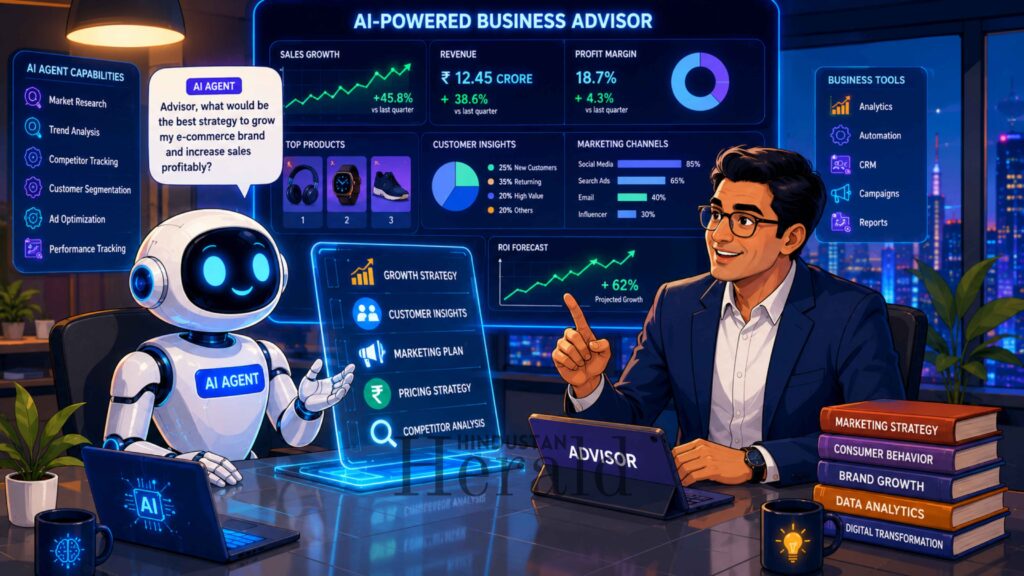
Until now, anyone running a serious Google advertising operation had to juggle multiple disconnected tools. Google Ads for campaign management. Google Analytics for performance tracking. Merchant Center for product feed health and shopping insights. Google Marketing Platform for broader measurement across campaigns and channels. Each platform has its own interface, its own data model, its own language.
Ask Advisor collapses all of that into one.
As confirmed by both Google’s official GML blog and the Search Engine Land recap, Ask Advisor is a Gemini-powered AI collaborator that works across Google Ads, Analytics, Merchant Center, and Google Marketing Platform simultaneously. It retains context across sessions meaning it remembers what you discussed or what campaigns you were working on last time and can take actions on your behalf. According to WordStream’s recap, that includes launching campaigns, generating creative assets, and flagging optimisation opportunities.
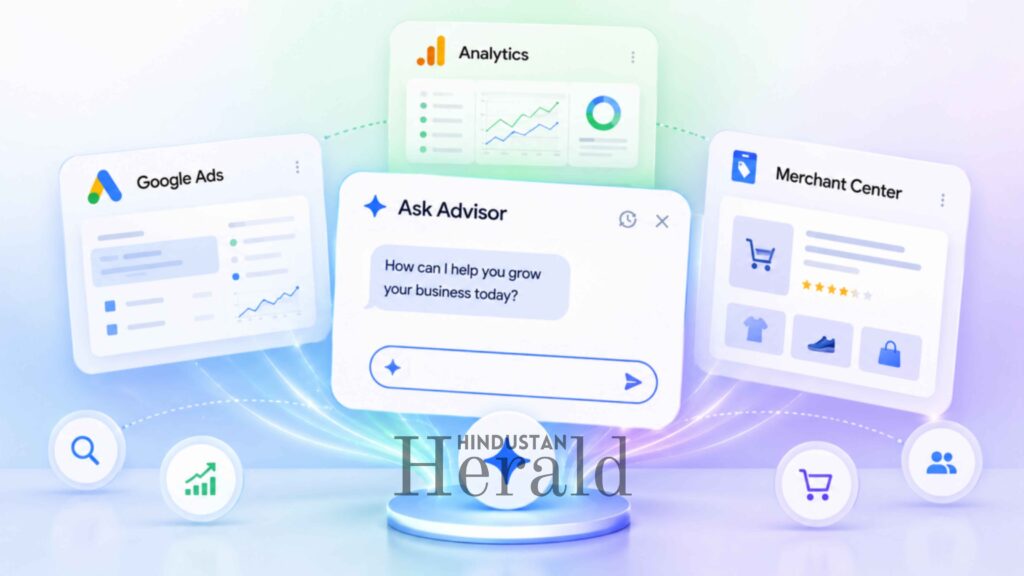
The practical framing from CMSWire’s GML analysis is worth noting Ask Advisor is positioned as Google’s answer to the fragmented tool landscape that marketers navigate daily. Rather than switching between four platforms to find out why a campaign is underperforming, a marketer can ask Ask Advisor a single question and get an answer that pulls from all four data sources at once.
For smaller businesses and solo operators, this changes the equation significantly. Campaign management at a professional level has historically required either dedicated expertise or an agency relationship. Ask Advisor, if it delivers on the demo, functions as a persistent, knowledgeable assistant that catches problems and surfaces opportunities that a solo operator wouldn’t have time to find manually.
Still, it is worth noting what Ask Advisor also represents at a structural level. Every action it automates launching campaigns, generating assets, adjusting bids is a task that previously required human decision-making. The technology is being positioned as a productivity multiplier, but it also compresses the execution layer that agencies have historically been paid for.
What None of This Means for India Yet, and Exactly Why That Matters
As of May 22, 2026, the Universal Cart has launched with American retail partners. Conversational Discovery ads are in US testing. Ask Advisor is rolling out in phases. India is not yet in the room.
That gap is the opportunity.
Every major Google product cycle follows the same pattern a US-first launch, a global rollout six to eighteen months later, and then a scramble among late movers to catch up with competitors who prepared early. The brands and agencies that study UCP now, restructure their product feeds for agentic discoverability now, and begin building AI Mode-compatible creative strategies now, will be significantly better positioned when these features land in Indian markets.
The e-commerce sector in particular has reason to pay close attention. India’s D2C industry has grown substantially over the last five years, and a meaningful portion of its growth depends on Google Shopping and Search as acquisition channels. When the Universal Cart and UCP reach Indian markets, the rules of that acquisition game change. Products that are not UCP-compatible may lose discoverability in AI Mode. Checkout flows that are not optimised for Google Pay integration will lose conversion opportunities to those that are.
The marketing services industry faces an even more immediate reckoning. Ask Advisor is not a threat to strategy. It is a threat to execution-only agency models. The agencies that survive are the ones that bring something to the AI that the AI cannot generate for itself local insight, brand instinct, cultural fluency, and the kind of strategic judgment that no prompt can fully replace.
For now, Google has drawn the map. The question is which Indian businesses and marketers will choose to read it before their competitors do.
Stay ahead with Hindustan Herald — bringing you trusted news, sharp analysis, and stories that matter across Politics, Business, Technology, Sports, Entertainment, Lifestyle, and more.
Connect with us on Facebook, Instagram, X (Twitter), LinkedIn, YouTube, and join our Telegram community @hindustanherald for real-time updates.

Tech writer passionate about AI, startups, and the digital economy, blending industry insights with storytelling.
- Neeraj Kapoor

- Neeraj Kapoor
- Neeraj Kapoor
- Neeraj Kapoor