 By Shelesh Joshi and Rajiv Menon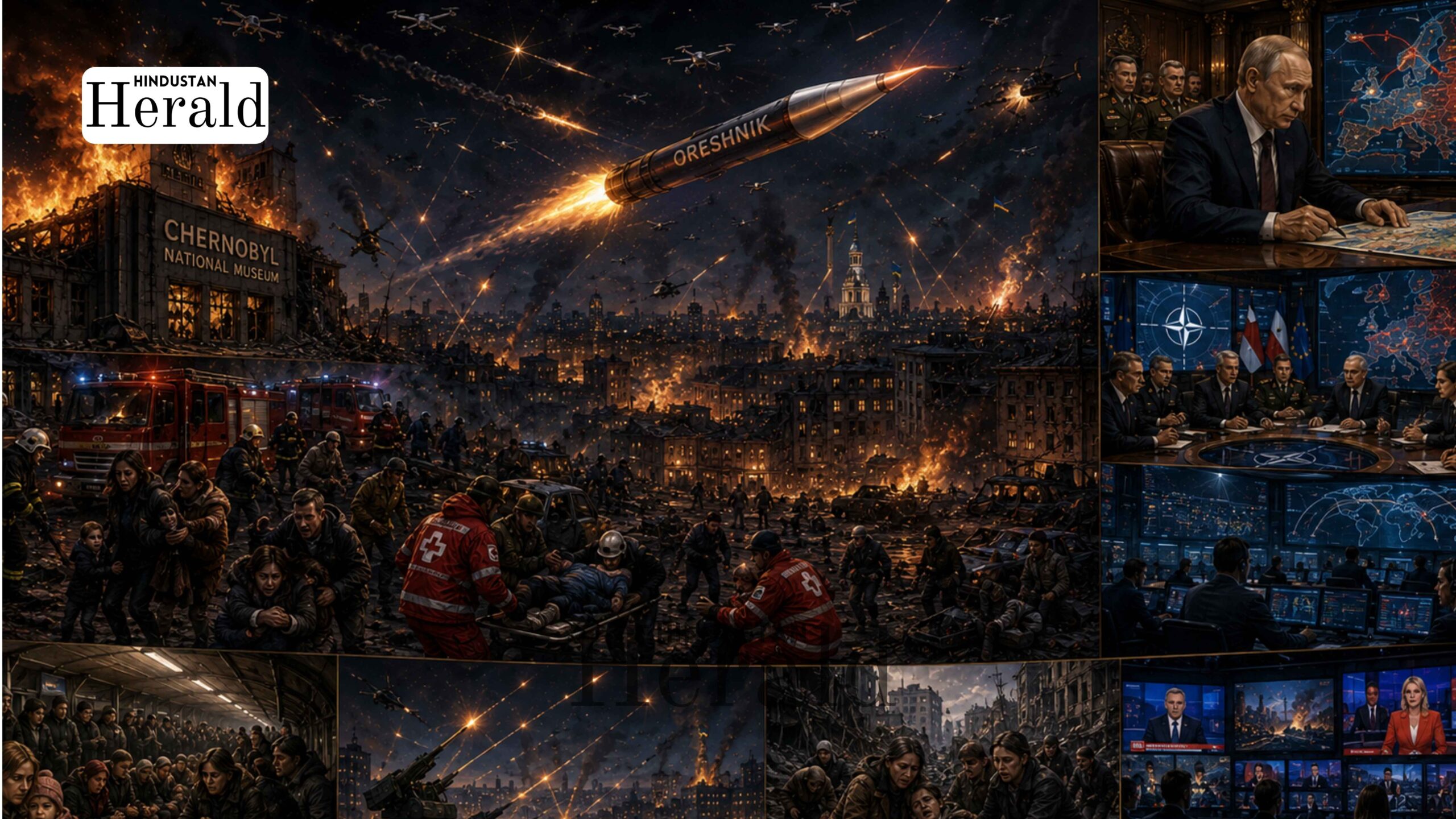
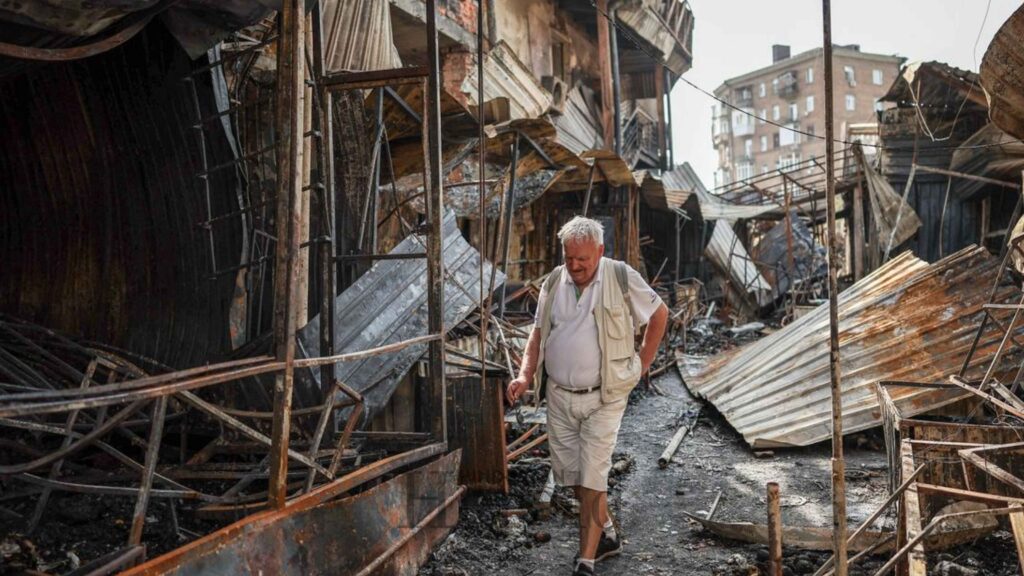
New Delhi, May 26: A cafe opened its doors for the first time on May 23. By the following morning, its windows were blown out, its walls cracked, and the street outside was covered in broken glass. The owner came in anyway. Made coffee. Opened for business in the wreckage. Less than a hundred metres away, the National Chernobyl Museum was still smouldering.
That museum had survived the Soviet Union. It had survived the actual Chernobyl disaster. It had survived four years of this war. It did not survive last weekend. Three weeks after reopening following eighteen months of painstaking restoration, timed deliberately to mark the 40th anniversary of the nuclear catastrophe it was built to remember, it was hit by a Russian missile and burned. Forty percent of its exhibits are gone. Forever. Not damaged. Gone. This is what Russia did to Kyiv on the night of May 23 24, 2026. And then the next morning, it told the world’s diplomats to pack their bags because worse was coming.
Quick Summary
- Russia launched 600 drones and 90 missiles at Kyiv on the night of May 23 24, the single largest aerial assault on the capital since the 2022 invasion began.
- At least 4 people were killed and more than 90 were injured, with damage recorded in every district of a city of nearly 3 million people.
- The National Chernobyl Museum, reopened just three weeks ago after 18 months of restoration, was destroyed with 40% of its exhibits lost forever.
- Russia fired the nuclear capable Oreshnik hypersonic missile for only the third time in this war, targeting Bila Tserkva, a city of 200,000 people just 50 miles from Kyiv.
- The Albanian Ambassador’s residence was directly struck during the attack, nearly killing the diplomat, with Albania summoning Russia’s ambassador for immediate explanation.
- Zelensky admitted on Monday that Ukraine is facing a critical global shortage of anti ballistic missiles, made worse because US stockpiles were drained defending against Iran.
Nobody Can Agree on What Started This
You have to go back to Friday, May 23, to understand the sequence. That evening, Russia claimed that Ukrainian drones hit a student dormitory in Starobilsk, a town Russia occupies in the Luhansk region. TASS reported 18 dead and made sure the word “children” appeared in every paragraph. Putin called it terrorism, went on camera looking grave and controlled, and ordered his military to respond. Ukraine said none of that is true.
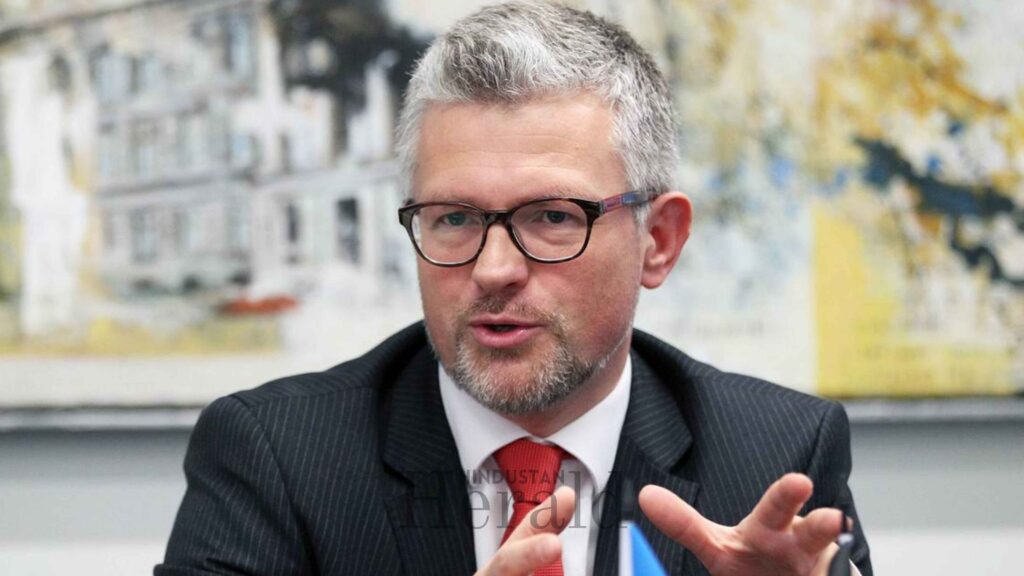
According to Kyiv’s General Staff, what its forces actually struck was the headquarters of the Rubikon drone unit, an active military command centre responsible, Ukraine says, for planning strikes on Ukrainian civilians. Not a dormitory. Not students. A military target. When Russia convened an emergency UN Security Council meeting to make its case, Ukraine’s Ambassador Andrii Melnyk sat across the table and called the whole proceeding a “pure propaganda show.” He said the operation “exclusively targeted the Russian war machine.”
Both of these things cannot be true at the same time. And here is the honest part: nobody reading this article, nobody watching the news, nobody outside of the people who were actually there can say with certainty which version is accurate. That is not a failure of journalism. That is the reality of this war in its fourth year. The fog is total. Both sides are fluent in it. And both sides understand that the story told in the first 24 hours shapes international perception for weeks. What nobody disputes, not Russia, not Ukraine, not a single observer anywhere, is what happened next.
What Six Hundred Drones Sounds Like at 3am
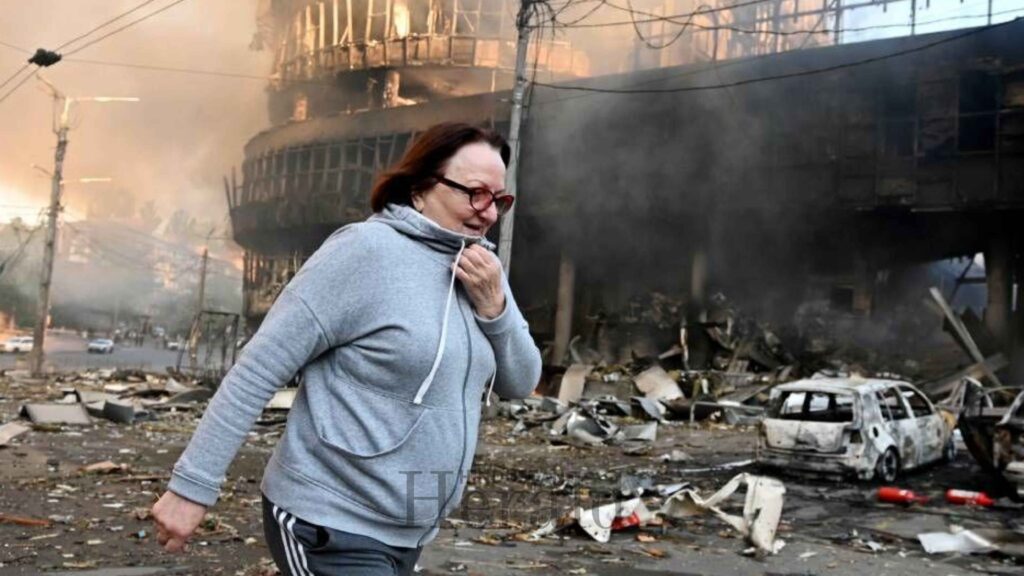
The numbers are almost too large to make human sense of. 600 drones. 90 missiles. In one night. Aimed at one city. Ukraine’s Air Force confirmed those figures. Mayor Vitaliy Klitschko went on record saying there was damage in every single district of Kyiv. Every one. Think about what that means in a city of nearly three million people. There was nowhere in the entire capital that was untouched.
At least four people were killed. More than 90 were injured. Fires burned across multiple neighbourhoods simultaneously, and rescuers spent over 15 hours just fighting the flames. By the time the sun came up, Kyiv police had already logged damage reports from more than 540 separate properties and the number was still climbing as people emerged from shelters and saw what was left of their streets. Zelensky went on Telegram that morning and called Russia “genuinely deranged.” It is difficult to read that and disagree.
Among the weapons Russia chose to use that night was the Oreshnik. If you have not come across this missile before, here is what you need to know. It travels at roughly Mach 10. Putin has described it moving “like a meteorite.” It carries six warheads, each containing six submunitions. The United States classifies it as an intermediate range ballistic missile capable of carrying nuclear warheads. And there is currently no air defence system in Ukraine, or frankly anywhere in the world outside of a small number of highly specialised installations, that can reliably shoot it down. Russia fired this weapon at Bila Tserkva. A city of 200,000 ordinary people. Fifty miles south of Kyiv.
This was the third time Russia has used the Oreshnik in this entire war. The first time was Dnipro, November 2024. The second was Lviv, January 2026. Now the outer edge of the capital itself. Each time, the target moves closer to the centre of Ukrainian life and power. Russia is not being subtle about what that progression means.
An Ambassador Nearly Died in His Sleep
Buried under the sheer scale of this attack is a detail that in any previous era of this conflict would have dominated front pages for a week. A missile or heavy debris from Russia’s strikes directly hit the residential building where Albania’s Ambassador to Ukraine was sleeping. Albanian Foreign Minister Ferit Hoxha confirmed that the strike “put his life at serious risk.” Not at arms length risk. Not theoretical risk. Serious. Immediate. He nearly died in his own home.
Albania summoned Russia’s ambassador the same day and demanded an explanation. Hoxha was not diplomatic about it. He called it “unacceptable” and “a grave escalation.” Tirana stated that those responsible must be held legally accountable. The building housing German broadcaster ARD’s studio was also damaged. A foreign press outlet. A diplomatic residence. Both hit in the same night that Russia was claiming it only targets military infrastructure. There is a gap between what Moscow says and what its missiles actually hit. It is not a small gap. It is the size of an ambassador’s bedroom.
The Morning Russia Told the World to Leave
Sunday ends. The fires are still going. People are picking through debris looking for their belongings, their pets, their neighbours. Emergency workers are exhausted. And Monday morning, Russia’s Foreign Ministry puts out a statement.
The Russian Armed Forces, the statement said, are beginning “systematic strikes” on military industrial facilities in Kyiv. Those strikes will also target “decision making centres and command posts.” All foreign nationals, all diplomatic personnel, all international organisation staff are advised to leave Kyiv as soon as possible. Then Sergei Lavrov personally picked up the phone and called Marco Rubio. The Russian Foreign Minister told the US Secretary of State directly: we are about to hit Kyiv’s decision making centres. Get your embassy people out.
Washington said nothing publicly in response. Just silence. There was one more element in that Foreign Ministry statement, and it has not received nearly enough attention. Moscow put in writing that Kyiv’s drone programme is being operated “with the help of NATO specialists who supply components, provide reconnaissance and target acquisition data.” Read that again slowly. Russia is formally stating, on the record, that in its view it is not at war with Ukraine alone. It is at war with NATO.
That is not a throwaway line from a spokesperson. That is a formal position from a foreign ministry. And if Russia ever decides to treat it as a military premise rather than a rhetorical one, what happens next is not a Ukraine problem. It is a Europe problem. It is a world problem.
Europe Looked at the Warning and Laughed
Not literally. But close enough. Not a single embassy moved. Not one country began evacuating its diplomatic personnel. The collective response from Western capitals to Russia’s evacuation warning was something between defiance and contempt.
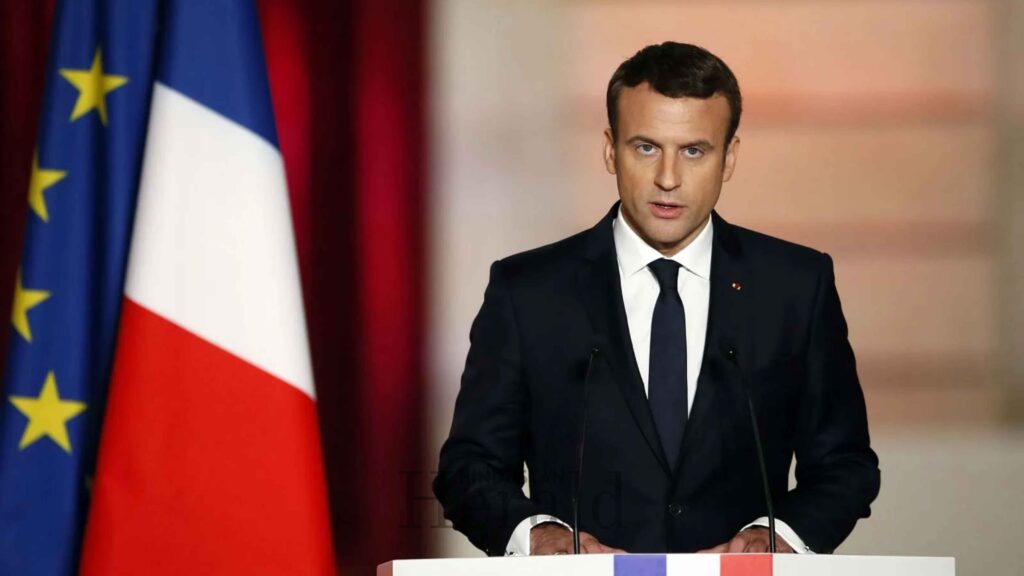
France went first and went hardest. A foreign ministry spokesperson said: “We’re used to Putin’s threats. It is out of the question to evacuate.” President Macron wrote publicly that the strikes exposed “the dead end of Russia’s war of aggression.” German Chancellor Friedrich Merz called the use of the Oreshnik a “reckless escalation.” His foreign minister Johann Wadephul told Bloomberg: “We will not be intimidated by this.”
European Commission spokesperson Anouar El Anouni kept it simple and devastating. “We will not change our posture or presence in Kyiv,” he said. “Russian attacks are, unfortunately, a daily reality in Kyiv and elsewhere in Ukraine.” He called Moscow’s tactics “reckless escalation.”
Canadian Prime Minister Mark Carney made a point that stung more than the diplomatic language usually does. These strikes, he said, “only prolong human suffering without altering the reality that Russia is losing the war.” Ukraine’s Foreign Minister Andrii Sybiha called it what his government genuinely believes it is. Blackmail. That is the word he used. Not escalation. Not aggression. Blackmail.
The defiance is real. But so is the uncomfortable arithmetic underneath all of it. An ambassador nearly died in his home this weekend. The assumption that Russia will not directly endanger foreign diplomats is no longer a safe one. Everyone still in Kyiv is now carrying that knowledge around with them every single night.
Zelensky Said Something Important That Got Ignored
On Monday morning, while the rest of the world was focused on the evacuation warnings and the diplomatic back and forth, Zelensky said something that deserves much more attention than it received.
Ukraine is running out of the missiles it needs to protect its own capital. He said it plainly. His government is “working with all our partners” on fixing the shortage, but specifically noted that progress with America has essentially stalled.
“Unfortunately, there has been no progress for a long time with America on expanding the production of anti ballistic capabilities,” he said on Monday. “We are trying to accelerate work in Europe on producing our own anti ballistic capabilities on the continent in sufficient quantities.”
Here is why the shortage exists, and it is a story that connects wars that most people think of as completely separate. US made Patriot air defence missiles are among the most effective tools available against Russian ballistic missiles. But Washington and its Gulf allies burned through enormous quantities of them defending against Iranian drone and missile attacks. The war with Iran has directly degraded Ukraine’s ability to protect Kyiv.
Everything is connected. The security crises of 2025 and 2026 are not separate events happening in isolation. They are feeding each other in ways that policy makers are still struggling to fully get ahead of. And right now those connections are showing up in the skies over the Ukrainian capital at 3am.
Ukraine Is Hitting Back and Nobody Is Talking About It
When the story is entirely about what Russia is doing to Kyiv, something important gets lost. Ukraine is not simply absorbing this. Kyiv has spent years, largely out of the headlines, building a long range drone programme that has become one of the more quietly impressive military developments of this entire conflict. It reaches deep into Russia with regularity now. Not into border towns. Into the economic heart of the country.
Russia’s Syzran oil refinery shut down completely after a Ukrainian drone hit its main crude distillation unit on May 21. Ukraine’s Security Service also struck the Vtorovo oil pumping station in Vladimir Oblast, a facility that pumps fuel directly into the Moscow region and its major airports.
Zelensky has taken to calling these strikes “long range sanctions.” It is a phrase that captures the strategy honestly. Every refinery that goes offline is money Moscow cannot turn into missiles. Ukraine understands this dynamic and has been working it hard.
This war is not one dimensional. It is happening simultaneously in the air, on the ground, in the global energy market, in the information space, in the corridors of the UN, and in the phone calls between foreign ministers at odd hours. Ukraine is not winning cleanly on any single front. It is also not losing cleanly on any of them.
The Word Most Reporters Avoid
Nuclear. The Oreshnik is a nuclear capable missile. That is a fact, not an interpretation. Every single time Russia fires it into a city, it is doing something that goes beyond whatever the military objective of that particular strike might be. It is making a nuclear capable weapon normal. Expected. Part of the routine of this war.
Putin has said the Oreshnik could be turned on countries that allow Ukraine to use Western weapons against targets inside Russia. NATO has said there will be “devastating consequences” if Russia uses nuclear weapons against Ukraine. Both of those positions are official. Both of them are on the record. And they have been sitting in direct tension with each other for months now without resolution.
The warheads this weekend were conventional. That is genuinely true. It is also the thinnest possible comfort when the missile carrying them is the same missile that could carry the other kind. And the world is just supposed to keep trusting that Russia will keep making the same choice it made this weekend. Maybe it will. The problem is that trusting Moscow’s restraint is not a policy. It is a prayer.
There Is No Peace. Let Us Be Honest About That.
Not close. Not coming. Not in any form that means anything real. Zelensky has talked about progress in discussions with American envoys. Moscow has said precisely nothing that indicates any genuine movement. Russia’s demands have not changed. They want effective control of four Ukrainian regions. They want fundamental changes to how NATO operates in eastern Europe. They wanted those things in February 2022 and they want them now.
The Institute for the Study of War put it clearly this week. These intensified strikes on Kyiv are as much political performance as they are military strategy. Russia is trying to look strong and decisive at the exact moment when American attention is stretched thin and European political unity is facing pressure from within its own member states.
The ruins of the Chernobyl Museum are a message. Russia knew what it was hitting. It knew when it was hitting it. Three weeks after reopening. On the 40th anniversary of the disaster the museum was built to remember. That timing is not a coincidence. It is a signature.
India Is Watching This Very Carefully
India has spent four years navigating this war in a way that annoyed Washington, frustrated Brussels, and gradually, quietly, turned out to be more strategically intelligent than most of its critics initially credited.
New Delhi never joined the condemnation chorus. It also never endorsed the invasion. What it did was call for talks, push for a ceasefire, and keep the phone lines open with both Moscow and Kyiv when almost everyone else had picked a side and stopped listening to the other.
Prime Minister Modi has sat with Putin. He has sat with Zelensky. He has said repeatedly that India is not neutral in this conflict. It is on the side of peace. In a war where every other major player has planted a flag firmly in one trench or the other, that is a rarer and more valuable position than it might appear.
Ukraine’s Ambassador Oleksandr Polishchuk has said publicly that Kyiv wants India more involved in any eventual peace process, precisely because New Delhi is one of the very few capitals Moscow will still engage with seriously and without hostility. That is real diplomatic capital. It was built slowly and carefully over four years of refusing to do the easy thing, which was to simply line up with the West and be done with it.
There are also concrete Indian interests sitting behind all of this. Volatile oil markets hit an import dependent economy in very direct ways. Western governments distracted by Europe are less focused on the Indo Pacific at a moment when that matters enormously for India’s strategic environment. Every month this war continues is another month of instability in a world India is trying to build serious long term relationships inside.
India has more reason to want this over than most. It also, perhaps unusually, has some genuine capacity to help push it toward an ending. Whether New Delhi decides to use that capacity more actively is one of the more consequential open questions in global diplomacy right now.
The Only Thing Left to Say
Russia has promised more strikes. It has named the targets. It has told the world to leave. It came within a missile’s width of killing a foreign ambassador in his home. It burned a museum that had been open for three weeks. It fired a nuclear capable weapon at a city of 200,000 people and described it as a measured military response.
The embassies are still open. The Ukrainian government is still in Kyiv. The people of this city, as they have been for every one of the past four years, are still there. And somewhere in Podil, in the neighbourhood where the Chernobyl Museum used to stand, a cafe owner who watched his brand new business get destroyed in a missile shockwave the day after he opened it came back in the morning and made coffee for whoever needed it.
He did not close. He did not leave. He made coffee. That is Kyiv right now. Battered and furious and stubbornly, defiantly, exhaustingly still standing. It just should not have to keep proving that.
Stay ahead with Hindustan Herald — bringing you trusted news, sharp analysis, and stories that matter across Politics, Business, Technology, Sports, Entertainment, Lifestyle, and more.
Connect with us on Facebook, Instagram, X (Twitter), LinkedIn, YouTube, and join our Telegram community @hindustanherald for real-time updates.

Tracking world politics, global markets, trade movements, policy decisions, and the changing balance of economic power.
- Shelesh Joshi

- Shelesh Joshi
- Shelesh Joshi
- Shelesh Joshi



Specializes in South Asian geopolitics and global diplomacy, bringing in-depth analysis on international relations.
- Rajiv Menon
- Rajiv Menon
- Rajiv Menon
- Rajiv Menon