 By Shelesh Joshi and Rajiv Menon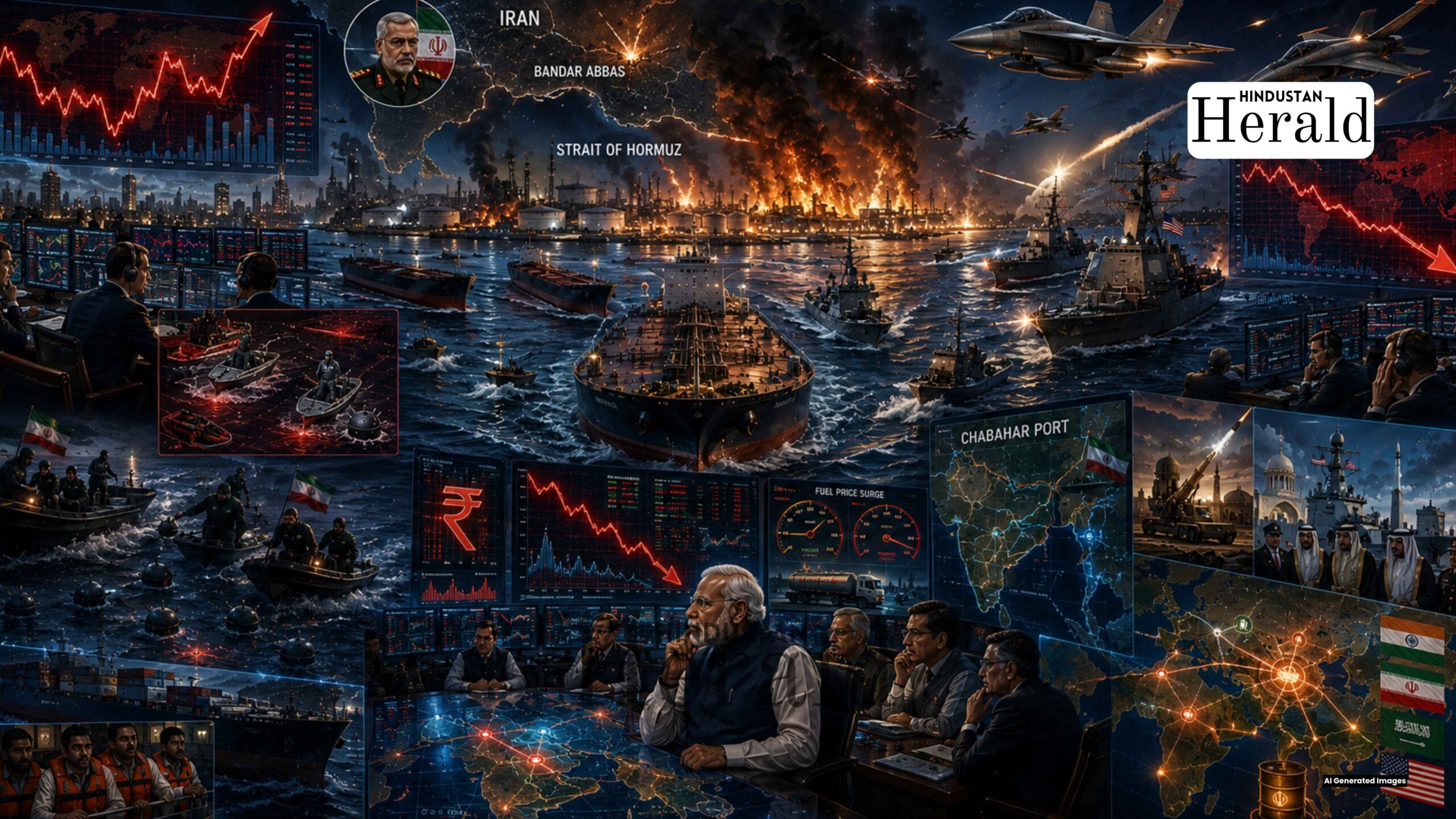
New Delhi, May 26: US strikes on Iran shook the Gulf before sunrise on Monday. The ceasefire was already fragile. Nobody needed to test it. But someone did. Two IRGC boats were caught laying mines in the Strait of Hormuz early Monday morning. American forces destroyed both vessels on the spot. Then a surface-to-air missile site in Bandar Abbas reportedly locked onto US warplanes overhead, and that too was struck. Three blasts were heard across the port city before dawn. More explosions followed near Sirik and Jask down the coast.
A senior US official later confirmed the strikes were “over for now.” Secretary of State Marco Rubio kept it even shorter. “The straits have to be open,” he said flatly. “They’re going to be open one way or the other.” By Tuesday, both sides were back to insisting the ceasefire still held. Technically, it does. Practically, that is a much harder argument to make when IRGC boats are seeding a global shipping lane with naval mines at three in the morning.
Why Bandar Abbas Is Never Just a Target
People hear “Bandar Abbas” in news reports and picture a port city taking fire. That misses the point entirely. This is where Iran’s naval war machine lives. The IRGC Navy is headquartered here. The fast-attack boats operate from here. The shore-based anti-ship missile batteries are here. The mine-laying capacity, as Monday demonstrated with brutal clarity, is also here. When the US strikes Bandar Abbas, it is not punishing a city. It is going directly at the mechanism Iran uses to threaten one of the most critical waterways on the planet.
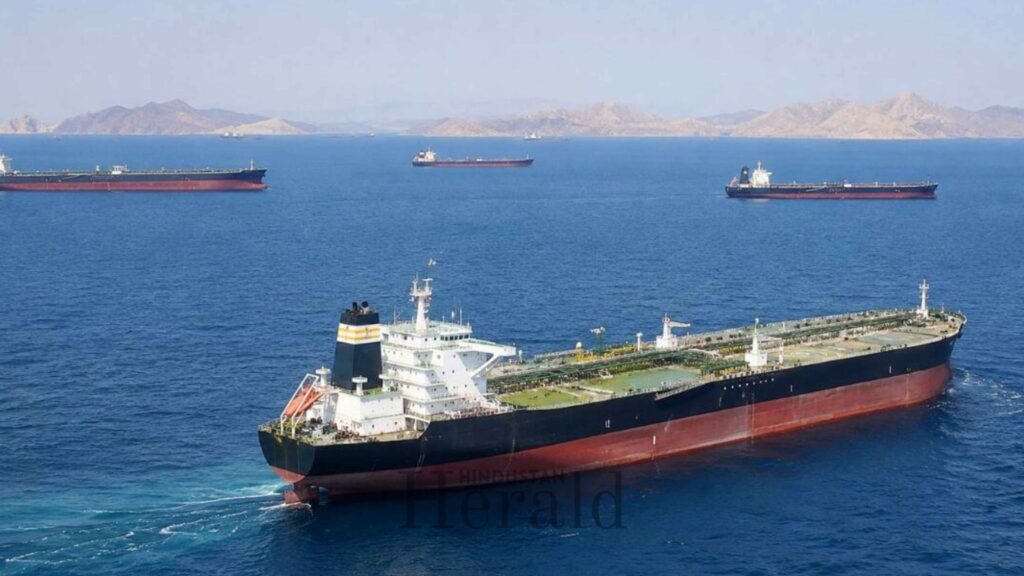
Roughly 27 percent of the world’s maritime crude and petroleum trade passes through the Strait of Hormuz every single day. Every tanker leaving Saudi Arabia, the UAE, Kuwait and Iraq uses this passage. So does most of Qatar’s liquefied natural gas. The IRGC had already deployed missile systems on three disputed Gulf islands back in March 2025, long before Monday’s mine-laying episode. The provocation on Monday was not spontaneous. It was a deliberate move, timed to maximum effect, at a moment when peace talks were still technically underway in Doha.
Close the Strait, or simply make it feel dangerous enough that insurers start refusing to cover tankers, and the entire global energy market convulses. Iran knows this. It has always known this. The Strait is not just a waterway. It is Tehran’s most powerful card.
Trump’s Post, and What It Actually Signalled
A few hours after the strikes concluded, Donald Trump went on Truth Social. He wrote that Iran’s enriched uranium would either be “immediately turned over to the United States to be brought home and destroyed” or, his stated preference, destroyed inside Iran under IAEA supervision at a mutually agreed location.
He referred to uranium as “Nuclear Dust!” Complete with exclamation mark. It reads like vintage Trump bluster. But buried inside the post was something genuinely significant. For months, he had been demanding that Iran physically hand over its uranium stockpile to American custody. This post softened that position, allowing for on-site destruction under international watch. That is a real shift, even if the packaging makes it easy to miss.

It tells you the Doha negotiations have not fully collapsed. And the timing of those talks makes Monday’s events even more layered. Iran’s chief nuclear negotiator was sitting across the table from the Qatari prime minister in Doha at the exact moment IRGC vessels were deploying mines in the Strait. Diplomacy in one room. Mines in the water simultaneously.
That is not contradiction. That is how Tehran negotiates. Military pressure and diplomatic engagement run in parallel, each meant to strengthen the other’s hand. It has worked for Iran before. The open question now is whether it still works when Washington has already shown it will bomb your nuclear facilities directly.
Supreme Leader Ali Khamenei had warned of “irreparable damage” if the US struck Iranian territory. The strikes happened anyway. Last June. Three facilities, bunker-busting bombs, the whole operation completed in under thirty minutes according to Pentagon statements. Trump declared it a spectacular success. That framing did not survive contact with the intelligence assessments that followed.
The June Strikes That Did Not Finish the Job
To understand where things stand today, you need to go back to June 22, 2025. That is when the US finally struck Iran’s nuclear facilities directly, hitting Fordow, Natanz and Isfahan with GBU-57A Massive Ordnance Penetrator bombs, the heaviest conventional weapons in the American arsenal. Trump announced on social media that all planes were safely out of Iranian airspace. He said Fordow was “gone.”
The problem emerged in the weeks that followed. US intelligence assessments concluded that while the strikes caused significant damage, they set Iran’s nuclear programme back by roughly two years at most. Fordow, buried deep beneath a mountain, had survived better than the Pentagon anticipated. The IAEA confirmed “enormous damage” but stopped well short of calling any facility destroyed beyond recovery.
Iran’s response was to tighten its grip on the Strait of Hormuz. Oil prices spiked hard. A genuine global energy shock followed. And Trump, who had spent the better part of a year using military force and maximum pressure diplomacy, found himself trying to finish the job at a negotiating table in Doha rather than from a B-2 bomber. That is still where things sit. The war is technically over. The underlying problem is not even close to resolved.
What This Crisis Is Doing to India Right Now
This is where the story stops being about geopolitics and starts being about real consequences for real people. India has lost over 40 percent of its crude oil imports since Iranian forces declared the Strait of Hormuz closed. Oil marketing companies are reportedly bleeding up to Rs 1,000 crore every single day, kept solvent only because the government has refused to pass the full cost on to consumers at the pump.
That cannot continue indefinitely. India imports more than 85 percent of its crude requirements. Around 5.5 million barrels per day at normal volumes, making it the world’s third-largest oil importer. Nearly half of that has historically flowed through the Strait of Hormuz. The disruption is not marginal. It is structural.
The rupee has been sliding. Foreign investors pulled more than $20 billion out of Indian equities in just the first four months of 2026, already surpassing last year’s full-year outflow record. BMI, part of Fitch, has cut India’s GDP growth forecast to 6.7 percent for fiscal 2026-27, down sharply from 7.7 percent the previous year. The Iran war is cited as the dominant reason.
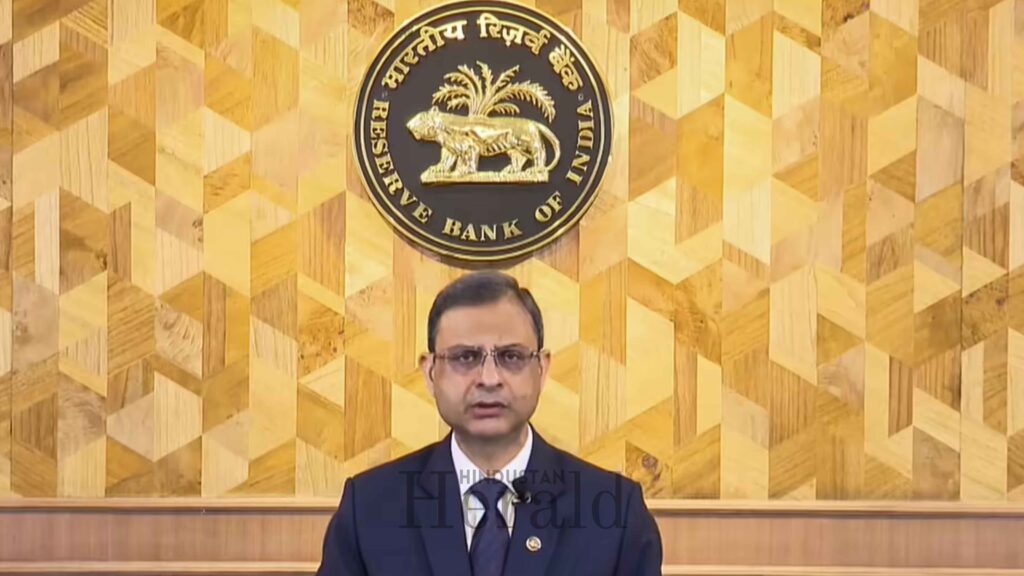
Reserve Bank of India Governor Sanjay Malhotra said this week that if the Strait remains disrupted for several more months, the central bank may have to intervene with monetary policy. Fuel price hikes, which the government has so far managed to avoid, are likely to become unavoidable in the second quarter.
Indian refiners have been doing what they can. Indian Oil Corporation, Bharat Petroleum and Hindustan Petroleum have been negotiating emergency crude purchases from the US, Russia and West Africa. Volumes can be sourced. But the math is punishing. Longer shipping routes, elevated freight charges, war-risk insurance premiums that have gone through the roof. Every barrel landing at an Indian refinery now costs materially more than it did twelve months ago. Chabahar is a separate wound entirely.
India invested heavily in that southeastern Iranian port, not just as a trade move but as a long-term strategic bet, a corridor into Afghanistan and Central Asia that bypassed Pakistan. A genuine alternative to overdependence on Pakistani routes. In September 2025, the US State Department revoked the sanctions exemption that had protected Chabahar operations. A limited reprieve was issued, running only until April 26, 2026.
That deadline has passed. No new exemption has been announced. Nobody in New Delhi is saying what happens to the investment now. The silence itself is a kind of answer. And then there is a quieter story that rarely reaches the front pages.
Indian sailors have been stranded on vessels near Iranian waters for weeks. Ships unable to move safely. Waters that have become genuinely hostile. Families in Kerala, Tamil Nadu and Andhra Pradesh sitting by phones, waiting for calls that are sometimes delayed by days. As reported by Reuters earlier this month, some sailors are still waiting to come home. That is the human cost that does not show up in GDP forecasts.
India’s Position and How Long It Can Hold
New Delhi has responded to all of this with its standard instrument: careful, calibrated neutrality. The Ministry of External Affairs has called for restraint and dialogue. It has not condemned the American strikes. It has not condemned Iranian mine-laying either. It has kept lines open to both Washington and Tehran simultaneously, treating the crisis as something to be navigated rather than adjudicated.
India has pulled this off before. Through the first Gulf War, through the 2003 Iraq invasion, through the 2019-2020 US-Iran standoff following the killing of Qasem Soleimani. The formula has worked because both sides generally valued Indian neutrality more than they needed Indian alignment. This moment feels different in degree, even if not entirely in kind.
Washington is watching whether India uses the Chabahar situation to distance itself from Tehran. Tehran is watching whether India’s deepening defence ties with the US signal a fundamental shift in alignment. Both readings are somewhat unfair to what India is actually doing, which is trying to protect its energy security and economic stability while avoiding a forced choice between two powers it needs for different reasons. But fairness does not really factor into how major powers read each other during a hot conflict.
The Quad framework, bilateral defence agreements with Washington and a growing convergence of strategic interests in the Indo-Pacific pull India one way. Deep historical ties with Iran, the Chabahar investment, the diaspora connections and a fundamental wariness about American reliability as an energy partner pull the other way. South Block has managed this tension through studied ambiguity. How long that remains a viable strategy depends entirely on how long this conflict drags on and how much worse the pressure gets.
Where Things Actually Stand
The negotiations in Doha have not collapsed. That much is confirmed. But Trump wants Iran’s uranium gone entirely. Iran will not surrender its enrichment programme. Those two positions have not moved toward each other in any meaningful way across months of talks, military strikes, ceasefire agreements and now renewed skirmishing in the Strait.
The IRGC laid mines on Monday morning. The US struck back within hours. The ceasefire held in name only, and barely even in name. The Strait is open today. Ships are moving through it, but carefully, with radar watching and insurers deeply nervous. Fires were still burning at Bandar Abbas port infrastructure as recently as this week, according to maritime intelligence firms tracking vessel movements in the area.
There is no clean resolution visible from where things stand right now. No obvious path from Monday’s explosions to a signed agreement and a stable Gulf. The bombing last June did not end it. The ceasefire did not end it. The Doha talks have not ended it.
What remains is a conflict frozen just below the boiling point, capable of heating up again at any moment, with consequences that fall heaviest not on Washington or Tehran, but on every country that depends on that narrow stretch of water between the Persian Gulf and the Gulf of Oman.
For India, that is not an abstraction. It is Rs 1,000 crore a day. It is a falling rupee. It is a Chabahar investment in legal limbo. It is sailors who just want to come home. The tightrope New Delhi is walking has always been thin. Right now it feels thinner than ever.
Stay ahead with Hindustan Herald — bringing you trusted news, sharp analysis, and stories that matter across Politics, Business, Technology, Sports, Entertainment, Lifestyle, and more.
Connect with us on Facebook, Instagram, X (Twitter), LinkedIn, YouTube, and join our Telegram community @hindustanherald for real-time updates.

Tracking world politics, global markets, trade movements, policy decisions, and the changing balance of economic power.
- Shelesh Joshi

- Shelesh Joshi
- Shelesh Joshi
- Shelesh Joshi




Specializes in South Asian geopolitics and global diplomacy, bringing in-depth analysis on international relations.
- Rajiv Menon
- Rajiv Menon
- Rajiv Menon
- Rajiv Menon