
 By Ananya Sharma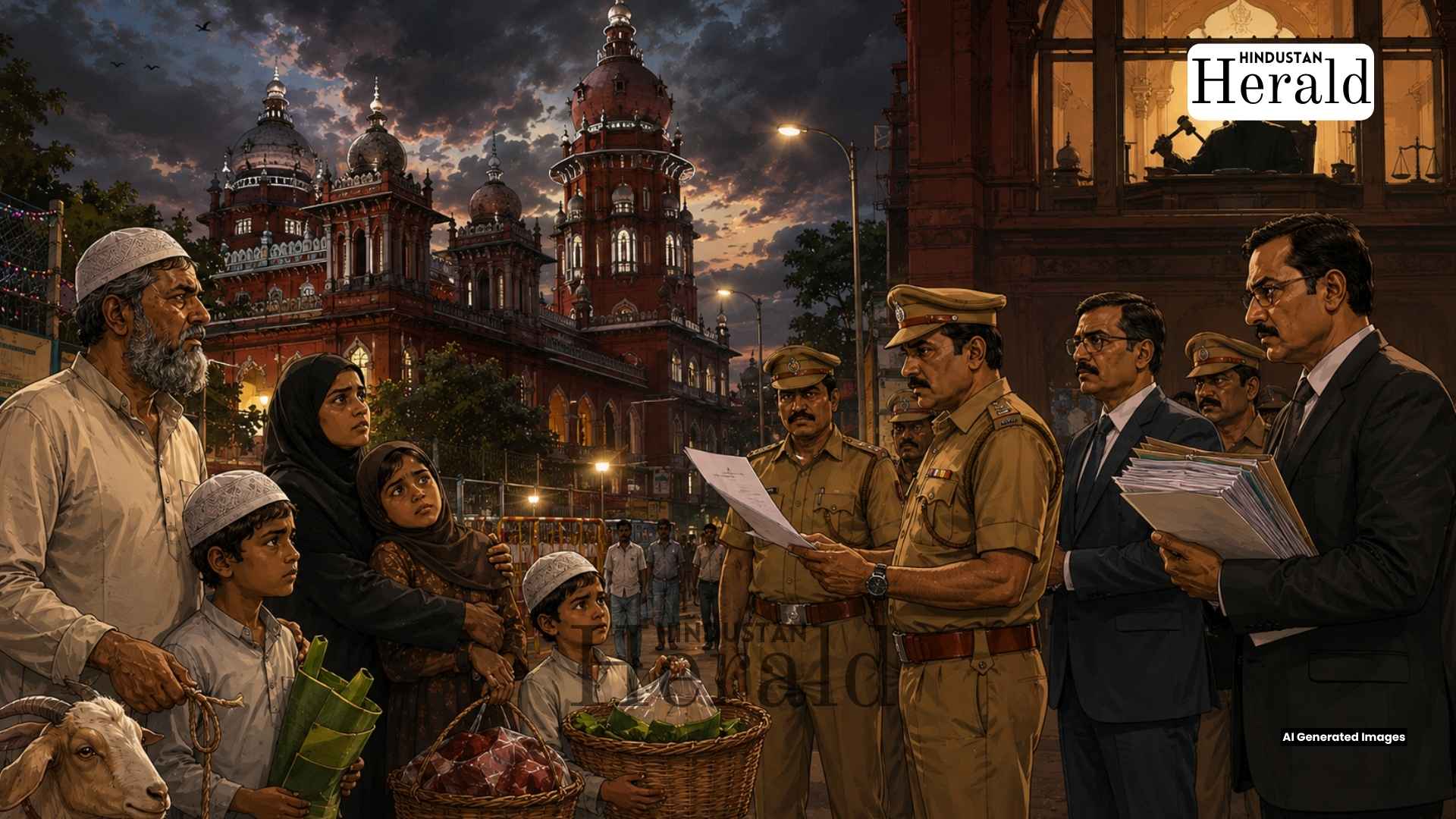
Chennai, May 28: Less than twenty-four hours before one of the biggest festivals in the Muslim calendar, the Madras High Court dropped an order that nobody in Tamil Nadu’s government was prepared for.
No cow. No calf. Not tonight. Not tomorrow during Bakrid. Not any day after that either.
The order landed on Wednesday evening. Eid-ul-Adha was Thursday morning. The state had two days to prove it had listened.
So What Actually Happened
A man named K. Surya Prasanth, youth wing secretary of a Hindu organisation called Indu Makkal Katchi, walked into the High Court with a complaint that started out looking fairly local. His problem was specific. In Coimbatore, he said, people had started putting up temporary sheds in open areas, not licensed slaughterhouses, just makeshift structures, and cows were going to be slaughtered there during Bakrid.
That kind of petition could have stayed a Coimbatore matter. It did not.
Two judges, Justice G R Swaminathan and Justice V Lakshminarayanan, were sitting on the summer vacation bench that day. They heard the case and did not stop at Coimbatore. They went statewide.
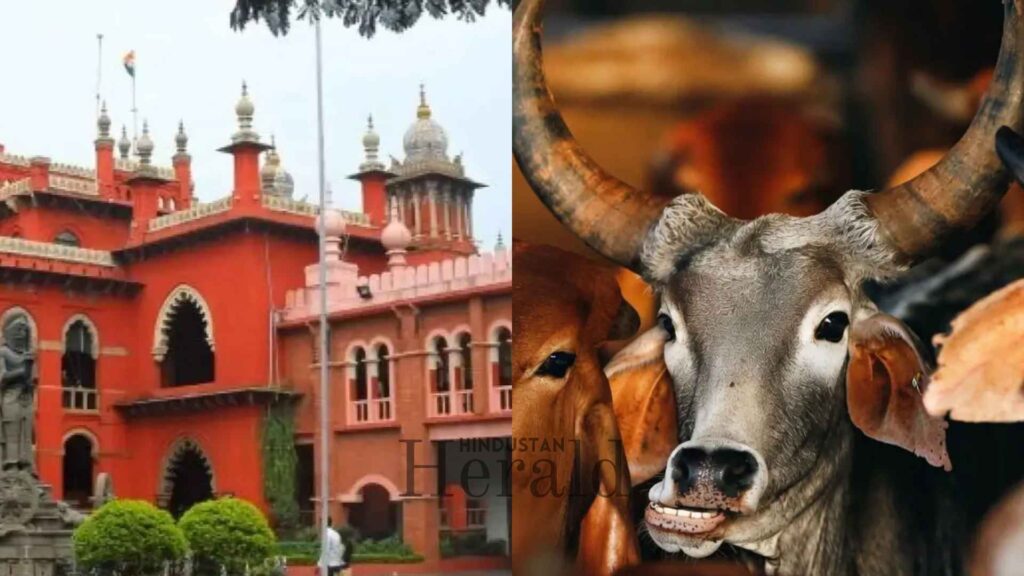
The Chief Secretary of Tamil Nadu, the most senior bureaucrat running the state government, was personally directed to ensure no cow gets slaughtered anywhere in the state. The Additional Director General of Police received the same instruction. Every district collector, every police officer down the chain, all of them were expected to fall in line overnight.
And then the court said something that made the whole thing feel even more urgent: come back on Friday with a compliance report. Two days. That is all the time the state got.
The Fifty-Year-Old Law Nobody Was Enforcing
Here is something that surprises most people when they hear it. Tamil Nadu already had a ban on cow and calf slaughter. This is not new law. There was a Government Order issued in 1976, fifty years ago, that prohibited it across the state.
The problem was simple. Nobody really enforced it consistently. Around Bakrid, or during other occasions when the question came up, the rule got quietly set aside in many places. Slaughter happened. Authorities looked elsewhere. Year after year.
What the Madras High Court did on Wednesday was pick up that fifty-year-old order, dust it off, and say: this carries the force of law. The bench also invoked Article 48 of the Constitution of India, a Directive Principle that asks state governments to protect cows and other milch and draught cattle from slaughter. While Directive Principles are not enforceable the way fundamental rights are, courts across India have used them for decades to back up animal protection decisions.
The court also flagged something practical that often gets missed in the larger debate. Under the Tamil Nadu Urban Local Bodies Rules, 2023, even goats and sheep are only legally permitted to be slaughtered inside licensed slaughterhouses. Not open plots. Not temporary sheds assembled for a festival. So the Coimbatore structures were already on the wrong side of the law on that count alone, quite apart from the cow question.
The Observation That Has Everyone Arguing
The legal scaffolding is one part of the story. What really set the conversation off was the court’s position on Bakrid itself.
The bench stated plainly that sacrificing a cow on Bakrid is not a religious requirement in Islam. Not mandatory. Not essential to the faith. The judges leaned on a Supreme Court judgment from 1958, the case of Mohammed Hanif Quareshi versus State of Bihar, where the apex court had held that slaughtering a cow on this occasion is not an obligatory act that every Muslim must perform to practice their religion. Justice Swaminathan also noted that several Muslim rulers across history had themselves banned cow slaughter during their reigns.
Now, this is where things get genuinely complicated.
There is a long-running argument in Indian legal circles about whether judges should be in the business of deciding what is or is not essential to any religion at all. Think about it plainly. If a court told members of any other community that a particular ritual was not really central to their faith, that it was optional, that they could skip it without any real loss to their religious identity, the reaction would be immediate and fierce. The same logic applies here.
Many legal scholars have said for years that this so-called essential religious practice test, where courts decide what sits at the core of a religion and what does not, puts judges in a position they were never meant to occupy. Judges are not theologians. They are not religious scholars. Deciding what is or is not fundamental to someone’s faith is exactly the kind of question courts arguably have no business answering.
That said, the 1958 Supreme Court ruling the bench cited does exist. The court did not fabricate authority. But applying that ruling on the eve of a major festival, leaving communities less than a day to adapt, is the kind of thing that leaves a difficult feeling behind even among people who hold no strong opinion on the slaughter question itself.
A Word About The Judge
Honestly, you cannot read this order without understanding who wrote it.
Justice G R Swaminathan is, by any measure, a polarising figure on the Indian bench. He is known for quoting films inside his judgments. He has spoken openly about his association with Hindu Munnani, a Hindu organisation in Tamil Nadu. His career has produced rulings that sit at completely opposite ends of public opinion.
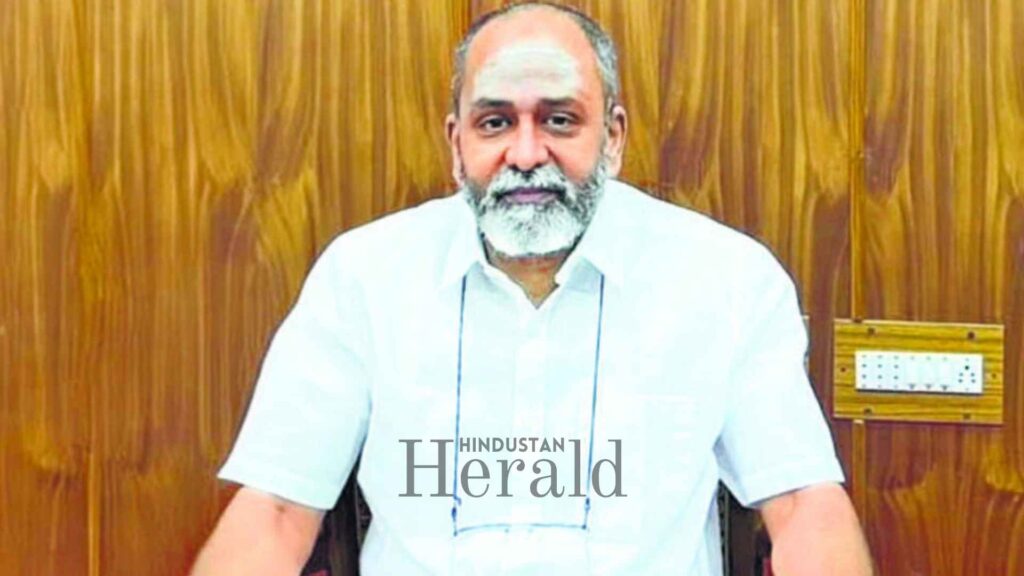
One of his orders banned unnecessary and harmful medical procedures on intersex children. That ruling was genuinely celebrated, and rightly so. Another order sent a whistleblower named Savukku Shankar to jail on contempt charges, a decision that drew sharp and widespread criticism. More recently, the Opposition I.N.D.I.A. Bloc went so far as to submit a formal impeachment petition against him to the Lok Sabha Speaker, an extreme step that happens very rarely in Indian judicial history.
The people who support Wednesday’s order will say he simply enforced a law that already existed, that the 1976 order was always there and the court merely gave it teeth. The people who oppose it will say the timing and the approach are part of a pattern that goes well beyond routine enforcement.
Both arguments are available. Neither disappears under scrutiny. That is the honest position.
What This Actually Means For Families Celebrating Bakrid
It is worth stepping back from the legal debate for a moment and thinking about what Bakrid actually is for the people who celebrate it.
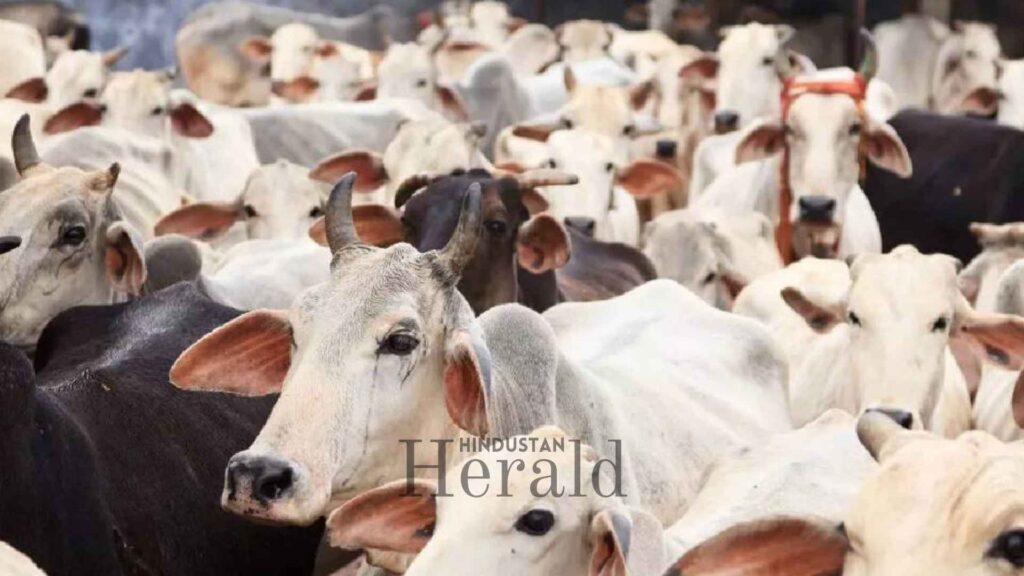
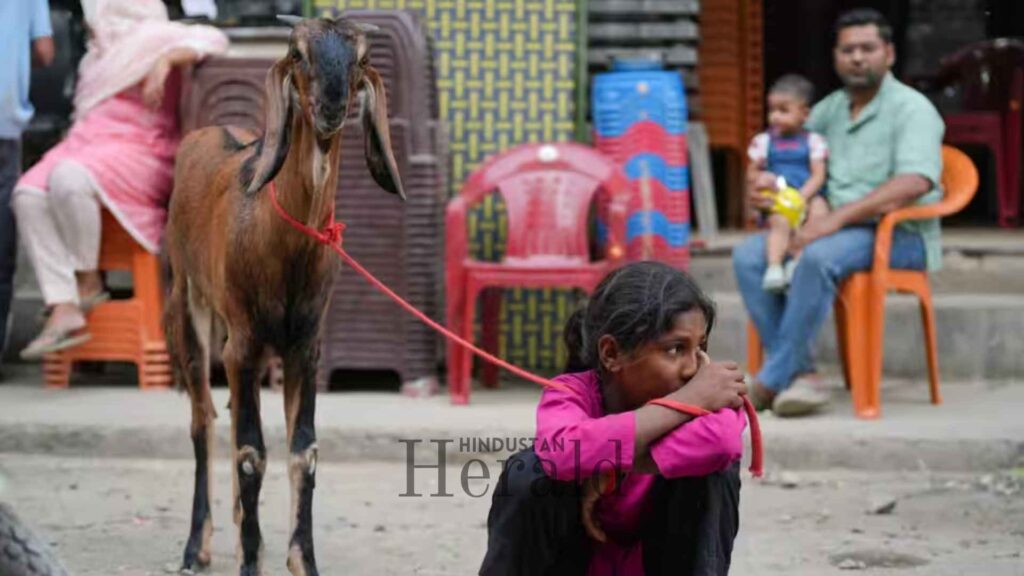
Eid-ul-Adha is not a casual occasion. It is one of the most emotionally weighted days in a Muslim family’s year. It commemorates the story of Ibrahim’s willingness to sacrifice his own son, and the tradition of Qurbani, animal sacrifice, is a central expression of devotion on that day. Families save up for the animal weeks in advance. Arrangements are made. Extended families gather. In terms of its emotional and cultural significance, it occupies the kind of place in Muslim homes that Diwali holds in Hindu ones or Pongal does in Tamil homes.
Across Tamil Nadu, in Vellore, Nagapattinam, Madurai, Chennai, and the Muslim-majority pockets of Coimbatore, families had been planning this for weeks. Animals had been purchased. Spaces had been arranged. Community plans were in place.
Then the court order arrived on Wednesday evening.
The court did not prohibit all animal sacrifice. Goats and sheep remain permissible, but strictly inside licensed slaughterhouses. Still, the scramble to understand exactly what was now permitted and what was not, on the night before the festival, is not a small thing. That kind of last-minute uncertainty carries a real cost, one that does not show up in any legal filing.
Why Tamil Nadu Is A Different Case Entirely
Something important to understand here is that Tamil Nadu is not Uttar Pradesh. It is not Gujarat or Madhya Pradesh, states where aggressive anti-cow slaughter laws have existed for years and where enforcement has sometimes turned violent.
Tamil Nadu has historically taken a more grounded, practical approach. The state permits the slaughter of bulls and bullocks above a certain age, recognising their role in the agricultural economy and the cattle trade. The 1976 order that the court cited covers only cows and calves specifically. That line still holds. This is not a total cattle slaughter ban imposed overnight.
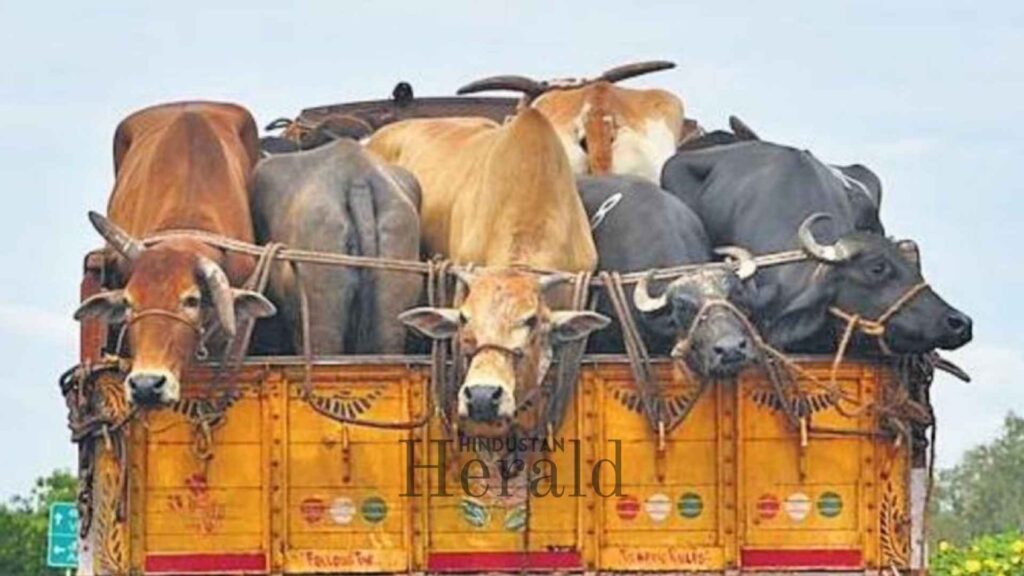
But in the middle of Bakrid season, with emotions running high on both sides, that legal distinction can disappear very quickly in the noise.
The Government’s Very Uncomfortable Wednesday Night
The DMK government under Chief Minister M K Stalin has spent years building its political identity around minority rights, social justice, and resistance to what it frames as majoritarian politics being pushed from the centre. These are not empty positions. The party has clashed with the central government repeatedly over cultural, religious, and linguistic questions.
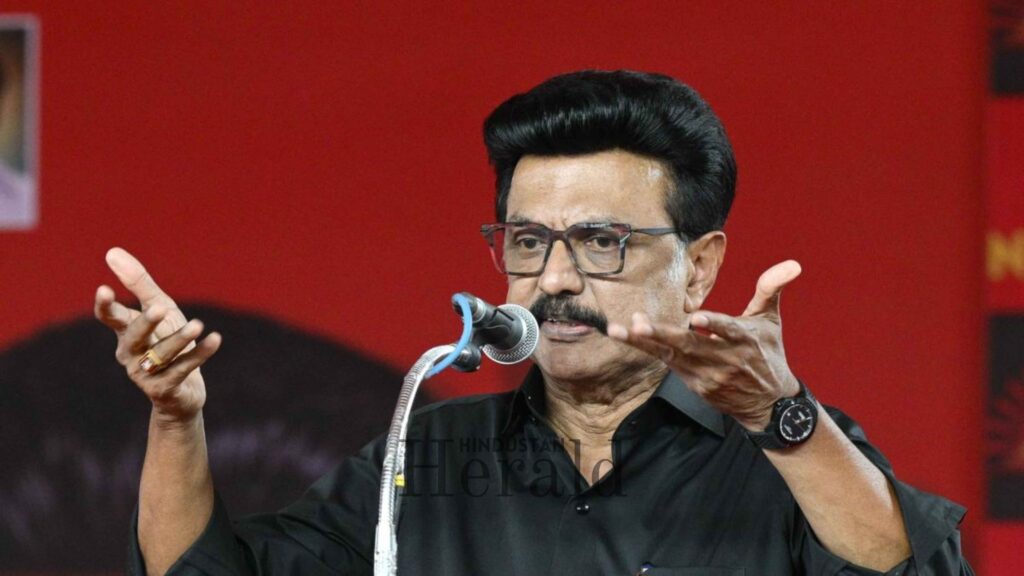
And yet, on Wednesday night, that same government was sitting under a court directive to enforce a cow slaughter ban before Bakrid morning. No immediate legal challenge was filed. No strong public statement pushed back against the direction. The state said almost nothing.
That silence was its own kind of response. Whether the government was choosing compliance to avoid a contempt situation, or calculating that a quiet response was the least damaging path politically, nobody said clearly. What was visible was the discomfort, and it was hard to miss.
The Pattern That Keeps Repeating
This order does not come from nowhere. Indian courts have been stepping into the space where religion, culture, and law intersect with growing frequency over the past decade.
The Jallikattu controversy showed how explosive these intersections can get in Tamil Nadu specifically. That dispute went all the way to the Supreme Court, triggered mass protests along the Marina Beach, and eventually forced Parliament to intervene. Court orders touching on mosque loudspeakers, religious processions through mixed neighbourhoods, idol immersion in water bodies, all of these have dragged judges into questions that were once considered firmly political.
A growing number of legal scholars and civil society voices argue that the judiciary has started occupying spaces it was not designed for. That elected governments, answerable to voters at election time, should be making these calls, not judges sitting on vacation benches hearing petitions from party functionaries. Whether that argument is right or wrong is a separate question. But it is one that Wednesday’s order will keep feeding for some time to come.
Because when a court order arrives the night before a major religious festival, affects millions of people across a state, and rests on a fifty-year-old government document that was largely ignored for decades, the question of whether the court should have moved this way matters just as much as whether it had the legal standing to do so.
For now, Tamil Nadu’s government has until Friday to tell the court exactly what it did. That compliance report will be read very carefully indeed.
Stay ahead with Hindustan Herald — bringing you trusted news, sharp analysis, and stories that matter across Politics, Business, Technology, Sports, Entertainment, Lifestyle, and more.
Connect with us on Facebook, Instagram, X (Twitter), LinkedIn, YouTube, and join our Telegram community @hindustanherald for real-time updates.

Covers Indian politics, governance, and policy developments with over a decade of experience in political reporting.
- Ananya Sharma

- Ananya Sharma
- Ananya Sharma
- Ananya Sharma




 Sandeep Verma