 By Shelesh Joshi and Rajiv Menon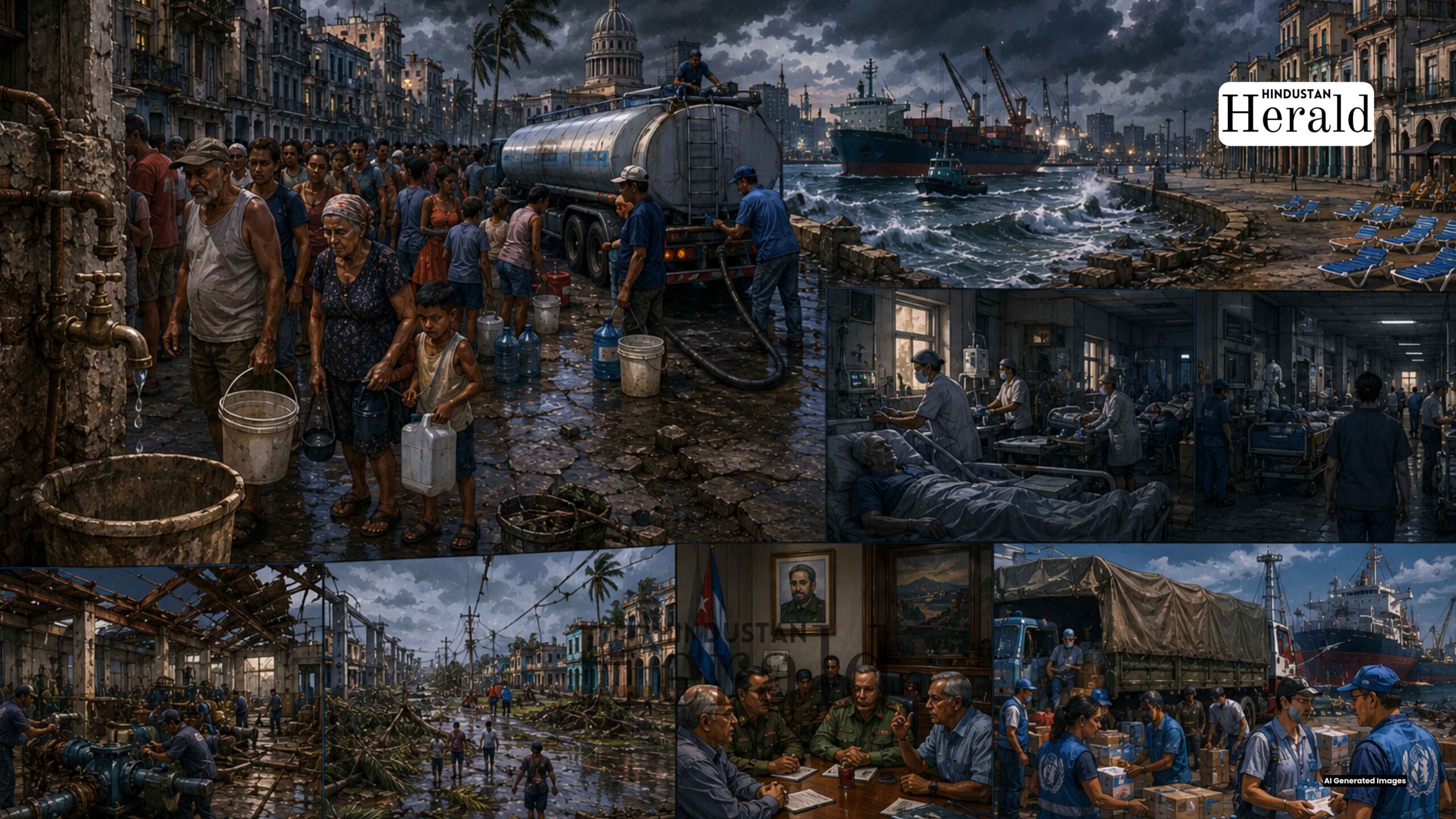
New Delhi, May 29: Cuba is running out of water. Say that again slowly, because it is easy to read past it. An entire country. Running out of water. Not in a war zone. Not in a desert. In the Caribbean, surrounded by ocean, in a country that once had functioning civic infrastructure and a healthcare system that the rest of the developing world genuiCuba is running out of water. The Cuba Water Crisis is no longer a warning. It is here.
Say that again slowly, because it is easy to read past it. An entire country. Running out of water. Not in a war zone. Not in a desert. In the Caribbean, surrounded by ocean, in a country that once had functioning civic infrastructure and a healthcare system that the rest of the developing world genuinely admired. That is gone now. Or going, fast.
Close to 3 million people on the island wake up every single morning not knowing whether their taps will produce anything. Some days there is a trickle. Most days there is nothing. And the days of nothing are stretching longer and coming more frequently, and nobody in any position of real power seems to be in any particular hurry to stop it.nely admired. That is gone now. Or going, fast.
Close to 3 million people on the island wake up every single morning not knowing whether their taps will produce anything. Some days there is a trickle. Most days there is nothing. And the days of nothing are stretching longer and coming more frequently, and nobody in any position of real power seems to be in any particular hurry to stop it.
Quick Summary
- Cuba’s water system is running at just 37% of its required fuel capacity, leaving nearly 3 million people without daily water access.
- US President Donald Trump signed an executive order in January 2026 threatening tariffs on any country selling oil to Cuba, effectively cutting off the island’s fuel supply.
- The UN has flagged a funding gap of $68 million to address Cuba’s humanitarian crisis, with only $26.2 million mobilised so far.
- Electricity shortages have forced Cuban medical authorities to postpone over 96,000 surgeries since the crisis deepened.
- International tourist arrivals to Cuba collapsed to 1.8 million in 2025, down from a peak of 4.6 million in 2018, gutting the island’s primary source of hard currency.
- India flew in approximately 20 tonnes of humanitarian relief, including a BHISHM Medical Trauma Unit, following Hurricane Melissa in October 2025.
Cuba Water Crisis Begins With a Single Number: Thirty-Seven Percent
Antonio Rodriguez runs Cuba’s National Institute of Water Resources, the state body responsible for keeping the island’s water systems alive. This week, he sat at a government roundtable and said something that should have landed harder than it did in international coverage. The water system, he said, is running at 37% of its required fuel capacity. Thirty-seven percent.
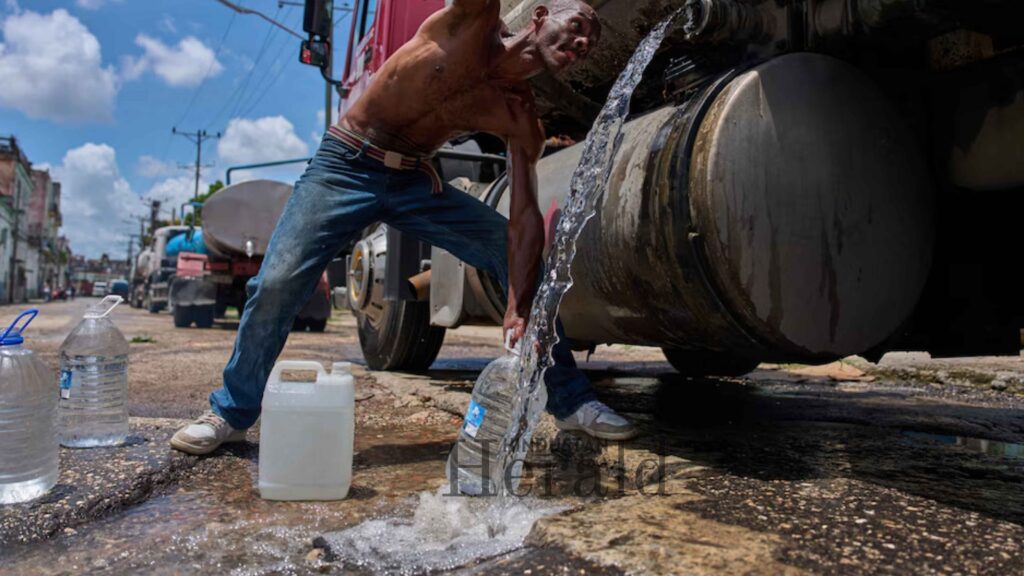
Not enough fuel to pump water properly. Not enough to send repair crews when pipes burst. Not enough to clean the tanks, clear the drains, test what comes out before it reaches people’s homes. Rodriguez was not being alarmist. He was being clinical. Water, he explained, is one of the country’s largest energy consumers. Pull the fuel out and the whole chain collapses, quietly and completely.
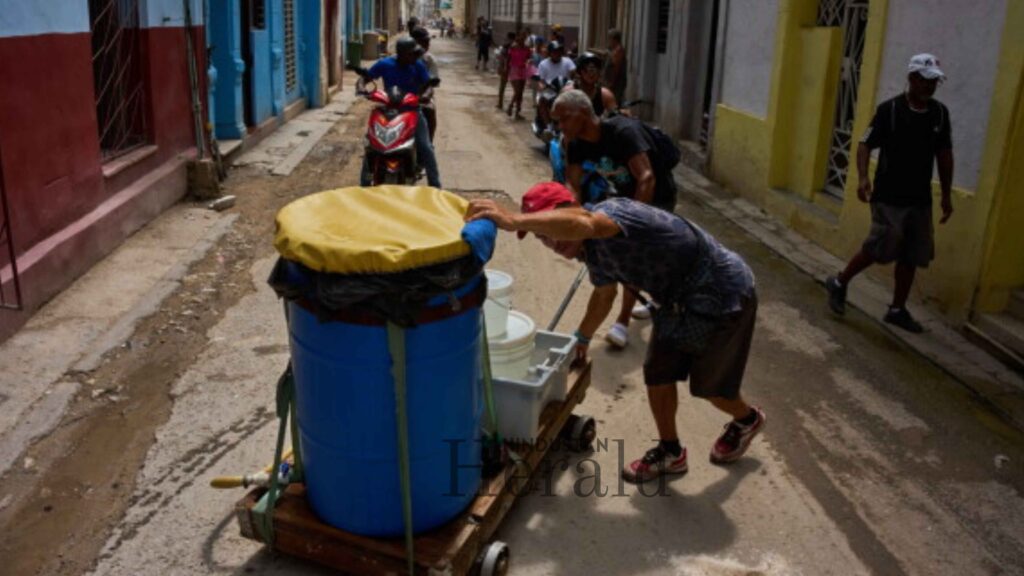
The water shortage in Cuba that millions are living through right now is not an abstraction. It shows up at six in the morning, when a person stands at a kitchen tap in Havana, waiting, tapping it again, waiting some more, and then quietly placing a bucket underneath it just in case something comes through later. That is a real person’s morning now. Millions of real people’s mornings.
How Did It Get Here
You have to go back to January to understand the shape of this disaster. Early January, US forces struck targets in Venezuela. Cuba, which had security personnel stationed there, lost 32 of them in those strikes. Havana declared national mourning. Washington, rather than de-escalating, moved in the opposite direction entirely. President Trump signed an executive order threatening tariffs on any country that sold or transferred oil to Cuba. Any country. Directly or indirectly. The message was not subtle. It was designed not to be.
Mexico, which had been supplying Cuba with fuel reliably for years, suspended shipments almost immediately. It had no real choice. Venezuela, the other major supplier and Cuba’s old ideological partner, was in post-strike chaos and could not help anyone. Cuba itself only produces around 40% of the fuel it needs domestically. The remaining 60% vanished in a matter of weeks.
What followed was not a gradual tightening. It was a collapse. Water shortages worsen across Cuba with every passing week, and January is when that story truly began. Blackouts that were already running 10 to 12 hours a day pushed past 20 hours. Petrol stations ran dry. Buses stopped. Banks cut their hours. Hospitals began making the kind of decisions you never want a hospital to have to make, about which machines stay on and which ones don’t. And then the water stopped
The Teacher on the Street
There is one detail from the Associated Press reporting out of Havana that has stayed with me more than any official statement or UN figure. Her name is Magaly Ribial. She is 60 years old and she teaches school. Reporters found her standing next to a water tanker truck that had finally arrived on her street. She had been waiting five days.
Five days without running water in her home. Five days of rationing whatever was left in containers, using it only for drinking and cooking, skipping everything else. When she spoke to the journalists, she did not scream or cry or rage at the government or at Washington. She just looked tired.
That is the thing about a crisis that has been going on long enough. The anger burns off eventually. What is left is a kind of heavy, practical exhaustion. You stop expecting things to be fixed. You start calculating how long what you have will last.
The tanker trucks roll through Havana neighbourhoods on schedules nobody can actually predict. People line up with whatever containers they have and fill them when the truck is there and make that water last until the next time. Some neighbourhoods wait two days. Some wait five. Some, reportedly, longer.
Rodriguez made the point in his roundtable that this is not only about drinking water failing to reach people’s homes. It is about an entire civic system going dark. The vehicles that respond when pipes burst need fuel. The machines that clear blocked sewage lines need fuel. The testing equipment that checks water quality before it enters the distribution network needs fuel. When the fuel is gone, none of that happens.
Pipes crack and nobody comes. Drains block and nobody clears them. The water that does eventually reach some taps may carry risks that a functioning system would have caught and neutralised. This is not just a scarcity problem. It is an infrastructure unravelling problem, and those are considerably harder to reverse.
The Hurricane Nobody Has Forgotten
The fuel crisis did not arrive on a clean slate either. Hurricane Melissa hit Cuba in October 2025 and hit it badly. The kind of storm that does not just damage things but sets recovery back by years. Water infrastructure, power lines, coastal barriers, roads, public buildings across multiple provinces were damaged or flattened. The Cuban government, already operating with an empty treasury and worn-out human resources, was never in a position to absorb that scale of damage cleanly. What Melissa did was push a country that was already leaning hard against a wall through that wall entirely.
The repairs that should have followed the hurricane have not happened, because the trucks and machinery needed to carry them out require fuel that does not exist. The international community sent condolences and some aid. India, notably, flew in around 20 tonnes of relief material including a medical trauma unit, generators, medicines, and solar lanterns within days of the storm. That mattered. But it was not enough to fix what Melissa broke on top of what was already broken.
Francisco Pichon, the UN’s man in Havana, has been saying clearly and repeatedly that humanitarian needs on the island have gotten worse since the end of March, not better. More than 96,000 surgeries have been postponed because hospitals cannot maintain reliable power. Children’s immunisation programmes have slipped. The UN has pulled together about $26 million in response funding. It needs $68 million. That gap is not closing.
The Words the UN Used
The Office of the UN High Commissioner for Human Rights put out a formal statement on the American executive order. They did not wrap it in diplomatic softness. They said that measures likely to result in shortages of essential goods may amount to the collective punishment of civilians. Collective punishment. Under international human rights law.
That is not a phrase UN bodies use carelessly. It carries real legal and moral weight. It is the kind of language that gets used in discussions about Gaza, about the Iraq sanctions of the 1990s that killed hundreds of thousands of civilians, about what economic siege warfare does to the people caught inside it. When experts at that level apply it to Cuba, they are saying something specific and serious. It is also worth sitting with the fact that this is not a straightforward story of one villain and one victim.
Most serious analysts, including those deeply critical of US policy, acknowledge that the Cuban government’s own decisions across six decades created much of the fragility that is now being exploited. A state that managed its economy better, that invested in infrastructure, that allowed more economic freedom, would have far greater capacity to absorb an external shock of this kind. Havana’s failures are real and they are relevant.
But none of that changes what a 60-year-old teacher experiences when the water does not come for five days. The reasons for her suffering are complicated. The suffering itself is not.
The Argument Nobody Is Really Having
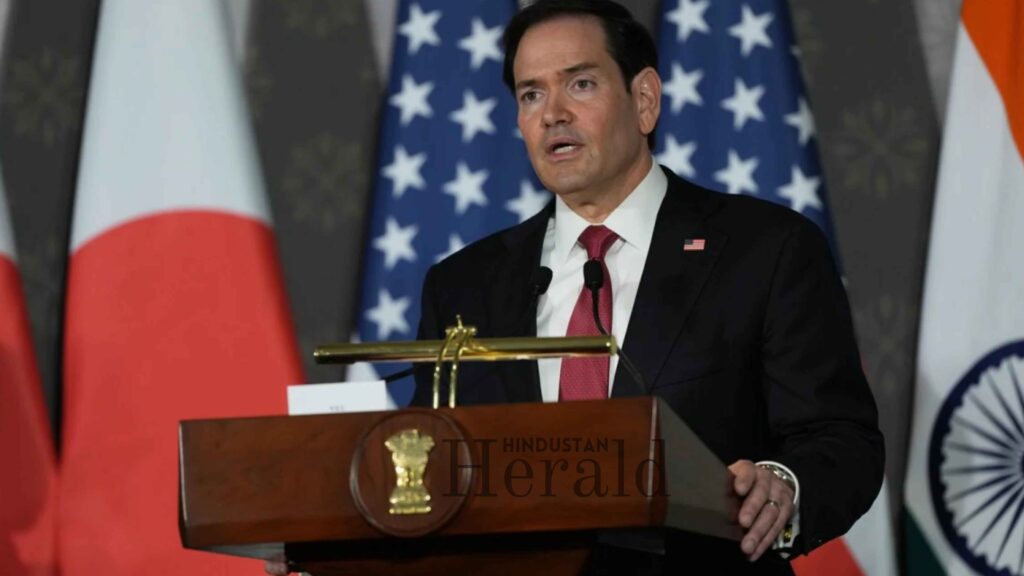
Marco Rubio went public with a claim that the US had offered Cuba $100 million in humanitarian aid and Cuba had turned it down. Cuba’s Foreign Minister Bruno Rodriguez Parrilla called it an outright lie. He said Rubio was fabricating the story to deceive both the Cuban and American publics. He did not say this gently.
The truth of who said what to whom in whatever back channel may exist between these two governments is impossible to verify from the outside. But watching the exchange, what becomes clear is that both sides have stopped speaking to each other and started speaking past each other, to audiences, to history, to whoever is keeping score internationally. The Cuban people queuing for water are not part of that conversation. They are its subject matter. There is a difference.
Russia sent a single oil shipment to Cuba in late March. Washington apparently allowed it through. The UN noted its arrival and then noted, carefully, that the situation on the island remains acute and persistent regardless. One tanker does not fix three months of blockade. It is a gesture. In Havana, people know the difference between a gesture and a solution.
The Tourism Numbers Tell Their Own Story
None of this fell out of nowhere. Cuba’s economy has been hollowing out for years, steadily, before the 2026 crisis gave the collapse a sharper and more dramatic final act. Tourist arrivals, which are where Cuba earns the hard currency it needs to buy fuel and food and medicine on international markets, peaked at 4.6 million visitors in 2018. Last year they came in at 1.8 million, down nearly 18% from the year before. The government had set a target of 2.6 million. It missed by nearly a million people.
Without tourists, there is no foreign exchange. Without foreign exchange, there is no fuel. Without fuel, the lights go out. It really is that simple and that terrible. Air France suspended flights between Paris and Havana from late March, citing jet fuel shortages on the island. When a major European airline pulls a route not for political reasons but because it literally cannot refuel the plane, you are looking at a crisis that has moved well beyond diplomacy and into basic operational reality.
Costa Rica cut diplomatic ties with Cuba in March. Ecuador expelled the Cuban ambassador and his full diplomatic staff. Honduras cancelled a decade-old cooperation deal that had Cuban doctors working in the country. Cuba’s regional network, never particularly robust, has frayed badly in 2026. What remains, largely, is Russia and whatever the UN can mobilise.
What This Means for India
India does not make noise about Cuba. Never has. It votes the right way at the UN, in favour of ending the embargo, and then moves on. But it showed up after Melissa. Twenty tonnes of supplies on a special aircraft, a BHISHM medical unit, generators, medicines, solar lanterns. The embassy in Havana confirmed it and said India stands with the Cuban people. Low-key, practical, genuine. That is how India tends to operate in these situations and it is generally the better approach.
The harder question for New Delhi is what this crisis signals about a tool Washington is increasingly comfortable using. Secondary tariffs. The threat to financially punish any country that trades with a state Washington has decided to squeeze. India knows this tool. It felt a version of it after the Ukraine invasion when American officials pushed hard on New Delhi to stop buying Russian crude. India pushed back, framed it as energy security and national interest, and largely held its position.
The Cuba situation takes that instrument further. If even a country as small and economically marginal as Cuba cannot find willing fuel suppliers without those suppliers facing American tariff threats, the question for larger economies like India is obvious. Where does this stop? What is the limit?
A bipartisan group of US senators wrote to Trump in February asking him to end the oil embargo. They warned specifically of water and sanitation failure, medical collapse, food insecurity, and a refugee wave that could unsettle the wider Caribbean. They were not speculating. They were reading the trajectory accurately. Nothing changed. Every outcome they described is now happening.
The Bucket Under the Tap
Somewhere in Havana right now, somebody has a bucket under a tap. Not because they are being dramatic. Not because they are making a political point. Because that is the rational thing to do in a city where water comes when it comes and you have learned the hard way not to assume it will come when you need it.
That bucket represents something. It represents a country that built infrastructure, trained doctors, taught its people to read, and told the world for decades that it had figured out an alternative way of organising society. Whatever you think of the Cuban government, and there is plenty to think, none of it flattering, that infrastructure existed. Those hospitals worked. The water came.
Now the bucket sits under the tap and the tap gives nothing and the teacher on the street has been waiting five days and the surgeon has postponed the operation again because the power cut out again and somewhere a child did not get the vaccination it was due.
Cuba is not at war. It is just running out of everything, slowly and then quickly, under the weight of its own government’s failures and Washington’s deliberate pressure and a hurricane that nobody fully recovered from and an economy that ran out of road years before the current crisis made it impossible to ignore. The international community is watching. The UN is asking for money it is not receiving. Russia sent one boat. India sent one plane of supplies months ago. And in Havana, the bucket sits under the tap. Just in case.
Stay ahead with Hindustan Herald — bringing you trusted news, sharp analysis, and stories that matter across Politics, Business, Technology, Sports, Entertainment, Lifestyle, and more.
Connect with us on Facebook, Instagram, X (Twitter), LinkedIn, YouTube, and join our Telegram community @hindustanherald for real-time updates.

Tracking world politics, global markets, trade movements, policy decisions, and the changing balance of economic power.
- Shelesh Joshi

- Shelesh Joshi
- Shelesh Joshi
- Shelesh Joshi


Specializes in South Asian geopolitics and global diplomacy, bringing in-depth analysis on international relations.
- Rajiv Menon
- Rajiv Menon
- Rajiv Menon
- Rajiv Menon