 By Shelesh Joshi and Rajiv Menon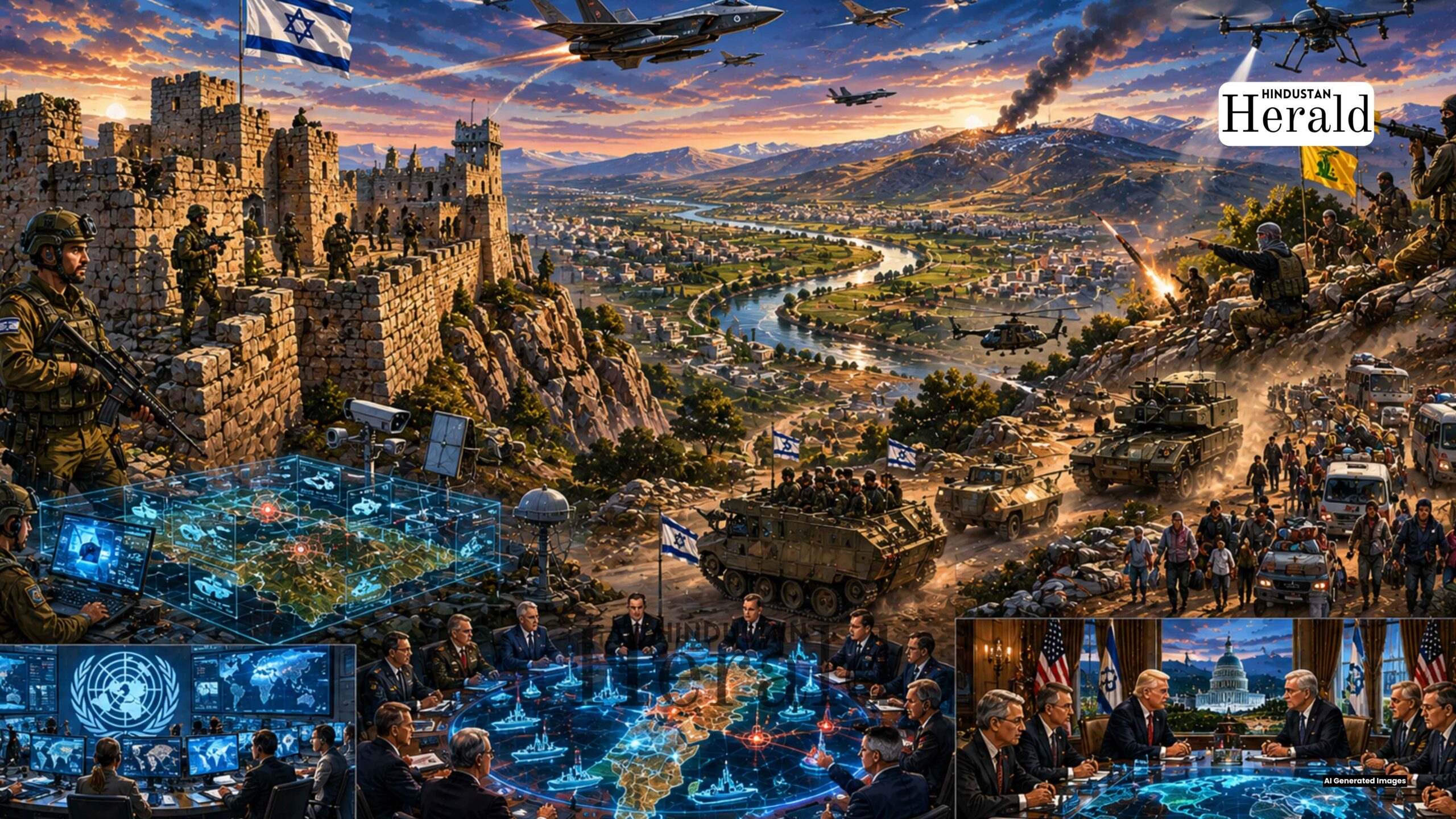
New Delhi, June 1: The photograph came out early Sunday morning and spread fast. Israeli soldiers standing inside Beaufort Castle. The flag up. Ancient stone walls around them. And below, a valley so green it looks almost peaceful from that height. This is the Israel Lebanon War 2026 at its most raw a medieval fortress seized, a ceasefire ignored, and peace talks scheduled in Washington just two days away.
Whoever released that image from the military press unit knew exactly what they were doing. Beaufort is not just a castle. It is a name that means something specific in this region, on both sides of the border, passed down through generations the way certain names are, without needing much explanation.
But photographs do not tell the whole story. They leave out the villages bombed for days before those soldiers made it up that hill. They leave out the families from Nabatiyeh who grabbed what they could and drove away after the Israeli military told them to. They say nothing about the ceasefire that has been technically in place since April, signed by governments, quietly ignored by everyone with a gun. And they say absolutely nothing about the peace talks scheduled in Washington for Tuesday. Two days from now. Less, depending on when you are reading this. The offensive and the peace process are running side by side. That is not a coincidence and nobody serious is pretending it is.
Quick Summary
- Israeli forces captured Beaufort Castle on Sunday, May 31, marking the deepest ground incursion into Lebanese territory in over 26 years
- The fortress sits just a few kilometres north of the Israeli border and overlooks the Litani River valley, giving Israeli forces a commanding strategic position over southern Lebanon
- Israeli troops are now approximately 5 kilometres from Nabatiyeh, one of southern Lebanon’s largest cities, with evacuation orders already issued to its residents
- France formally requested an emergency UN Security Council meeting after the capture, with Foreign Minister Jean-Noel Barrot calling the Israeli advance unjustifiable
- The offensive is happening despite a nominal ceasefire in place since April 17, an agreement that Hezbollah never signed
- Washington peace talks between Israel and Lebanon are scheduled to begin on Tuesday, June 2, just 48 hours after the castle fell
That Hill Has Seen Everything
There is something people say about this part of the world, somewhere between a joke and a sigh. The Middle East does not have history. It has a present tense that keeps running the same scenes with different people in them. Beaufort Castle makes that observation feel less like a witticism and more like a plain description of reality.
The Crusaders put it up in the 12th century, though the hill had been fortified before they arrived. They called it Beaufort, which is old French for “beautiful fortress,” and standing there today, looking down over the Litani River valley, you understand immediately why every army that ever came through this region wanted to hold that particular piece of ground.
After the Crusaders, Saladin took it. Then the Mamluks. The Ottomans held it for a long stretch. Then the French, during the Mandate years, when Paris administered Lebanon with the breezy confidence of a power that had decided it was doing the locals a favour. Then the PLO used it as a base. And then, in the summer of 1982, Israel came for it.
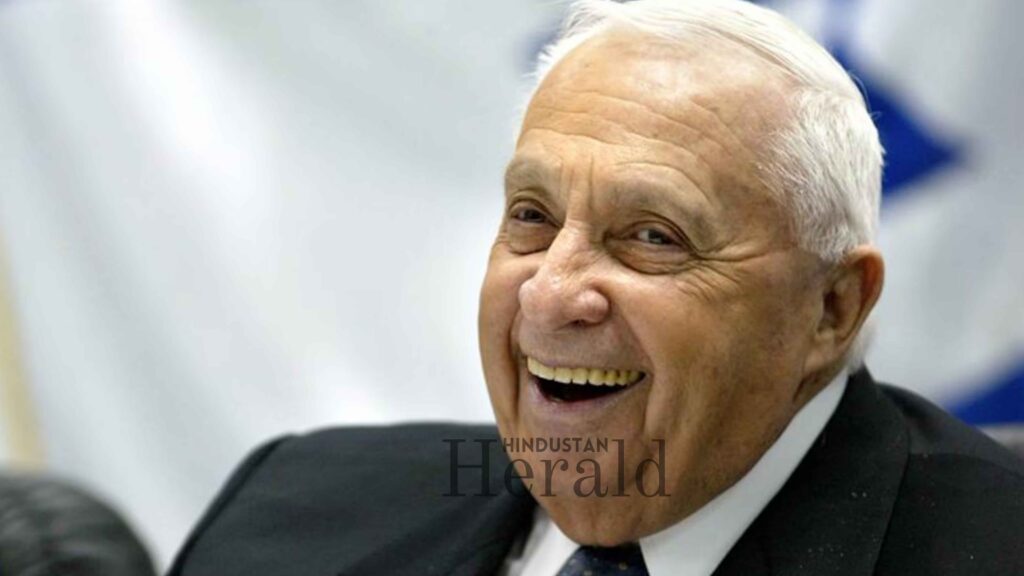
That battle was commanded by Ariel Sharon, Defence Minister at the time, prime minister years later. The capture was celebrated back home. What followed it was not so celebratory. The army pushed on to Beirut, held the Lebanese capital, and spent the next 18 years in a southern Lebanon occupation that nobody, when it finally ended in 2000, could honestly describe as having gone according to plan.
After the withdrawal, the castle was fixed up a bit and opened to visitors. There were days when people stood on those old stones and looked out over the valley and felt something other than the weight of everything that had happened there. That feels like a long time ago now.
Where the Israel Lebanon War 2026 Actually Started, Depending on Who You Ask
Every conflict in this region comes with six different origin stories and everyone chooses the one that suits them best. The one most people are using for the current round of the Israel Lebanon War 2026 is March 2.
That is when Hezbollah fired rockets into northern Israel. They did it two days after the United States and Israel struck Iran. So Hezbollah called it a response to an attack on their main patron. Israel called the Iran strikes a response to years of Iranian behaviour. Iran called all of it a response to something else going back further still. Round and round. It has been going round like this for so long that the loop itself has become part of the landscape.
What nobody disputes is what happened after March 2 in the Israel Lebanon War 2026. Israel launched a ground invasion. Week by week it pushed further into southern Lebanon, taking villages and towns along the way. Hezbollah threw thousands of rockets and drones back at Israeli soldiers in the south and at communities in northern Israel, hard enough that ordinary life in parts of the Galilee became genuinely difficult for people who had no say in any of this.
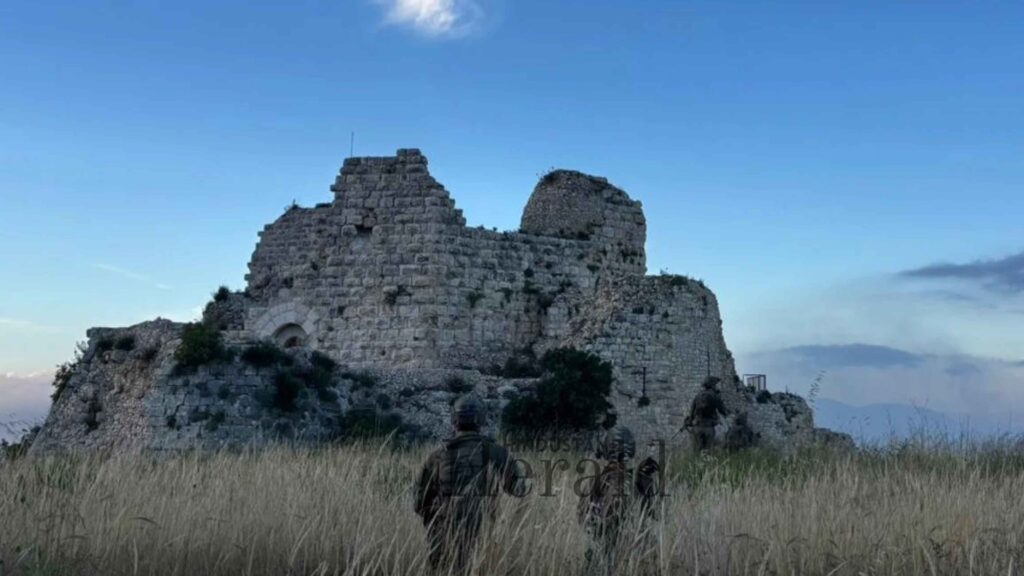
The fighting for Beaufort Castle came after days of heavy strikes on the surrounding area. Villages below the ridge were hit. Families left. Then the ground forces moved up through rough terrain and by early Sunday they were inside the fortress walls.
By Sunday afternoon, Israeli troops were sitting about 5 kilometres from Nabatiyeh, one of the bigger cities in southern Lebanon. Evacuation orders had gone out. The same for Tyre, Lebanon’s fourth largest city, on the coast, an ancient place that has been through more than most cities survive. Armies do not issue evacuation orders for cities that size when they are winding down.
Netanyahu Looked Pleased. The Rest of the World Not So Much.
Netanyahu stood in front of cameras on Sunday with the castle photograph behind him. He called it “a dramatic shift” in Israeli policy. He looked satisfied, maybe more than satisfied.
That message had a specific audience inside Israel. There has been a real argument going on within the country about whether the Lebanon campaign actually has a coherent destination, whether it is building toward something that will hold, or whether it is just burning through lives and money without a clear idea of what the end looks like. Netanyahu was answering that argument. Look, he was saying. The ground is changing. We are moving. Abroad, the image and the statement hit differently.
France did not waste time. Foreign Minister Jean-Noel Barrot went on television Sunday and announced that Paris was formally requesting an emergency meeting of the UN Security Council. He said the thing about Israel’s right to self defence first, which every Western government says before criticising an Israeli military operation, because the alternative is being accused of something worse. Then he said what he actually meant. “Nothing can justify the continuation of Israeli military operations in Lebanon and its ever deeper occupation of Lebanese territory.”
France and Lebanon have a relationship that goes back far enough and runs deep enough that it is hard to explain quickly. The Mandate years. The ties to Lebanon’s Christian communities that go back generations. The sense in Paris that Beirut is connected to France in ways that feel cultural and almost personal. When France calls an emergency Security Council meeting over Lebanon, there is genuine feeling behind it. It is not a performance.
Israel’s UN envoy Danny Danon came back with the response Israeli officials reliably give in situations like this. The real problem, he said, is that Resolution 1701, the 2006 agreement that was supposed to end the last major war and require Hezbollah to disarm and pull back, was never actually implemented. He is right about that. That resolution sat largely ignored for nearly twenty years. The current war is partly what happens when international agreements are treated as optional.
Both of them have a point. That is the particular exhaustion of this conflict. The arguments are legitimate on multiple sides and none of it has ever been enough to actually end anything.
The Ceasefire Was Already Half a Fiction Before Sunday
A ceasefire came into effect on April 17. Israel signed it. Lebanon signed it. American diplomats put it together and announced it carefully. People in this region received the news with the kind of guarded hope that comes from having been through this too many times. Hezbollah did not sign it.
That one fact has defined everything since. Hezbollah is the organisation doing the actual fighting on the Lebanese side. A ceasefire that the main combatant is not party to is not a ceasefire in any functional sense. It is paperwork. Something governments can gesture at when asked what they are doing to stop people from dying.
The agreement said Israel retained the right to respond to imminent threats. Israeli officials have been reading that clause generously. The ground advance, the airstrikes, the castle, all of it has happened while the ceasefire is technically still in force.
Nabih Berri, Lebanon’s Parliament Speaker, one of the most senior Shia figures in the country and a longtime political patron of Hezbollah, spoke on Sunday with the tired directness of someone who has sat through this particular drama more times than he can count. He said he could personally guarantee Hezbollah would fully commit to a ceasefire. Then he asked who was going to make Israel do the same. No one answered. There is no mechanism to answer it. That is the problem.
Sunday Morning Was Not an Accident
The Washington talks start on Tuesday, June 2. Beaufort fell on Sunday. By Sunday afternoon Israeli forces were hitting Hezbollah positions near Tyre and elsewhere across the south.
Joe Macaron, an analyst based in Beirut who knows this terrain as well as anyone, said plainly what most people watching were thinking. Israel is grabbing ground before the negotiations freeze the lines. “The more land they can grab before the ceasefire, the more they can impose conditions on Hezbollah,” he said, then admitted he genuinely did not know yet which way this would tip.
This is not a new strategy. It is probably as old as the idea of negotiated settlements. You take what you can before the diplomats sit down, and then the diplomats have to work with whatever you have taken. The map at the table looks different from the map before the offensive started.
For the Lebanese people heading to Washington this week, it looks very different. They are not arriving to negotiate the terms of a foreign military presence in a contested border zone. They are arriving to negotiate while their country’s south is under active occupation, while displacement orders are spreading toward major cities, while the other side is still actively striking targets. Whether they actually get on the plane is an open question as of Sunday evening.
The UNESCO Part That Keeps Getting Skipped
The military reporting and the diplomatic fallout are consuming most of the attention, which is fair. But there is something else here that is being mentioned briefly and then dropped.
UNESCO gave Beaufort Castle its highest available protection status during the 2024 conflict. One of 34 Lebanese cultural sites granted what the organisation calls provisional enhanced protection, which is the strongest designation it has. It means the site cannot be attacked. Cannot be used for military purposes. That is not a recommendation. That is the stated intent of the protection.
UNESCO has called Beaufort one of the finest preserved medieval castles in the Near East. It already took damage during Israel’s previous occupation before 2000. What it looks like now, and what it will look like after this, is not yet reported.
The Israeli flag is flying over it. Soldiers are inside the walls. The Israeli military has said nothing publicly about the UNESCO designation. Not one word.
Whether this is a violation of international humanitarian law will be debated for a long time in legal circles. That debate is worth having. But whatever the outcome, the practical story is already written. The protection protected nothing. The castle is occupied. That is the reality on the ground regardless of what any legal finding eventually says.
This Is Not Only About Lebanon
The military story in southern Lebanon sits inside a much larger regional picture, and that picture is necessary for understanding why none of this gets resolved.
This war grew from American and Israeli strikes on Iran in March. Tehran came back through Hezbollah, as it has done reliably across years of regional confrontation. The people in Nabatiyeh and Tyre are carrying the weight of decisions made in government buildings they have never been near, in cities far from their own.
Iran has been signalling through back channels that it will not agree to any nuclear deal with the United States unless that deal includes a ceasefire in Lebanon. Tehran has tied the battlefield situation in southern Lebanon to the nuclear file. What happens on a ridge above the Litani now connects to negotiations happening in entirely different rooms about entirely different things.
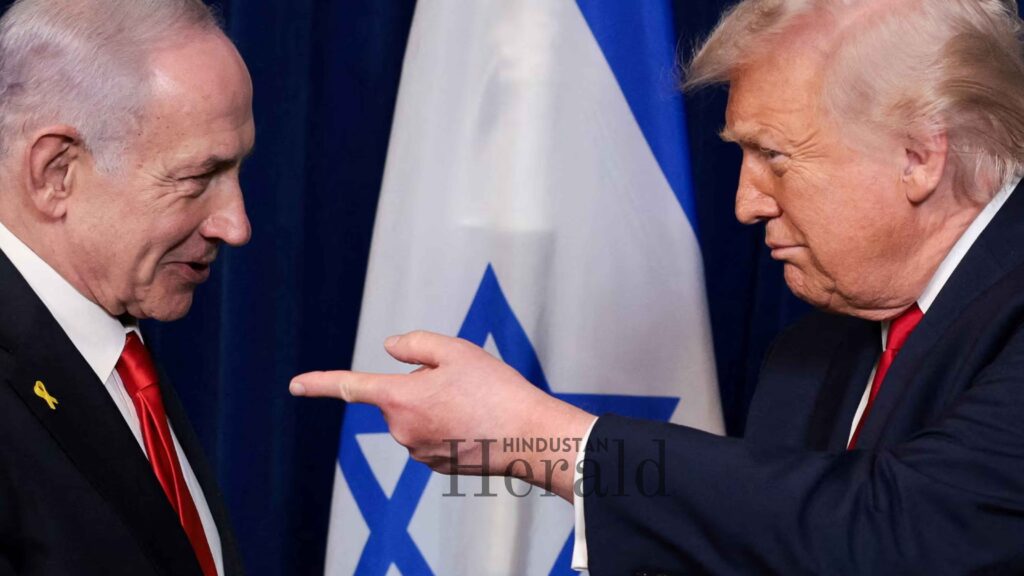
Trump told Netanyahu last week, according to an Israeli official who spoke to CNN, that he backed Israel’s “freedom of action against threats on all fronts, including Lebanon.” This was said in the same week American diplomats were setting up the Washington talks.
Washington wants to be Israel’s unconditional military partner. Washington also wants to be the credible neutral broker of a Lebanese peace agreement. Those two things are genuinely in tension and the tension is getting harder to manage the further the offensive goes. Whether anyone in the administration is wrestling seriously with that or has simply decided to not look too closely is a question with consequences beyond Lebanon.
India Is Closer to This Than It Might Appear
India has around 90,000 citizens in Lebanon. Most of them are in Beirut and along the coast, in hospitals, in private homes, in the wider service economy. They are not in the line of fire today. That word “today” is doing a lot of work.
India has been through this before. The 2006 Lebanon war triggered one of the largest citizen evacuations the country had mounted at that point, getting thousands of people out of Beirut in difficult and fast moving conditions. The systems for doing that again exist. Nobody wants to use them.
The economics are not abstract either. India imports more than 85 percent of its crude oil. Sustained escalation in the eastern Mediterranean feeds directly into price volatility that ends up at petrol pumps and in the cost of goods for households across the country. Red Sea and Suez disruptions have been a problem for Indian traders for over a year already. A deeper conflict does not ease that pressure.
India’s official response will be what it always is. Restraint. De escalation. Dialogue. The Ministry of External Affairs used these exact words when the 2024 ceasefire came through, and they will use them again. These words are not wrong. They just do less and less work as situations become harder to stay vague about.
India has real ties with Israel, built across thirty years. It has deep relationships across the Arab world. It formally supports Palestinian statehood. That balance has held for a long time because India has been careful and consistent about maintaining it. But balance gets harder to hold the more extreme the situation on the ground becomes, and the current situation is becoming extreme.
Studied neutrality is a defensible position. At a certain point it starts to look like something other than balance. India has not crossed that line yet. It is getting closer to it.
The Honest Answer Is No One Knows
The Washington talks were supposed to mean something real. First direct negotiations between Israel and Lebanon since the May 17 Agreement broke down in 1983. A genuine shot at a permanent peace framework and Hezbollah disarmament, something discussed for years in the abstract without anyone ever doing anything concrete about it.
That possibility has not vanished entirely. But Sunday made it much harder to reach and the atmosphere around it much more difficult to manage.
Hezbollah has lost ground. It has taken hits to its supply lines and command structure. It has watched a castle that matters in the memory and geography of southern Lebanon fall to Israeli forces and become a photograph on every major news wire in the world. How it responds, whether it escalates, recalibrates politically, or does something less predictable than either, will shape what this war looks like for the rest of the year. Joe Macaron was honest about it. Tipping point, yes. Which way it goes, he could not say yet.
That honesty is worth more than most of what is being said right now. The uncertainty is real. Anyone who tells you with confidence where this is heading is either guessing or telling you what they want to happen.
The castle has changed hands again. Different flags. Different names for the sides. Different weapons, far more destructive than anything ever used on that hill before. What has stayed the same is who ends up carrying the cost of all of it.
It is never the people who make the decisions. It has not been for the last eight hundred years of that hilltop’s history. And sitting here in June 2026, there is not much evidence that is about to change.
Stay ahead with Hindustan Herald — bringing you trusted news, sharp analysis, and stories that matter across Politics, Business, Technology, Sports, Entertainment, Lifestyle, and more.
Connect with us on Facebook, Instagram, X (Twitter), LinkedIn, YouTube, and join our Telegram community @hindustanherald for real-time updates.

Tracking world politics, global markets, trade movements, policy decisions, and the changing balance of economic power.
- Shelesh Joshi

- Shelesh Joshi
- Shelesh Joshi
- Shelesh Joshi





Specializes in South Asian geopolitics and global diplomacy, bringing in-depth analysis on international relations.
- Rajiv Menon
- Rajiv Menon
- Rajiv Menon
- Rajiv Menon