
 By Herald Desk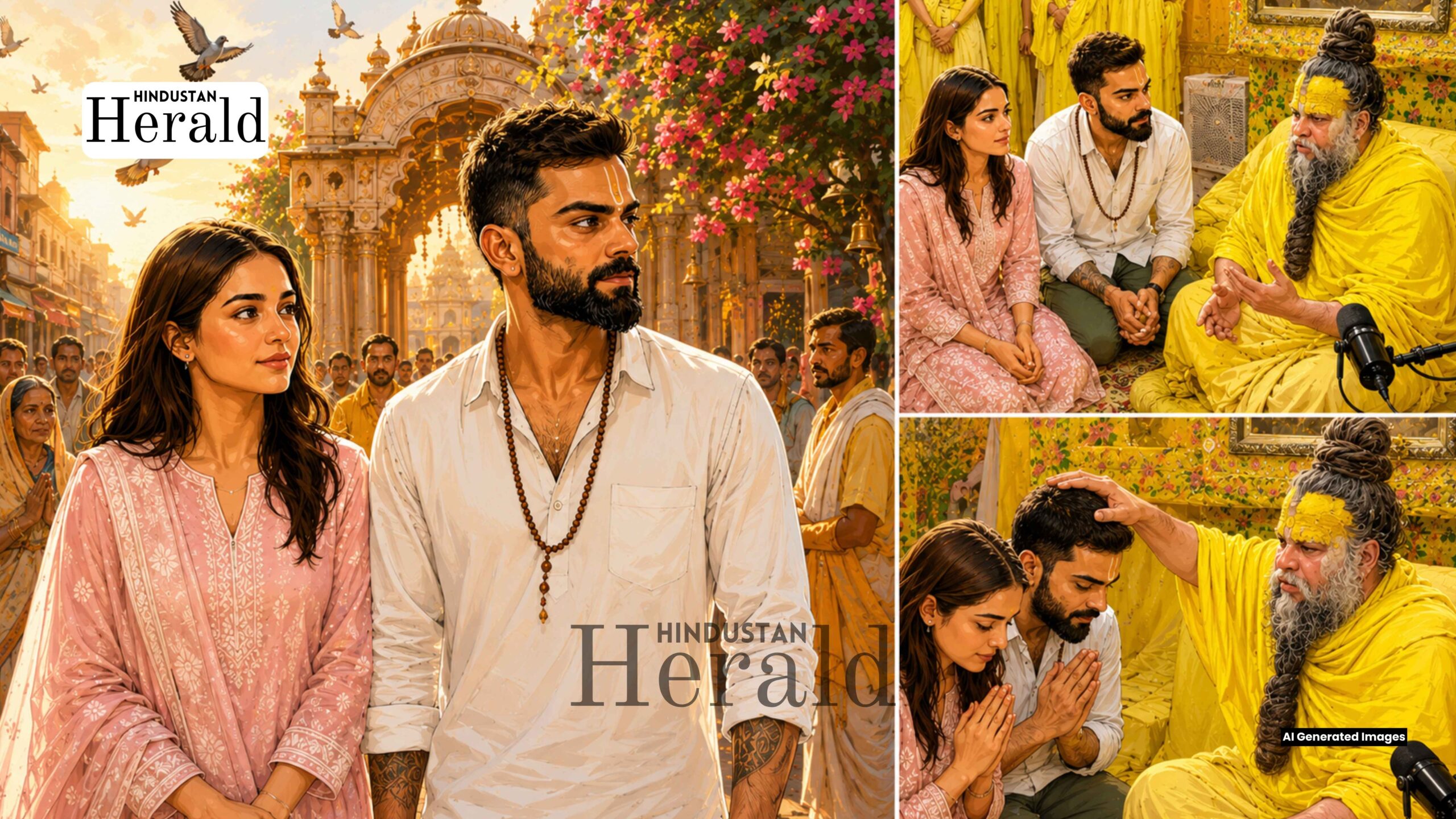
Vrindavan, June 2: The night before, Virat Kohli had just pulled off one of those knocks that remind you why people build entire religions around watching cricket. An unbeaten 75 off 42 balls in an IPL final, chasing with the match hanging by a thread, the team wobbling at 132 for 5, and then this man just standing there and dismantling it all. Royal Challengers Bengaluru won by five wickets. Ahmedabad was loud in a way only that city can be when something historic is happening under those floodlights.
By Tuesday morning, he was in Vrindavan.
Not recovering at some luxury resort. Not doing press rounds. He and Anushka Sharma had already boarded a flight to Agra, landed early, and made their way quietly into the lanes of one of the most sacred towns in north India. Kohli in a plain white shirt and a red cap. Anushka in a simple pink kurta. Tulsi malas around their necks. Sandalwood on their foreheads. No fanfare, no production. Just two people who apparently decided that the morning after winning the IPL was a good time to sit with a saint.
Where They Went and Why It Matters
The ashram they visited is not a celebrity circuit stop. Shri Hit Radha Keli Kunj, the ashram of Premanand Ji Maharaj in Vrindavan, draws devotees who are actually looking for something. The interaction the couple participated in, called an “Ekantik Vartalaap”, is a private one-on-one or small group spiritual conversation. It is not a photo opportunity. Those who were present said Kohli and Anushka sat among ordinary devotees without requesting any separation or special seating. They listened. They stayed.
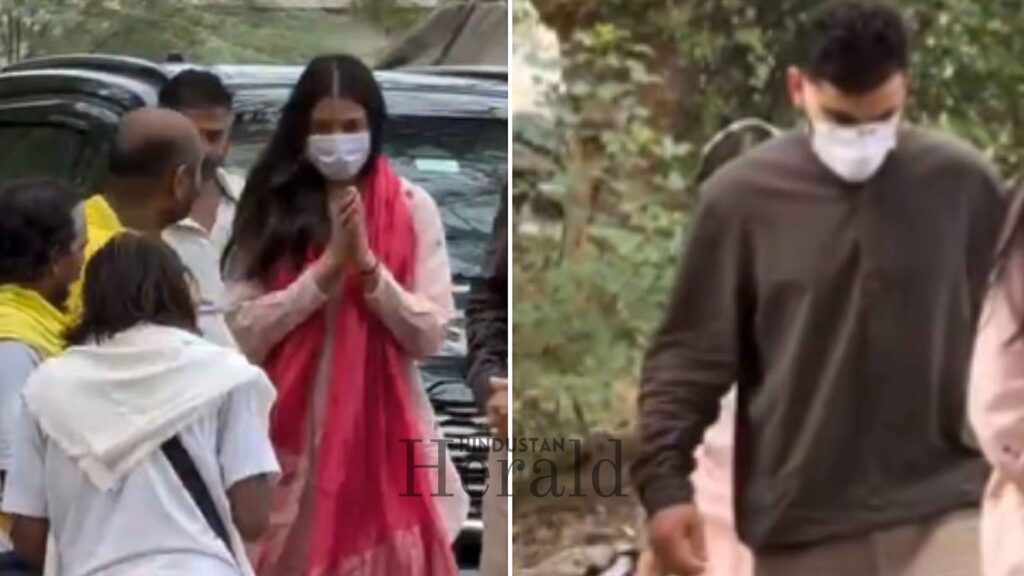
This, for context, is not a new chapter. It is an ongoing one. This visit marks their third trip to Vrindavan in roughly five months, and their second time at this particular ashram in 2026 alone. The couple has been building this habit quietly, showing up at temples and spiritual gatherings in India and abroad with a consistency that is harder to dismiss as optics the more it repeats itself.
The guidance typically offered at this ashram centres on humility, detachment from outcomes, and the philosophy of treating work as divine service rather than personal conquest. Whether those words landed differently the morning after an IPL title win is something only the two of them would know.
The Match That Made This Moment
To understand why this image of Kohli sitting still in a temple hits the way it does, you have to sit with what he did on the field the night before.
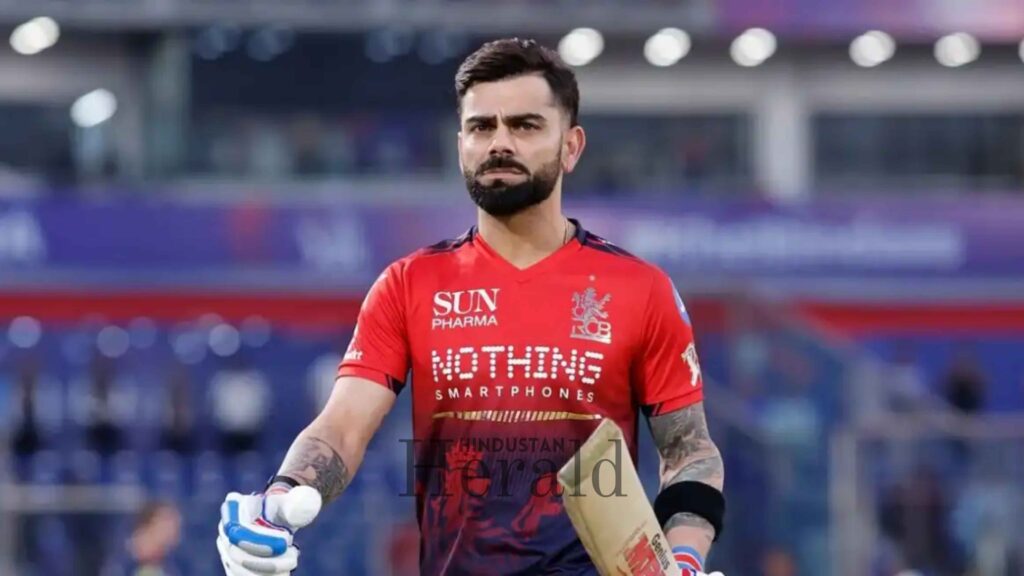
RCB’s chase of 155 was not going according to plan. Wickets fell at uncomfortable intervals and the middle order did not hold. When Kohli was batting with the team at 132 for 5, there was a real possibility this was slipping away. He did not let it slip. The innings he played was controlled, brutal when it needed to be, and utterly calm in its execution. He finished unbeaten on 75, guided them home, and then immediately looked toward the stands where Anushka was sitting and blew her a flying kiss. She sent one back. The internet, predictably, combusted.
He ended the IPL 2026 season with 675 runs across 16 innings, averaging 56.25, at a strike rate of 165.84. One century. Five fifties. A best of 105 not out. The numbers are not the numbers of a man winding down. They are the numbers of a man who has figured something out.
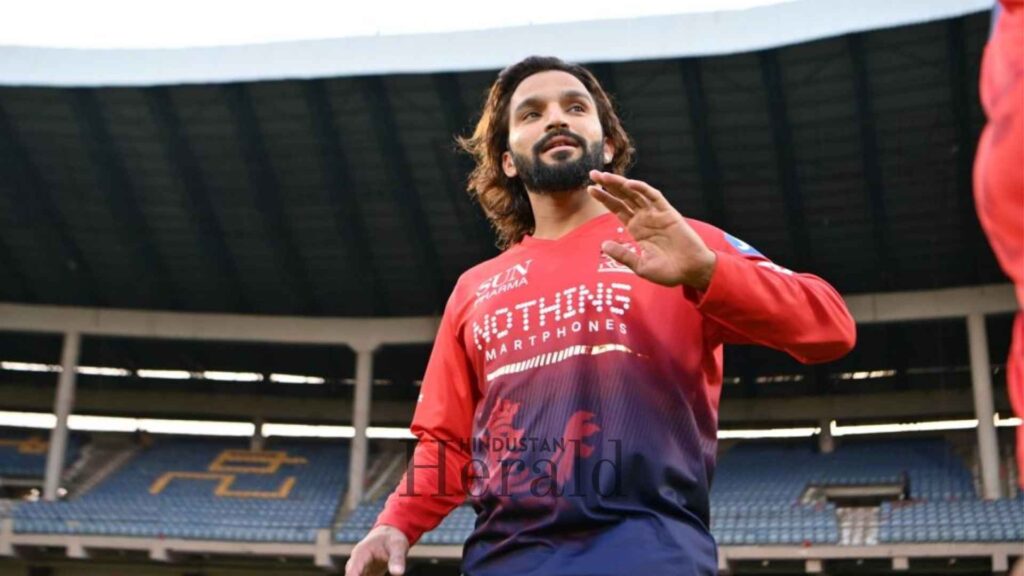
Captain Rajat Patidar lifted the trophy with the now-familiar war cry from the dressing room, “Ee Saala Nu Cup Namdu”, which roughly means this year too, the cup belongs to us. RCB had now done what only Chennai Super Kings and Mumbai Indians had managed before: defend an IPL title in consecutive seasons. The franchise, the fans, the city, all of it earned its moment.
And then Kohli went to Vrindavan.
The Man Behind the Scorecards
There is a version of Virat Kohli that became almost mythological in Indian cricket. Chest-thumping after wickets, staring down opposition players, running between wickets like someone personally offended by the idea of a dot ball. He was electric and he was exhausting and he was exactly what the sport needed for a long time.
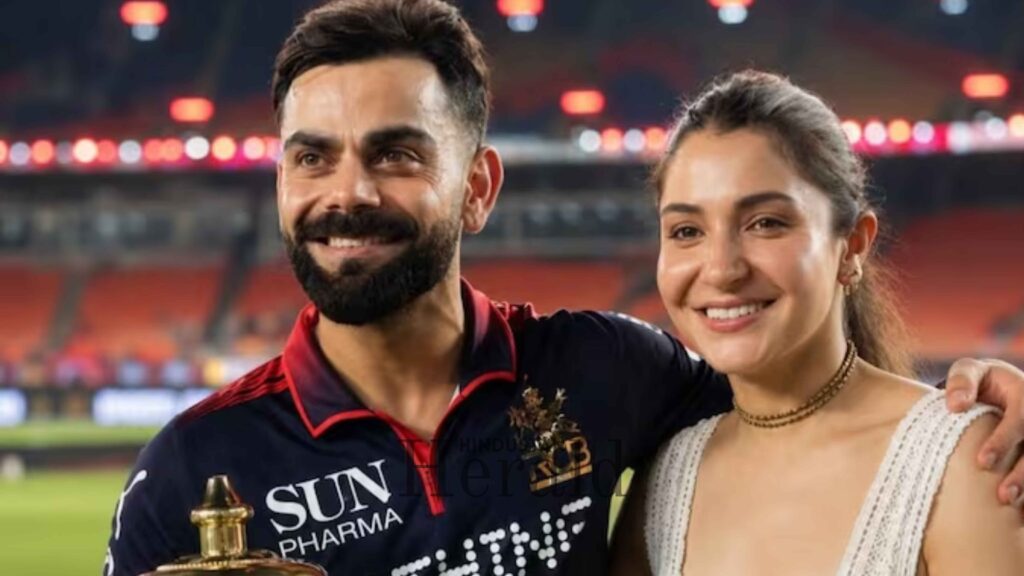
That version has not disappeared. The 75 in Ahmedabad proves it is still very much there when required. But something else has layered itself on top of it over the last couple of years, and it shows up in how he speaks now more than how he bats.
After the final, he told reporters something worth actually listening to. “We’ve had to wait for so long and then just to have a group of guys where you feel like you’re stepping onto the ground, you don’t need to be the one to step up every time.” That sentence would have been unthinkable from the Kohli of a decade ago. Not because he lacked grace then, but because he was built around the idea that he had to be the one. Every time. He carried that identity for years, wore it like armour.
At 37, he talks like a man who has put the armour down. Not retired it. Put it down.
What People Are Saying, and What They Are Missing
The reactions online have been predictable in their range and entirely human in their messiness.
A lot of people found the Vrindavan visit genuinely moving. The contrast of it, this ferociously competitive man who had just dismantled a final single-handedly, sitting the next morning in a quiet ashram listening to a spiritual teacher, struck something real for them. India is a country where faith and high performance are not considered contradictions. For a significant portion of the people watching, there was nothing surprising about this at all. It felt natural, even right.
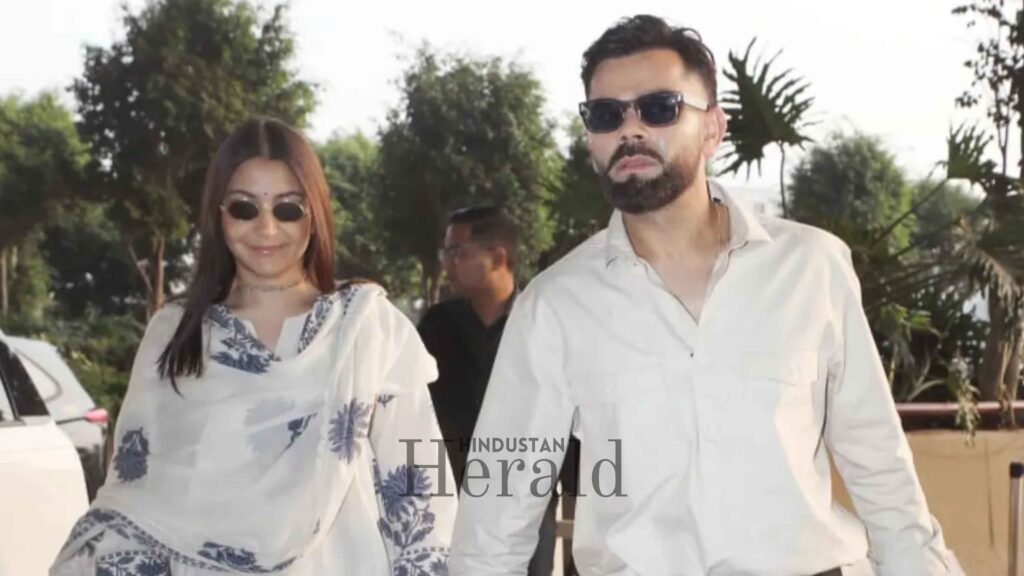
Others were more skeptical. The word “PR” appeared with some regularity in comment sections, the argument being that high-profile spiritual visits have become a reliable tool in the celebrity image management playbook. That the timing was too neat. That no one accidentally ends up in Vrindavan the morning after a trophy win.
Both arguments exist and both have logic behind them. What both miss, though, is that these two things have never been mutually exclusive. A person can seek spiritual grounding sincerely and still benefit from how it looks publicly. Those are not the same thing, and assuming cynicism explains everything is its own kind of laziness.
As it turns out, the couple has been doing this long enough and quietly enough that the “it’s just PR” reading has started to age poorly. PR campaigns do not revisit the same ashram three times in five months without any coordinated media presence. That is just a habit.
A Couple, and a Larger Shift
What the Vrindavan visit also quietly reflects is something happening more broadly among a certain generation of Indian public figures. The appetite for visible spiritual grounding, for being seen as someone who seeks something beyond the scoreboard or the box office, has grown considerably. It is partly a cultural moment and partly something more individual.
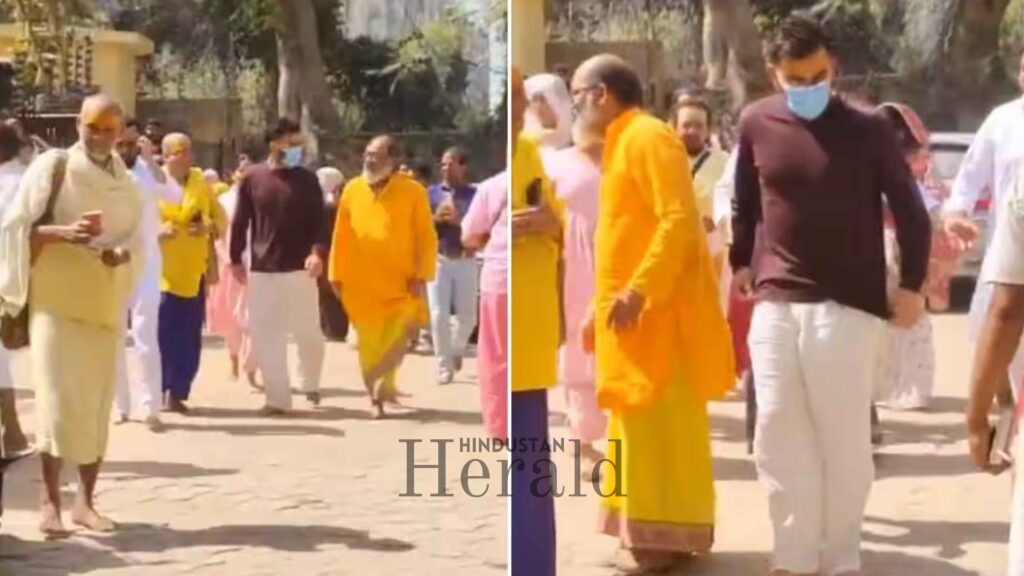
For Anushka Sharma, who stepped back from acting for a significant stretch to focus on her family and has spoken in rare interviews about how that recalibration changed her, the visits to ashrams and temples read as consistent with a broader internal shift. She is not someone who has sought spiritual attention for image purposes. She has, if anything, become more private over time, not less.
For Kohli, the shift is more visible because his public persona was always the louder one. Watching him evolve from the player who needed to be the axis of everything to someone who can sit still in a crowd and listen, that is actually interesting to observe regardless of whether you follow cricket at all.
The dancing with Anushka on the field after the final. The flying kiss. The quiet morning in Vrindavan. None of these things cancel each other out. They are all the same person, just in different rooms.
For now, that person has two consecutive IPL titles, a wife who wore a T-shirt with a frankly excellent tagline, and apparently a standing reservation at an ashram in Vrindavan. There are worse ways to spend the morning after winning something.
Stay ahead with Hindustan Herald — bringing you trusted news, sharp analysis, and stories that matter across Politics, Business, Technology, Sports, Entertainment, Lifestyle, and more.
Connect with us on Facebook, Instagram, X (Twitter), LinkedIn, YouTube, and join our Telegram community @hindustanherald for real-time updates.

- Herald Desk

- Herald Desk
- Herald Desk
- Herald Desk




 Ananya Sharma