 By Shelesh Joshi and Kavita Iyer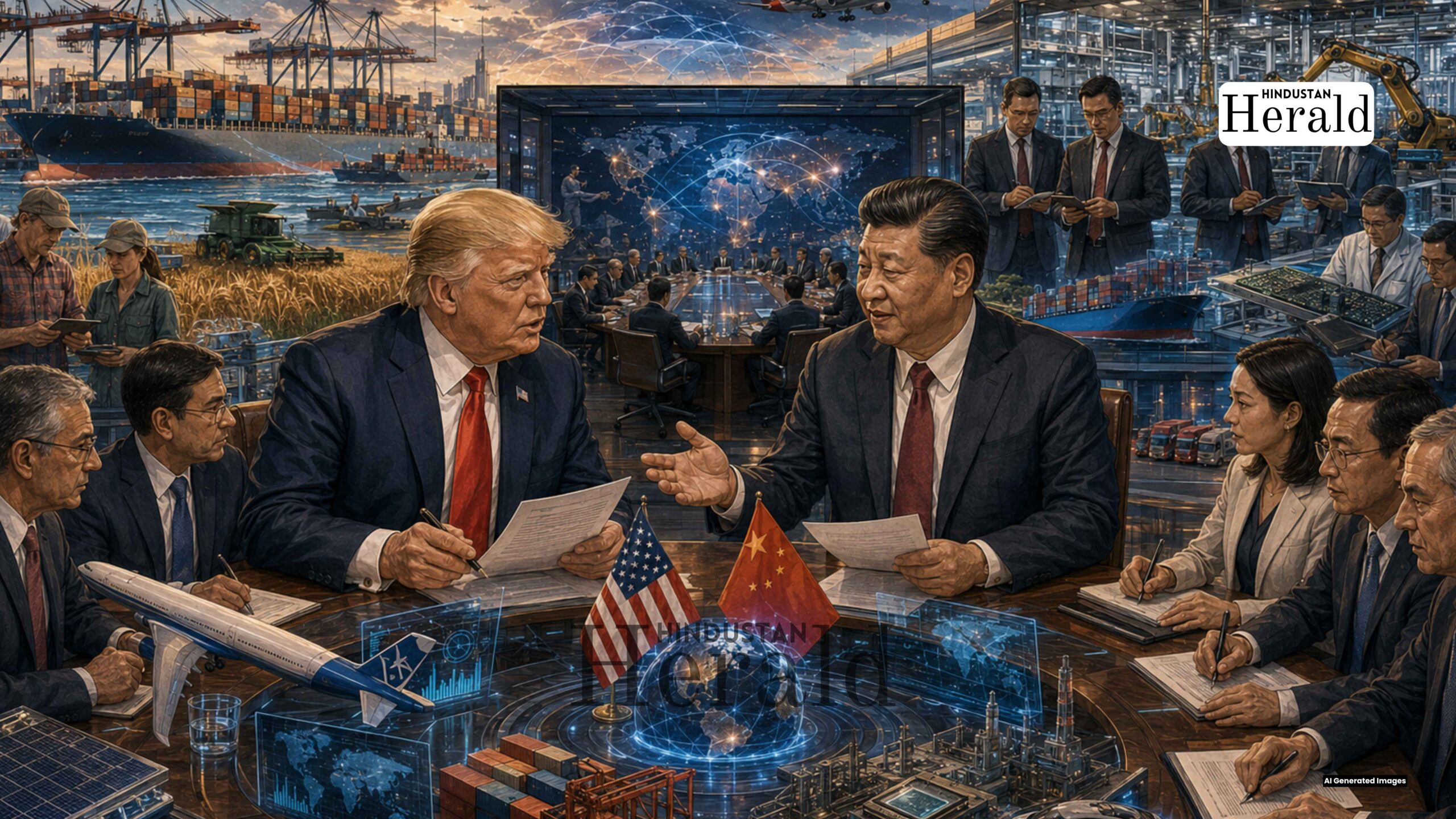
New Delhi, June 3: Nobody in Washington is calling it a peace treaty. Nobody in Beijing is either. What the Trump administration announced on Tuesday is the US-China Board of Trade a proposal far more cautious, far more transactional, and in some ways far more interesting than a grand diplomatic reset.
The US-China Board of Trade is a standing body through which the world’s two largest economies would sit down, regularly and formally, to decide which goods each side is willing to trade without treating the other as a national security threat.
The Office of the United States Trade Representative has opened a public comment process on the mechanism’s scope and design. American farmers, manufacturers, small business owners, and industry groups now have until July 10 to tell Washington what they want included. Rebuttals go in by July 27. Then, at some point later this year, the Board is supposed to actually start doing things.
That is the official version. The lived reality of how this moment came to be is considerably messier and considerably more consequential for a country like India, which has spent the better part of two years quietly benefiting from the chaos between its two most important trading and strategic partners.
Quick Summary
- The USTR formally launched the US-China Board of Trade on June 3, 2026, opening a public comment period on its scope, design, and eligible product categories.
- Public comments on non sensitive products that may qualify for tariff relief are due by July 10, 2026, with rebuttal submissions accepted through July 27, 2026.
- Both governments have indicated an initial target of approximately $30 billion worth of goods on each side that could qualify for potential tariff reductions.
- The Board emerged directly from the May 2026 Trump-Xi Summit in Beijing, at which China agreed to purchase 200 Boeing aircraft and resume imports of American soybeans and beef.
- India exported $86 billion worth of goods to the United States in 2024-25, with Indian exporters having benefited significantly from elevated U.S. tariffs on Chinese products.
- Ambassador Jamieson Greer confirmed that existing tariffs on Chinese imports would remain fully in place alongside the new mechanism, which is designed to manage not eliminate bilateral trade tension.
Eight Years of Friction, One US-China Board of Trade Public Docket
The tariff war between the United States and China did not begin with Donald Trump’s second term. It began in 2018, hardened through the Biden years, and then exploded spectacularly in April 2025 when the administration unveiled what it called Liberation Day tariffs a sweeping, maximalist set of duties on Chinese imports that sent global equity markets into a freefall and rattled supply chains from Shenzhen to Surat.
What followed was months of open brinkmanship, a series of partial truces that never quite held, and eventually something that looked, at least from a distance, like two exhausted heavyweights deciding they had hit each other hard enough for one round.
By mid 2025, Washington had suspended its most elevated duties while keeping a baseline tariff structure firmly in place. Negotiations continued through the second half of the year. Then, in May 2026, President Donald Trump flew to Beijing and sat down with President Xi Jinping for the kind of summit that neither side had been willing to commit to just eighteen months earlier.
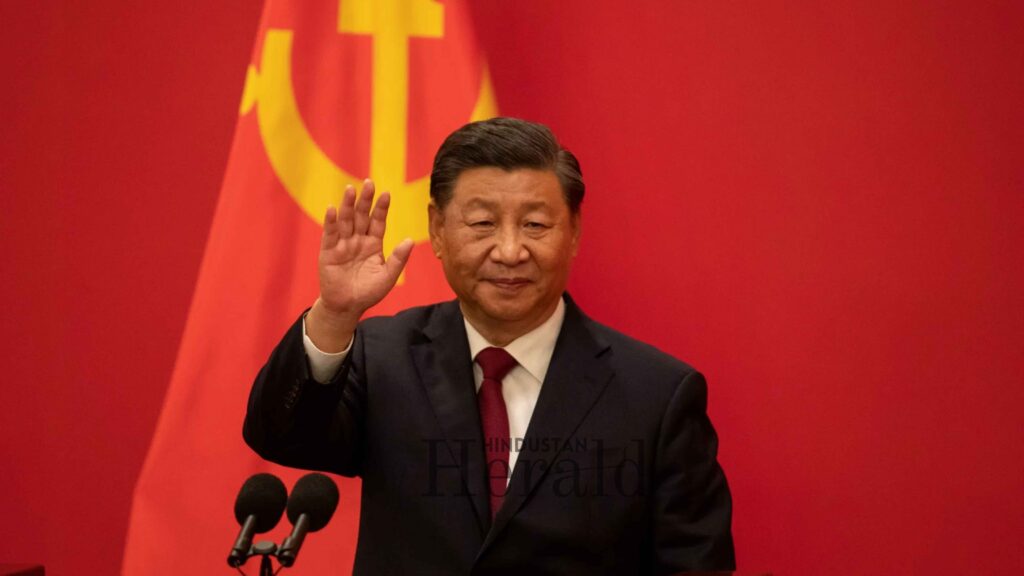
The meeting produced the deliverables both governments needed to show their domestic audiences. China agreed to purchase 200 Boeing aircraft. It agreed to ease restrictions on American beef and sharply increase soybean imports. Washington, for its part, allowed 10 Chinese technology firms to resume purchases of advanced Nvidia chips a concession that carries enormous symbolic weight in a rivalry increasingly defined by the contest over artificial intelligence and semiconductor dominance.
Both nations also agreed, in principle, to establish a Board of Trade and a Board of Investment to manage the bilateral relationship going forward. The Trump administration seeks public comments on promoting balanced, reciprocal trade with China under proposed Board of Trade. Tuesday’s USTR announcement is Washington beginning the formal process of making the US-China Board of Trade real, operational, and publicly accountable formally seeking public comments on promoting balanced and reciprocal trade with China under the proposed US-China Board of Trade.
The Architecture of Managed Distrust
Here is what the Board is actually supposed to do, stripped of the diplomatic language that tends to accumulate around these announcements.
Both sides will identify a defined pool of goods products that neither government considers strategically sensitive on which they are willing to reduce tariffs in a structured, symmetrical way. Officials from both countries have discussed an initial figure of approximately $30 billion worth of goods on each side. Every concession is matched. Washington extends ground on Chinese imports of a certain value; Beijing offers equivalent ground on American exports in return. No side extends unilateral generosity. This is managed symmetry, and it is a deliberate departure from both the maximalist confrontation of 2025 and the looser engagement frameworks of earlier decades.
A Federal Register notice described the Board as an “adapter” mechanism which is an unusually honest piece of bureaucratic framing. It is not designed to resolve the deeper structural contradictions in the US-China relationship. It is designed to prevent those contradictions from producing another round of market shaking escalation while delivering enough tangible benefit to justify continued engagement.
The USTR was explicit about what the Board would not do. As long as China maintains its non market industrial policies, disregards intellectual property rights, subsidises domestic industries into global overcapacity, and maintains opaque barriers to American exports, Washington will continue relying on tariffs and other tools to manage the relationship. The Board of Trade runs alongside that posture. It does not replace it.
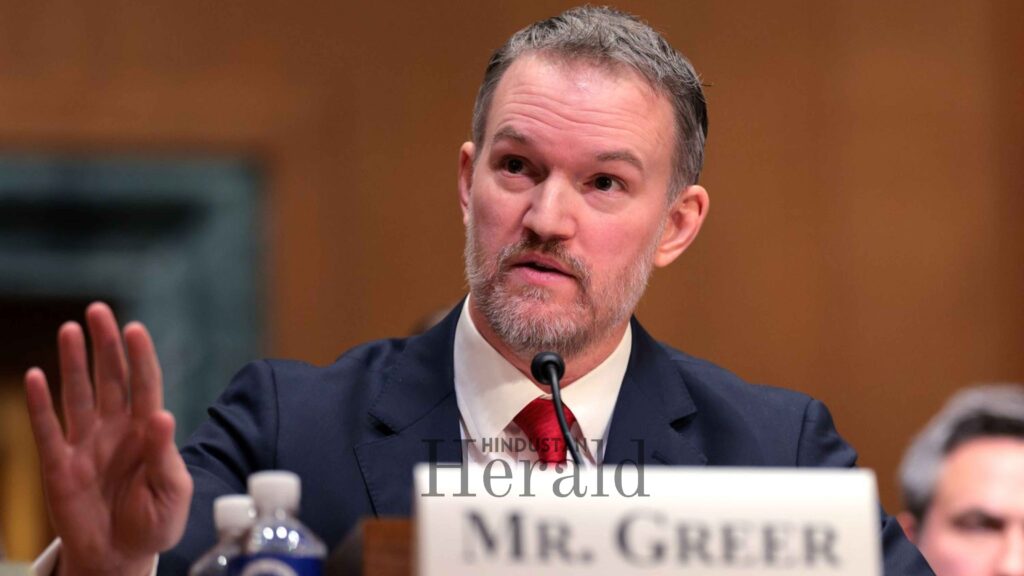
Ambassador Jamieson Greer framed the comment process in terms that would land with farm states and factory towns. The administration, he said, would work with stakeholders to identify non sensitive goods that can deliver results for American farmers, ranchers, fishermen, small businesses, manufacturers, and workers.
That is a political sentence as much as a policy one. The tariff war has cost American agricultural exporters enormous volumes of Chinese market access over nearly a decade. The Board of Trade is, among other things, a vehicle for beginning to win some of that back.
What “Non Sensitive” Will and Will Not Cover
The question of which products make the non sensitive list is, in practical terms, the only question that matters at this stage. It will define who gains and who loses from the entire exercise, which is precisely why the five week comment window carries real commercial stakes.
Consumer goods are the most likely early entrants household products, clothing, furniture, mid range manufactured items that American retailers have been sourcing from China for decades and whose removal from Chinese supply chains has cost American consumers measurably in the form of higher prices and reduced choice.
Agricultural inputs and raw materials are also strong candidates. Industrial components where neither government has formally designated the supply chain as strategically critical could follow. Some categories of basic chemicals and commodity plastics may also surface as candidates.
What will almost certainly not appear on any agreed list is easier to state. Semiconductors and chip manufacturing equipment are off the table. Advanced battery technology is off the table. Rare earth processing, anything with a direct or plausible defence application, and telecommunications hardware are off the table. The last eight years of US-China strategic competition have been defined largely by the contest over these technologies. No Board of Trade mechanism changes that, and neither government is pretending otherwise.
The USTR has also asked stakeholders how often the Board should convene and how it should manage the evolution of the product list over time. That administrative detail matters more than it might seem at first glance. A body that meets quarterly, reviews its own scope regularly, and adjusts based on outcomes is a fundamentally different instrument than one that makes a single set of decisions and then calculates its job as done. Washington appears to be designing for the former, which would make the Board one of the more sophisticated bilateral trade management structures in recent American economic history.
Sitting in New Delhi, Reading Between the Lines
India has a more complicated relationship with this story than a surface reading of the headlines suggests. The past two years have been genuinely good for Indian exporters pursuing the American market. When Washington raised tariffs aggressively on Chinese goods and American importers began searching for alternative suppliers, Indian manufacturers in pharmaceuticals, textiles, chemicals, auto components, and electronics assembly were frequently first in line to fill the gap that Chinese suppliers had left behind.
The Federation of Indian Export Organisations noted last October that India’s exports to the United States had reached $86 billion in 2024-25, and that continuing tariff pressure on China was driving further sourcing diversification in India’s favour. That market share gain has been backed by real capital investment, particularly in Gujarat, Tamil Nadu, Telangana, and the broader National Capital Region, where factories have expanded capacity to serve American buyers who no longer want single source dependence on China.
A calibrated de escalation between Washington and Beijing complicates that picture without fully reversing it. The Board of Trade’s likely restriction to consumer goods, agricultural commodities, and non strategic raw materials provides significant insulation for Indian exporters. The sectors where India has built its most significant and durable export momentum advanced pharmaceuticals, precision engineering, speciality chemicals, IT services components are largely outside the product categories likely to feature in early Board of Trade negotiations.
Still, no Indian exporter should be reading Tuesday’s announcement as irrelevant noise. The direction of travel matters as much as the immediate product list. A functioning Board of Trade that successfully expands its scope over successive meetings could gradually shift the competitive landscape in ways that are difficult to predict from today’s vantage point.
The Dumping Question, Reconsidered
There is a second order consequence of this development that receives insufficient attention in Indian business commentary, and which cuts against the straightforward narrative that any US-China trade normalisation is automatically detrimental to Indian interests.
When Chinese manufacturers lose American market access due to elevated tariffs, the surplus production does not simply vanish. It gets redirected often at steeply discounted prices into markets across South Asia, Southeast Asia, Africa, and the Middle East. India has been a recurring and costly target of that redirect, particularly in steel, solar panels, commodity chemicals, synthetic fibres, and consumer electronics, where Chinese overcapacity is both real and well documented.
A partial restoration of Chinese export volumes into the American market, even a modest one of the kind the Board of Trade contemplates, could meaningfully reduce the volume of Chinese goods being diverted into Indian domestic and third country export markets. Fewer goods redirected away from the U.S. market means reduced dumping pressure on Indian manufacturers who compete at home and in global markets where Chinese pricing has been deeply distortive.
This is not a guaranteed outcome. It depends on what actually makes the final non sensitive product list, on Chinese production and inventory decisions, and on global demand patterns that are genuinely difficult to forecast. But it is a real and underappreciated possibility, and Indian industry bodies and the Ministry of Commerce and Industry in New Delhi should be modelling it explicitly as they track the comment process through July.
The Bigger Strategic Picture
Beyond trade economics, the Board of Trade carries a geopolitical significance that India’s foreign policy establishment will be processing carefully over the coming weeks, even if those conversations do not happen in public.
India has spent several years positioning itself as the natural, reliable counterbalance to Chinese influence across Asia the large democratic market, the English speaking technical workforce, the strategically aligned partner that American policymakers and global supply chain managers can depend on when they want to reduce exposure to Beijing. That positioning has yielded real dividends in foreign direct investment flows, defence cooperation, and strategic partnership depth across the Quad framework and beyond.
A structured, institutionalised US-China economic relationship does not erase India’s strategic value. But it subtly alters the competitive landscape within which that value is exercised. Washington formally engaging Beijing through a bilateral management mechanism signals that the United States considers long term economic engagement with China to be achievable and worth pursuing which is a different posture from treating Beijing primarily as an adversary to be contained through escalating pressure.
Analysis of the 2026 US-China summit noted that deepening economic cooperation between Washington and Beijing can weaken India’s push for a genuinely multipolar Asia, reduce the strategic urgency of the Quad, and complicate India’s approach to regional security concerns including along the Line of Actual Control. The Board of Trade is one more data point in a trend that runs in a directionally uncomfortable way from New Delhi’s perspective.
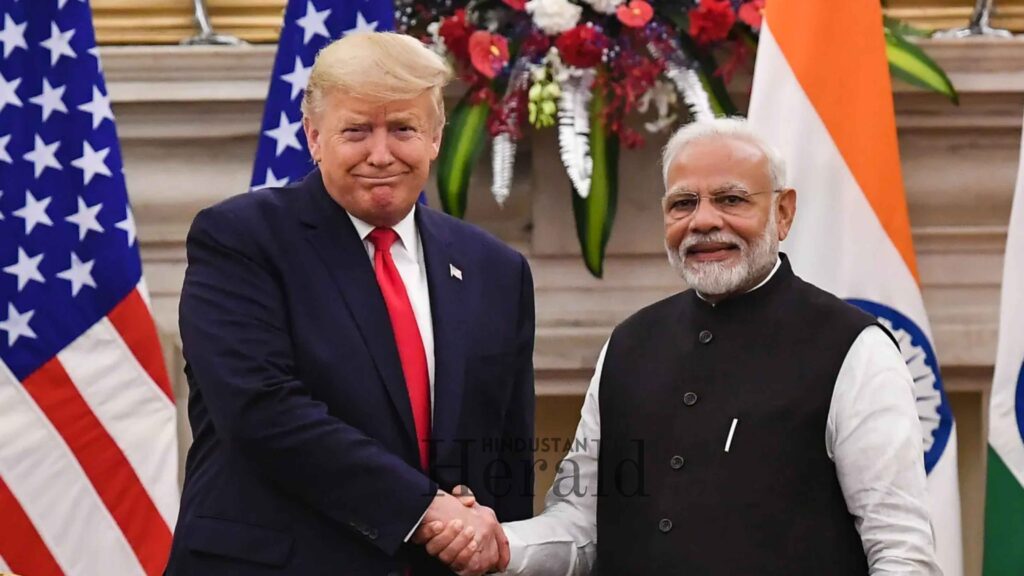
That said, India arrives at this moment in considerably stronger shape than it did twelve months ago. The bilateral trade framework announced by Prime Minister Narendra Modi and President Donald Trump in February 2026 established a structural foundation for the relationship that had been conspicuously absent through much of 2025’s diplomatic turbulence. The Stimson Center observed at the time that while the agreement did not eliminate all sources of friction, it gave both sides a genuine opportunity to reset and deepen the relationship across multiple strategic domains including critical minerals, artificial intelligence, nuclear energy, and defence innovation.
India is therefore not watching the emergence of US-China Board of Trade from a position of strategic vulnerability. It is watching from a position of relative stability and recent positive momentum, which gives its policymakers the space to respond thoughtfully rather than reactively.
Sectors Worth Tracking Closely
For Indian businesses and investors, the public comment process in Washington that closes on July 10 is not simply an American administrative exercise. The product categories that emerge from it will have direct and traceable commercial consequences for exporters, manufacturers, and importers operating across Indian industry.
Agricultural commodities deserve the closest early attention. If American soybeans, beef, grain sorghum, and dairy products move back into Chinese supply chains in meaningful volume following Board of Trade agreements, global commodity pricing will shift. Indian agribusinesses that have benefited from Chinese sourcing diversification over the past two years will need to assess those shifts carefully.
Pharmaceuticals occupy a genuinely uncertain position in this framework. The sector sits at the intersection of commercial competitiveness and strategic supply chain concerns in ways that neither government has cleanly resolved. Whether Chinese active pharmaceutical ingredients are classified as non sensitive or strategically sensitive under the Board’s framework will matter significantly for Indian generic manufacturers who compete directly with Chinese API producers in the American market and in large third country markets across Africa and Southeast Asia.
Consumer electronics and household goods are the most probable early candidates for inclusion on the non sensitive list. Indian electronics manufacturers in Noida, Chennai, and Pune who have attracted significant investment on the basis of their China alternative credentials will want to understand exactly which Chinese product categories are being contemplated and on what timeline.
Textiles and garments produced across clusters in Tiruppur, Surat, Ludhiana, and Panipat represent another area of direct exposure. So do speciality chemicals and auto components, sectors where Indian exporters have made their most durable and significant gains over the past two years and where even modest competitive shifts in the American market would register meaningfully in order books and capacity utilisation rates.
A Fiction Both Sides Need to Sustain
There is a line from financier Wilbur Ross, who served as U.S. Commerce Secretary in Trump’s first term, that cuts through much of the noise around this announcement. The idea of the United States being totally independent of China, or China being totally independent of the United States, he said recently, is a fiction.
That uncomfortable truth is the foundation on which the Board of Trade rests. After years of decoupling rhetoric, tariff escalation, strategic rivalry, and mutual recrimination, both Washington and Beijing have quietly concluded that they cannot fully separate their economies and that the attempt to do so imposes costs that their domestic businesses, consumers, and political constituencies are no longer willing to absorb without limit.
The Board of Trade is not a surrender of the rivalry. It is a recognition that the rivalry has to be managed rather than simply escalated, and that managed engagement can deliver more durable results than maximum pressure applied without strategic selectivity.
For now, the mechanism exists in a Federal Register notice and a commitment made across a diplomatic table in Beijing last month. Converting it into a functioning institution that actually modifies tariffs, convenes regularly, and commands the confidence of industry on both sides will require navigating fierce domestic politics in Washington, managing the expectations of supply chain managers who have restructured entire businesses around the assumption of continued confrontation, and sustaining enough working trust between two governments that fundamentally distrust each other to keep the whole thing operational. None of that is straightforward. Some of it may prove impossible.
But the alternative a trade relationship between the world’s two largest economies defined entirely by escalation, retaliation, and maximum uncertainty has already cost both sides, and the global economy, more than the most pessimistic initial projections suggested. That is the underlying calculation driving this process forward, and it is a calculation that does not change just because the politics remain genuinely hard.
Whether the U.S.-China Board of Trade becomes something lasting, or becomes one more mechanism that was announced with purpose and quietly abandoned, will depend on decisions that have not yet been made, in rooms that have not yet been convened, by officials whose institutional stamina and political backing remain to be tested.
For Indian industry, the only sensible posture right now is to watch the comment process carefully, track which product categories emerge from it, monitor the first Board meetings when they eventually happen, and prepare for a global trade environment that is neither the maximum confrontation of 2025 nor the relatively open engagement of an earlier era but something more ambiguous, more managed, and considerably harder to navigate without deliberate strategic preparation.
Stay ahead with Hindustan Herald — bringing you trusted news, sharp analysis, and stories that matter across Politics, Business, Technology, Sports, Entertainment, Lifestyle, and more.
Connect with us on Facebook, Instagram, X (Twitter), LinkedIn, YouTube, and join our Telegram community @hindustanherald for real-time updates.

Tracking world politics, global markets, trade movements, policy decisions, and the changing balance of economic power.
- Shelesh Joshi

- Shelesh Joshi
- Shelesh Joshi
- Shelesh Joshi





Former financial consultant turned journalist, reporting on markets, industry trends, and economic policy.
- Kavita Iyer
- Kavita Iyer
- Kavita Iyer
- Kavita Iyer