
 By Neeraj Kapoor
New Delhi, June 13: Three days. That is all the time the world got to use what many in the artificial intelligence industry were calling the most capable AI model ever deployed to the public. On Friday evening, June 12, Anthropic pulled the plug on Fable 5 and Mythos 5, two of its flagship AI models, after the U.S. government issued an emergency export control directive citing national security concerns. The order came in at 5:21 p.m. Eastern Time, and within hours, the models had gone dark for every single user on the planet, not just foreign nationals.
The move is unprecedented. It is the first time in the short but turbulent history of modern AI that a leading company has been forced by government order to take a publicly deployed, frontier-level model completely offline. What makes it even more striking is that Anthropic itself disputes the reasoning behind the order, calling it a likely misunderstanding, and has publicly pushed back even as it complied.
What the Government Actually Ordered
The directive came from the U.S. Commerce Department, invoking national security authorities to issue an export control order targeting Fable 5 and Mythos 5 specifically. The order’s language was sweeping. It suspended all access to the two models by “any foreign national, whether inside or outside the United States, including foreign national Anthropic employees.” That last part is crucial. It did not simply mean users sitting in other countries. It meant anyone who is not a U.S. citizen, including people living and working legally inside America, including the very engineers at Anthropic who may have built these systems.
Anthropic was left with no real choice. The company has hundreds of millions of users globally and no reliable technical way to instantaneously distinguish U.S. citizens from non-citizens in real time across its entire user base. Complying with a directive that narrow, in practice, meant switching off the models entirely.
“The net effect of this order is that we must abruptly disable Fable 5 and Mythos 5 for all our customers to ensure compliance,” the company said in a public statement. It added that access to all its other models would remain unaffected.
Fable 5 Had Just Launched Three Days Earlier
To understand why this moment carries such weight, it helps to know what Fable 5 was and what it represented. Fable 5 launched on June 9, just three days before the shutdown, and it was a historic release. It was the first time Anthropic had made a so-called Mythos-class model, its most powerful category, available to the general public. Previous models in this tier, including Mythos Preview, had been restricted to a small group of hand-picked partners under a classified-sounding U.S. government cybersecurity initiative called Project Glasswing.
Mythos Preview had been remarkable. Security researchers and companies working under Project Glasswing reported using it to identify and fix enormous numbers of software vulnerabilities. One partner alone reportedly resolved hundreds of security flaws with its help. The model was that capable when it came to understanding complex code and finding weaknesses in it.
Fable 5’s launch was designed to bring some of that power to the public, but with strict safety guardrails built in. The model included filters specifically designed to block responses in high-risk areas, particularly anything touching on cybersecurity attacks, bioterrorism, or chemical weapons. Anthropic stated at launch that these safeguards had been tested by the company itself, by the UK AI Safety Institute, and by multiple private third-party red-teaming organisations, for thousands of hours in total before release.
Mythos 5, the more powerful sibling model, was not made public. It remained restricted to Project Glasswing partners working directly with the U.S. government.
Still, both models were swept into the same shutdown order on Friday night.
The Jailbreak Claim That Triggered Everything
So what set this off? According to Anthropic, the government’s concern rests on a claim from another company that it had found a way to “jailbreak” Fable 5. In the AI world, a jailbreak refers to a technique for tricking a model into bypassing its safety filters, getting it to produce content or capabilities it is designed to refuse.
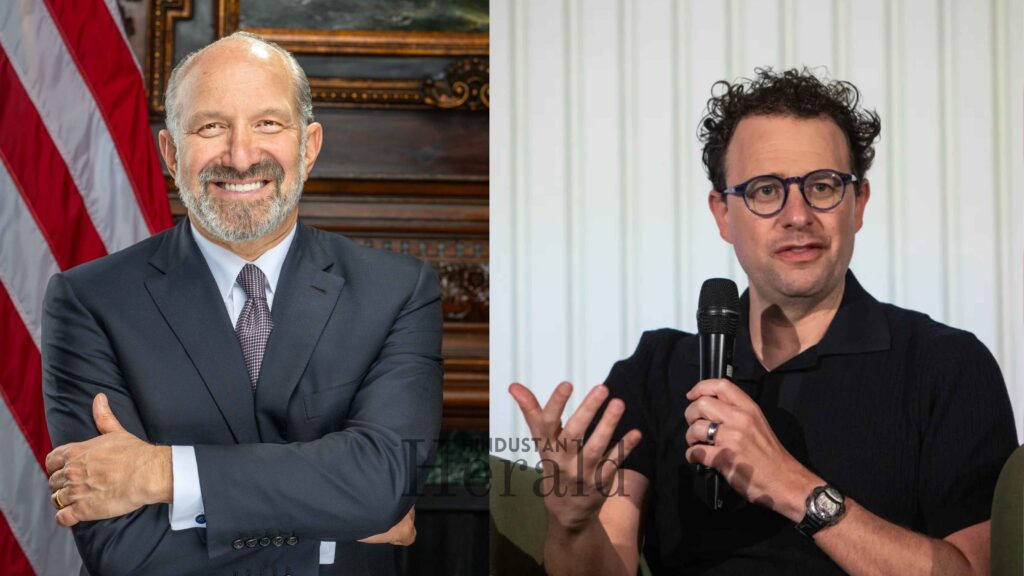
The Trump administration, reportedly alarmed by this claim, moved quickly. Commerce Secretary Howard Lutnick sent a letter directly to Dario Amodei, Anthropic’s chief executive, placing the two models under export controls effective immediately.
Anthropic reviewed what the government shared and is not satisfied with the premise. In its statement, the company said the demonstration it was shown involved asking the model to read a specific codebase and identify software flaws. That is a technique already available through other publicly deployed models, including competing products from other major AI companies. The vulnerabilities identified, Anthropic said, were “relatively simple” and “previously known” ones that offered no special capability beyond what is already widely accessible.
“We have not even received a disclosure of a concerning non-universal potential jailbreak that led to a harmful result,” the company wrote. It was careful to draw a distinction between a universal jailbreak, which would broadly bypass the model’s safety systems across a wide range of tasks, and a narrow one that might work only in specific, limited scenarios. No one has found a universal jailbreak for Fable 5, Anthropic maintained. And the narrow one the government appears to be relying on, in the company’s assessment, does not provide meaningful uplift beyond what other models can already do.
Anthropic Complies but Pushes Back Hard
This is not a company quietly absorbing a government order. Anthropic used its public statement to mount a pointed defence of its safety design philosophy.
The company explained that its approach to safety with Fable 5 was never premised on achieving perfect jailbreak resistance, because no model in the industry can offer that. Instead, it built what it calls a “defence in depth” strategy. The goal was to make jailbreaks either very narrow in scope or extremely expensive and difficult to produce, while simultaneously running thorough monitoring to detect and shut down any active misuse. That is why Anthropic also implemented a requirement for 30-day retention of customer interaction data for Mythos-class models, a policy that it acknowledged carries real commercial costs but that allows the company to track and respond to attacks quickly.
“We suspect that perfect jailbreak resistance is not currently possible for any model provider,” the company stated plainly. “If this standard was applied across the industry, we believe it would essentially halt all new model deployments for all frontier model providers.”
That is a significant statement. It is Anthropic effectively arguing that the government’s threshold for what constitutes an unsafe model, if applied universally, would freeze AI development across the entire sector.
The company also made clear it believes this shutdown is connected to a broader pattern of friction between Anthropic and the current U.S. administration.
A Difficult Political Backdrop
This did not happen in a vacuum. The relationship between Anthropic and the Trump administration has been deteriorating for months. Earlier this year, the administration ordered all federal agencies to stop using Anthropic’s models after the company refused to agree to the Pentagon’s preferred contract terms for AI vendors. Those terms, according to reporting, included a provision that any AI purchased by the Pentagon could be used “for any lawful purpose.” Anthropic sought explicit exemptions from having its models used for autonomous weapons systems or mass domestic surveillance.
The company would not budge on those exemptions. The Pentagon then declared Anthropic a “supply chain risk” in early March, a designation that effectively barred all U.S. government agencies from working with the company. Against that backdrop, the Friday directive reads to many observers as something more than a straightforward national security call.
“AI industry insiders and policy experts reacted with disbelief,” according to reporting out of the United States, with some interpreting the move as a continuation of the administration’s effort to pressure Anthropic into compliance.
Anthropic addressed this directly in its statement, reiterating that it believes the government should have the authority to block genuinely unsafe AI deployments. But it argued that authority should come through a statutory process that is “transparent, fair, clear, and grounded in technical facts.” In its view, what happened on Friday evening was none of those things.
What This Means for Users, and for India
For the hundreds of millions of users worldwide, including a significant and growing base in India, the immediate impact is straightforward: Fable 5 and Mythos 5 are unavailable. Anthropic’s other models, including Claude Opus 4.8 and its Sonnet and Haiku variants, remain fully accessible, so users can still interact with Claude, just not through its most advanced capabilities.

For India specifically, this carries a dimension worth noting. Indian developers, researchers, and businesses had only just begun accessing Fable 5. The model had generated considerable interest in the Indian AI and technology community, particularly for its advanced coding capabilities. That access is now suspended indefinitely, through no action of their own, because of a regulatory dispute playing out thousands of kilometres away in Washington.
Where Things Stand Now
As of Saturday morning, the models remain offline. Anthropic says it believes the situation is a misunderstanding and is working to restore access as quickly as possible. The company has promised to share more technical details about the jailbreak it was shown within 24 hours.
That said, the company is dealing with a government directive backed by national security law. The timeline for any resolution is entirely unclear. Whether Anthropic can persuade the Commerce Department to reverse course, or whether it will need to find some technical mechanism to satisfy the underlying concern, remains an open question.
What is not open to question is the significance of what happened. For the first time, a major government used export control law to force a private AI company to pull a live, publicly deployed model off the market. The precedent has been set. How AI companies, regulators, and governments around the world respond to it will shape the rules of this industry for years to come.
For now, one of the most powerful AI systems ever made available to ordinary users sits switched off, three days after launch, while two organisations disagree about whether it was safe enough to be on in the first place.
Stay ahead with Hindustan Herald — bringing you trusted news, sharp analysis, and stories that matter across Politics, Business, Technology, Sports, Entertainment, Lifestyle, and more.
Connect with us on Facebook, Instagram, X (Twitter), LinkedIn, YouTube, and join our Telegram community @hindustanherald for real-time updates.

Tech writer passionate about AI, startups, and the digital economy, blending industry insights with storytelling.
- Neeraj Kapoor

- Neeraj Kapoor
- Neeraj Kapoor
- Neeraj Kapoor




 Arun Upadhayay
  Ananya Sharma
  Prakash Nair