
 By Ananya Sharma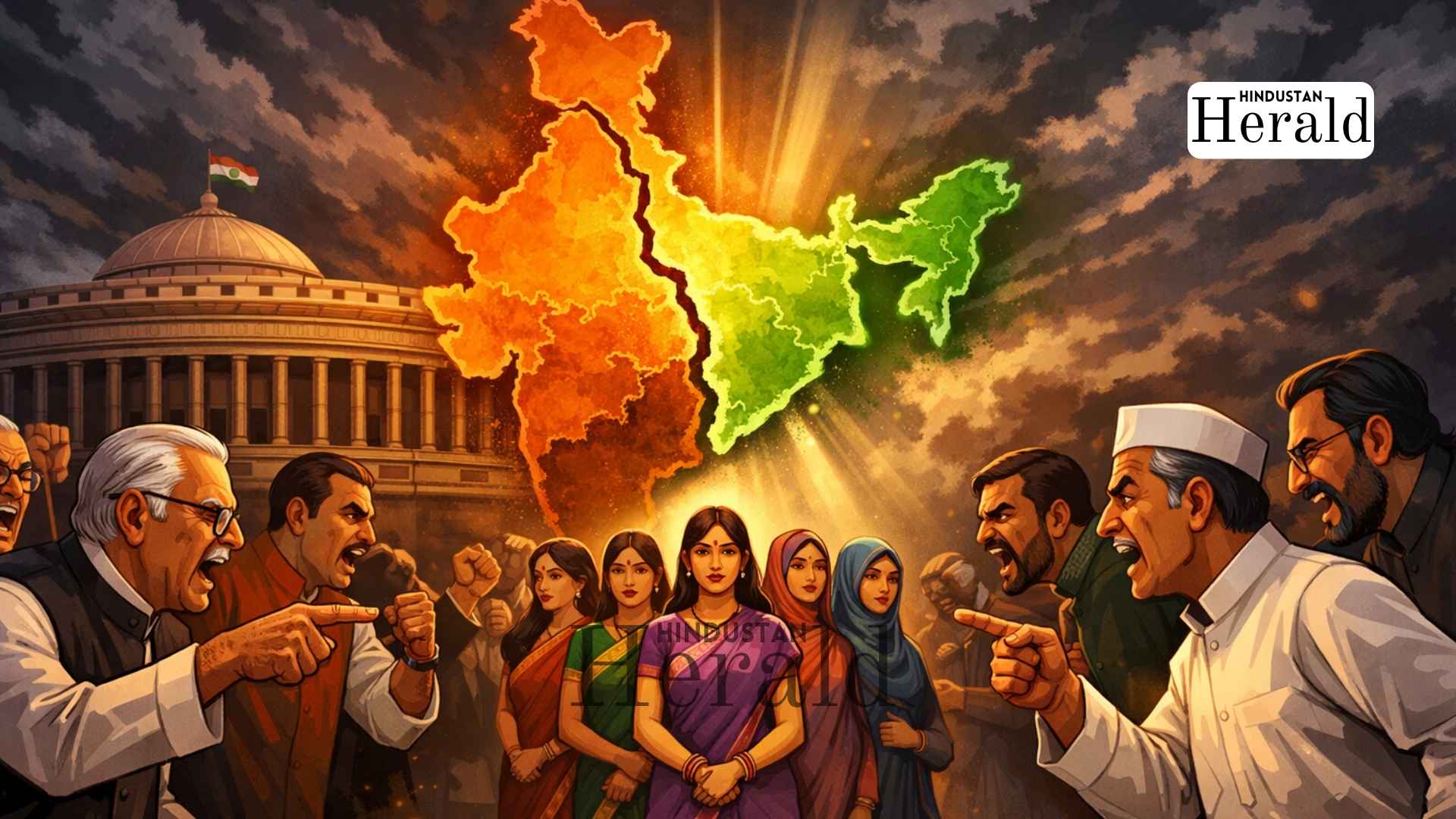
New Delhi, April 16: Parliament was supposed to be on a break. Instead, it’s back, and the reason is three bills that could change the face of Indian politics for the next 50 years.
The government called a special three-day session starting today, April 16. Three bills were tabled in the Lok Sabha this morning. On paper, they are about giving women more seats in Parliament. In practice, they have set off a political storm that cuts across party lines, state boundaries, and decades of constitutional history.
What The Government Put On The Table
Let’s start simple.
Right now, the Lok Sabha, the lower house of Parliament, has 543 seats. The government wants to take that number to 850. That’s a jump of more than 300 seats in one go.
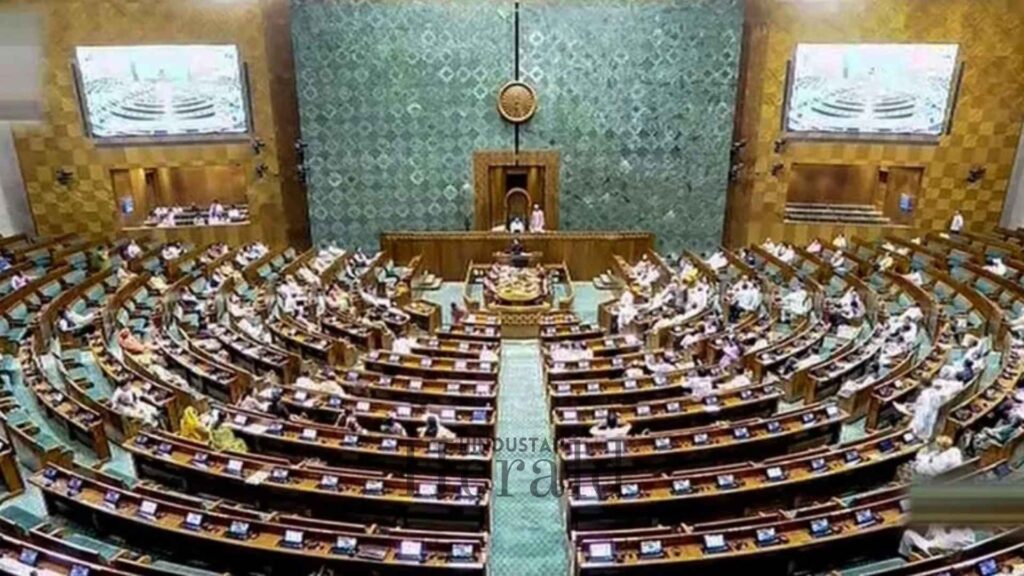
Along with that, the government wants to redraw all the constituency boundaries across the country. This process is called delimitation. Think of it as redrawing the map of who votes where. And once that map is redrawn, one-third of all seats in Parliament and in state assemblies will be reserved for women.
Three bills were introduced in the Lok Sabha today: the Constitution (131st Amendment) Bill, 2026, the Delimitation Bill, 2026, and the Union Territories Laws (Amendment) Bill, 2026. Together, they seek to increase the size of the Lok Sabha, enable delimitation based on the 2011 Census, and allow women’s reservation to kick in after that delimitation.
The women’s quota is not a new idea. Parliament had already passed a law for it back in September 2023, the Nari Shakti Vandan Adhiniyam. But there was a catch baked into that law. Its implementation was linked to a future delimitation exercise and a Census that had not yet been conducted. Since the 2021 Census is still pending, it was delayed first by the pandemic and has still not been completed. The quota was stuck in a waiting room with no exit date.
Now the government wants out of that waiting room. The new bills amend the Constitution to allow the one-third reservation for women to take effect immediately after delimitation, removing the requirement to wait for a Census conducted after 2026. Instead of waiting for fresh Census data, the plan is to use numbers from the 2011 Census and get the job done before the 2029 general elections.
Why The Opposition Is Not Happy
The opposition is not against women getting more seats in Parliament. Several MPs said that clearly on the floor of the House today. What they are against is how the government is going about it.
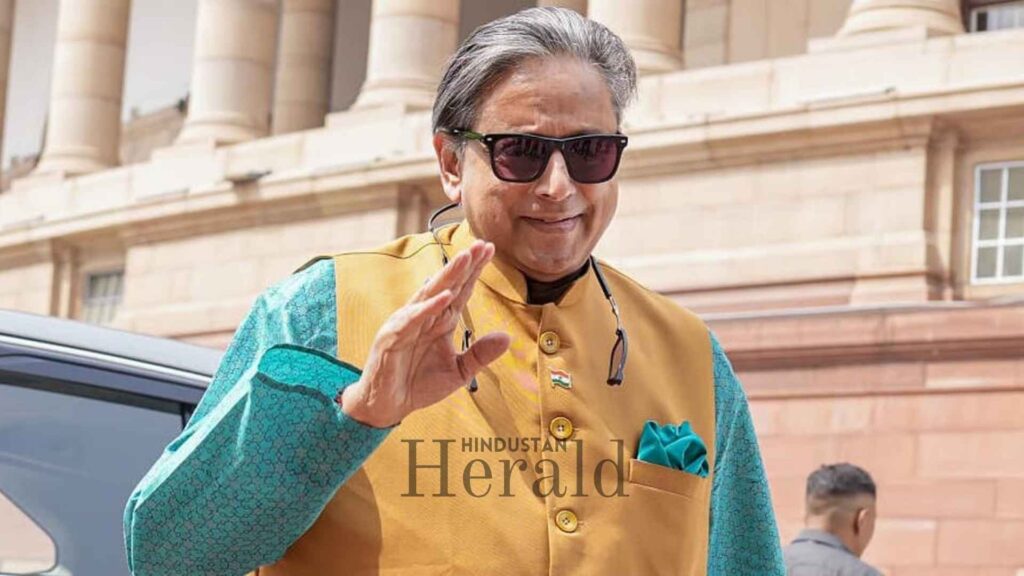
Congress MP Shashi Tharoor did not mince words. He told the House that the government’s real plan is to redraw constituencies in a way that increases seats in areas where the ruling party is strongest, and that women’s reservation is simply being used as the political cover to push that through. He called it “political demonetisation” using the memory of 2016 when a big announcement caught the country off guard and upended everyday life.
The Congress separately accused the government of wanting to “bulldoze” delimitation using women’s reservation as the shield.
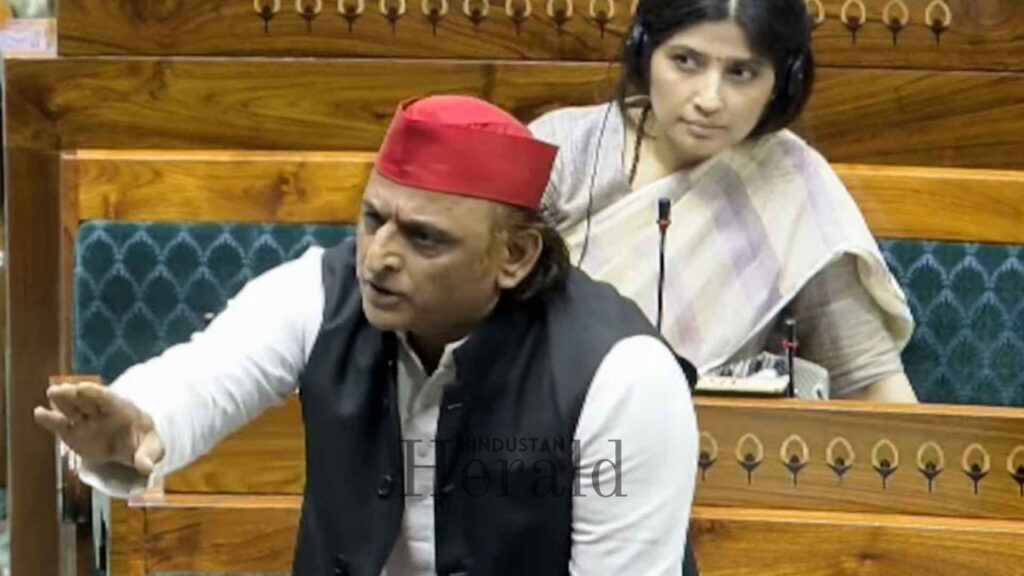
Samajwadi Party president Akhilesh Yadav took a different angle, alleging that the BJP’s real urgency around women’s reservation is to avoid or delay a caste census, which has been gaining political momentum since the Bihar findings were released.
All of this is happening against a backdrop of sharp unease from southern India and those concerns, frankly, are backed by numbers.
The South India Problem
Here is something worth understanding before the political noise drowns it out.
Back in the 1970s, the government froze how seats were allocated to states. The idea was simple: states that controlled their population growth should not be penalised for it. States in the south, Kerala, Tamil Nadu, Karnataka, Telangana, and Andhra Pradesh, took that seriously. They ran family planning programmes, educated women, and brought down birth rates. And it worked.
Meanwhile, states like Uttar Pradesh, Bihar, Madhya Pradesh, and Rajasthan in the north had far higher population growth. More people meant more seats in a population-based system. But the freeze protected the South from losing ground.
Through the 42nd Constitutional Amendment in 1976, the total number of seats of each state in the Lok Sabha was frozen based on the 1971 Census. This was done as a deliberate measure to enable states to pursue population stabilisation without political penalty.
The new bills lift that protection.
Congress Rajya Sabha MP P Chidambaram put it plainly: southern states that currently hold 24.3 per cent of Lok Sabha seats could see that share shrink to about 20.7 per cent after delimitation. That is roughly 17 fewer seats in effective influence for states that did exactly what the Constitution asked of them.
On the flip side, Uttar Pradesh’s seat count could rise from 80 to 120, and after delimitation, possibly climb further to around 140.
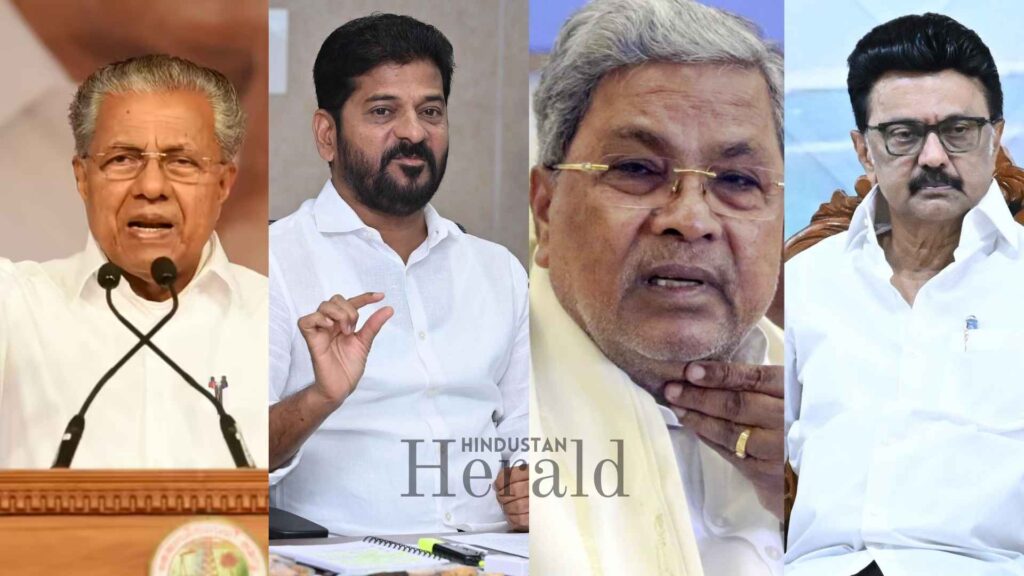
The Chief Ministers of Tamil Nadu, Karnataka, Kerala, and Telangana M K Stalin, Siddaramaiah, Pinarayi Vijayan, and Revanth Reddy have stood together publicly against the exercise. Their demand: implement women’s reservation on its own, without tying it to a map redraw that shrinks southern representation. Congress MP Hibi Eden, who formally moved a notice in Parliament to oppose the bill, argued that it removes the constitutional anchor that historically tied delimitation to the latest Census, and is bound to skew political power towards the Hindi heartland.
The government’s assurance that no state’s proportional share will be reduced has not been accepted at face value. Trust, at this point, is in short supply.
The OBC Question Nobody Is Answering
There is another piece of this that gets less coverage than it deserves.
The women’s reservation, as proposed, is a flat 33 per cent. One in every three seats, across the board. But India’s women are not a monolith. A woman from a Dalit family in rural Bihar and a woman from an upper-caste household in a metropolitan constituency are both women but they do not face the same barriers, access the same resources, or stand equal chances in an election.
Several opposition parties, including the Samajwadi Party and sections of the Congress, want a sub-quota for OBC women within that 33 per cent. The current bills have nothing of the sort.
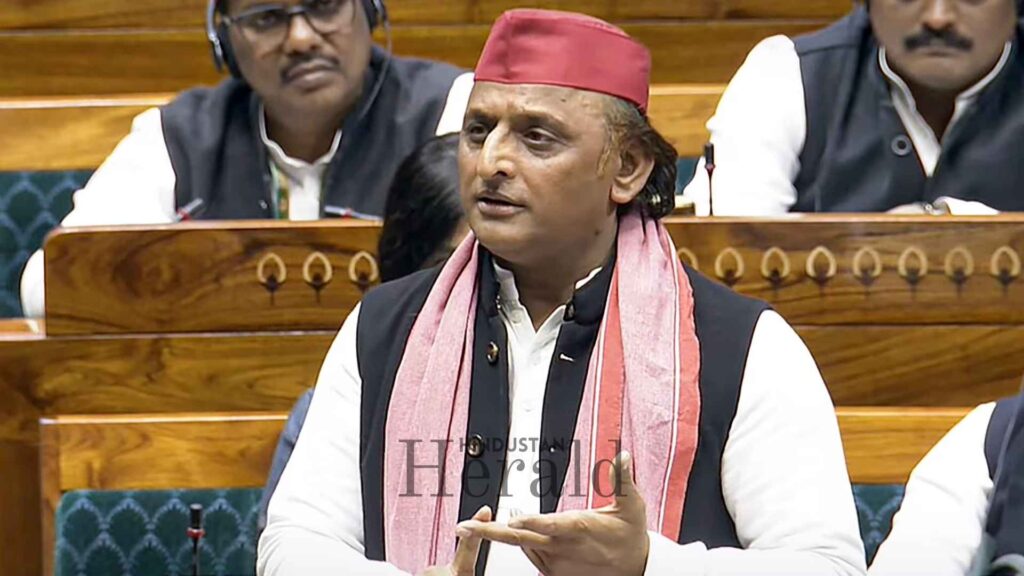
Akhilesh Yadav said in the House today that he is personally in favour of women’s reservation, but requested that backward communities, especially Muslim women, be given reservation within the quota. He also argued that without a proper Census capturing caste data, the government does not even have reliable numbers to design fair reservations. Another MP pointed out that without the Census, there is no accurate data on OBC and women’s representation, making it impossible to design genuinely equitable reservations.
The silence on OBC women is not an oversight. It is a political choice, and it is one the government will have to answer for as the debate rolls on over the next two days.
What Happens Now in Women’s Reservation
The special session runs until April 18. The debate in Lok Sabha has already turned combative, and the bills will face even sharper scrutiny in the Rajya Sabha, where the government’s numbers are tighter.
Here is the constitutional reality: to pass an amendment to the Constitution, the government does not just need a simple majority. It needs two-thirds of the members present and voting in both Houses. That is a considerably higher bar, and with the Opposition unified around at least parts of this resistance, and southern state leaders openly campaigning against it, that bar is not easy to clear.
The Constitution Amendment Bill also proposes that Parliament will have the power to decide by law when to carry out delimitation and which census to use a decision that could be taken by a simple majority. Critics point out that this hands enormous discretionary power to whichever party is in government at the time, and sets a precedent that could outlast the current administration.
Still, the government has framed this as a moment of historic justice for Indian women. The argument that a quota written in 2023 should not gather dust while bureaucratic delays push it past another election is not without merit. The 2021 Census delay is real. The 2029 elections are not far. And the women who were promised 33 per cent of seats in Parliament are still waiting.
What is also true is that how a democratic reform is designed matters as much as the reform itself. A woman’s reservation that arrives bundled with a delimitation that shrinks southern representation, without OBC sub-quotas, and with Parliament handed the keys to decide future Census timelines, is a package with consequences that go well beyond gender equality.
The next two days in Parliament will tell us whether the government has the votes and the argument to push this through.
Stay ahead with Hindustan Herald — bringing you trusted news, sharp analysis, and stories that matter across Politics, Business, Technology, Sports, Entertainment, Lifestyle, and more.
Connect with us on Facebook, Instagram, X (Twitter), LinkedIn, YouTube, and join our Telegram community @hindustanherald for real-time updates.

Covers Indian politics, governance, and policy developments with over a decade of experience in political reporting.
- Ananya Sharma

- Ananya Sharma
- Ananya Sharma
- Ananya Sharma




 Ayesha Khan
  Sandeep Verma