 By Shelesh Joshi and Rajiv Menon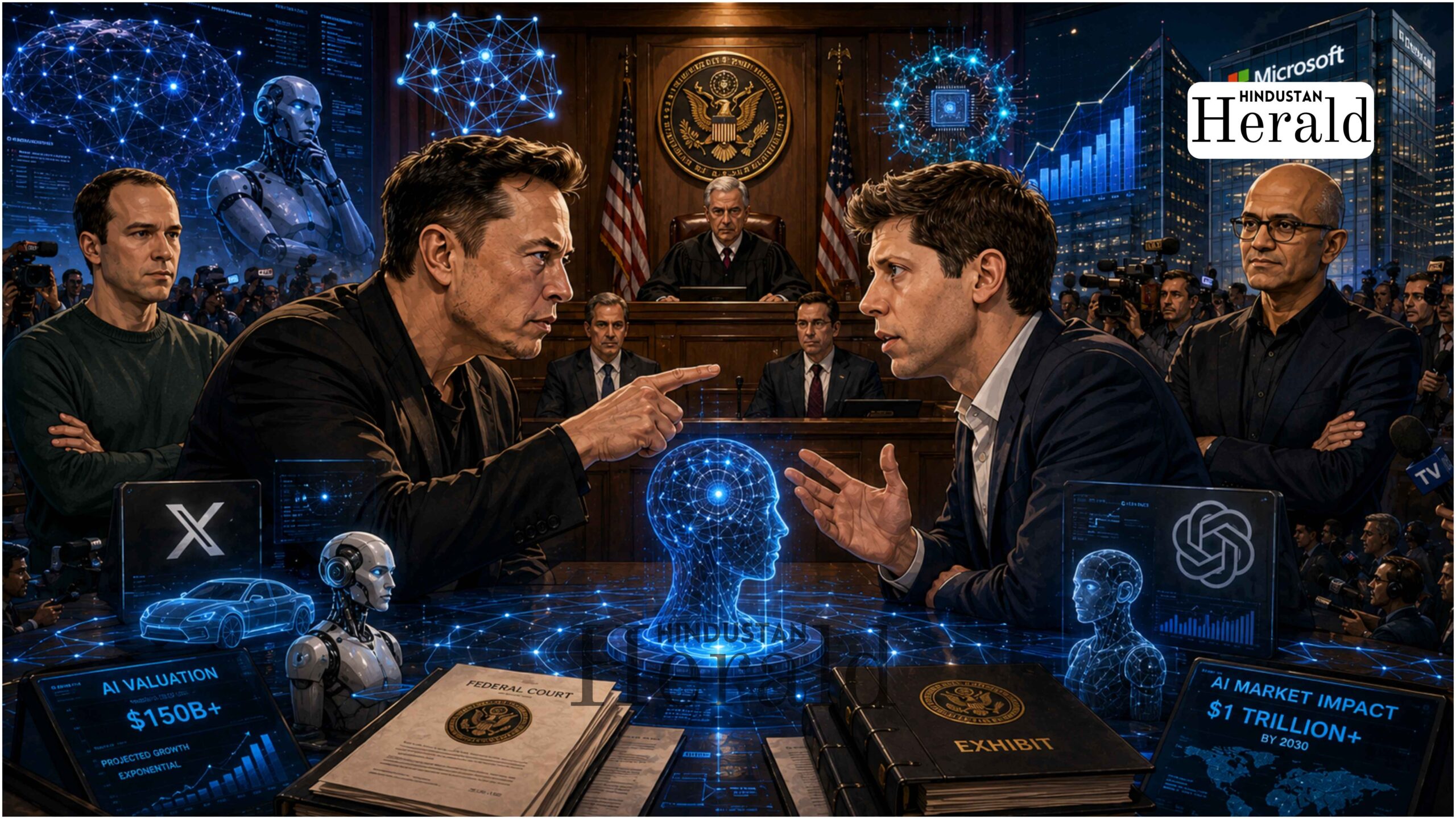
Oakland, May 19: Just after 10:23 in the morning on Monday, a courtroom deputy handed a folded note to a federal judge in Oakland, California. It took nine jurors less than two hours to write it.
Three weeks of explosive testimony. Eleven days of arguments. Two of the most powerful men in the technology world sitting in the same courtroom, telling completely different versions of the same story. And it ended before lunch, with a unanimous verdict that threw out every single claim Elon Musk had brought against OpenAI, Sam Altman, Greg Brockman, and Microsoft.
Judge Yvonne Gonzalez Rogers read the note, looked up, and said what many in the room had begun to sense was coming. “I’ve always said I would accept the jury’s verdict,” she told the courtroom. “I think there’s a substantial amount of evidence to support the jury’s finding, which is why I was prepared to dismiss on the spot.” Just like that, the case was over.
How a $38 Million Bet Became a $180 Billion Grudge
To understand why this trial happened at all, you have to go back to December 2015, when a group of idealistic technologists sat around a table in San Francisco and agreed to do something unusual.
They were going to build one of the most powerful technologies in human history. And they were going to do it as a charity. OpenAI was born as a nonprofit. No shareholders. No profit motive. The entire premise was that artificial general intelligence, the kind that could one day outthink any human being on earth, was too dangerous and too important to be built inside a company chasing quarterly returns.
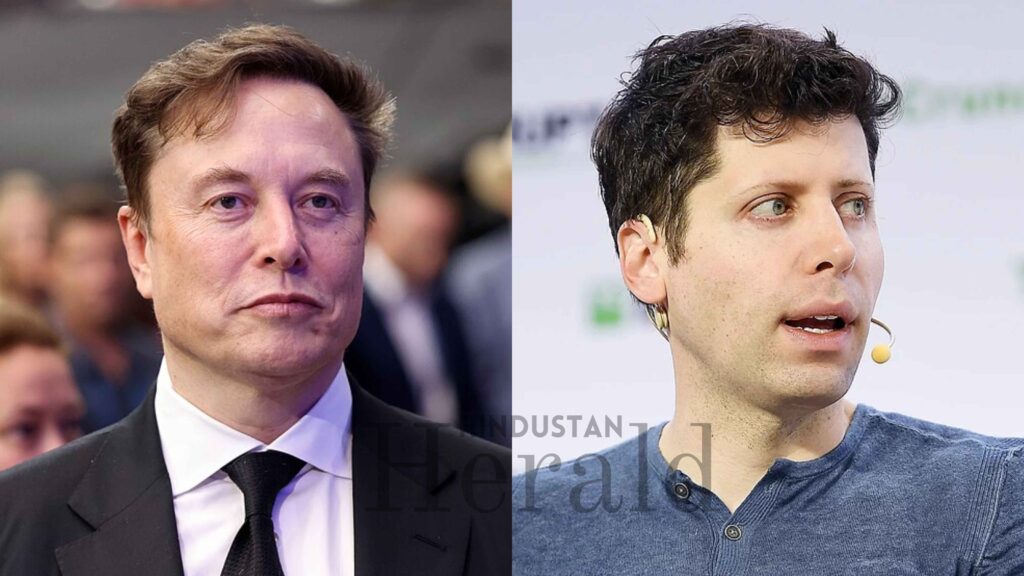
Elon Musk believed in that premise enough to put $38 million of his own money behind it. He also believed in it enough to serve on the board until 2018, when things between him and his co-founders went sideways. The split, as it turns out, was not really about mission. It was about control.
Musk had pushed the other founders to hand him majority authority over the organisation, either through a direct stake or by folding OpenAI into Tesla. They said no. He left. And for the next five years, he watched from the outside as the organisation he helped build transformed into something he no longer recognised.
By 2019, OpenAI had a for-profit subsidiary. By 2023, Microsoft had poured $13 billion into that subsidiary and walked away with intellectual property rights and a share of future revenues. The nonprofit that was supposed to govern everything, Musk argued, had quietly become a shell. In February 2024, he sued.
“It’s Not OK to Steal a Charity”
Musk’s legal team did not hold back on the framing. Their opening argument described the case as a “textbook tale of altruism versus greed.” Altman and Brockman, they claimed, had taken a charitable institution built on donor goodwill and public trust, stripped it of its mission, and enriched themselves enormously in the process. On the stand for three days, Musk tried to cut through what he knew would be a complicated legal fight with a simple moral appeal.
“I think they’re going to try to make this lawsuit very complicated,” he told the jury, “but it’s actually very simple. It’s not OK to steal a charity.”
He also explained why he had waited so long to file the case. Altman, he said, had repeatedly reassured him over the years that everything was fine. That OpenAI was still operating in the spirit of its original mission. That the commercial arrangements were just practical necessities, not a fundamental betrayal.
“Thinking that someone might steal your car is not the same as someone stealing it,” he told jurors. “I would have filed a lawsuit sooner if I thought they had stolen the charity sooner.” It was a good line. The jury did not buy the underlying argument.
What Altman Said From the Same Stand
Sam Altman offered a portrait of the same events that was, in almost every detail, the opposite of Musk’s. He testified that the decision to reject Musk’s takeover proposal was not a power play. It was a matter of principle. The entire point of building OpenAI as a nonprofit, Altman argued, was to ensure that no single person could control the development of technology this consequential.
“Part of the reason we started OpenAI is we didn’t think AGI could be under the control of any one person, no matter how good their intents are,” he told the court. He was also asked about the personal toll of the falling-out. Altman said that before things deteriorated, he had genuinely admired Musk. What followed was not anger, exactly, but something that sounded more like disappointment.
“I felt like he had abandoned us,” Altman said quietly. “Not come through on his promises. Put the company in a very difficult place. Jeopardised the mission. Didn’t really care about the things I thought he cared about.”
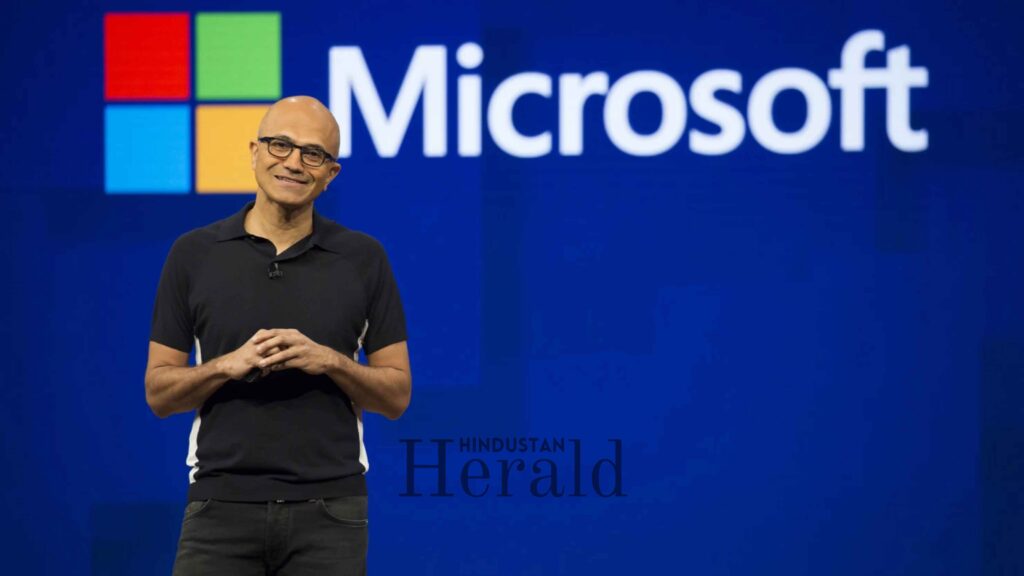
Microsoft CEO Satya Nadella also appeared on the stand, as did former OpenAI board members Helen Toner and Tasha McCauley, both of whom acknowledged concerns about Altman’s truthfulness during the chaotic board episode in 2023 that saw him briefly fired before being reinstated within days. That admission did not hurt OpenAI’s case, but it was a reminder of just how much turbulence sits beneath the polished surface of this company.
OpenAI’s Defence: The Clock Already Ran Out
OpenAI’s lawyers came into the trial with a clear strategy. They did not need to prove that the company had done nothing wrong. They needed to convince nine jurors of one thing: Musk knew what was happening years before he sued, and he chose to wait. Lead attorney William Savitt opened with a line that would echo through the rest of the proceedings. “He waited too long to sue. It’s too late now to gin up something to harm a competitor.”
The competitor reference was deliberate. In March 2023, about eighteen months before filing his lawsuit, Musk had launched xAI, his own artificial intelligence company. OpenAI’s lawyers argued throughout the trial that the lawsuit had far less to do with protecting a charitable mission and far more to do with slowing down a direct commercial rival.
They also argued something more damaging: that Musk himself had once pushed for a for-profit structure at OpenAI. Internal communications shown to the jury reportedly included discussions in which Musk had explored the idea of OpenAI creating a commercial entity, on the condition that he retained control of it. When that condition was rejected, he left. The lawsuit, OpenAI’s team suggested, was what happened when a man who wanted to own a company realised he never would.
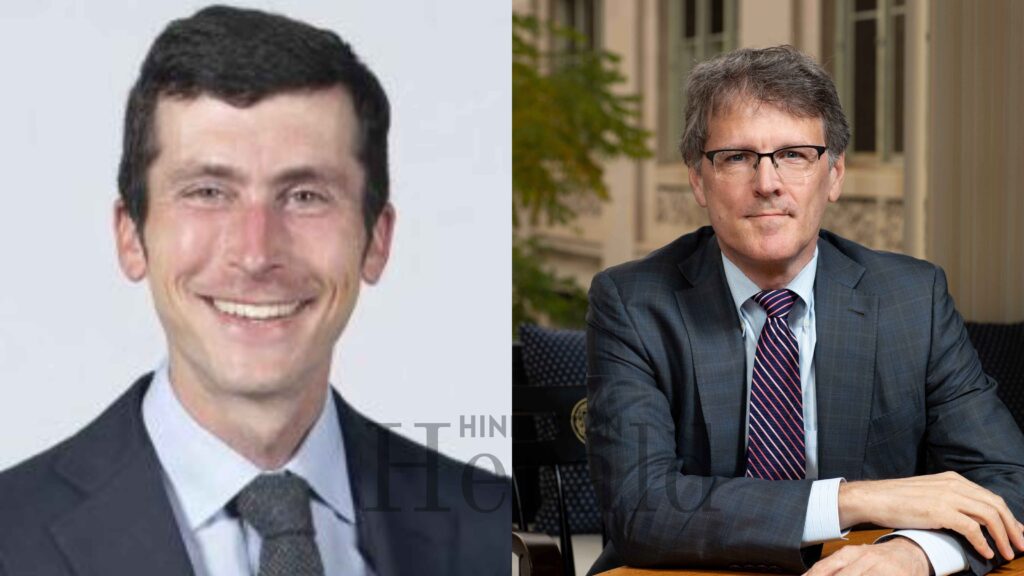
Two law professors, Daniel Hemel of New York University and John Coates of Harvard, testified that OpenAI’s hybrid structure was legally sound. Coates put a number on it: the arrangement had generated roughly $200 billion in value for the nonprofit entity. Whatever one thought about the ethics of the transformation, the structure itself held up under academic scrutiny.
OpenAI also argued that Musk’s donations never came with conditions attached. Without a restricted gift, his attorneys said, there was no charitable trust for him to enforce. The jury agreed with the framing. Or at least, it agreed that the clock had already run out before Musk ever walked into court.
The Verdict, the Reactions, and the Hugs Outside
When the note landed on Judge Gonzalez Rogers’ desk at 10:23 am, the hearing on potential remedies that had been scheduled for later that day was already underway. She called a stop to the proceedings, read the verdict, and accepted it as the court’s own.
Outside the courthouse, OpenAI’s attorneys and Microsoft’s legal team celebrated with hugs and pats on the back. Neither Musk nor Altman was present in the room to witness it. Savitt did not mince words in front of the cameras.
“The finding of the jury confirms that what this lawsuit was, was a hypocritical attempt to sabotage a competitor. The fact is that OpenAI is a not-for-profit, mission-driven organisation that has been and will continue to be faithful to that mission.”
Microsoft released a short written statement. “The facts and the timeline in this case have long been clear. We welcome the jury’s decision to dismiss these claims as untimely.” Musk responded hours later, from his phone, on X.
“The judge and jury never actually ruled on the merits of the case, just on a calendar technicality,” he wrote. “There is no question to anyone following the case in detail that Altman and Brockman did in fact enrich themselves by stealing a charity. The only question is WHEN they did it.”
He also turned his frustration toward the judge, calling her a “terrible activist” who had “just handed out a free licence to loot charities if you can keep the looting quiet for a few years.” His lead attorney Marc Toberoff was blunter about what came next.
“This at its core is a travesty,” he said at a press conference outside the courthouse. “This one is not over. I can sum it up in one word: appeal.” Attorney Steven Molo reached for history to make his point. He compared the verdict to the Siege of Charleston and the Battle of Bunker Hill, framing it as a setback in a longer campaign. Americans lost those battles, he noted, but won the war.
What Was Actually at Stake Financially
It is worth pausing to consider what Musk was actually asking the court to do, because the numbers involved were staggering even by the standards of a technology industry that throws billions around casually.
He wanted OpenAI and Microsoft to hand back between $130 billion and $180 billion in what he termed “ill-gotten gains.” He wanted Altman and Brockman removed from their positions. He wanted the entire corporate restructuring that turned OpenAI into one of the world’s most valuable private companies to be unwound, top to bottom.
Had the jury sided with him on the merits, the consequences for the AI industry would have been profound and probably permanent. No venture-backed AI lab could have looked at the nonprofit-to-for-profit conversion model without legal anxiety again.
Instead, the opposite has happened. OpenAI is currently valued at approximately $852 billion, a number that emerged in testimony during the trial itself. The company completed a $40 billion fundraising round led by SoftBank earlier this year, the single largest private capital raise in the history of the technology sector. An IPO that some analysts have projected could push the valuation toward $1 trillion is now moving forward without the cloud of an existential damages order hanging over it.
Wedbush Securities analyst Dan Ives put it simply in a research note after the ruling. The verdict, he wrote, takes the “worst-case scenario off the table” for both OpenAI and Microsoft. Greg Brockman’s stake in OpenAI is worth approximately $30 billion. Sam Altman’s net worth is estimated at over $3.5 billion. Both men keep their jobs.
The Appeal and the Unanswered Question
Musk’s team will now go to the Ninth Circuit Court of Appeals. Their argument will centre on whether the jury was given flawed instructions on how to apply the statute of limitations, and whether the lower court interpreted the standard correctly.
It is a genuinely difficult path. Overturning a unanimous jury verdict on procedural grounds requires showing that the instructions themselves were legally wrong, not just that a different jury might have weighed the evidence differently. That bar is high.
Still, the underlying legal question at the heart of this case, whether a nonprofit organisation can transform itself into a for-profit enterprise without legal consequence to the people who funded its early years, remains entirely unsettled. The jury never touched it. The judge never ruled on it. It floats there, unresolved, somewhere above the courtroom that just cleared Sam Altman’s path to one of the largest public offerings in history.
For everyone else watching this space, including investors, regulators, and the dozens of AI research organisations currently navigating similar structural questions, that unanswered question may matter more than the verdict itself. Musk lost. OpenAI won. The fight over who gets to shape artificial intelligence, and under what terms, is nowhere near finished.
Stay ahead with Hindustan Herald — bringing you trusted news, sharp analysis, and stories that matter across Politics, Business, Technology, Sports, Entertainment, Lifestyle, and more.
Connect with us on Facebook, Instagram, X (Twitter), LinkedIn, YouTube, and join our Telegram community @hindustanherald for real-time updates.

Tracking world politics, global markets, trade movements, policy decisions, and the changing balance of economic power.
- Shelesh Joshi

- Shelesh Joshi
- Shelesh Joshi
- Shelesh Joshi



Specializes in South Asian geopolitics and global diplomacy, bringing in-depth analysis on international relations.
- Rajiv Menon
- Rajiv Menon
- Rajiv Menon
- Rajiv Menon