 By Shelesh Joshi and Rajiv Menon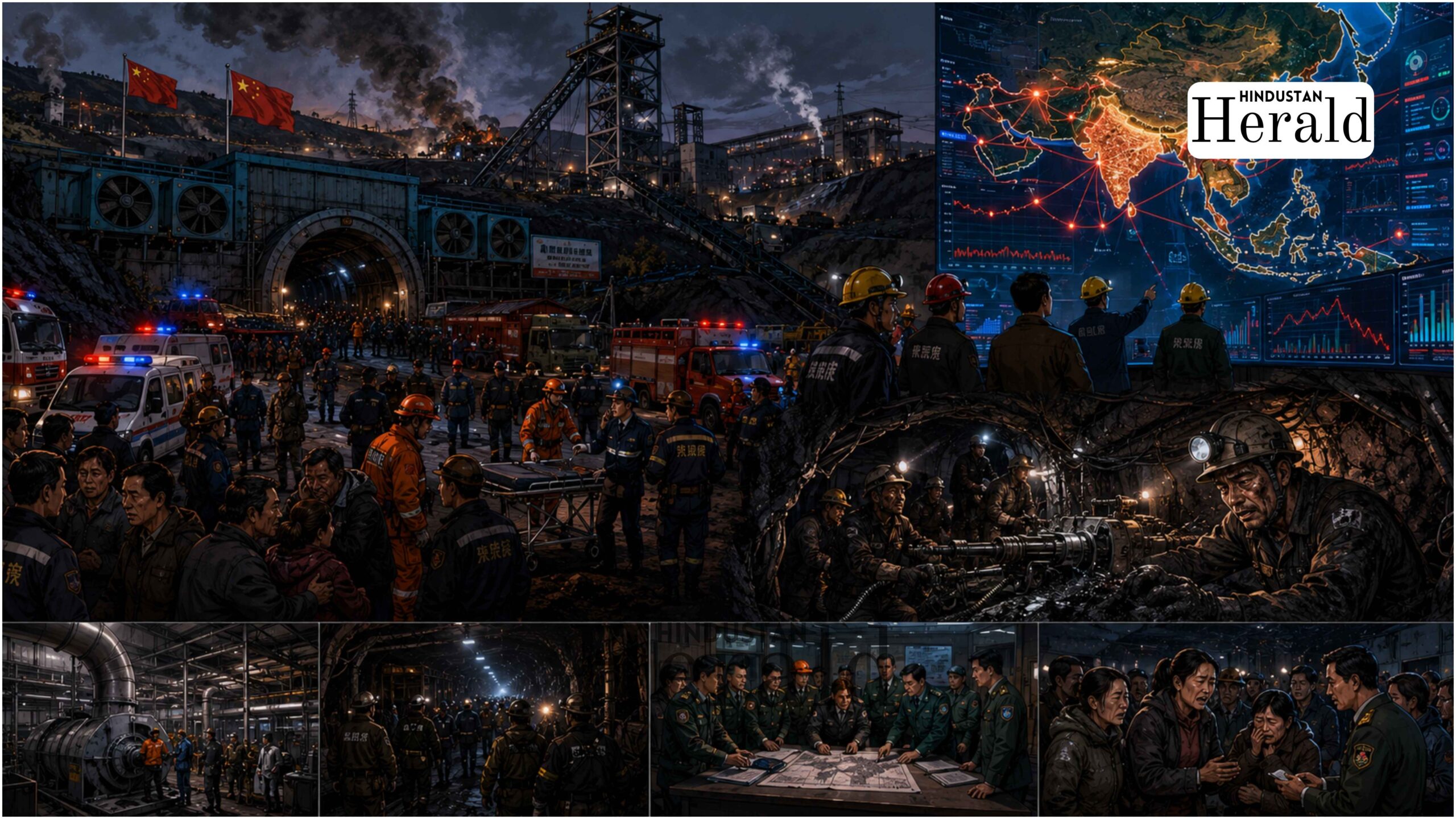
Beijing, May 23: It was just past 7:30 on a Friday evening when something went terribly wrong inside the Liushenyu coal mine in Qinyuan County, Shanxi Province.
Two hundred and forty seven workers were underground at the time. Within minutes, carbon monoxide readings had “exceeded limits” across sections of the coal mine, according to Xinhua News Agency. Then the gas exploded. By Saturday morning, 82 people were confirmed dead. Around a dozen workers were still unaccounted for, believed to be trapped somewhere in the tunnels below. Rescue teams were drilling, ventilating, and searching but time was running short.
This is now the deadliest coal mine disaster China has seen in over a decade. The coal mine sits at the heart of Shanxi’s vast extraction network. And for a province that has buried miners before and will, in all likelihood, bury more, it is a moment that raises questions the government has never fully answered.
What Happened Friday Night
The sequence of events, as pieced together from Xinhua, Reuters, and CGTN, is a familiar one in Chinese mining disasters, which makes it no less damning. Carbon monoxide levels rose inside the coal mine before the explosion. The warnings were apparently there. Yet when the blast ripped through the workings at 7:29 PM, 247 workers were still inside.
By 6 AM Saturday, 201 of them had been brought safely to the surface. That is, in one sense, a significant achievement for the rescue teams who worked through the night. In another sense, it means 46 people were still unaccounted for at dawn, and as the hours wore on, that number was revised to around a dozen still trapped, with 82 confirmed dead.
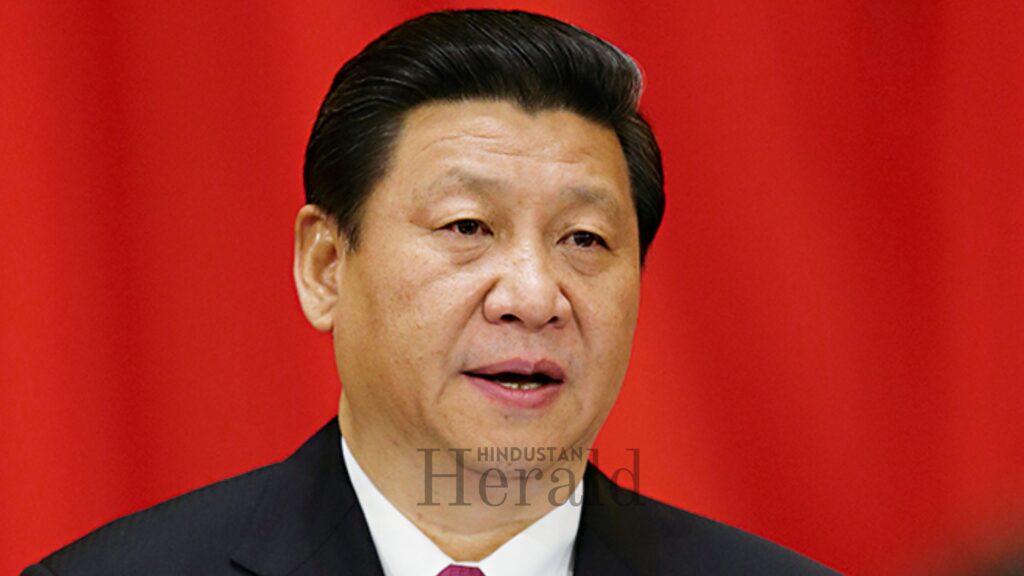
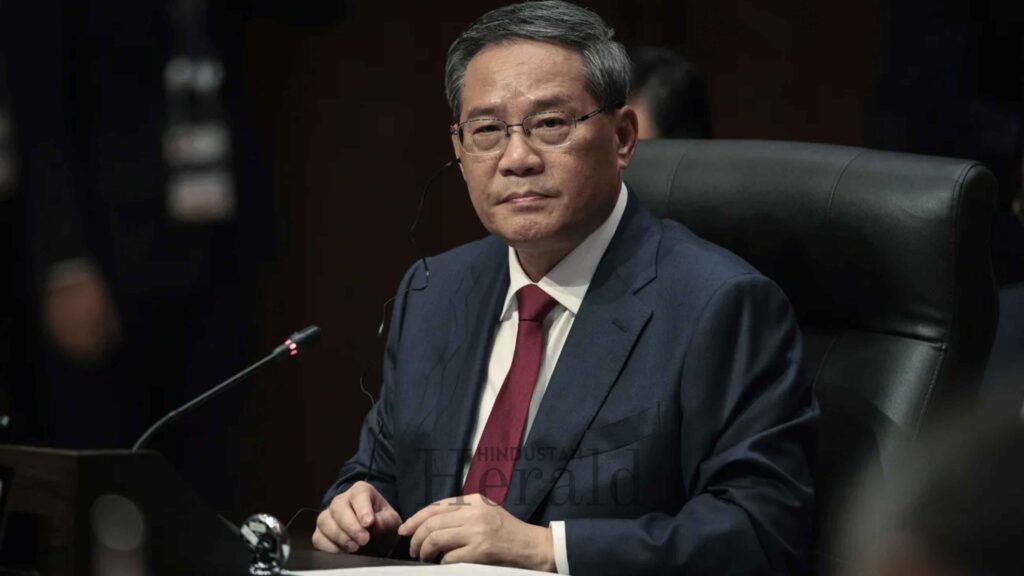
As per sources cited by Reuters, President Xi Jinping issued a directive calling on authorities to “spare no effort” in rescue operations and ordered a thorough investigation with strict accountability. Premier Li Qiang went a step further, specifically calling for the “timely and accurate release of information” an instruction that would be unremarkable in most countries, but in China’s context is a pointed signal that the government does not want this story to be managed out of the headlines before the facts are established.
The coal mine itself has been suspended. Criminal investigators have moved in. Management is reportedly under police supervision. The National Mine Safety Administration has ordered an emergency safety audit across Shanxi’s entire mining network.
Shanxi and Its Long Record
People who cover Chinese industry have a shorthand for moments like this: Shanxi again. The province is China’s coal heartland. It feeds the country’s power plants and steel furnaces, employs hundreds of thousands of miners, and generates a disproportionate share of both national energy output and national mining fatalities.
In November 2023, a fire at a coal mine company building in Lvliang City also in Shanxi killed 26 workers, according to the Associated Press. In February of that same year, 53 miners died in a landslide at an opencast coal mine in Inner Mongolia. Before that, there was the 2009 Tunlan coal mine blast that killed 74. Before that, Hongtong county in 2007, where 105 died. Each time, the President issued a statement. Each time, mine managers were detained. Each time, investigators filed reports. The Liushenyu explosion, with 82 dead and counting, now sits at the top of that list.
What keeps putting Shanxi in these headlines is not just geology or bad luck. It is the collision between two forces that Chinese governance has never successfully reconciled: the demand for maximum coal output and the requirement that workers come home alive. When production targets are set at the national level and filtered down through provincial officials who depend on the coal economy, the pressure lands on coal mine supervisors. And under that kind of pressure, early warning signs have a way of being rationalised away. Carbon monoxide levels that “exceeded limits” before a gas explosion, with 247 workers still underground, is not a failure of technology. It is a failure of decision making.
The Workers Nobody Talks About Enough
Most of the men who go into Shanxi’s coal mines come from rural communities in coal country where the alternative to mining is often no work at all. They come from villages where the coal mine is the biggest employer within a hundred kilometres. They work in conditions that formal safety rules describe one way and that underground foremen often manage another way entirely.
When a disaster like this happens, Chinese state media typically focuses on the rescue operation, the government response, and the investigation that follows. The workers themselves are named in official casualty figures, sometimes listed in local government statements, but rarely profiled individually.
Their families, according to international wire reports, gathered outside the coal mine through Friday night and into Saturday morning, waiting for information that came slowly and in pieces. Premier Li Qiang’s instruction about timely information was issued at the top. Whether it filtered down to the officials managing the families outside the coal mine gate is another question entirely.
Why This Matters Beyond China
India imports somewhere in the range of 160 million tonnes of coking coal annually by 2030, based on projections cited by Steel Secretary Sandeep Poundrik and a significant portion of that requirement is priced against Asian benchmarks that move when Chinese supply moves.
When China conducts a wave of post disaster safety shutdowns, which is the standard regulatory response after an incident of this scale, domestic coal mine output in Shanxi and neighbouring provinces typically drops. That tightens regional supply. Prices on thermal and coking coal benchmarks shift upward. Indian steel producers and power companies, who buy on those same markets, end up paying more.
This is not a theoretical connection. In 2021, when China ordered mass safety inspections after a series of accidents, global thermal coal prices spiked to levels not seen in a generation. Indian power generators who had cut back on import procurement found themselves caught short. The price shock was felt from electricity tariffs to industrial input costs.
Shanxi Province has already ordered a month long special safety inspection across all its coal mines following Friday’s explosion, according to international wire agencies. That could translate into temporary shutdowns across a chunk of one of the world’s most productive coal regions.
India is also in the middle of its own coal mine production push. Coal India Limited is reopening 32 dormant mines and launching five new operations this year to meet domestic demand, according to the US International Trade Administration. The government has invested heavily in digital approvals and exploration to fast track new capacity.
The instinct behind that push is understandable. Energy security is a legitimate national priority. But the Liushenyu coal mine disaster is a useful reference point for what the cost can look like when scale moves faster than safety infrastructure.
The Accountability Question
Here is where Chinese governance runs into a wall it has hit before. The formal accountability mechanisms after major coal mine disasters in China are well established and, in their own way, real. People go to prison. Officials are fired. Mines get shut down. Reports are published that, in documented detail, lay out exactly what went wrong.
What tends not to happen is the systemic change that would make the next disaster less likely. The reasons for that are structural. Local governments in coal producing regions depend on coal mine revenues. State owned mining enterprises operate with production mandates from Beijing. Inspection regimes, though better resourced than they were twenty years ago, remain subject to the same pressures that create the problem in the first place.
As Al Jazeera reported in the context of an earlier Shanxi accident, official calls for coal mine safety improvements from Xi Jinping himself have had “limited effect” on coal mine operations where local officials and corporate managers face stronger incentives to keep output moving.
Premier Li Qiang’s emphasis on accountability and information transparency suggests the central government is at least aware that the usual post disaster choreography is not enough. Whether that awareness translates into something different this time is the question.
As the Search Continues
As of Saturday morning, the rescue operation at the Liushenyu coal mine was still active. Senior officials from the State Council had arrived on site to oversee operations directly. Specialised drilling equipment and gas detection technology were in use to identify any pockets in the collapsed sections where survivors might still be sheltering. The window for finding anyone alive narrows with every hour, and the concentration of carbon monoxide in sealed underground sections makes survival without fresh air supply increasingly unlikely.
The official coal mine death toll of 82 will almost certainly rise. The investigation into the coal mine blast’s cause will run for months. The report it produces will be detailed and, in its description of management failures and protocol violations, probably accurate.
Whether it changes anything for the next shift of workers going underground in Shanxi is a different matter and one that China’s coal country has been waiting for an answer to for a very long time.
A Province Built on Coal, Broken by It
There is something particular about the geography of a Chinese mining disaster that gets lost when it becomes a statistic. Qinyuan County, where the Liushenyu coal mine sits, is a small, hilly administrative zone in central Shanxi. It is not a place most people outside China would have heard of before Friday night. It has no tourist sites, no major university, no technology industry. What it has, in common with dozens of other counties across Shanxi, is coal mine activity beneath the ground and communities whose economic history has been shaped entirely by getting it out.
The miners who work the night shift in places like Qinyuan are not, for the most part, choosing between coal and something better. They are choosing between coal mine work and nothing. Migrant workers from poorer inland provinces fill many of the physically demanding roles. Locals who have known the mines their whole lives fill the rest. The work pays reasonably by rural standards. The risk is understood. It is accepted because the alternative is worse.
That calculus accepted risk in the absence of alternatives is what makes coal mine safety in China a social and economic problem as much as a regulatory one. You cannot solve it purely through inspection regimes and criminal prosecutions, though those things matter. You have to give workers and communities something else to stand on.
China’s government knows this. President Xi Jinping has spoken about it. The State Council has published policy papers about rural economic diversification and industrial transition in coal dependent regions. But Shanxi is still digging, still producing record volumes, and still burying miners.
The Coal That Runs Asia
Step back from the human story for a moment and the numbers become staggering. China produced more than 4.7 billion tonnes of coal mine output in 2023, according to the International Energy Agency a record. Shanxi alone accounts for a significant portion of that. The province’s output feeds power plants across eastern China, steel mills that produce a third of the world’s steel, and a domestic energy system that remains, despite years of renewable investment, fundamentally dependent on coal mine supply. India is watching this closely not because of sympathy or strategy, but because of prices.
The two countries are the world’s biggest coal consumers. They compete on the same import markets for metallurgical grade coal. When Shanxi tightens up, those markets tighten up with it. Indian steel producers sourcing coking coal for their blast furnaces, and Indian power utilities buying thermal coal on spot markets, both feel the movement.
The post accident safety shutdown that Shanxi has already announced will run for at least a month. If inspectors find violations and they will, because violations are endemic some mines will be shut longer. The market effect is already being watched by trading desks in Mumbai and Delhi.
For Indian policymakers, this is also a mirror. The pressure to scale up Coal India’s output, to reopen dormant mines, to fast track approvals and hit production targets, is real and legitimate. But scaling production without commensurate investment in safety infrastructure creates exactly the conditions that are playing out in Shanxi right now. The regulatory capture, the informal pressure on supervisors, the tendency to read warning signs as operational inconveniences rather than emergencies none of that is unique to China.
India has had its own mining disasters. Meghalaya’s East Jaintia Hills saw 30 people killed in an illegal coal mine explosion as recently as February 2026, according to News on Air. The structural similarities to the Chinese problem informality, weak enforcement, economic dependence, absent alternatives are not coincidental.
What Comes Next
The immediate future is fairly predictable. The National Coal Mine Safety Administration will file a preliminary accident report within weeks. The coal mine’s owner and senior management will face criminal charges. Local officials who supervised or failed to supervise the safety inspection regime will be disciplined or removed. The Shanxi provincial government will release inspection results and announce a set of corrective measures.
Xi Jinping and Li Qiang will have said the right things. The state media will have covered the rescue with appropriate seriousness. And then, gradually, the story will fade. The coal mines that were shut for inspection will reopen. The output targets will reassert themselves. And somewhere in another county in Shanxi or Shaanxi or Inner Mongolia, a morning shift supervisor will look at a carbon monoxide reading that has crept above the normal range and decide it is probably fine. That is not cynicism. It is a pattern, documented across decades of Chinese industrial history.
The only thing that interrupts it is political will sustained past the point where a crisis is no longer politically inconvenient. China has not yet demonstrated that it can do that for coal mine safety. The Liushenyu disaster, with 82 dead and families still waiting outside the gate in the dark, is the latest test of whether this time will be different. It probably will not be. But the people underground on Friday night, and the families who came to the surface and the ones who did not, deserved better than a pattern.
Stay ahead with Hindustan Herald — bringing you trusted news, sharp analysis, and stories that matter across Politics, Business, Technology, Sports, Entertainment, Lifestyle, and more.
Connect with us on Facebook, Instagram, X (Twitter), LinkedIn, YouTube, and join our Telegram community @hindustanherald for real-time updates.

Tracking world politics, global markets, trade movements, policy decisions, and the changing balance of economic power.
- Shelesh Joshi

- Shelesh Joshi
- Shelesh Joshi
- Shelesh Joshi





Specializes in South Asian geopolitics and global diplomacy, bringing in-depth analysis on international relations.
- Rajiv Menon
- Rajiv Menon
- Rajiv Menon
- Rajiv Menon