
 By Ananya Sharma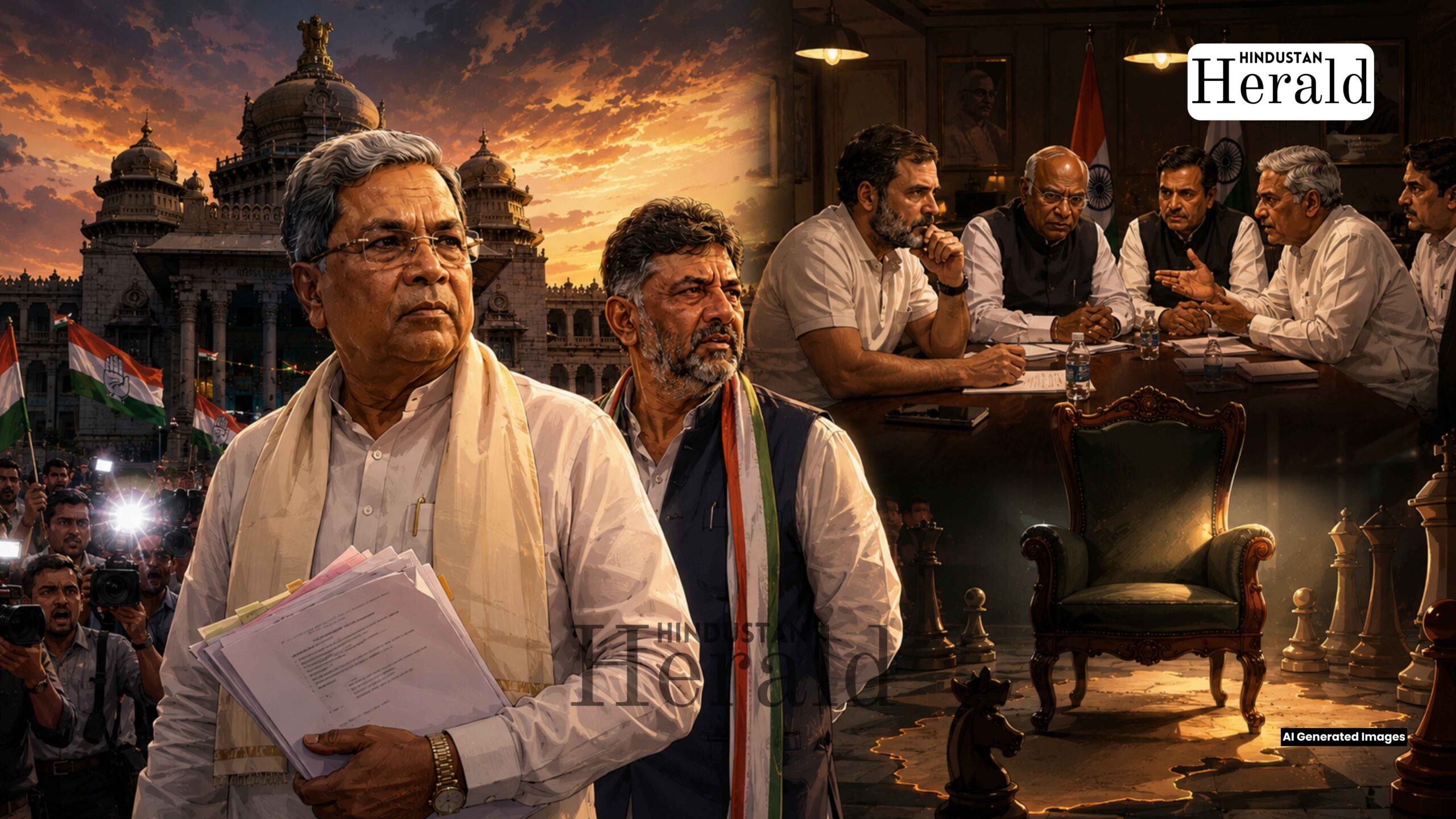
Bengaluru, May 27: Siddaramaiah has survived a lot in Karnataka politics. Defections, court cases, factional rebellions, a MUDA scandal that his opponents were certain would finish him. He has outlasted most of the people who tried to move him. That track record is exactly why Tuesday’s meeting in Delhi felt different to those watching closely.
This time, the pressure did not come from opponents. It came from his own party’s top floor.
Delhi Called. Both of Them Came.
On Tuesday, Siddaramaiah and his deputy DK Shivakumar boarded flights to New Delhi. Officially, the Congress said the meetings were about Rajya Sabha and Karnataka Legislative Council elections. KC Venugopal said as much to reporters outside Indira Bhawan, with Siddaramaiah and Shivakumar standing right beside him, faces giving nothing away.
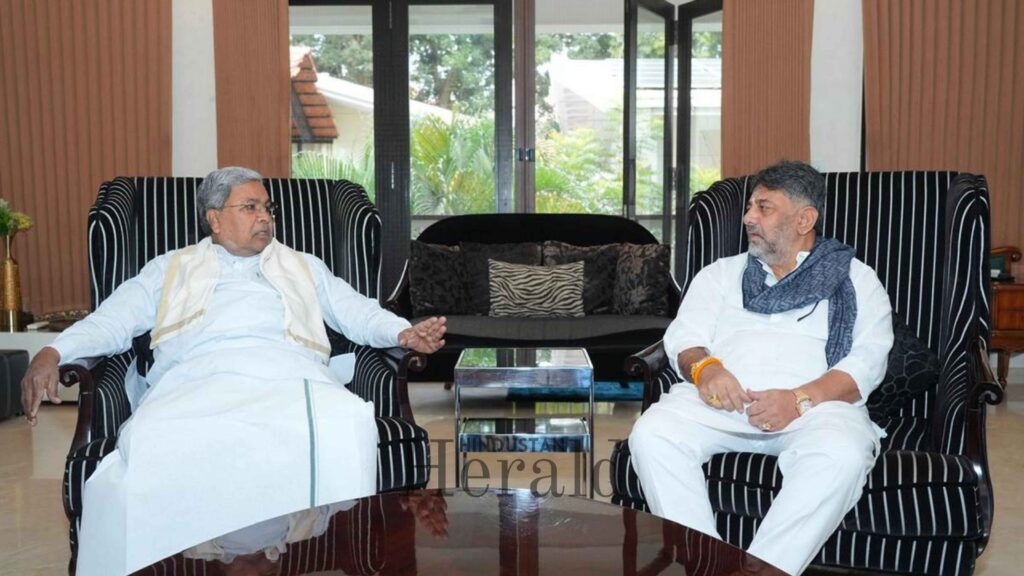
Nobody quite believed it.
What actually happened inside that meeting at Congress headquarters involved Mallikarjun Kharge, Rahul Gandhi, Venugopal, and Karnataka in-charge Randeep Surjewala sitting across from the two men who have been circling each other for power since 2023. The message to Siddaramaiah, according to sources quoted by The New Indian Express and The Federal, was direct: the party needs him in Delhi. Not Bengaluru. A Rajya Sabha seat, a national platform, a prominent role as one of the Congress’s most recognised OBC faces ahead of 2029. The chair in Vidhana Soudha, they were saying, belongs to someone else now.
Siddaramaiah, as per those same sources, did not slam the door. He also did not walk through it. He said he had no interest in national politics. He asked for time. And then, according to India TV News, he said the one thing that effectively ended his own resistance: he would step down if Rahul Gandhi asked him to.
That sentence matters. In Congress culture, saying you will abide by Rahul Gandhi’s decision is not a negotiating position. It is a concession.
He Came Prepared to Fight. It Did Not Help.
What is worth understanding about Siddaramaiah is that he did not fly to Delhi to surrender. Sources told The Week he arrived carrying letters of support from close to 100 MLAs. That is not a man who thinks he is going quietly. That is a man who walked into the room with his numbers on the table, expecting the arithmetic to do what it has always done for him in Karnataka politics: hold.
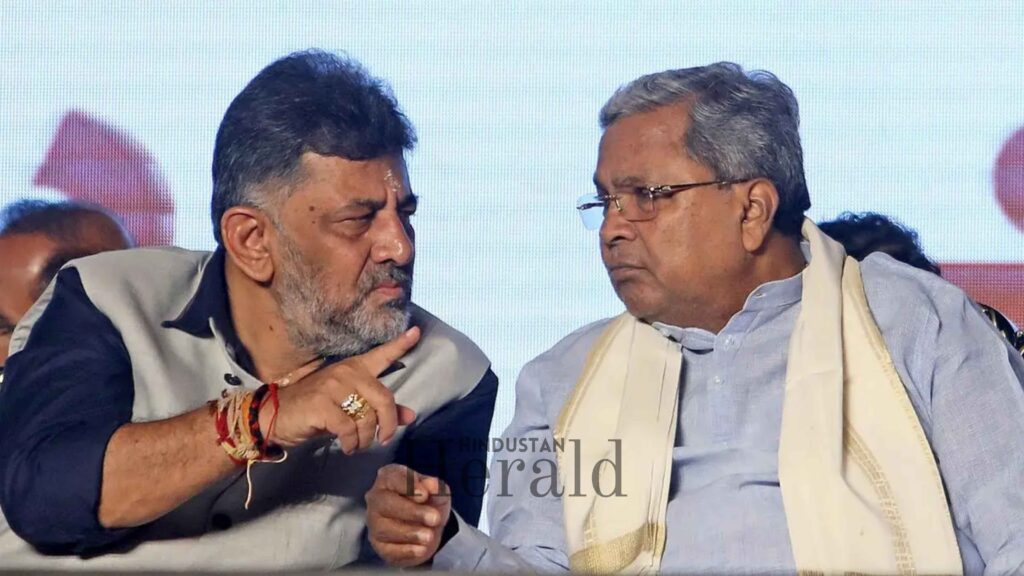
It did not hold this time.
By Tuesday night, sources close to him were telling Siasat Daily and The Week that he had agreed to step down. He reportedly told his ministers and aides that he would not go against Rahul Gandhi’s wishes. Senior Congress observers are now expected to arrive in Bengaluru to manage the transition. As per The New Indian Express, he has sought an appointment with Governor Thawar Chand Gehlot at Raj Bhavan on Thursday at 2 pm. A Congress Legislative Party meeting is likely on Friday.
He is also scheduled to host the full Karnataka cabinet for breakfast at his official residence on Thursday morning, before a press conference later the same day. Whether that press conference carries the announcement or merely precedes it is the question everyone in Bengaluru is sitting with right now.
The Bihar Comparison Nobody Wants to Say Out Loud
The political formula being applied here is being quietly compared to what the BJP did with Nitish Kumar in Bihar: move a powerful sitting chief minister out of the state chair and into the Rajya Sabha, give him a national face, call it an elevation. Congress appears to be borrowing the model.
The problem, which every senior leader in the party understands, is that Siddaramaiah is not Nitish Kumar. Nitish Kumar’s base in Bihar, however formidable, is ultimately transactional. Siddaramaiah’s connection to the AHINDA coalition in Karnataka, those are minorities, OBCs, and Dalits in Kannada political shorthand, is something built over decades. It is ideological as much as electoral. The Federal noted plainly that he is “extremely powerful” as an OBC leader and “crucial for the party’s AHINDA voter base.” That is not language people use about leaders who are replaceable.
The high command clearly weighed that risk and decided to proceed anyway. What that tells you about how the internal pressure had built up is worth noting.
Shivakumar Has Been Waiting Since 2023
DK Shivakumar has never pretended he did not want this. He accepted the deputy’s role three years ago, reportedly with the understanding, never formally committed to but widely assumed, that there would be a rotation at some point. Siddaramaiah himself told senior leaders on Tuesday that he was unaware of any such two-and-a-half-year formula, according to India TV News. Whether that is a genuine recollection or a negotiating stance is something only the people in that room could tell you.
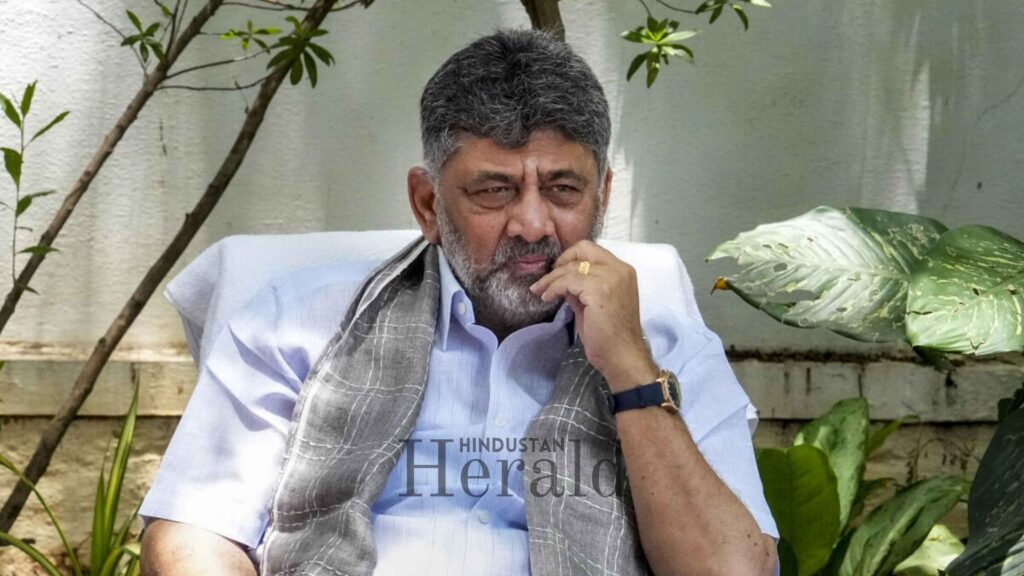
What is not in dispute is that Shivakumar has spent months lobbying. Delhi visits, back-channel conversations, quiet pressure applied through every available route. His Vokkaliga base has been restless. Community leaders have been vocal. A seer publicly asked Siddaramaiah to step aside months ago.
All of that has apparently added up to something.
Meanwhile, the Caste Survey Sits in the Background
On the same Wednesday that Bengaluru’s political class was decoding every signal from Delhi, the Karnataka State Backward Classes Commission was quietly holding a meeting of its own, to discuss the submission of its long-pending social, educational, and economic survey report.
This is the caste census that the Siddaramaiah government commissioned and positioned as a cornerstone of its social justice agenda. The commission, led by R Madhusudan Naik, surveyed 1,574 castes across Karnataka, covering around 5.86 crore people out of an estimated state population of 6.85 crore. As Deccan Herald reported earlier, roughly one crore residents were not counted, and critics have pointed out that the absence of that data creates real gaps in whatever recommendations eventually come.
The report was expected in March. It has not arrived yet. Wednesday’s meeting is a step toward finalising it.
Here is the part that nobody is saying loudly but everyone is thinking: this report, whenever it lands, is now going to land in a very different political environment. Siddaramaiah’s government built its identity around OBC welfare and the promise of using this survey to reshape reservation structures. An incoming Shivakumar government may share those commitments on paper. Whether it carries them with the same intensity is a genuinely open question. Shivakumar’s base is Vokkaliga, a dominant community that has, in some quarters, pushed back against parts of the caste census findings. That is a tension no one has resolved yet.
Where This Leaves Karnataka
For now, the Congress officially maintains there is no leadership change. That position is becoming harder to sustain with every passing hour.
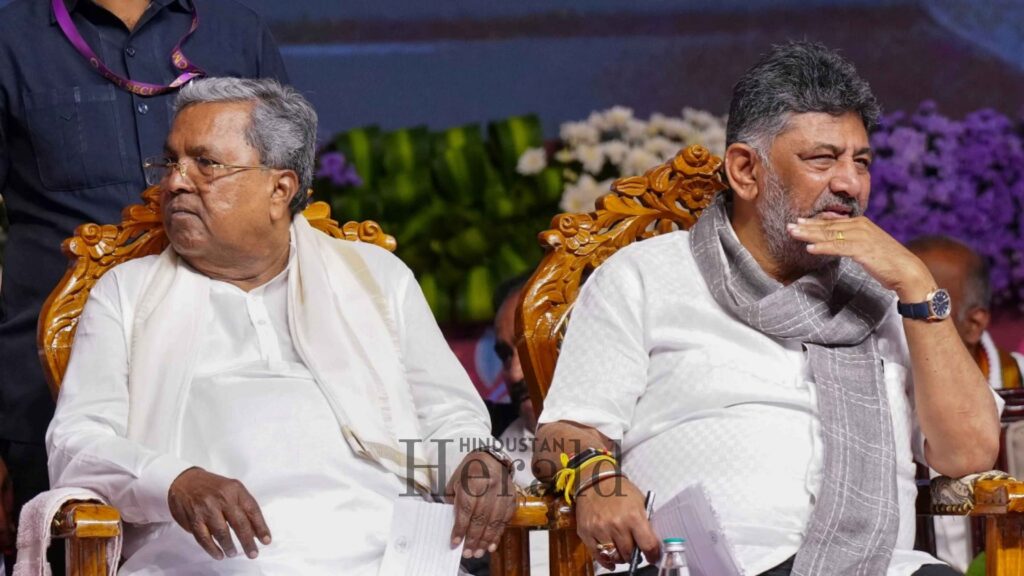
If Thursday’s meeting with the Governor goes ahead as reported, and if the CLP meeting follows on Friday, Karnataka could have a new Chief Minister before the week is out. Shivakumar would get what he has angled for since he accepted second billing in 2023. Siddaramaiah would make his exit, whether to the Rajya Sabha or simply out of active government, after a second term defined as much by the constant background noise of succession as by the guarantee schemes and caste survey he staked his legacy on.
For the ordinary voter who benefited from those guarantees, the free electricity, the subsidised gas cylinders, the women’s bus travel scheme, the more pressing question is whether any of this changes anything for them. Probably not immediately. But the politics of the next two years, leading into the next Karnataka assembly election, just shifted in ways that will take time to fully read.
Siddaramaiah built his career on the argument that numbers, specifically OBC numbers, are the only thing that matter in Karnataka politics. He arrived in Delhi on Tuesday with 100 letters to prove it.
He came back without the chair.
Stay ahead with Hindustan Herald — bringing you trusted news, sharp analysis, and stories that matter across Politics, Business, Technology, Sports, Entertainment, Lifestyle, and more.
Connect with us on Facebook, Instagram, X (Twitter), LinkedIn, YouTube, and join our Telegram community @hindustanherald for real-time updates.

Covers Indian politics, governance, and policy developments with over a decade of experience in political reporting.
- Ananya Sharma

- Ananya Sharma
- Ananya Sharma
- Ananya Sharma



 Sandeep Verma