
 By Shelesh Joshi and Rajiv Menon
New Delhi, May 27, 2026: War has its own calendar. Not the kind printed on walls the kind measured in body counts, broken ceasefires, and the particular exhaustion of diplomats who have been saying “we’re close” for two years and still mean it. This week, that calendar flipped again. The Israel Defense Forces announced they had killed Hamas’s newly appointed military commander in Gaza the man who stepped into the role after the last one was killed, who had stepped in after the one before him was killed.
The strike landed precisely when indirect ceasefire talks, mediated by Qatar, Egypt, and the United States, were at their most delicate. Whether that timing was deliberate, opportunistic, or simply the nature of this war is a question that different capitals will answer very differently.
Quick Summary
- The IDF announced it killed Hamas’s newly appointed military commander in a strike on Khan Younis, southern Gaza the 3rd such killing of a top Hamas military figure in under 18 months.
- The dead commander was the direct replacement for Mohammed Sinwar, who had himself taken over after his brother Yahya Sinwar was killed by Israeli forces in October 2024.
- Ceasefire talks mediated by Qatar, Egypt, and the United States were at a sensitive framework stage when the strike hit Hamas has since signalled the process is in serious jeopardy.
- Gaza’s Health Ministry, cited by UN agencies, puts the Palestinian death toll above 52,000 since October 7, 2023 most of them civilians, many of them children.
- The October 7 attacks killed approximately 1,200 Israelis and saw 250+ people taken hostage into Gaza, a significant number of whom remain unaccounted for.
- India is threading a needle it has threaded before defence ties with Israel, historical solidarity with Palestine, and millions of its own citizens living across the Gulf whose daily lives depend on this region staying stable.
The Same Announcement, for the Third Time
At some point, you stop being surprised. That is perhaps the most unsettling thing about where this conflict now stands. When the IDF announced it had killed Hamas’s military commander in a strike on Khan Younis, the first reaction in most newsrooms was not shock. It was the weary process of checking which commander, confirming the circumstances, and figuring out what it meant for the talks.
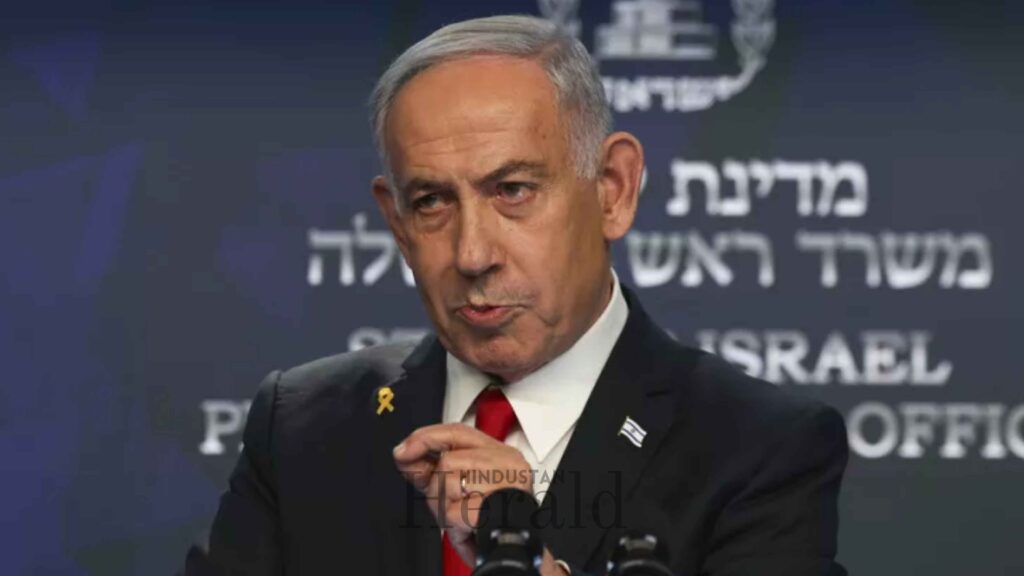
The strike hit a building in southern Gaza where the commander was reportedly in a meeting with other operatives, according to The Times of Israel. The IDF has not released his name, citing operational security. Hamas has said nothing officially which is what Hamas does when Israeli claims are either accurate enough to sting or complicated enough to require internal coordination before responding.

For context, this commander replaced Mohammed Sinwar, who had himself taken over the military wing after his brother Yahya Sinwar architect of the October 7, 2023 attacks was killed by Israeli forces in late 2024. Three successive heads of Hamas’s military apparatus, gone in eighteen months. Tactically, that is a remarkable achievement. Strategically, what it actually produces remains genuinely open.
The Israeli military calls it a decapitation strategy. Keep eliminating decision-makers fast enough that the organisation cannot stabilise, cannot plan, cannot function as a coherent fighting force. As Reuters has reported, Israeli intelligence believes this pressure serves a dual purpose it degrades Hamas’s operational capacity inside Gaza while signalling to the political leadership in Doha that geographic distance offers no real protection. A European diplomatic official, speaking to The Guardian on background, captured the counter-argument plainly.
“Each time a Hamas commander is killed, the organisation has demonstrated an ability to replace him, often within days. The question is not whether Hamas can survive this, but whether anyone can now negotiate with whoever comes next.” Israel keeps landing blows. Hamas keeps absorbing them. And the people trying to negotiate a way out keep having to start over.
A Deal Was Within Reach. Then the Strike Happened.
Ask anyone who has covered ceasefire negotiations the most dangerous moment is not when talks are deadlocked. It is when they are actually moving. That is when a single incident can undo months of careful work in a matter of hours. According to reporting by both Al Jazeera and The Washington Post, talks had quietly reached a point where a real framework was forming. It was not pretty. It was not complete. But a multi-phase structure was on the table hostages released in exchange for Palestinian prisoners, with a temporary halt in fighting running alongside each phase.
Qatar and Egypt had been working this for months. The United States had become increasingly hands-on as American hostage families lobbied Washington with a persistence that visibly moved people inside the administration. Sources speaking to Axios described Hamas’s political bureau in Doha as having shifted on certain conditions it had previously refused to budge on. Not a full pivot. More like a creak in a door that had been sealed shut for months. Mediators were not celebrating. But they had stopped bracing for imminent collapse.
Then came the announcement from Tel Aviv. Hamas’s response was fast Israeli officials were described as having no genuine interest in peace, the strike as proof that negotiations were cover for continued military operations. They have said versions of this before and came back to the table each time. What matters now is what the political bureau in Doha actually decides to do. And that is not yet clear. What is clear is that both Qatar and Egypt have gone silent since the announcement. No statements. No press conferences. No background briefings. That kind of silence almost always means something serious is being worked through in private.
52,000 Dead. And the Numbers Keep Moving.
Fifty-two thousand. That is the figure Gaza’s Health Ministry had recorded as of early May 2026, as cited by The Hindu and consistent with data referenced by multiple UN agencies.
Palestinian deaths since the war began on October 7, 2023. The majority are civilians. Thousands are children. Walk through what that number represents on the ground. The northern Gaza Strip has been comprehensively destroyed, in the assessment of virtually every independent observer who has managed to access it. Entire residential neighbourhoods are rubble. Hospitals that were functioning at the start of the war have been struck, evacuated, struck again.
The healthcare system as it existed before October 2023 is essentially gone. Food insecurity across large parts of Gaza meets the technical definition of famine, according to international humanitarian benchmarks. OCHA the UN’s humanitarian coordination office has said Gaza is among the worst active humanitarian crises anywhere in the world right now. Not in recent memory. Right now, in May 2026.
The International Court of Justice is still hearing the genocide case filed by South Africa. Interim orders have been issued requiring Israel to ensure humanitarian access. Israel contests the framing. Access has remained severely limited. This is not background. It is the condition inside which every military and diplomatic development this week is actually happening.
India’s Careful Walk Along a Very Narrow Line
For most countries, the Gaza conflict is a foreign policy problem. For India, it is several foreign policy problems stacked on top of each other. The India-Israel defence relationship is real and growing. Drone technology, missile systems, surveillance hardware India is one of Israel’s most significant defence customers globally, a relationship built steadily since diplomatic ties were formalised in 1992. That is not going away regardless of international pressure.
At the same time, India’s historical support for Palestinian statehood is not just rhetorical. It goes back to the Non-Aligned Movement years and carries genuine domestic weight, particularly given India’s Muslim population and the emotional resonance the Palestinian cause holds across large sections of Indian society. Add roughly nine million Indian nationals living and working across the Gulf, sending remittances home, whose daily security depends on the region not spiralling into wider conflict.
West Asia instability is, for India, an economic risk and a human one simultaneously. The Ministry of External Affairs has managed this by staying consistent call for hostage releases, demand humanitarian access, support a negotiated two-state solution. In a statement to PTI, the MEA spokesperson reiterated India’s support for “a negotiated, peaceful resolution based on international law and the relevant UN Security Council resolutions.”
Carefully worded. Deliberately so. As The Indian Express has reported, India has also been managing its position within the I2U2 grouping the India-Israel-UAE-USA framework which has complicated things somewhat. Deepening economic ties with Israel have continued even as the humanitarian situation in Gaza has drawn widespread international condemnation. It is a balance New Delhi appears committed to maintaining. How long it remains politically sustainable is a live question.
What the Next Few Weeks Could Look Like
Honest forecasting on Gaza requires acknowledging upfront that professionals paid to do it have a mixed record at best. Still, the situation tends to resolve in one of a few directions. The scenario mediators are working hardest to produce is one where Hamas quickly appoints a replacement, demonstrates that its political bureau retains control, and signals continued willingness to negotiate. According to Middle East Eye, Qatari officials have been making exactly this case to Hamas leadership that walking away isolates Hamas at a moment when international sympathy has been running more in its direction than usual.
The scenario everyone fears is the opposite. The political bureau has never had an easy time managing the hardline factions within Gaza who regard any deal as surrender. Every time a commander is killed, those voices get louder. If they win the internal argument even briefly the talks do not pause. They end. What follows is another escalation cycle, more civilian casualties, and a diplomatic situation that could take many more months to rebuild.
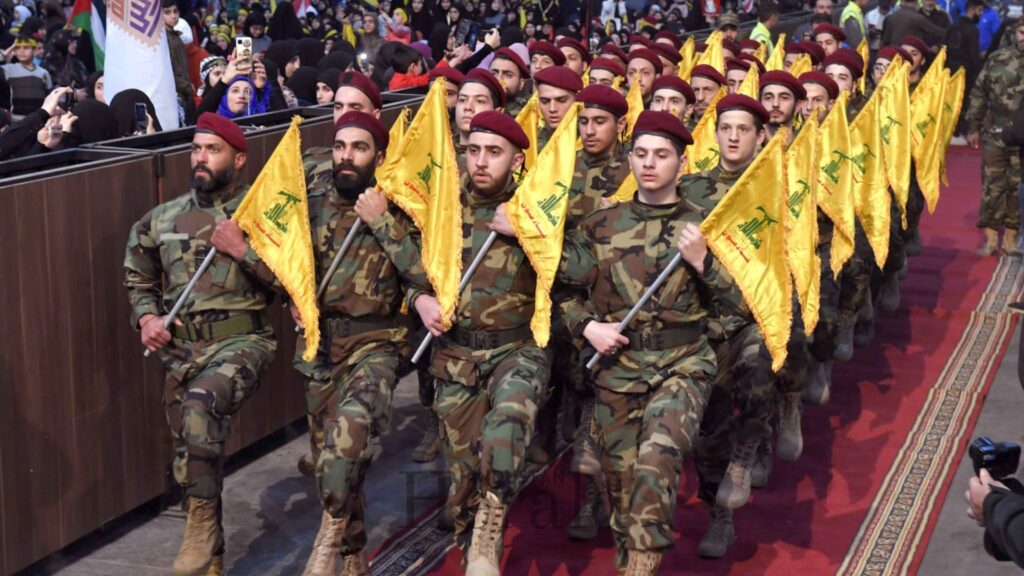
Then there is the wider escalation scenario. Hezbollah, Iranian-backed proxy groups in Syria and Iraq these actors have shown throughout this conflict that they are watching and will act when they judge the moment right. The US military maintains significant regional presence precisely because this scenario is always on someone’s threat assessment. Whether this particular strike crosses whatever threshold those actors are calculating against is not yet clear.
Two Years In, and the Endgame Is Still a Question
At this point, it is worth asking a simple question. What does ending this war actually look like? Israel’s stated objectives eliminating Hamas as a governing and military force, recovering all hostages remain unmet. The gap between those objectives and current reality is wide enough that serious analysts have begun asking whether they were ever achievable as defined. Hamas has lost commander after commander and kept functioning. It has lost territory and kept recruiting.
Hamas, from its side, has refused any outcome that ends its governance of Gaza. It has reframed its own survival battered and costly as it has been as proof that resistance works. That argument plays in parts of the Arab world in ways that Israeli and Western officials find deeply frustrating but cannot simply dismiss.
History has a few things to say about conflicts like this one. Northern Ireland ground on for decades before the conditions for peace were finally met. Sri Lanka’s civil war ended through military victory and the political consequences of how it ended are still being lived with today.
What most post-conflict studies agree on is straightforward. Armed groups rarely negotiate themselves out of existence. They negotiate when the people making decisions calculate that the costs of continuing outweigh whatever fighting on might produce.
Neither side in Gaza appears to have reached that moment yet. One more killed commander changes the military facts of this conflict marginally. It changes the diplomatic landscape significantly, at least in the short term. What it does not do is bring the war any closer to an ending that either side can actually live with. That work slower, less dramatic, less amenable to press releases is still waiting to be done.
Stay ahead with Hindustan Herald — bringing you trusted news, sharp analysis, and stories that matter across Politics, Business, Technology, Sports, Entertainment, Lifestyle, and more.
Connect with us on Facebook, Instagram, X (Twitter), LinkedIn, YouTube, and join our Telegram community @hindustanherald for real-time updates.

Tracking world politics, global markets, trade movements, policy decisions, and the changing balance of economic power.
- Shelesh Joshi

- Shelesh Joshi
- Shelesh Joshi
- Shelesh Joshi





Specializes in South Asian geopolitics and global diplomacy, bringing in-depth analysis on international relations.
- Rajiv Menon
- Rajiv Menon
- Rajiv Menon
- Rajiv Menon