
 By Shelesh Joshi and Kavita Iyer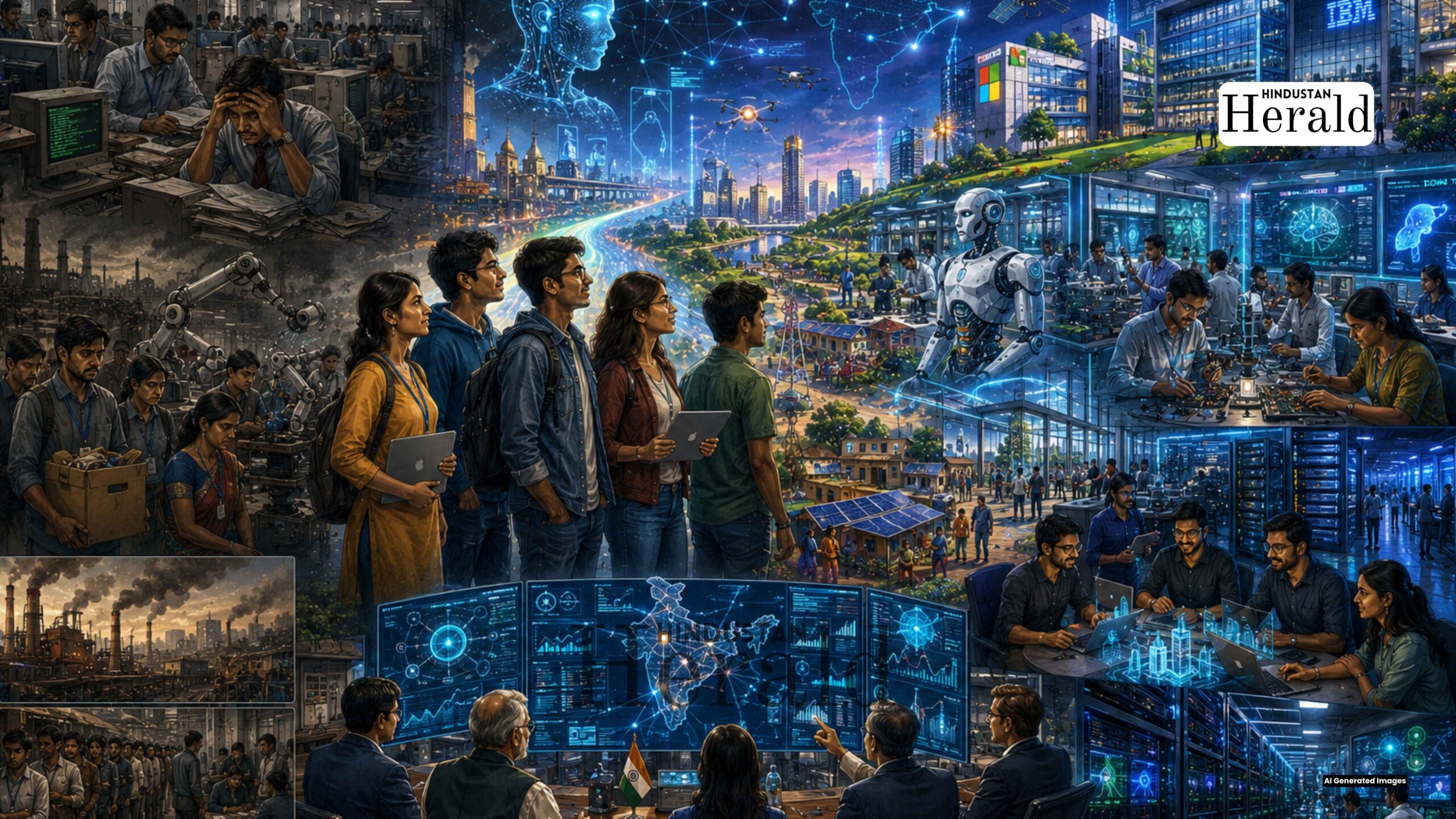
New Delhi, May 28: Let’s be honest about something. India has been having the India’s AI skill gap conversation for at least five years now. Every industry summit has a panel on it. Every annual report from NASSCOM or Deloitte flags it. Every budget season, someone in North Block writes a memo about it. And yet, here we are in 2026, with demand for AI professionals set to cross 1 million and only 16 percent of the existing IT workforce actually equipped to meet it. At some point, talking about the problem stops being useful. That point, by most accounts, has already passed.
What is different now, and what makes the current push worth examining seriously, is that the government has stopped treating the India AI skill gap as a line item in someone else’s budget and started treating it as a national infrastructure problem. The curriculum is being torn apart and rebuilt. Global technology giants are embedding themselves directly into the formal education system. Industrial training institutes that once taught skills from a previous decade are being handed money and told to catch up. Whether all of this adds up to something real, or whether it becomes another well documented near miss, is the story India’s economy is currently living through
Quick Summary
- India’s AI talent demand is projected to exceed 1.25 million professionals by 2027, against a current supply gap of 51 percent
- The Union Budget 2025-26 allocated Rs. 500 crores specifically for a Centre of Excellence in AI for Education
- Microsoft has committed to skilling 20 million Indians with AI capabilities and has already trained over 5.6 million since January 2025
- Over 50,000 IT jobs were cut in India in 2024 due to AI-driven automation, even as the AI market is projected to reach $28.8 billion at a 45 percent CAGR
- The FutureSkills PRIME platform, a MeitY NASSCOM initiative, had crossed 1.856 million registered learners by August 2025
- AI and Computational Thinking will be embedded in school curriculum from Grade 3 onwards, beginning academic session 2026-27
India’s AI Skill Gap Is Not New. The Urgency Is.
Numbers in the skilling space tend to blur after a while. There are so many of them, from so many reports, that they stop landing with the weight they should. So consider just a few, carefully.
Deloitte India and NASSCOM, in a joint assessment published in August 2024, projected that Indian AI talent demand would grow from roughly 600,000 to 650,000 professionals in 2022 to over 1.25 million by 2027. That growth is being driven by 25 to 35 percent annual expansion in the AI market itself. The supply side is not keeping pace. The demand supply gap in data science and AI roles currently sits at around 51 percent, per NASSCOM’s own data.
Put that differently. For every two AI professionals India needs, it has roughly one. And the gap is widening, not closing. Only around 16 percent of IT professionals are currently AI-skilled, according to the Ministry of Electronics and IT. That is not a rounding error. That is a structural problem in a workforce of millions, in a country that has staked a significant part of its economic ambition on becoming a global technology leader by 2030.
That is exactly why the govt partners industry to revamp AI curriculum to bridge skill gap, moving beyond annual reports and conference panels into something that looks, for the first time in a while, like a coordinated plan of action.
The India Skills Report 2026, which draws on responses from over 100,000 candidates and spans seven key sectors, does carry some genuine good news. National employability has climbed from 46.2 percent in 2022 to 56.35 percent in 2026. Over 90 percent of Indian employees are using generative AI tools in some form. India holds 16 percent of the global AI talent pool, which is not a negligible share by any measure. But holding 16 percent of a pool that is too small for the demand placed on it is not the same as being ready. And readiness, right now, is the only thing that matters.
What the Budget Actually Committed To
The Union Budget 2025-26 was where intent started to look like policy. An allocation of Rs. 500 crores was announced for a Centre of Excellence in Artificial Intelligence for Education, a national hub designed to integrate AI into teaching practices, support research, and prepare a workforce pipeline that is actually calibrated to industry need rather than five year old syllabus committees.
This was the fourth such Centre of Excellence. Three had already been established before education got its own dedicated one. Alongside these, five National Centres of Excellence for Skilling were set up specifically to give young people access to industry relevant AI capabilities, not just theoretical exposure to the concept of machine learning.
The curriculum side of the push is, if anything, more ambitious than the infrastructure side. Aligned with NEP 2020 and the National Curriculum Framework for School Education 2023, AI and Computational Thinking are being introduced as subjects from Grade 3 onwards, with full implementation targeted for the 2026-27 academic session. The government has framed this under the banner of “AI for Public Good,” which is a deliberately wide framing, suggesting the ambition extends beyond producing coders and data scientists. The idea, at least on paper, is to produce a generation that understands what AI does, what it cannot do, and what responsibility looks like in a world that runs on it.
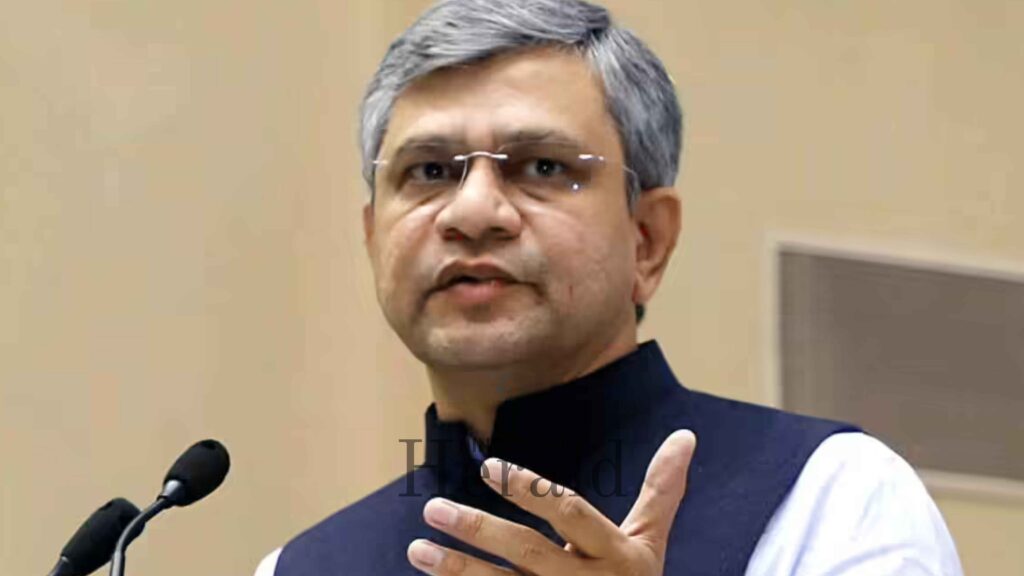
The Council for the Indian School Certificate Examinations has added robotics and AI to its curriculum starting 2025-26. The IIMs and ISB have integrated Generative AI into their academic programmes. At the India AI Impact Summit in February 2026, Union IT Minister Ashwini Vaishnaw confirmed that AICTE and the Ministry of Education are mid revision on higher education curricula, trying to close the gap between what universities teach and what employers actually need when they put up a job posting.
These are not small moves. But they are moves that India has made before, in different forms, with varying degrees of follow through. The difference this time, if there is one, is the involvement of industry at a depth that earlier reform cycles never quite achieved.
Microsoft, IBM, and the Institutional Bet
Microsoft launched Microsoft Elevate for Educators in New Delhi in February 2026 and, in doing so, made a bet on India that it has not made on any other country in Asia.
The programme targets two million teachers and 200,000 schools and educational institutions by 2030. It is part of a broader Microsoft commitment to equip 20 million people in India with AI skills. The delivery partners are not external NGOs or third party training vendors. They are CBSE, NCERT, AICTE, NCVET, and the Directorate General of Training, which means the programme is operating inside the formal institutional architecture of Indian education, not around it.
That matters more than it might seem. Previous corporate skilling initiatives in India often ran alongside the formal system, producing certifications that students valued but that institutions did not quite know what to do with. Plugging directly into CBSE and AICTE changes that dynamic in a meaningful way.
Since January 2025, Microsoft has reportedly trained over 5.6 million Indians under its various skilling initiatives. That is a large number in a short period, and it reflects the kind of delivery infrastructure that takes years to build. Brad Smith, Vice Chair and President of Microsoft, was present at the New Delhi launch, which is itself a signal of how seriously the company is treating this particular market.
IBM was in this space earlier than most people remember. In September 2023, the company signed multiple Memoranda of Understanding with both the Ministry of Education and the Ministry of Skill Development and Entrepreneurship, covering the full educational spectrum. At the school level, IBM SkillsBuild content is now reaching students at institutions identified by Navodaya Vidyalaya Samiti, NCTE, and Kendriya Vidyalaya Sangathan. CBSE’s AI curriculum for Grades 11 and 12 has been refreshed under the collaboration. At the higher education level, IBM is working directly with AICTE. At the vocational level, the ITI network is part of the picture. It is, in scope, a more serious commitment than the press release it generated at the time suggested.
The FutureSkills PRIME platform, a joint initiative between MeitY and NASSCOM, does not get the attention that Microsoft and IBM do, but it is arguably the most scalable piece of the infrastructure that currently exists. By August 2025, over 1.856 million learners had registered on the platform for certifications across 10 emerging technologies, AI among them. It is not a glamorous programme. It does not have a high profile launch event every year. But it is reaching people that more premium skilling programmes are not.
Minister of State for Skill Development Jayant Chaudhary has been direct about the government’s philosophy here. Industry partnerships are not supplementary. They are the mechanism. The government’s role is to create the policy architecture and provide institutional access. The private sector fills in the delivery, the content, and the employment pathways. Whether that division of labour holds together in practice, at the scale India needs, is a legitimate question. But the intent, at least, is cleaner than it has been in previous reform cycles.
ITIs Are the Part of This Story That Actually Matters for Most Indians
There is a version of the AI skilling conversation that only talks about IITs, EdTech unicorns, and IIM graduates pivoting into data science. That conversation is real, but it is a conversation about a relatively small slice of India’s workforce.

The Industrial Training Institute network is where the broader economy either catches up or gets left behind. Finance Minister Nirmala Sitharaman addressed this without equivocation in September 2025 at an event organised by the Indian Foundation for Quality Management. The Centre, she confirmed, will provide full funding to upgrade ITIs into AI-driven training centres. She also made a direct appeal to industry to stop treating the skilling agenda as the government’s problem alone.
The Ministry of Skill Development and Entrepreneurship is currently integrating AI, data analytics, and cloud computing into the vocational education curriculum. Industry collaborations are helping establish AI labs within ITIs and NSTIs, redesigning both what is taught and how it is taught, moving away from purely theoretical instruction toward hands on, project based learning.
The early results are worth noting. At NSTI Indore, near complete campus placements were recorded among the first cohort of students trained under the revised curriculum. They went into sectors as varied as quick commerce, logistics, and manufacturing, which is precisely the kind of cross sector impact the programme is supposed to produce.
The ADVANTA(I)GE INDIA initiative, a collaboration between the Ministry of Skill Development and multiple technology companies, is designed specifically to push AI skilling beyond tier one cities. The theory of change is straightforward enough: if AI literacy remains concentrated in Bengaluru, Hyderabad, and Mumbai, India’s demographic dividend becomes a demographic divide. Whether the programme reaches a student in Muzaffarpur or Belgaum with the same effectiveness it reaches one in Pune is the real test of its ambition.
The Displacement Question Sitting in the Room
It would be dishonest to write about India’s AI skilling push without acknowledging what is sitting on the other side of the equation. Over 50,000 IT jobs were cut in 2024. Not outsourced. Not relocated. Cut, because AI-driven automation made certain roles redundant faster than the industry had publicly acknowledged it would. This happened in the same year that India’s AI market was projected to hit a 45 percent CAGR and cross $28.8 billion in size. Both things are true. The market is growing and the job losses are real, and the people caught between those two facts are not abstractions.
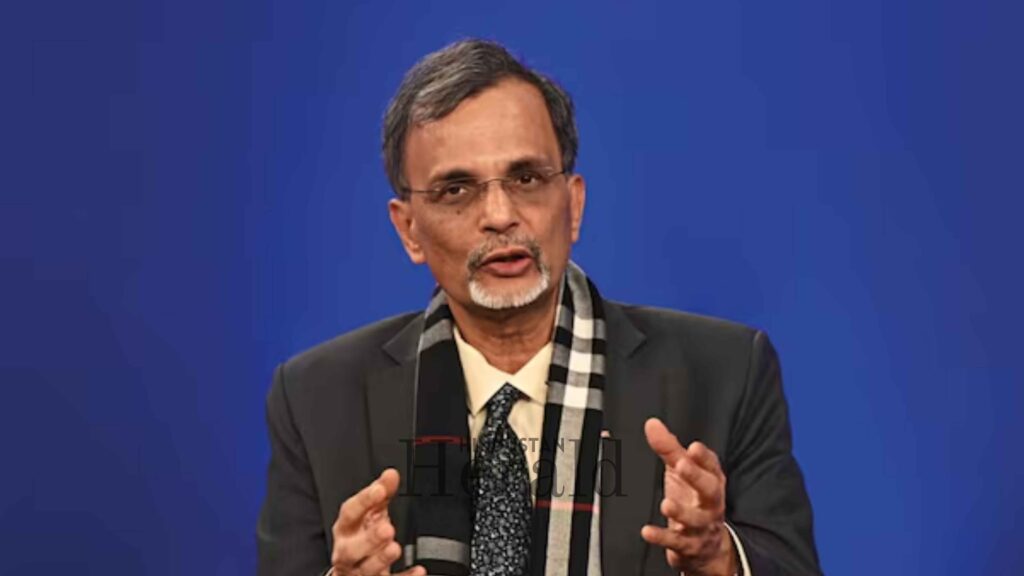
Chief Economic Advisor V Anantha Nageswaran was unusually candid about this tension in the Economic Survey 2024-25. Technology, he acknowledged, does eventually generate more employment than it eliminates. But he placed significant weight on the word “eventually.” What happens in the space between now and that outcome is where the real policy challenge lives.
For the 31 percent of professionals who, per NASSCOM data, do not feel equipped to use AI tools in their current roles, that space is not a theoretical concern. It is a Monday morning problem.
The Deloitte NASSCOM report found that 43 percent of the Indian workforce has already encountered AI in their organisations in some active form. Among Gen Z workers, 71 percent recognise that AI skills will directly shape their career trajectory. Two out of three Indians say they plan to learn at least one digital skill in the near term, with AI and Machine Learning at the top of that list.
The appetite is there. What is not yet there, at sufficient scale, is the structured, verified pathway that converts intention into competency and competency into employment. Building that pathway, across the full diversity of India’s educational and economic geography, is what the current policy effort is actually attempting. And it is a harder problem than any single budget allocation or corporate MoU can solve on its own.
Reading the Investment Landscape
For anyone tracking the business and investment dimensions of this story, the implications are fairly clear, even if the timeline is not. The EdTech and enterprise learning market is the most direct beneficiary of what is being built. Curriculum mandates embedded in CBSE, AICTE, and the ITI network create institutionally anchored, policy driven demand. This is not a market that evaporates when consumer sentiment shifts. It is a market backed by government spending, regulatory requirements, and demographic scale. Companies positioned within that architecture, whether through content partnerships, platform integrations, or certification programmes, are sitting on durable ground.
The sectoral skilling story beyond IT is consistently underweighted in most coverage. Logistics, aviation, railways, maritime, and advanced manufacturing are all navigating AI-driven workforce transitions that are as structurally significant as anything happening in the technology sector itself. The skills required for AI-driven predictive maintenance in a steel plant or green logistics optimisation in a port are not being met by existing vocational curricula. Whoever builds credible, sector specific AI training pathways in these industries will be operating in a market with very little competition and very high institutional need.
The compute infrastructure expansion running alongside the curriculum push is also worth watching. At the India AI Impact Summit 2026, Minister Vaishnaw announced that India would add 20,000 GPUs to its existing 38,000 unit compute capacity. Curriculum reform without the computational infrastructure to support it produces theory without practice. The government’s decision to move on both simultaneously suggests a more integrated strategic vision than India’s skilling programmes have historically demonstrated. Whether the execution matches the vision is, as always, the variable.
The Honest Assessment
India is not starting from nothing. The talent base is real. The demographic numbers are real. The documented appetite for digital skills, consistent across multiple independent surveys and report cycles, is real. The policy intent, judged by budget allocations and the institutional depth of current partnerships, is more serious than it has been in previous reform cycles.
What has historically been the weak link is not ambition. It is the last mile. The distance between a policy announced in New Delhi and a student in a government ITI in Gorakhpur actually acquiring a skill that the market values is not a short distance. It runs through state education departments, district administrations, institute principals, faculty who themselves need retraining, and infrastructure that ranges from adequate to genuinely poor depending on where in the country you happen to be standing.
The Deloitte NASSCOM report puts India’s 2030 potential plainly: a genuine path to becoming a global AI powerhouse with over a million highly skilled professionals. The condition it attaches is equally plain. The focus must shift from the quantity of people being skilled to the quality of what they are actually learning. One number keeps returning to mind. Only 31 percent of professionals feel prepared to use AI tools effectively. In a country of this size, with this much at stake, that number is the problem statement and the programme objective rolled into one.
The curriculum has been rewritten, or is being rewritten. The money has been committed. The partnerships with Microsoft, IBM, NASSCOM, and dozens of other organisations are signed and, in several cases, already delivering. The political will, for now, is visible. What the next three years will determine is whether all of that translates into something that a student in Rajkot or a mid career engineer in Bhopal can actually point to and say: this changed what I am able to do. That is the only outcome that counts.
Stay ahead with Hindustan Herald — bringing you trusted news, sharp analysis, and stories that matter across Politics, Business, Technology, Sports, Entertainment, Lifestyle, and more.
Connect with us on Facebook, Instagram, X (Twitter), LinkedIn, YouTube, and join our Telegram community @hindustanherald for real-time updates.

Tracking world politics, global markets, trade movements, policy decisions, and the changing balance of economic power.
- Shelesh Joshi

- Shelesh Joshi
- Shelesh Joshi
- Shelesh Joshi





Former financial consultant turned journalist, reporting on markets, industry trends, and economic policy.
- Kavita Iyer
- Kavita Iyer
- Kavita Iyer
- Kavita Iyer




 Ananya Sharma and Kavita Iyer