
 By Ananya Sharma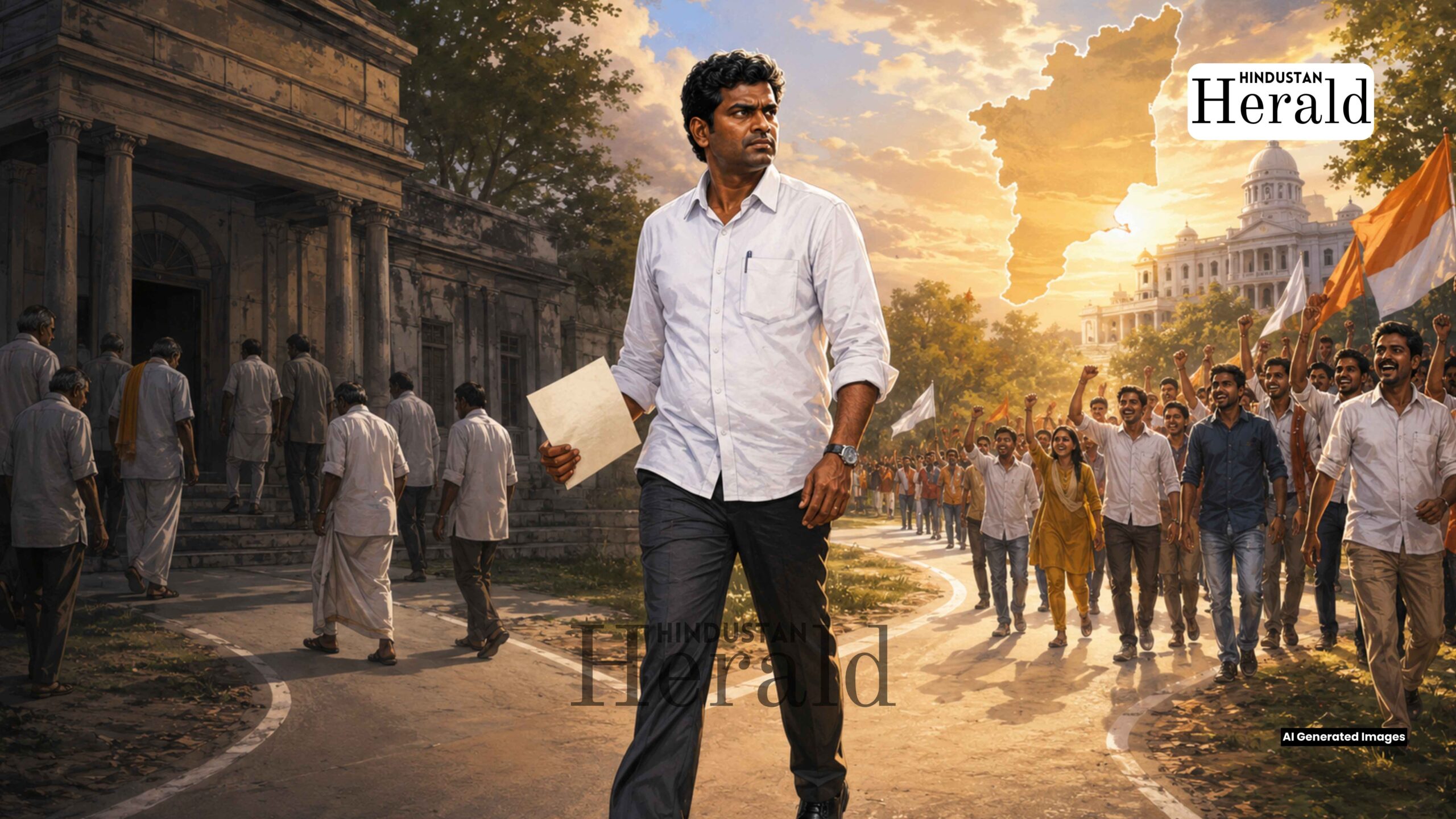
New Delhi, June 2: He Came, He Fought, He Left. The Annamalai Chapter In BJP Is Over. Nobody got a farewell speech. No emotional address to party workers, no teary-eyed press conference, no carefully worded statement thanking the leadership for the opportunity. Just a Tuesday morning in Delhi, a five-page letter, and a man who had clearly made up his mind a long time ago finally making it official.
K. Annamalai has quit the BJP.
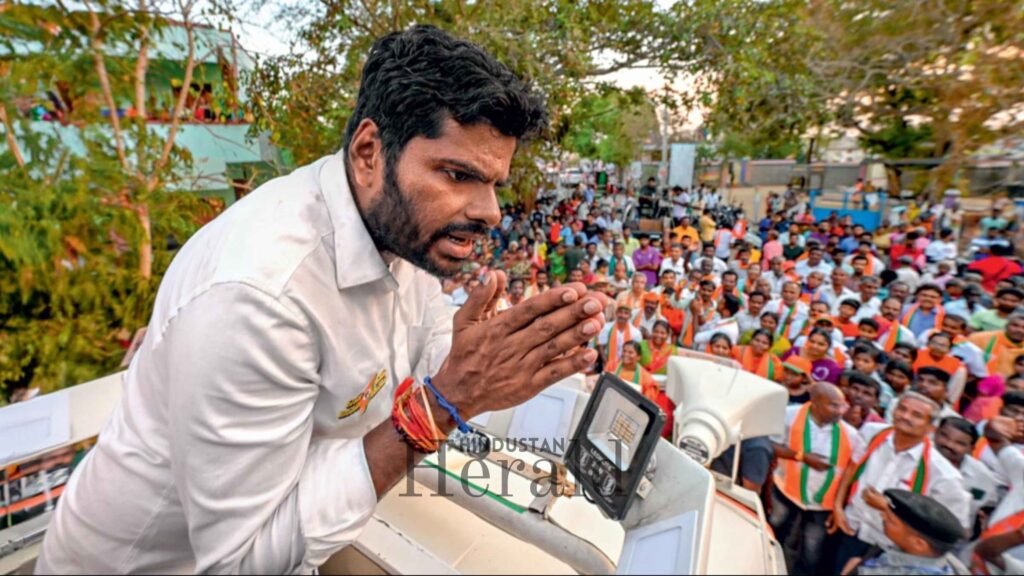
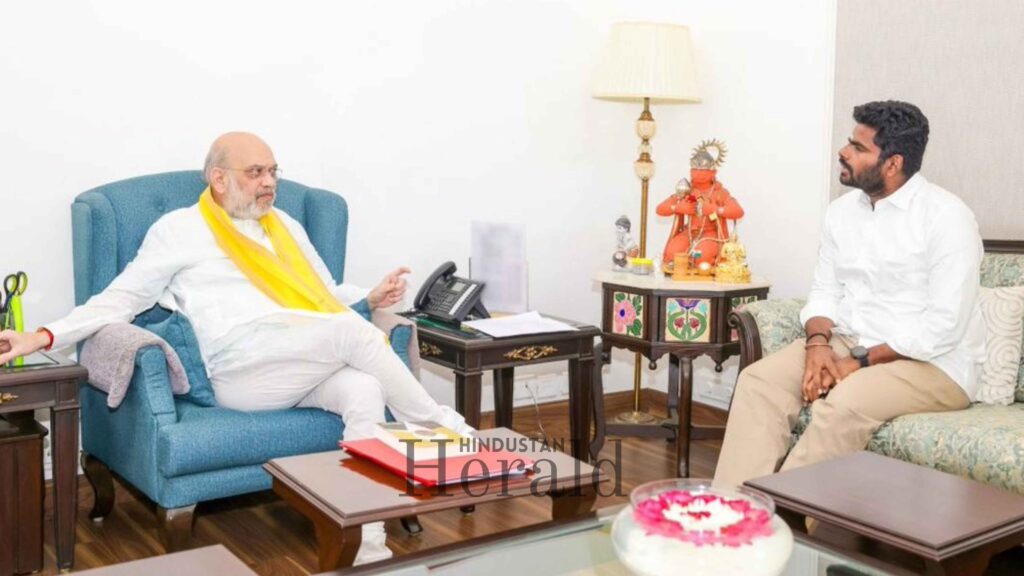
The former IPS officer walked into a meeting with party president Nitin Nabin, handed over his resignation, met organisation secretary BL Santhosh, and then drove to Amit Shah’s residence for a conversation that nobody on either side is talking about publicly. What was said in that room is anyone’s guess. What is not a guess is that Annamalai walked out without reversing course. The resignation stands. The exit is real.
And in Tamil Nadu, a state that runs on political drama the way other states run on coalition arithmetic, the fallout is just getting started.
The Man The BJP Built, Then Boxed In
You have to go back to 2020 to understand how much this exit stings, at least symbolically. Annamalai was not a typical BJP recruit. He was an IPS officer from the Karnataka cadre who resigned his post, went back to Tamil Nadu, and presented himself as something genuinely different from the Dravidian party ecosystem that had dominated the state for six decades.
He was young. He was Tamil-born but not attached to any caste patronage network in the usual way. He spoke in English and Tamil with equal comfort. He picked fights publicly, loudly, on camera, and his supporters loved him for it.
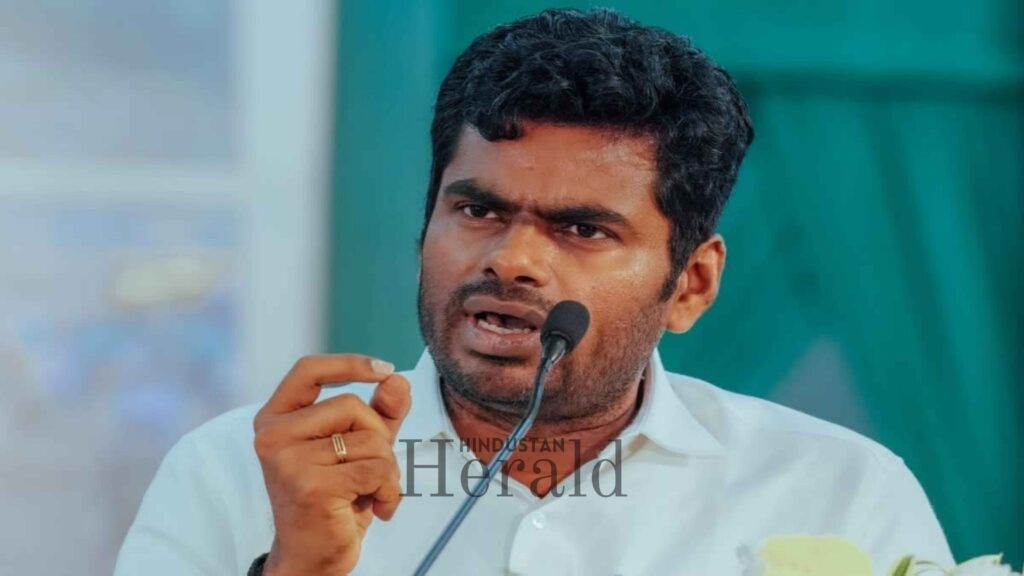
Within ten months of joining the BJP, he was handed the state unit presidency. That is not how the party normally works. That timeline tells you how badly the BJP wanted what he seemed to offer.
He launched the ‘En Mann, En Makkal’ yatra and covered every single one of Tamil Nadu’s 234 assembly constituencies. He went after DMK leaders in ways that generated national headlines. He said things on stage that veteran BJP politicians in Delhi would never say in public. And for a stretch, particularly in cities and among younger voters, it genuinely seemed like the BJP might be building something real in Tamil Nadu rather than just showing up at election time as someone else’s junior partner.
That said, there was always a gap between the noise and the numbers. And the party’s national leadership was always more interested in the numbers.
The Fault Line That Was There From The Start
Annamalai had one core political conviction that put him on a collision course with the BJP high command almost from the beginning. He believed the party should compete independently in Tamil Nadu. Not through alliances with Dravidian parties, not by making peace with the AIADMK establishment, but by building its own voter base from scratch and taking the fight directly to the DMK.
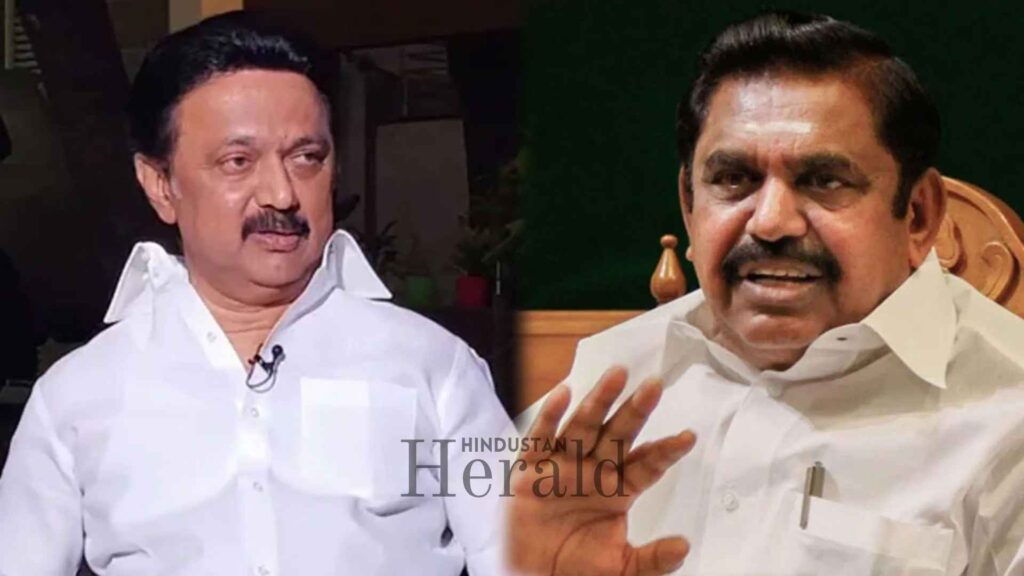
The central leadership did not agree. Or more precisely, they agreed in principle and disagreed in practice every single time an election approached.
His public attacks on Dravidian political figures, including pointed remarks about C.N. Annadurai and J. Jayalalithaa, had already cost the party its alliance with the AIADMK once. When the BJP decided ahead of the 2026 Assembly elections that it needed that alliance back, Edappadi K. Palaniswami’s camp made one condition abundantly clear: Annamalai had to go. The BJP agreed. Amit Shah flew to Chennai, stood next to Palaniswami at a press conference, announced the revived alliance, and confirmed Nainar Nagendran as the new state unit chief in the same breath.
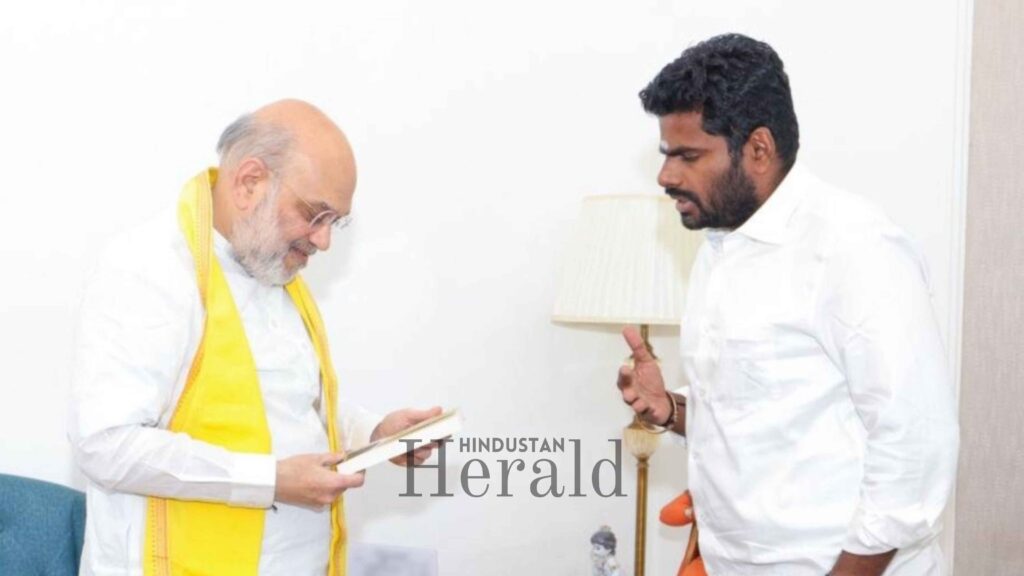
Annamalai was not in the room.
He stepped down as Tamil Nadu BJP president in April 2025. Sources at the time said the transition was described internally as leveraging his skills in the party’s national framework. It was the kind of language that means exactly nothing in practical terms.
One Seat. That Is What It Added Up To.
After the leadership change, Annamalai went quiet. He was nominally assigned campaign responsibilities in six constituencies for the 2026 Tamil Nadu Assembly elections. He later withdrew from even that role, citing personal reasons. He did not contest a seat. He did not appear prominently at rallies. He was, for all practical purposes, a bystander in a campaign being fought under the party’s banner.
The BJP won one assembly seat.
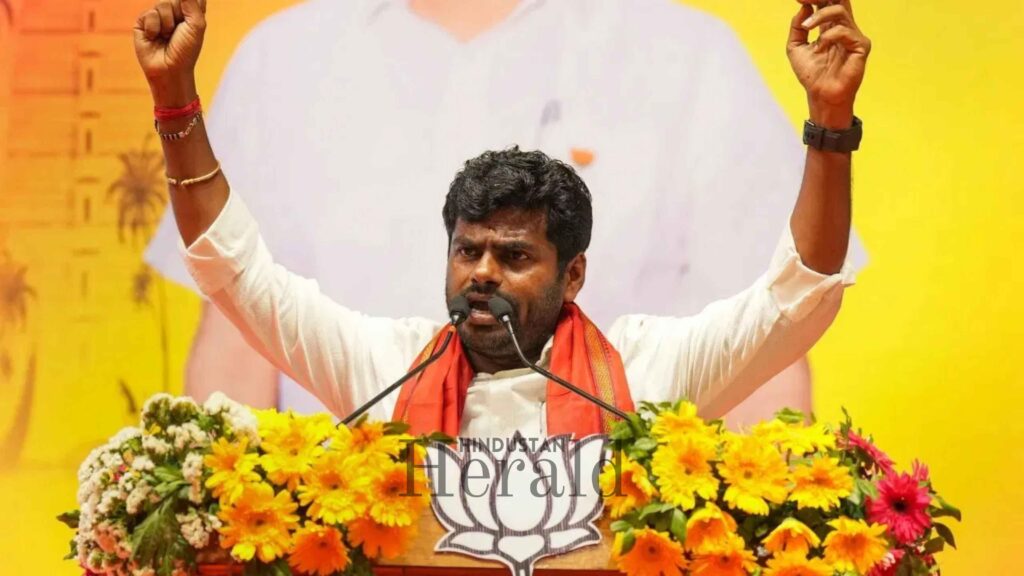
One seat, in a 234-seat legislature, in a state the party had spent five years and considerable political capital trying to crack. The alliance with the AIADMK, the leadership reset, the quiet sidelining of the party’s most visible face in the state, all of it produced one seat.
That number is not just a data point. It is a verdict.
He Turned Down A Rajya Sabha Seat
Before the resignation became public, the BJP reportedly made a last attempt to keep him inside the system. A Rajya Sabha seat was offered, according to multiple reports. He said no.
That is worth pausing on. A Rajya Sabha berth would have kept him in parliament, given him a national platform, kept him visible and relevant inside the establishment. He turned it down. That is not what someone does when they are looking for accommodation. That is what someone does when they have already decided to build something outside the tent.
Sources close to him say he sees no future in the BJP and has been thinking about this move for a while.
A New Party, A New Name, A Familiar Pattern
The name already being circulated among his supporters is “Makkal Sakthi Iyakkam,” which translates loosely to People’s Power Movement. The plan, as sources describe it, is to begin as a volunteer-driven civil society movement, drawing in young people, professionals, and activists, and then over time evolve into a proper political party.
It sounds familiar because it is. Several politicians in Tamil Nadu have tried exactly this model. Kamal Haasan built Makkal Needhi Maiam on a similar idea, with genuine enthusiasm, celebrity pull, and a reform-oriented pitch. It struggled badly at the ballot box and eventually found its way into the DMK alliance structure. The road from movement to party to electoral relevance is not a short one, and Tamil Nadu has seen enough of these launches to be appropriately sceptical.
Still, Annamalai has things that some of those efforts lacked. He is younger than most who have attempted this. He has spent five years building a recognisable political identity rather than arriving cold from another profession. He has a base in Coimbatore and other urban centres that is genuinely attached to him personally. And crucially, the 2026 election result changed the political landscape in ways that may have created room that did not exist before.
Vijay’s Tamilaga Vettri Kazhagam shook up the old DMK-AIADMK duopoly in a way that few had predicted. The DMK still governs. The AIADMK is in disarray. TVK is new and still unproven. In that unsettled terrain, the argument for a fourth option, one that is urban, reform-focused, and rooted in Tamil identity without being tied to the old Dravidian party lineages, is at least worth making.
Whether Annamalai can make it convincingly is the question Tamil Nadu politics will spend the next year or two answering.
His Recent Moves Were Already Sending A Signal
Looking back, the signs were there for anyone paying attention. A few weeks ago, Annamalai publicly opposed the CBSE’s three-language policy notification for Class 9 students and called for it to be withdrawn. On the surface, it looked like a policy position. In context, it was considerably more than that.
Language politics in Tamil Nadu is not casual. It cuts deep, historically and emotionally, in ways that politicians from outside the state sometimes underestimate. For Annamalai to publicly break with a central government policy on language, at precisely the moment when his exit from the BJP was becoming an open secret, was not a coincidence. He was signalling where his political identity would be anchored going forward. Tamil, regional, not bound by the BJP’s national positions.
He was planting a flag. Tuesday’s resignation was just the moment he drove it into the ground.
What The BJP Does With The Wreckage
The BJP’s problem in Tamil Nadu is now more acute than it was before. The party spent years selling the story of Annamalai as proof that it could build genuine mass support in the state. One assembly seat and one high-profile resignation later, that story needs a complete rewrite.
Nagendran leads a state unit that is structurally dependent on the AIADMK alliance, which itself is a weakened force following the 2026 results. The grassroots mobilisation model that Annamalai was supposed to represent has walked out the door. Whether the party has anyone left in Tamil Nadu capable of rebuilding that kind of ground-level presence is a serious and as yet unanswered question.
For now, the central leadership is unlikely to say any of this publicly. There will be careful statements about Annamalai’s contributions and the party’s continued commitment to Tamil Nadu. The party does not do public post-mortems.
But the reality is that the BJP bet heavily on one man to solve a structural problem in a state it has never figured out, watched alliance politics erode his position from underneath, replaced him with a more pliable figure to keep a coalition partner happy, and ended up with one seat and no Annamalai.
That is not a clean outcome by any measure.
As for Annamalai, the meeting with Amit Shah on Tuesday remains the one unresolved detail in an otherwise complete story. Maybe Shah made a final offer. Maybe it was a conversation about terms of departure. Maybe it was something else entirely. What it clearly was not was a reconciliation.
The man who once called himself the future of BJP in Tamil Nadu has decided that future is somewhere else. Tamil Nadu, which rarely does politics quietly, is going to find out exactly where soon enough.
Stay ahead with Hindustan Herald — bringing you trusted news, sharp analysis, and stories that matter across Politics, Business, Technology, Sports, Entertainment, Lifestyle, and more.
Connect with us on Facebook, Instagram, X (Twitter), LinkedIn, YouTube, and join our Telegram community @hindustanherald for real-time updates.

Covers Indian politics, governance, and policy developments with over a decade of experience in political reporting.
- Ananya Sharma

- Ananya Sharma
- Ananya Sharma
- Ananya Sharma

 Sandeep Verma
  Herald Desk