 By Neeraj Kapoor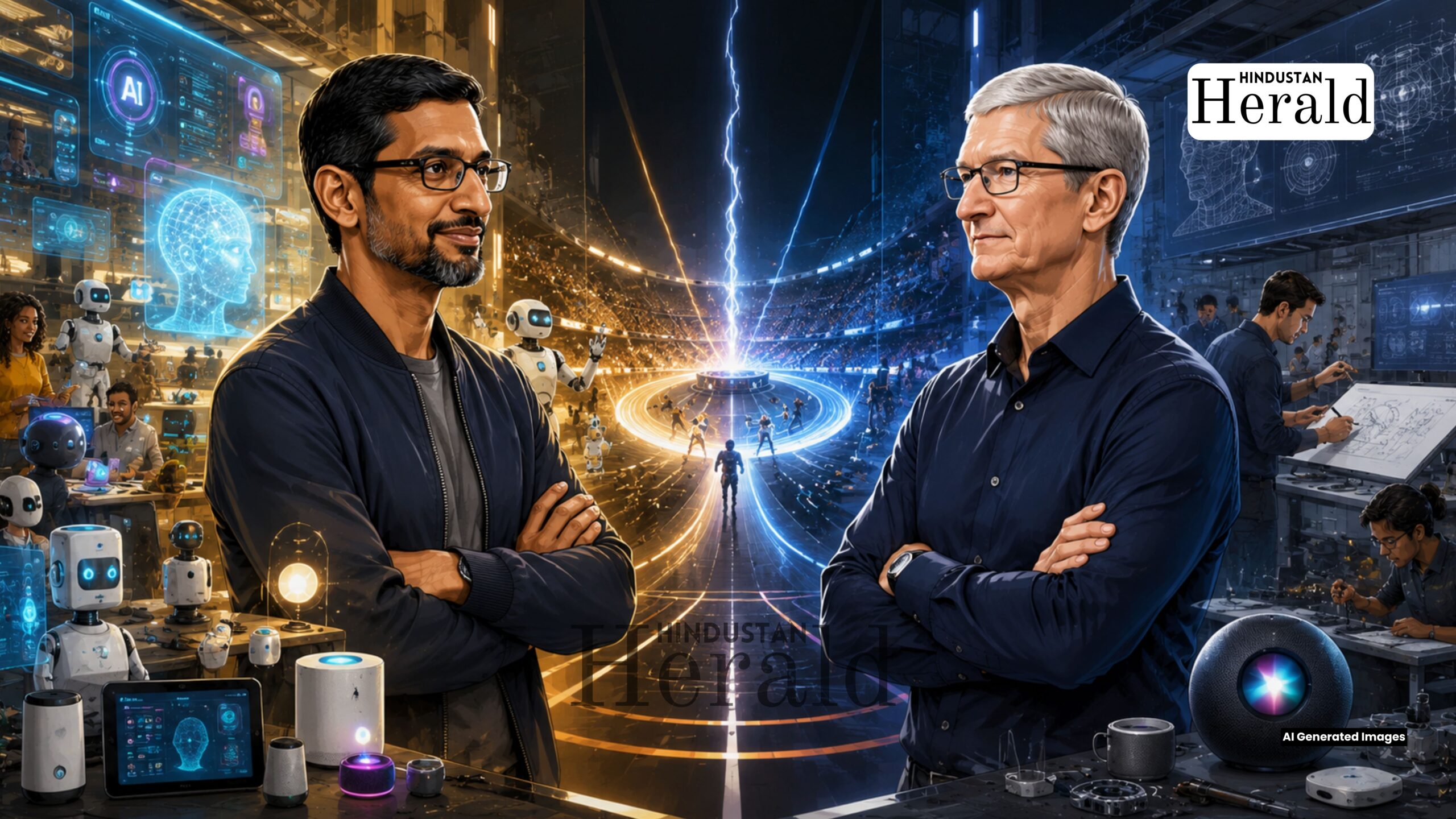
New Delhi, June 3: Google spent the better part of the last two years making promises about its Gemini AI platform. At conference after conference, in keynote after keynote, the company rolled out a cascade of announcements, demos, and roadmaps. Features were teased with polished slides. Products were previewed months before they shipped. The tech press wrote thousands of words about what Gemini would eventually do.
The thing is, Google largely went ahead and did it.
That fact, quiet but significant, now sits at the heart of one of the most important questions in consumer technology heading into the second half of 2026: if Google could actually deliver on its artificial intelligence promises, why is Apple still struggling to do the same?
Google Did Not Just Promise. It Shipped.
The scale of what Google announced and then actually released over the last eighteen months is genuinely worth pausing on. At Google I/O 2026, Sundar Pichai described the past year as “a period of relentless shipping, technology advances and hyper progress,” with the company shifting its focus toward making AI valuable in products that people use every day.

That is not merely corporate language. The substance is there. At I/O 2026, Google announced Gemini 3.5 Flash, which combines frontier intelligence with agentic task performance, surpassing its predecessor in coding, agentic, and multimodal benchmarks while running at roughly four times the speed of comparable frontier models. Alongside it, Gemini Omni was introduced as a new model series that combines reasoning with creation, accepting image, audio, video, and text as inputs and producing video grounded in real-world knowledge.
These are not promises. These are shipping products.
In May 2026, Google announced that Gemini Intelligence is coming to Android devices, bringing the ability to automate complex multi-step tasks, summarize web content, fill forms, and polish spoken messages through a new feature called Rambler, with rollout beginning on select Samsung and Google phones. Months before that, Personal Intelligence had already landed as Google’s cornerstone feature for the year, allowing Gemini to securely connect information from linked apps including Gmail, Photos, YouTube, and Search to provide more tailored, context-aware assistance.
Still, the ambition went further. At Google Cloud Next ’26, the company unveiled the Gemini Enterprise Agent Platform, eighth-generation TPUs, a reimagined Agentic Data Cloud, and Workspace Intelligence for enterprise customers. Then came Antigravity 2.0, a standalone desktop platform that lets users orchestrate multiple AI agents simultaneously to execute parallelised workflows and automated background tasks. Then came Gemini Spark, described as a personal 24/7 AI agent that takes action autonomously on behalf of enterprise users.
The list goes on. And that is the point. It keeps going.
What Google’s Execution Record Changes
There is a version of this story where none of this matters to ordinary users. Most people do not follow developer conferences. They do not track changelog updates or parse the difference between Gemini 3.5 Flash and Gemini Omni. They just want their phone to be useful.
That said, execution at Google’s scale is not just a technical benchmark. It functions as a proof of concept for the entire industry. When one company demonstrates that genuinely complex AI features can be researched, developed, tested, and shipped to billions of users within a reasonable window of being announced, it forces every other company to explain why they cannot.
Apple cannot currently offer that explanation. Not a convincing one, anyway.
Apple’s Intelligence Problem Is Now a Credibility Problem
The contrast with Apple Intelligence has become almost embarrassing to catalogue. In May 2026, Apple agreed to pay $250 million to settle a class-action lawsuit filed in the Northern District of California, alleging false advertising and unfair competition after the AI-powered Siri features the company promoted during the iPhone 16 launch saw significant delays.
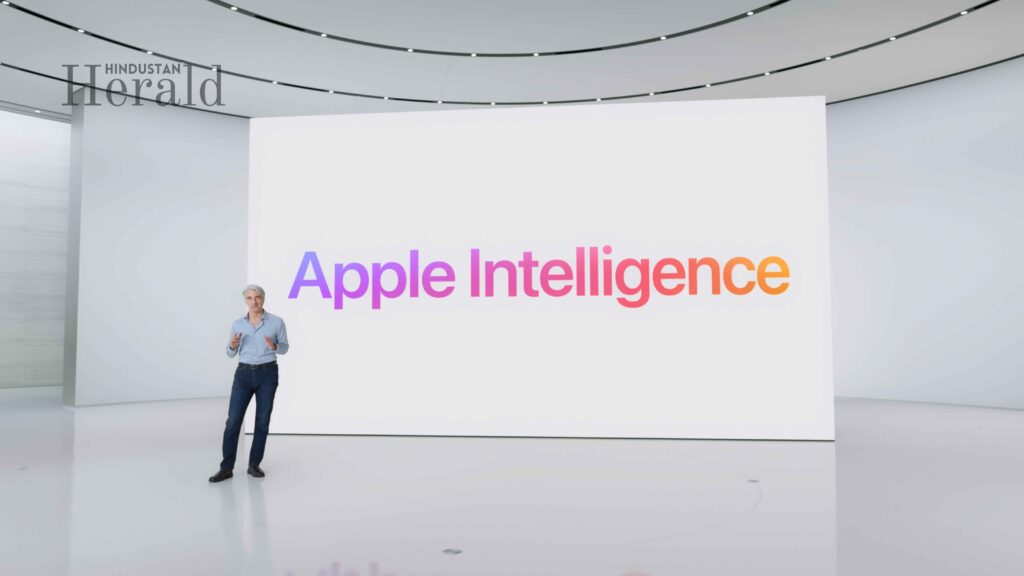
The story of how Apple got there is worth understanding. Apple had made much of its Apple Intelligence tools when they were unveiled at its developer event in June 2024, but the company later confirmed that some of the more advanced features, including capabilities for Siri, would not be ready until 2026. The lawsuit alleged that Apple’s marketing saturated the internet, television, and other media to build consumer expectations that these AI features would be available when the phone launched. They were not.
As analyst Avi Greengart of Techsponential put it, the problem was not the delay itself. “The problem is that Apple promised a smarter Siri as a reason to purchase its devices today.”
That is a precise and damning way to frame it. Apple sold a future product as if it were a present one. Google, for all of its own showmanship, at least had the products to show when the lights came up.
A separate shareholder class-action led by South Korea’s National Pension Service, the world’s third-largest pension fund, alleges that Apple’s AI delays caused billions of dollars in investor losses, with Apple’s motion to dismiss still awaiting a court ruling. The financial and legal exposure is real, and it is not going away quietly.
The Google-Apple Siri Connection Nobody Expected
What makes this story stranger, and richer, is that Apple’s path out of its Siri crisis now reportedly runs directly through Google.
Apple is reportedly preparing a major overhaul of Siri at WWDC 2026, which begins June 8, with the new Siri expected to be powered by Google’s Gemini. According to reports, Apple will reportedly pay Google approximately $1 billion annually to use a custom Gemini large language model to power the rebuilt Siri.
This is, to put it plainly, extraordinary. The company that spent two years promising its own AI revolution is now, reportedly, borrowing the AI infrastructure of its most direct rival to deliver it. The company whose promises about Apple Intelligence triggered a $250 million lawsuit and an investor class action is set to stand on a stage in five days and unveil a smarter Siri that runs on Google’s backbone.
Even with the Gemini agreement reportedly in place, Apple has been struggling to finalise the integration, with the rebuilt Siri potentially sliding further toward iOS 27 or even a fall release window. That means the “make-or-break” framing around WWDC 2026 is not exaggerated. It is accurate.
WWDC 2026 Is Five Days Away. The Stakes Are High.
Apple will open WWDC 2026 on June 8 at Apple Park, with iOS 27, iPadOS 27, macOS 27, watchOS 27, and visionOS 27 all expected to be unveiled alongside a significant focus on artificial intelligence strategy.

As one analysis framed it, the Siri situation is no longer just a product delay. It has become a credibility problem. Apple announced an AI-forward Siri at WWDC 2024 as part of Apple Intelligence, and the company is now under significant pressure to demonstrate that Siri can actually perform the context-based tasks it promised nearly two years ago.
According to Bloomberg’s Mark Gurman, the revamped Siri could debut as early as September and may constitute Tim Cook’s final major product moment before handing the company over to his successor. That is a consequential personal footnote to what is already a consequential product moment.

For now, the pressure is real. Apple has adopted “All systems glow” as its WWDC 2026 slogan, with the phrase widely read as a reference to the redesigned Siri experience expected to arrive with iOS 27. Whether that glowing Siri actually arrives, and whether it actually works, will determine a great deal about how Apple is perceived in the AI era it so loudly claimed to be leading.
Why This Matters Beyond the Two Companies
There is a bigger story here that goes beyond the rivalry. The Google-versus-Apple contrast in AI execution matters because it tests a question the entire industry is struggling with: how do you honestly market AI capabilities that are not fully built yet?
Google’s answer, imperfect as it is, has been to ship early and often, iterate in public, and absorb the criticism that comes with products that do not always work the first time. Its Gemini rollout has been messy in places. There have been embarrassments, including well-documented AI misinformation incidents. But the core product has moved forward.
Apple’s answer was to promise polished perfection and then deliver silence. The advertising campaigns ran. The iPhone 16 launched. The AI features did not come. The result has been one of Apple’s most visible modern misfires, leaving the company looking like it was trying to market the future before it had fully built it.
For Indian users, this dynamic has real implications. AI-powered features in apps like Gmail, Google Search, and Google Maps are already deployed and improving on Android devices that are used by hundreds of millions of people across the country. The gap in capability between what Android users can do today and what iPhone users are still waiting for is no longer theoretical. It is functional.
As TechRadar put it following Google I/O 2026, Gemini is becoming “impossible to avoid,” with features like Gemini Spark, Omni, and AI-powered Search pushing Google toward an always-on AI assistant model embedded across its entire product ecosystem.
Apple needs June 8 to go very well. Google, for perhaps the first time in its rivalry with Apple in the consumer intelligence space, has earned the right to watch.
Stay ahead with Hindustan Herald — bringing you trusted news, sharp analysis, and stories that matter across Politics, Business, Technology, Sports, Entertainment, Lifestyle, and more.
Connect with us on Facebook, Instagram, X (Twitter), LinkedIn, YouTube, and join our Telegram community @hindustanherald for real-time updates.

Tech writer passionate about AI, startups, and the digital economy, blending industry insights with storytelling.
- Neeraj Kapoor

- Neeraj Kapoor
- Neeraj Kapoor
- Neeraj Kapoor