
 By Neeraj Kapoor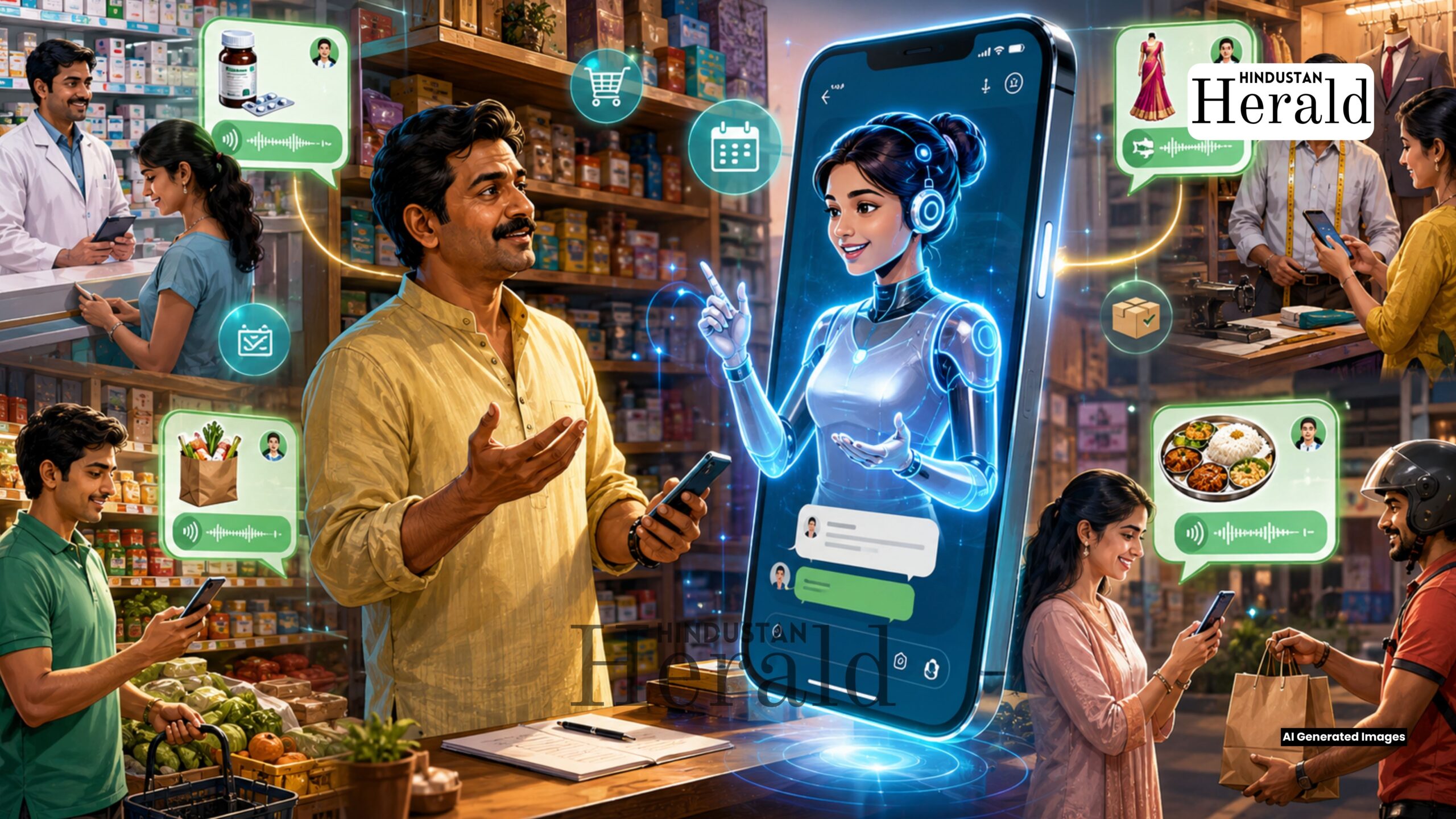
New Delhi, June 4: Walk into almost any small shop in India and you will find WhatsApp open on someone’s phone behind the counter. Maybe it is a tailor in Jaipur sending fabric photos to a customer. Maybe it is a pharmacist in Nagpur confirming whether a particular medicine is in stock. Maybe it is a tiffin service owner in Pune managing twenty orders through a single chat window. WhatsApp stopped being a messaging app for Indian businesses a long time ago. It became the business itself.
Meta knows this. And on Wednesday, the company made its biggest move yet to capitalise on it.
At its Conversations conference in London, Meta announced the global rollout of what it is calling the Meta Business Agent, an AI-powered tool built directly into WhatsApp, Instagram DMs, and Messenger that can handle customer conversations without a human on the other end. The launch follows nearly two years of quiet testing in India, Mexico, and Brazil, and it arrives at a moment when virtually every major technology company is racing to put AI agents inside the products people already use every day.
Not Just Another Chatbot
It is worth being clear about what this actually is, because the word “chatbot” carries a lot of baggage. Most people have had the experience of hitting a wall with a bot, typing a question three different ways and still getting an answer that has nothing to do with what they asked.
The Meta Business Agent is being positioned as something meaningfully different. According to the company, it can answer customer questions, pull up and recommend products from a business catalog, book appointments, and sort through incoming sales inquiries to figure out which ones are worth pursuing. When a conversation gets complicated enough that a human genuinely needs to take over, the agent hands it off.
That handoff feature is quietly important. It signals that Meta is not, at least for now, trying to eliminate the human element entirely. It is trying to handle the volume, the repetitive first-contact stuff, so that business owners and their staff can focus on conversations that actually need their attention.
Meta is also testing a morning briefing feature. Business owners would get a daily summary of customer conversations from the night before, along with pattern highlights. That is still in limited testing across WhatsApp Business, Instagram Pro, Messenger, and Meta Business Suite, so it is not widely available yet. But it gives a sense of where the product is headed.
India Was the Lab
Before this became a global product, it was an Indian experiment. Meta spent the better part of two years running pilot programmes in India and a handful of other markets. By the time Wednesday’s announcement came around, more than one million businesses were already using earlier versions of the tool on WhatsApp and Messenger.
That number matters. It means this is not a cold launch. Meta walked into London with real adoption data, real feedback from actual small business owners, and a reasonably clear picture of what works and what does not.
India was the obvious choice for testing. More than 200 million businesses worldwide use the WhatsApp Business app, and India accounts for a significant chunk of that base. WhatsApp here is not just popular. It is structurally embedded in how commerce happens. A customer expects to be able to message a local business the same way they message a friend. That expectation does not exist in the same way in most Western markets.
Still, the jump from pilot to global product comes with real questions. India’s small business landscape is staggeringly diverse. A product that works cleanly for an English-speaking online retailer in Bengaluru may not work as well for a Bengali-speaking shop in Howrah or a Marathi-speaking hardware dealer in Nashik. Meta has not been specific about out-of-the-box language support for the Business Agent, and that detail will determine a lot about how deep the product actually penetrates into the Indian market beyond metros.
What Comes Next on the Roadmap
The version launching now is explicitly a first chapter. Meta has outlined capabilities it is still building out, including tools for market research, competitive analysis, product feature promotion, and calendar integration. The company is also working on letting the agent surface a business when a user searches for it on WhatsApp, and enabling the agent to share contact details within a conversation automatically.
For larger enterprises, Meta is rolling out something separate called the Meta Business Agent Platform. This is not the out-of-the-box tool for a small boutique. It is a configurable infrastructure layer that big businesses can connect to their existing systems, including Shopify for e-commerce, Zendesk for customer support, and Shopee for Southeast Asian retail. Large businesses using this tier will pay based on how many tokens their agents consume, which is the same usage-based pricing model common across most enterprise AI products today.
That distinction between the two tracks, a simple product for small businesses and a flexible platform for enterprises, is actually one of the more thoughtful structural decisions Meta has made here. It avoids the trap of building one product that tries to serve everyone and ends up serving no one particularly well.
The Revenue Logic
There is an obvious commercial motivation driving all of this, and Meta has not been shy about it.
For years, the company’s WhatsApp revenue has come primarily from two sources: businesses paying for messaging, and click-to-WhatsApp advertising. That second category has been genuinely strong. As reported by industry trackers, click-to-WhatsApp ads performed particularly well in markets like Brazil, and Meta’s Family of Apps revenue outside of traditional advertising grew 48 percent to 434 million dollars in the third quarter of 2024 alone.
The Business Agent, if it achieves serious adoption, adds a third revenue stream on top of those two. Smaller businesses can access a basic tier for free initially, but Meta has made clear that paid subscription tiers are coming. Larger businesses will pay per token. It is a model designed to scale with the customer, charging more as usage grows, which makes it accessible at the low end while still being quite profitable at the high end.
This is critical for WhatsApp as a business unit. The app has always been the outlier inside Meta’s portfolio, deeply used but historically harder to monetise than Facebook or Instagram. The Business Agent is, in a real sense, Meta’s clearest attempt yet to change that.
The Bigger Picture
Meta is not operating in isolation here. OpenAI, Google, and Anthropic are all building AI agents aimed at businesses. What separates Meta’s play from most of the competition is distribution. WhatsApp already has more than two billion users. Instagram has over a billion. Meta is not asking businesses to adopt a new platform. It is adding capability to one they are already on.
That is a significant advantage. A small business owner in Lucknow does not need to sign up for a new service, learn a new interface, or convince their customers to download something. The agent lives inside the app the customers are already using to reach them.
That said, distribution alone does not guarantee success. The quality of the AI, the ease of setup, the reliability of the handoff to human agents, and frankly the trust that business owners develop over time in letting an algorithm speak on their behalf, all of those things will determine whether this becomes a genuine shift in how Indian businesses operate or just another feature that sounds promising in a press release.
For now, the global rollout has started. Businesses can join a waitlist for access. And across millions of small shops, clinics, salons, and tiffin services in India, a familiar green app is quietly getting ready to do a great deal more than send messages.
Stay ahead with Hindustan Herald — bringing you trusted news, sharp analysis, and stories that matter across Politics, Business, Technology, Sports, Entertainment, Lifestyle, and more.
Connect with us on Facebook, Instagram, X (Twitter), LinkedIn, YouTube, and join our Telegram community @hindustanherald for real-time updates.

Tech writer passionate about AI, startups, and the digital economy, blending industry insights with storytelling.
- Neeraj Kapoor

- Neeraj Kapoor
- Neeraj Kapoor
- Neeraj Kapoor