
 By Ayesha Khan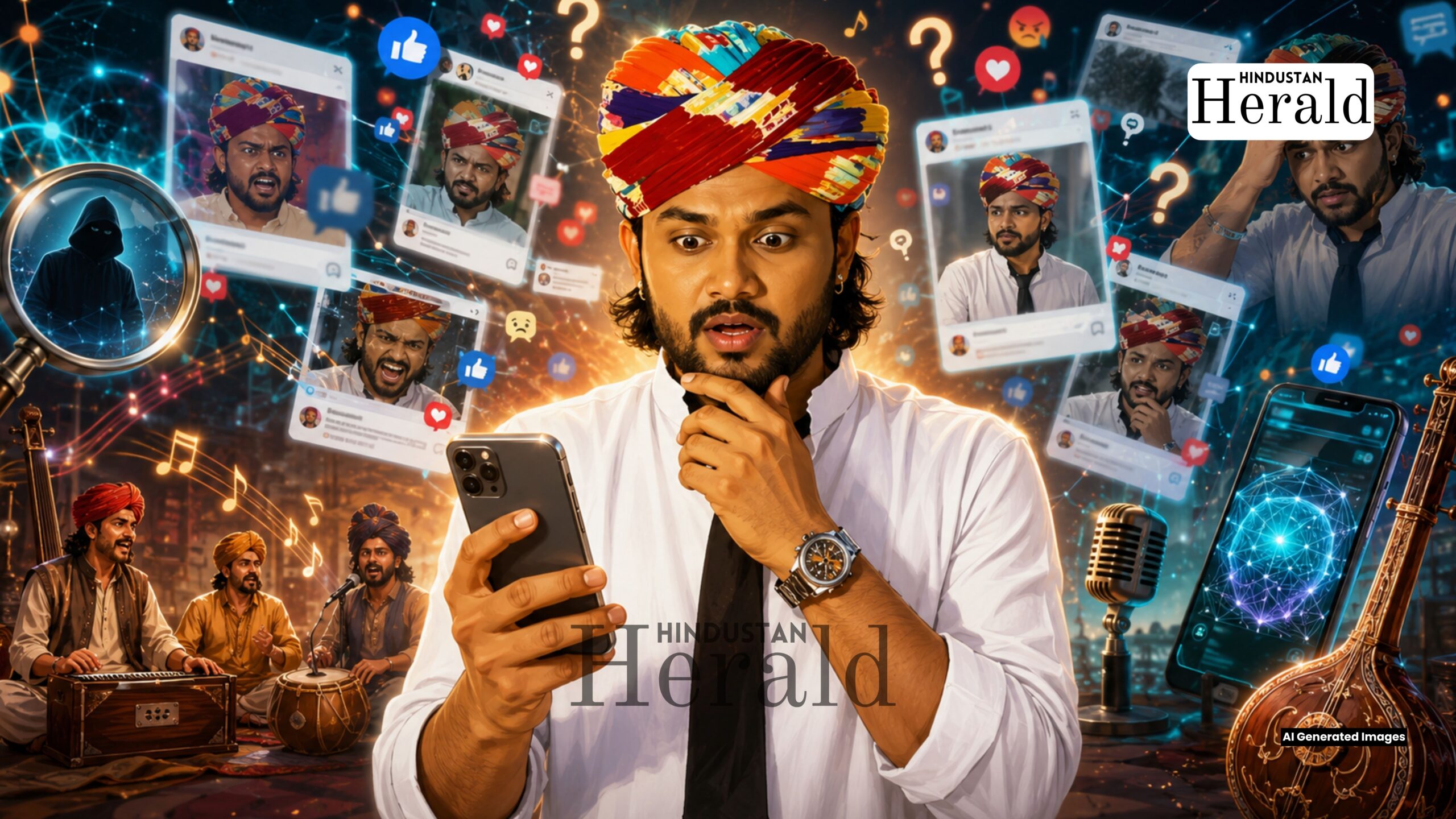
New Delhi, June 4: Sometime in the last 48 hours, Swaroop Khan searched his own name on Google and found out he was dead. Not rumoured to be unwell. Not hospitalised. Dead. With a date next to it and everything. June 2, 2026. Right there in the little information box that Google puts at the top when you look someone up the one that people instinctively trust because it looks so clean and official. It said he had died two days ago.
He responded the only way that made any sense. He posted a photo of himself and wrote: “Abhi Hum Zinda Hain.”
We are still alive.
The Kind of Morning Nobody Wants
To be clear about the timeline here Swaroop Khan is 34 years old. He has a film credit from this year. He was not in a hospital, not in any accident, not even particularly in the news for anything. He was just going about his life when, apparently, Google decided otherwise.
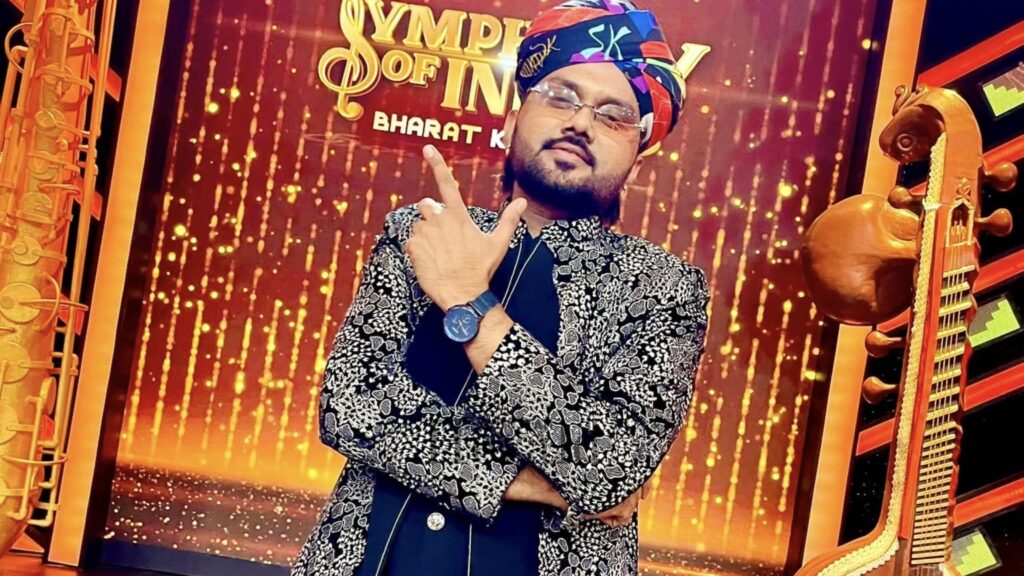
The post hit his followers fast. People who had already stumbled onto the search results and quietly panicked were now relieved, then annoyed, then somewhere between laughing and genuinely disturbed. His fans are not a small group either. He has been a working, respected name in Bollywood for well over a decade. Word travels.
The correction did what corrections do it reached most people eventually. But for a few hours, a non-trivial number of people believed, on the basis of what Google had told them, that one of India’s better-known folk voices had passed away on a Monday.
He had not.
How Google Does This To People
This is not the first time this has happened. Not even close.
The way Google’s knowledge graph works is that it aggregates information from across the internet and surfaces it in a structured format when you search for someone’s name. It is convenient. Often accurate. And occasionally, spectacularly wrong in a way that causes real distress to real people.
The biggest vulnerability in the system is Wikipedia. Not because Wikipedia is unreliable as a whole, but because it is publicly editable. Anyone can go in and change a date. Anyone can add a death date to a living person’s entry. Google has automated systems meant to catch when information has been tampered with, and those systems mostly work. The word “mostly” is where things get uncomfortable.
When something slips through and it does slip through the false information does not appear as a rumour buried on some fringe blog. It appears at the very top of the most-used search engine in the world, formatted to look like established fact. That presentation carries weight. People believe it before they think to question it.
Rapper Bia experienced this in late 2023. Google showed her as having died in New York on a day she had posted on social media. Fans were genuinely frightened. Eminem has been through a version of it. Internationally, the list keeps growing actors, musicians, public figures from different countries and industries who have all, at some point, had to personally confirm to their own audiences that they were not, in fact, dead.
Google’s position each time has been consistent: the knowledge graph draws from multiple sources, the detection systems are not perfect, and when errors are flagged they are fixed quickly. That is all true. It does not make the moment of discovery any less jarring for the person whose name is on the page.
Before All This, There Was the Music
Swaroop Khan was born in Jaisalmer in 1991. If you know anything about Jaisalmer, you know it is not just a city it is a living archive of Rajasthani folk tradition, the kind of place where music is embedded in the walls. He grew up inside that. It shows in everything he has done since.
He came to national attention through Indian Idol Season 5 in 2010. Reality singing competitions in India have launched careers and buried them in roughly equal measure, but Khan was one of the ones who came out of it with genuine momentum. Bappi Lahiri, who knew a distinctive voice when he heard one, gave him his first Bollywood break on the title track of The Film Emotional Atyachar.
Then came PK in 2014. “Tharki Chokro” is the kind of song that sounds effortless and is anything but folk energy channelled into a mainstream production without losing its edge. The film itself was one of the biggest of that year. The song found its own audience beyond it.
Four years later, “Ghoomar.” Padmaavat was already one of the most anticipated films of 2018 before it released, and the song became one of the defining moments in it. Swaroop Khan’s voice alongside Shreya Ghoshal’s, over a composition by Sanjay Leela Bhansali it was the kind of collaboration that produces something lasting. The track won Song of the Year at the Mirchi Music Awards in 2019. It still plays at functions across the country. Probably played at one last weekend.
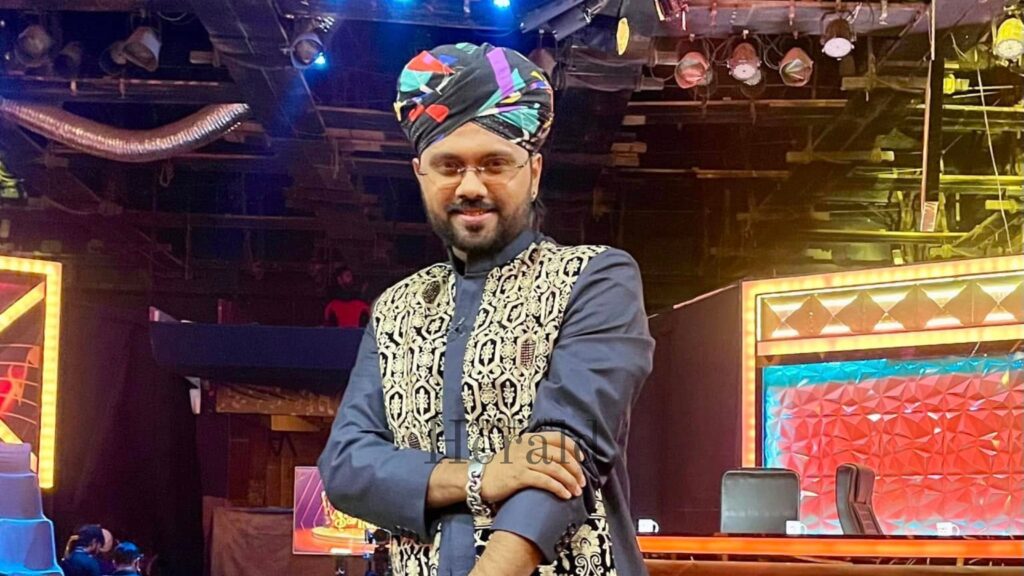
His work since then has continued steadily. Mukkabaaz. Bholaa. Ae Watan Mere Watan. A Kannada film. A film called Sagwaan this year. He received the Rajasthan Sangeet Natak Akademi Award and the Dharohar Virasat Award for what he has given to folk music preservation. Last year he was a judge on Symphony of India: Bharat Ki Goonj. Active, respected, mid-career.
Not the profile of someone Google should be listing under past tense.
What “Abhi Hum Zinda Hain” Actually Means
On one level it is simply a correction. Alive, see, photograph, moving on.
On another level it is something slightly more pointed. Because the phrase we are still alive carries a particular weight in 2026, when the experience of discovering that an algorithm has misrepresented your existence to millions of people is becoming something that happens to people regularly enough to have a recognisable shape.
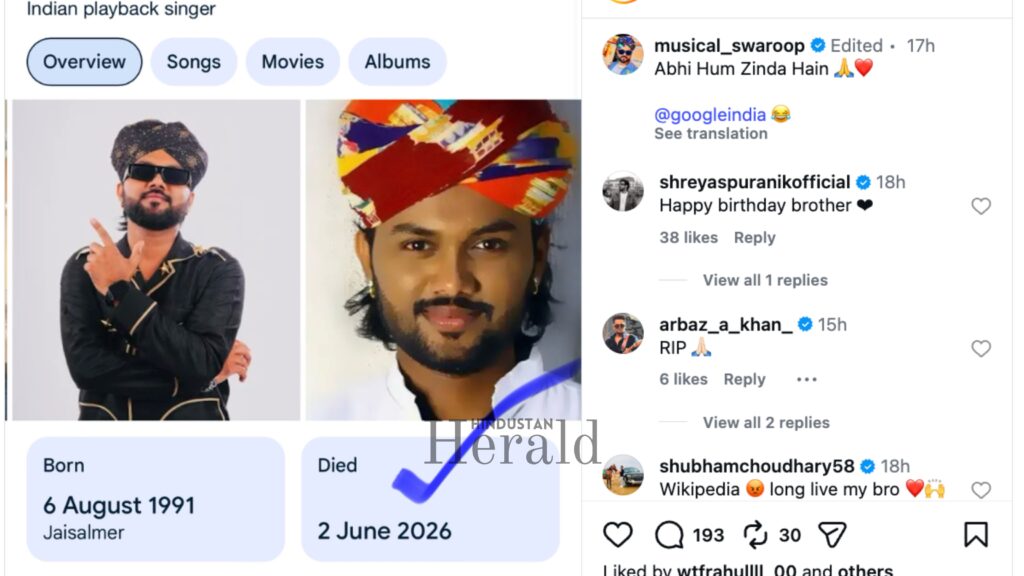
It is worth thinking about what that shape looks like for someone who does not have 50,000 Instagram followers to push back with. Swaroop Khan could post a photo and most of his audience would see it within hours. The story resolves. But for a public figure with less reach, a false death date on Google can sit there longer. It affects search results. It affects how people write about you, book you, refer to you. The misinformation does not wait politely for the correction to arrive. It moves.
There is a real structural problem here that the tech industry has not fully reckoned with. The knowledge graph carries the authority of the platform it lives on. When it is right, that authority is useful. When it is wrong about something as consequential as whether a person is living or dead, that same authority becomes a mechanism for spreading a serious falsehood faster than any single person can contain it.
Every few months there is an incident like this. Briefly, the conversation turns to how platforms should handle life-and-death information differently, whether there need to be more friction in the pipeline before a death date appears publicly, who bears responsibility when the system gets it wrong. Then the incident resolves, the conversation fades, and everyone waits for the next one.
After the Post
The knowledge panel has been corrected. Swaroop Khan did not need to file paperwork or call a lawyer. He posted a photo, his fans shared it, someone flagged the error to Google, and the page now reflects what was true all along: a living person, still making music, still here.
That is the good version of how this ends. The quick version. And to be fair, it did end quickly this time.
Still. There was a window. A few hours where enough people had seen enough wrong information that it had to be publicly undone. That window is the part worth paying attention to, because for all the speed of the correction, the error got there first.
Swaroop Khan is fine. He made that clear himself, with a photograph and a phrase that managed to be both ordinary and quietly devastating at once.
We are still alive.
Yes. And it should not have taken a social media post to prove it.
Stay ahead with Hindustan Herald — bringing you trusted news, sharp analysis, and stories that matter across Politics, Business, Technology, Sports, Entertainment, Lifestyle, and more.
Connect with us on Facebook, Instagram, X (Twitter), LinkedIn, YouTube, and join our Telegram community @hindustanherald for real-time updates.

Covers films, television, streaming, and celebrity culture with a focus on storytelling trends.
- Ayesha Khan

- Ayesha Khan
- Ayesha Khan
- Ayesha Khan




 Arun Upadhayay