
 By Ananya Sharma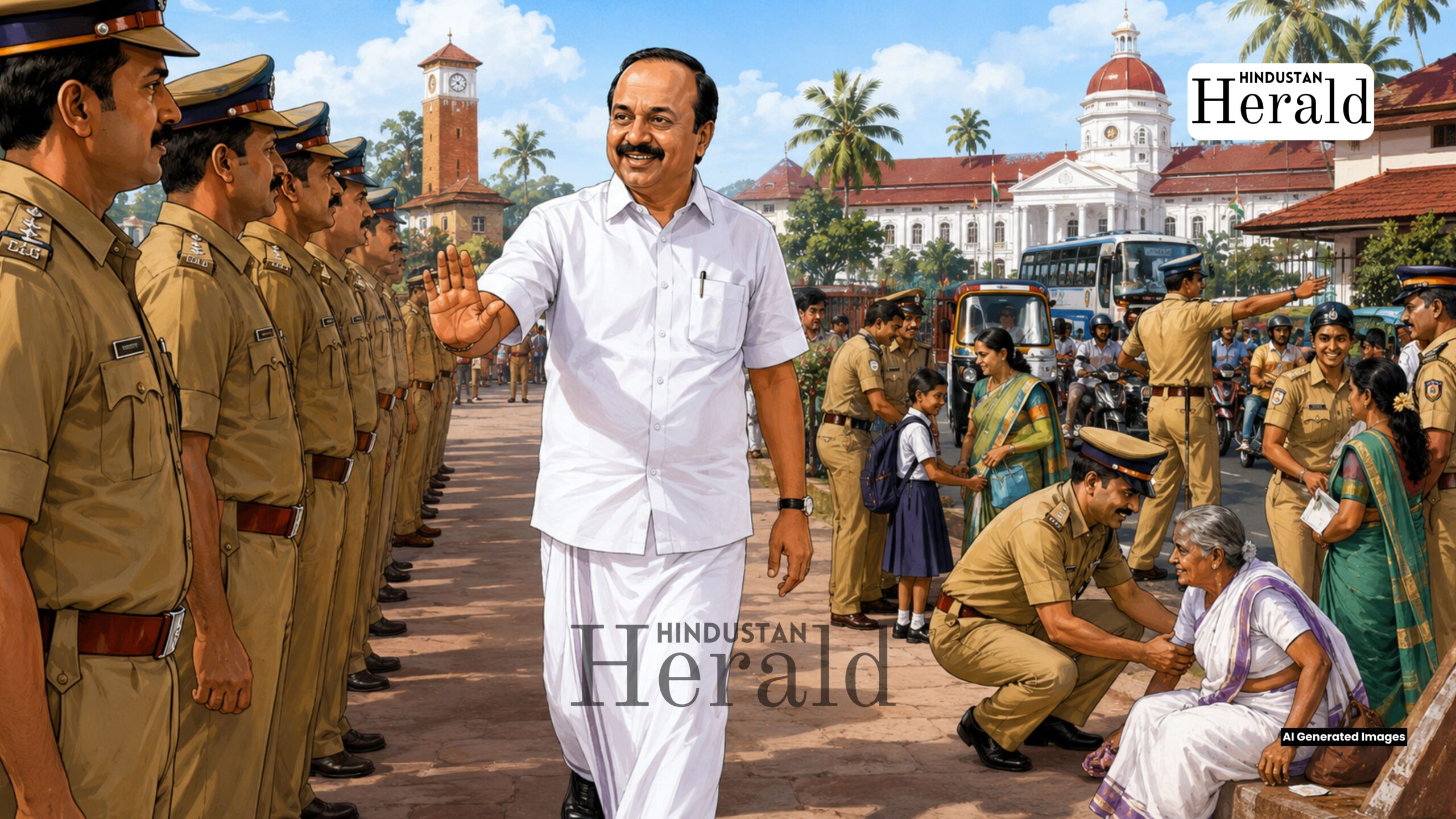
Thiruvananthapuram, June 5: Kerala’s new Chief Minister has a problem with standing on ceremony. Literally.
V.D. Satheesan this week told senior police officials that he does not want a Guard of Honour during his official visits across the state. No formation of uniformed officers. No ceremonial reception outside government guest houses. His question to the police brass, including State Police Chief Ravada A. Chandrasekhar, was blunt: when the force is struggling with manpower shortages across districts, why are trained officers being pulled away to stand in a line for a politician?
It is a fair question. And the fact that a sitting Chief Minister is asking it at all says something about the kind of political moment Kerala finds itself in right now.
The Ceremony Nobody Questioned Until Now
A Guard of Honour is exactly what it sounds like. When a constitutional dignitary or senior official arrives at a venue, uniformed personnel receive them in formation as a mark of respect. It is tradition, inherited partly from colonial-era military practice, partly from the ceremonial grammar of the Indian republic. The Prime Minister gets one. So do visiting heads of state, military chiefs, governors. And in Kerala, the Chief Minister has long received one during district tours, typically when staying at official government guest houses.
Nobody has really questioned it for decades. It was just part of how things worked.
Satheesan is questioning it. And his reasoning is not just about personal discomfort with pomp. As per sources close to the discussions, he specifically framed the objection around resource deployment. The Kerala Police is understaffed in meaningful ways. Pulling officers out of active duty for ceremonial guard rotations is, in his view, a waste of capacity the force can ill afford. Whether that reasoning will hold up in the face of protocol and the Home Ministry’s security guidelines is another matter entirely, but the argument itself is hard to dismiss.
This Was Coming
To anyone who has followed Satheesan over the past few months, this move is entirely consistent with what he has been doing since even before he was sworn in on May 18.
In the days leading up to taking office, he had already told senior police officials to drastically cut down his security convoy. No more 20-vehicle motorcades. No more traffic signals being manually switched off across Thiruvananthapuram while ordinary commuters sat and waited. His instruction was simple: a pilot vehicle and one escort car. That is it. Roads should not be blocked. People on their way to work, to hospitals, to school should not be made to feel that the Chief Minister’s travel is more important than theirs.
It was a pointed departure from what Kerala had gotten used to. Under his predecessor Pinarayi Vijayan, the convoy had become something of a recurring public grievance. Reports from multiple outlets, including IANS, described motorcades that stretched to 20 vehicles at a time, with jammer vans, armed police details, multiple escort cars and an ambulance trailing at the rear. In Thiruvananthapuram especially, those convoys meant long waits, blocked intersections and a general sense that power in Kerala came with a very visible footprint.
Satheesan wants a different footprint. Whether he maintains that will depend on how long he is in office and what pressures come with it. But the early weeks have been deliberate.
He was spotted in mid-May pulling his vehicle over on a Thiruvananthapuram road and stepping out to speak with people on the street. It was a small thing, but it spread quickly. Partly because people noticed. Partly because they could not remember the last time something like that had happened.
The Part That Is Not So Simple
That said, scrapping the Guard of Honour is not simply a matter of the Chief Minister saying he does not want it. The police have a role here too, and they have their own constraints.
Security arrangements for the Chief Minister are not set by whim or personal preference. They are governed by a Union Home Ministry framework, commonly called the Yellow Book, which lays out the baseline requirements for a CM’s convoy and protection detail. As The Federal reported, the standard arrangement even under normal circumstances includes the CM’s vehicle, five to six escort cars and an ambulance. The composition can expand further depending on threat perception or the nature of the visit.
Police officials cannot simply remove security elements on a verbal request, even one from the Chief Minister himself. If something were to go wrong, the accountability would fall squarely on the department. That is the nature of these protocols, and it is why police leadership has reportedly been trying to find a middle path rather than just complying outright. One option being explored, as per sources, is a stripped-down Guard of Honour that retains the ceremonial form in a minimal way without the full deployment of personnel that the current practice involves.
It is a quiet institutional negotiation, and it will probably settle somewhere between what Satheesan wants and what the police say they must provide.
What He Is Actually Saying With All of This
There is politics here, obviously. It would be strange if there was not.
Satheesan spent five years as Leader of the Opposition. During that time, the criticism of VIP culture, of the Vijayan government’s perceived distance from ordinary citizens, of convoys that treated public roads as private property, was part of the Congress-UDF’s pitch. It worked. The alliance won 102 of the 140 seats in the 2026 assembly election, ending more than a decade of Left Democratic Front rule. That kind of mandate does not come purely from policy arguments. It comes, at least in part, from the feeling that the other side had stopped listening.
So yes, Satheesan stopping his car to talk to a pedestrian in Thiruvananthapuram is political. Asking why officers are doing ceremonial guard duty when they should be on patrol is political. But that does not make either of those things wrong or insincere. In Indian public life, it is entirely possible for something to be a political signal and also be the right thing to do.
The more interesting question is whether this lasts. VIP culture in India has a tendency to creep back in. It starts with small exceptions: a threat assessment here, a protocol requirement there. The convoys start growing again. The road blockages return. Satheesan himself criticised such drift when it happened under Vijayan. He now has to govern under the same institutional pressures that produced it.
The Broader Conversation It Has Opened
The Guard of Honour debate, small as it might seem in isolation, has touched something real in Kerala’s public conversation this week. People understand what it means for police to be short-staffed. They understand what it means when those same officers are deployed to stand in formation for a political ceremony. The dissonance is obvious once someone points it out.
As it turns out, all it took was a Chief Minister willing to point it out about himself.
How exactly this resolves, whether the Guard of Honour is formally discontinued, modified beyond recognition or quietly retained in some ceremonial compromise, will likely become clear in the weeks ahead as Satheesan begins his district tours in earnest. For now, the direction of travel is clear. Kerala’s new Chief Minister is trying, with some consistency and apparent conviction, to govern differently from the man he replaced.
Whether the system lets him is the question that will define much of what comes next.
Stay ahead with Hindustan Herald — bringing you trusted news, sharp analysis, and stories that matter across Politics, Business, Technology, Sports, Entertainment, Lifestyle, and more.
Connect with us on Facebook, Instagram, X (Twitter), LinkedIn, YouTube, and join our Telegram community @hindustanherald for real-time updates.

Covers Indian politics, governance, and policy developments with over a decade of experience in political reporting.
- Ananya Sharma

- Ananya Sharma
- Ananya Sharma
- Ananya Sharma

 Sandeep Verma