 By Shelesh Joshi and Rajiv Menon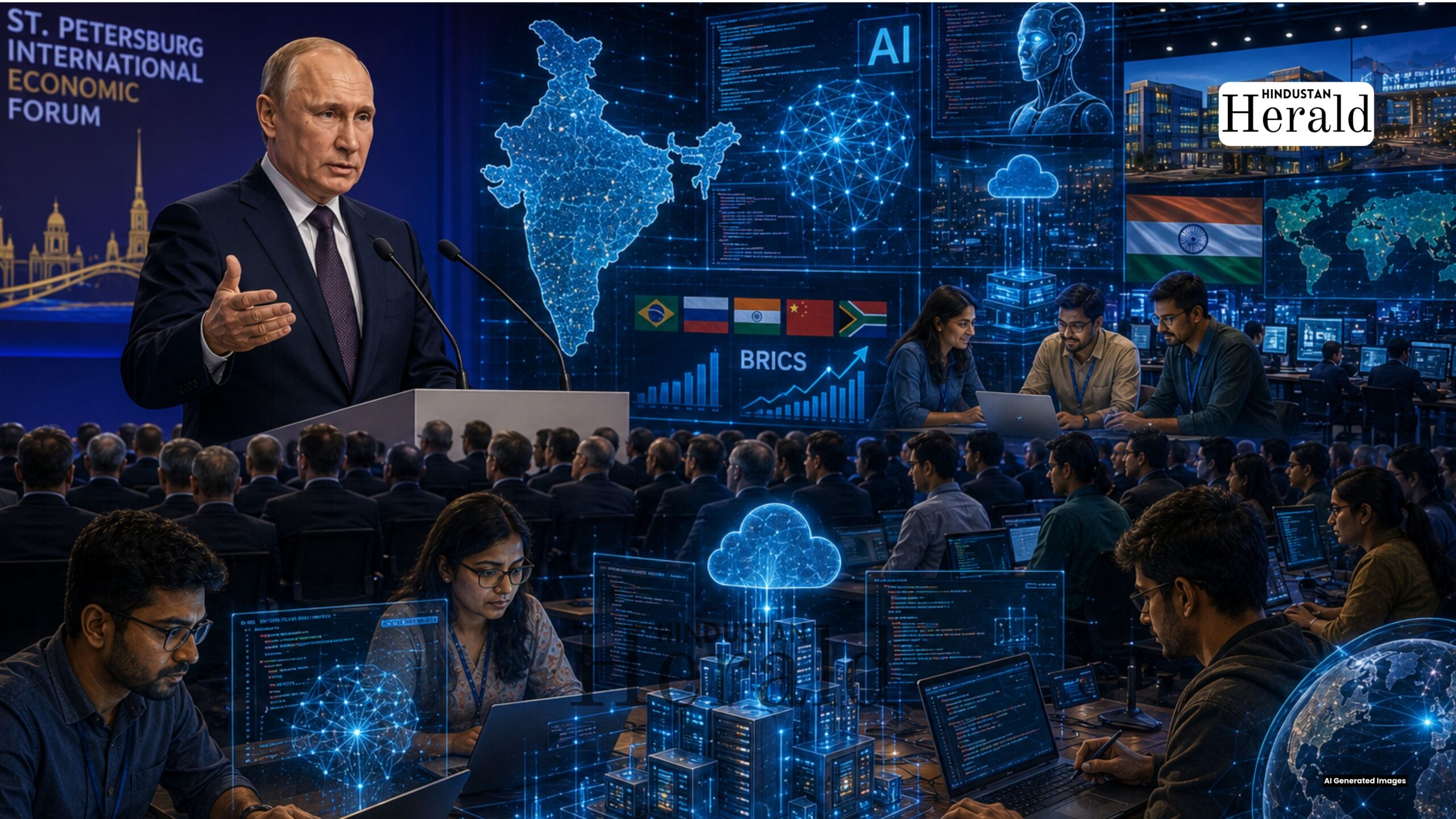
New Delhi, June 6:Vladimir Putin did not have to say it. He was sitting at the St Petersburg International Economic Forum with a room full of finance ministers and oil executives, people who fly business class to these things and spend three days talking about trade corridors and currency settlements. He had real problems to address. The war. Sanctions. Energy. The question of whether the global order his country helped build is actually collapsing or just reorganising itself. And in the middle of all that, he said something nobody expected. Indian coders, he told that room, are known across the world.
Not as a warm up line. Not as the thing you say before the handshake photo. He said it the way you mention something that is simply true, the way you say the sky is blue or Mumbai traffic is terrible. Like it needed no qualification.
It landed differently back home. By Friday evening the clip was moving through WhatsApp groups the way clips do when they touch something real. An engineer in Bengaluru sent it to his college group chat. A girl in Hyderabad prepping for her first placement interview watched it three times. Someone who left for London eight years ago and has not quite stopped feeling guilty about it shared it without a caption, because there was nothing to add. Pride was in there. But so was something else. Something older and quieter that pride tends to sit on top of.
Quick Summary
- Vladimir Putin at SPIEF 2026 on June 6 said Indian coders have achieved “world renown,” one of the most direct acknowledgments of India’s tech talent from a sitting head of state at a major global economic forum, as reported by ANI.
- India has around 5.8 million IT industry professionals, the second largest pool in the world after China, according to the NASSCOM Strategic Review 2025, confirmed by Reuters.
- BRICS countries now account for 40 per cent of global GDP measured by purchasing power parity while the G7 has dropped below 29 per cent on the same measure, figures Putin cited directly at SPIEF, as reported by TASS and The Statesman.
- Moscow is finalising a long term cooperation plan with India till 2030 covering energy, defence, technology, and pharmaceuticals, Putin confirmed at SPIEF, as reported by Deccan Herald.
- The BrahMos missile, built jointly by India’s DRDO and Russia’s NPO Mashinostroyeniya, was cited by Putin as his clearest example of what real bilateral technology work looks like, according to ANI.
- India ranks first in the world for AI skills penetration and holds the second largest AI and ML talent pool globally, per the NASSCOM State of Data Science and AI Skills report, independently confirmed by the Stanford AI Index 2024. India also ranks third globally in cloud computing professionals, according to a NASSCOM Cloud Skills report, though that specific figure is based on FY2021 data.
He Said It Like He Believed It
There is a version of the St Petersburg forum that is pure theatre. Leaders showing up to reassure each other and the cameras that Russia still has friends, that Moscow is not the economic pariah the West wants it to be. That version exists and it is real. But it does not mean everything said there is hollow.
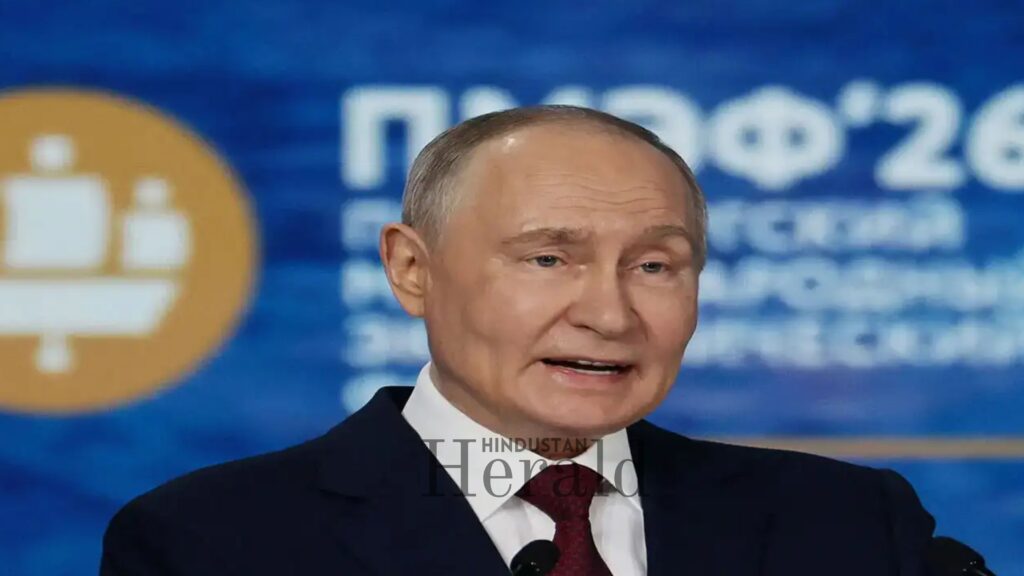
When Putin told the room, according to an ANI report carried by New Kerala, “We know how talented the Indian people are, how well educated. Indians have great competencies, which have achieved world renown, especially in coding and in other fields,” that was not drafted by a diplomat trying to soften a difficult bilateral meeting. It was a plain statement. About a particular group of people. About a particular skill. Said by someone who has been watching the global technology order shift for twenty years and knows what the numbers show.
He did not stop there. According to India.com, he called India “one of the leading players in the IT industry” that “accounts for a significant share of the global software market.” Then he brought up the numbers. According to TASS and The Statesman, Putin stated that BRICS now accounts for 40 per cent of global GDP measured by purchasing power parity, while the G7 sits below 29 per cent on the same measure. He added that over the five year period from 2021 to 2025, 49 per cent of all global economic growth came from BRICS countries, while the G7 contributed 18 per cent over the same stretch.
He was putting India’s technology workforce inside a larger argument. The point was not just that Indian coders are good. The point was that the world where only California and Berlin produced things that mattered is already over. Bengaluru is in that sentence now whether the old centres of power acknowledge it or not.
The Numbers That Never Get Loud Enough
India is strange about its own technology story. The country that produced some of the sharpest engineers on earth somehow never learned to talk about it without apologising first or adding a qualifier.
According to the NASSCOM Strategic Review 2025, confirmed independently by Reuters, India’s IT industry workforce reached 5.8 million professionals in FY2025, making it the second largest national tech talent pool in the world behind only China. But the headcount is actually the least interesting part.
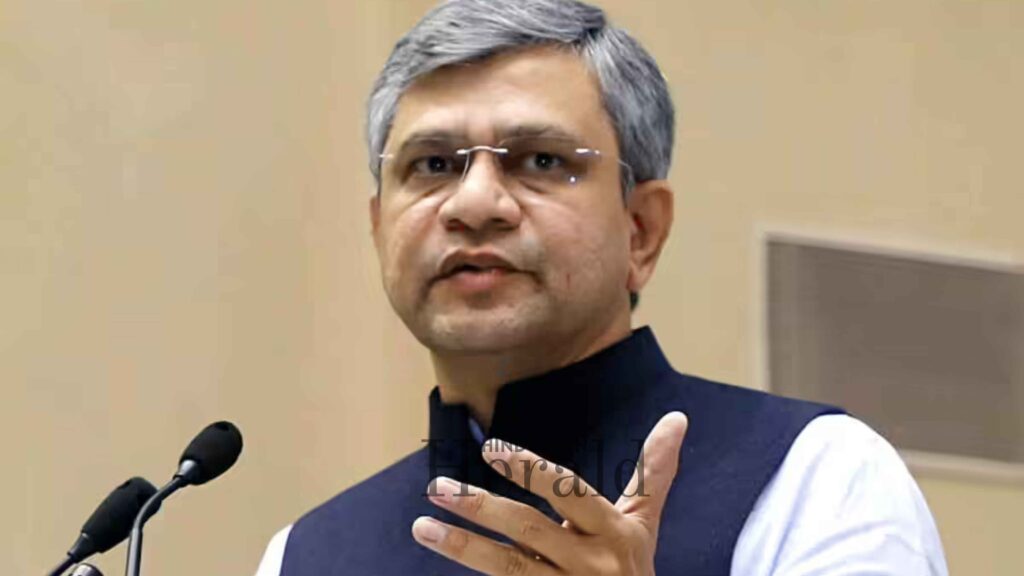
According to NASSCOM’s State of Data Science and AI Skills report, independently confirmed by the Stanford AI Index 2024 and cited in a December 2025 statement by Union Minister Ashwini Vaishnaw in the Rajya Sabha, India ranks number one globally for AI skills penetration in its workforce and holds the second largest AI and machine learning talent pool in the world. A separate NASSCOM Cloud Skills report placed India third globally for cloud computing professionals, based on FY2021 data, a ranking that industry observers say has broadly held since.
In 2026 those are not niche categories. Every serious industry is rebuilding itself around those exact skills right now. The hospitals, the banks, the logistics companies, the defence establishments. People who understand how to build and run AI systems are genuinely scarce worldwide. India has more of them than almost any country alive. That stopped being an outsourcing story a while ago.
The leadership picture is the part that should end any remaining argument. Sundar Pichai at Google. Satya Nadella at Microsoft. Shantanu Narayen at Adobe. Arvind Krishna at IBM. Not on advisory boards. Running the companies. Making the calls that shape how technology gets built globally. Every single one of them came out of the same Indian system, the same culture around mathematics, the same middle class household that decided engineering was the answer before their child could read.
Russia has its own reason to take this seriously right now. Since 2022, Google, Microsoft, Oracle and others have pulled back from Russia. Moscow is trying to build domestic versions of systems it used to buy. In that context, India’s depth in software is not just something Putin admires from a distance. It is something Russia has very concrete reasons to want a relationship with.
What He Was Really Saying to Washington
Compliments are rarely just compliments at forums like this. There was a second audience for Putin’s remarks on Friday, and it was not the delegates in the room.
India has been under steady American pressure for three years over two things. The first is Russian oil. After the Ukraine invasion New Delhi kept buying it, took advantage of the discounts, kept energy costs down, and in the process kept Russian export revenues from collapsing the way the sanctions were designed to make them. The second is defence. India’s military runs on a large volume of Russian-origin equipment, and the institutional relationships built over decades of joint procurement and development are not the kind of thing you can dissolve in a hurry without creating serious gaps in national security.
Washington made its frustration clear on both fronts. Secondary sanctions warnings. Diplomatic pressure. Conversations at senior levels about what continued Russia engagement might cost India. New Delhi listened politely and largely continued.
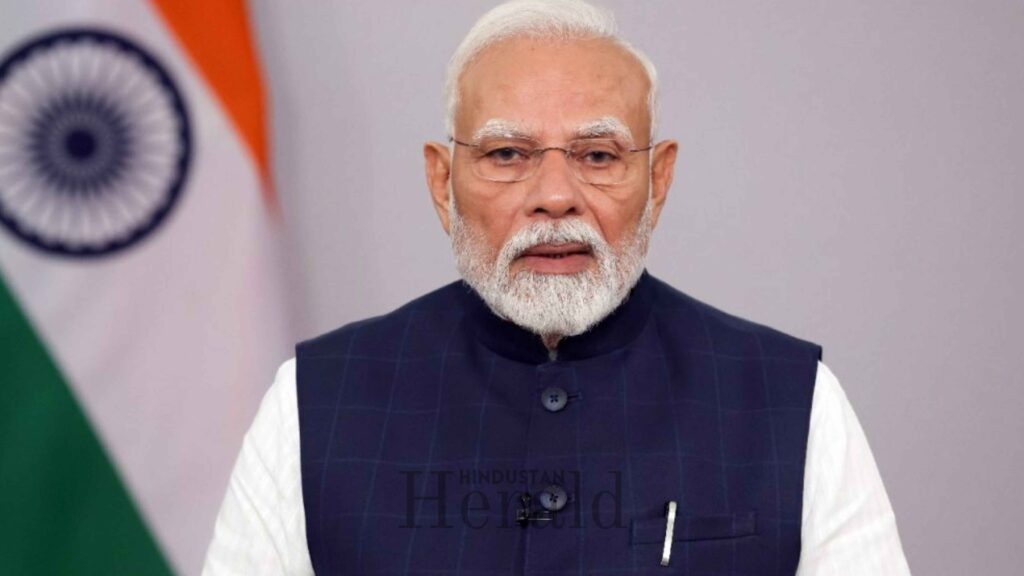
Putin’s response, delivered publicly at SPIEF, was to make the relationship look not strained but solid. According to ANI, as reported by New Kerala, he said Russia’s cooperation with India “is not subject to the political environment,” that “nobody can dictate to us,” and that India “always acts as a sovereign country.” He said that under Modi, sanctions threats “would boomerang immediately.”
That last line is doing real work. He was not just defending Russia’s position. He was publicly saying that India’s government is not the kind that bends when a bigger power pushes. In a world full of governments that do exactly that, it is a specific and considered thing to say. Self serving, yes. But also hard to argue with, given the last three years.
Missiles, Military Ties, and a History That Predates Both Their Current Governments
The technology story and the geopolitics are what people will write about. But the defence relationship is where the actual weight sits. According to ANI, Putin spoke about how India’s armed forces have operated Russian-origin equipment since the Soviet era and said the relationship has moved past procurement into genuine joint development where both countries share ownership of what they build.
BrahMos is the proof. Designed jointly by India’s DRDO and Russia’s NPO Mashinostroyeniya, it is one of the better supersonic cruise missiles in the world today. The Philippines completed its purchase of the system in recent years. Several other countries are in talks. India is exporting it. A weapons system that engineers from both countries built together is now something foreign militaries are paying real money for. That is not the story of India as a passive buyer of other people’s defence technology. That story ended some time ago.
On energy, as ANI reported, Putin acknowledged the supply pressures India had been navigating because of tensions in the Strait of Hormuz and said Russia responded by increasing shipments to the Indian market. He called it what partners do for each other. The practical reality, whatever you make of that framing, is that Russian oil kept Indian energy costs from doing what they did in most of the rest of the world during that period.
What Strategic Autonomy Looks Like When It Is Actually Working
The standard line from Western commentators is that India is hedging. Sitting on a fence. Too cautious to pick a side. That reading misses the point. India is not confused about which side it is on. It is on India’s side. The Non-Aligned Movement did not come from ambivalence. It came from a deliberate decision that a newly independent country should not organise its foreign relationships around someone else’s Cold War. That instinct never went away. It got renamed strategic autonomy and updated for a more complicated world.
According to Deccan Herald, Putin confirmed at SPIEF that the India-Russia long term cooperation framework extending to 2030 is being finalised, covering energy, defence manufacturing, pharmaceuticals, technology, and investment. As All India Radio has reported, the two countries formally describe the relationship as a “special privileged strategic partnership,” reflecting a level of coordination on major international positions that predates the current governments in both capitals by several administrations.
India is not choosing Russia over America. It chose its own interests. Both Washington and Moscow are currently working hard to keep New Delhi in their orbit and making real concessions to do it. That is not fence sitting. That is leverage.
What Was Under the Pride
The specific thing Putin said, about Indian coders having world renown, produced a reaction that was more layered than straightforward national pride. Worth talking about honestly.
India has been producing serious software engineers since the 1990s. The IITs and NITs built real institutions out of limited resources. The culture around it, the pressure, the sacrifice, parents in small towns putting everything into an engineering seat for their child, it was never accidental. It produced something the world came to depend on. And then a very large share of it got on a plane.
The engineers who could have built India’s next generation of technology companies are in San Francisco writing code for American firms. The researchers who might have worked on Indian AI systems took fellowships at MIT and Stanford and did not come back. The education India subsidised is generating its best returns somewhere else. This is not a new observation. But Putin standing up at SPIEF and praising Indian coders brought it back into focus in an uncomfortable way. The obvious follow-up question is not really about Russia or geopolitics. It is about India.
If the world has known how good Indian engineers are since the nineties, what exactly has India been building for them to stay for?
The startup ecosystem is better than it was, genuinely. But it still has not reached Bhopal or Coimbatore or Raipur with any consistency. A talented engineer from a tier-3 city still has to move to Bengaluru first just to get into the room. Public sector salaries cannot compete with private tech, and private tech in India cannot compete with what the same person earns abroad.
According to NASSCOM, India will need an additional one million AI skilled professionals by 2026, which points to both the scale of demand and the scale of the gap that still needs filling domestically. Investment in foundational AI research and semiconductor development is growing but remains thin for a country with these ambitions. The talent was never the problem. What is still being built, too slowly in places, is the ecosystem around that talent.
The Outsourcing Label Has Expired
The old story about India and technology was specific and persistent. Services. Execution. Reliable, affordable, not quite the place where the original ideas came from. That story had some truth in it once. It stopped being true gradually and then all at once.
Putin at SPIEF did not discover this. He stated it. India is doing original work at the frontier of AI, cloud infrastructure, cybersecurity, and semiconductor design. Not as someone’s back office. As a country with real capability and real standing in those fields.
That changes what India can ask for when the world sits down to write the rules for AI governance and data regulation and who controls the standards in critical technology. India is already in those conversations through the G20 and bilateral dialogues with most of the major economies. Its position gets stronger every time someone at Putin’s level says publicly what the technology industry has known privately for thirty years. He did not give India that standing. The engineers built it. He just said it where it would be heard.
After the Clip
People in India will remember one thing from SPIEF 2026. A foreign leader, at a table that matters, saying that Indian coders are known everywhere.
The harder thing is what comes after. Not the pride. The work. More technology companies built here and owned here. More foundational research that generates intellectual property India actually holds. A genuine reason for a brilliant kid from Varanasi or Vizag to build something here instead of spending the best decade of their career making someone else’s economy stronger.
The world figured out that Indian engineers are exceptional a long time ago. India has always known. The gap between knowing it and building around it properly is still there. That is what Friday’s clip should have started a conversation about. Whether it does is another matter.
Stay ahead with Hindustan Herald — bringing you trusted news, sharp analysis, and stories that matter across Politics, Business, Technology, Sports, Entertainment, Lifestyle, and more.
Connect with us on Facebook, Instagram, X (Twitter), LinkedIn, YouTube, and join our Telegram community @hindustanherald for real-time updates.

Tracking world politics, global markets, trade movements, policy decisions, and the changing balance of economic power.
- Shelesh Joshi

- Shelesh Joshi
- Shelesh Joshi
- Shelesh Joshi


Specializes in South Asian geopolitics and global diplomacy, bringing in-depth analysis on international relations.
- Rajiv Menon
- Rajiv Menon
- Rajiv Menon
- Rajiv Menon