
 By Sandeep Verma and Neeraj Kapoor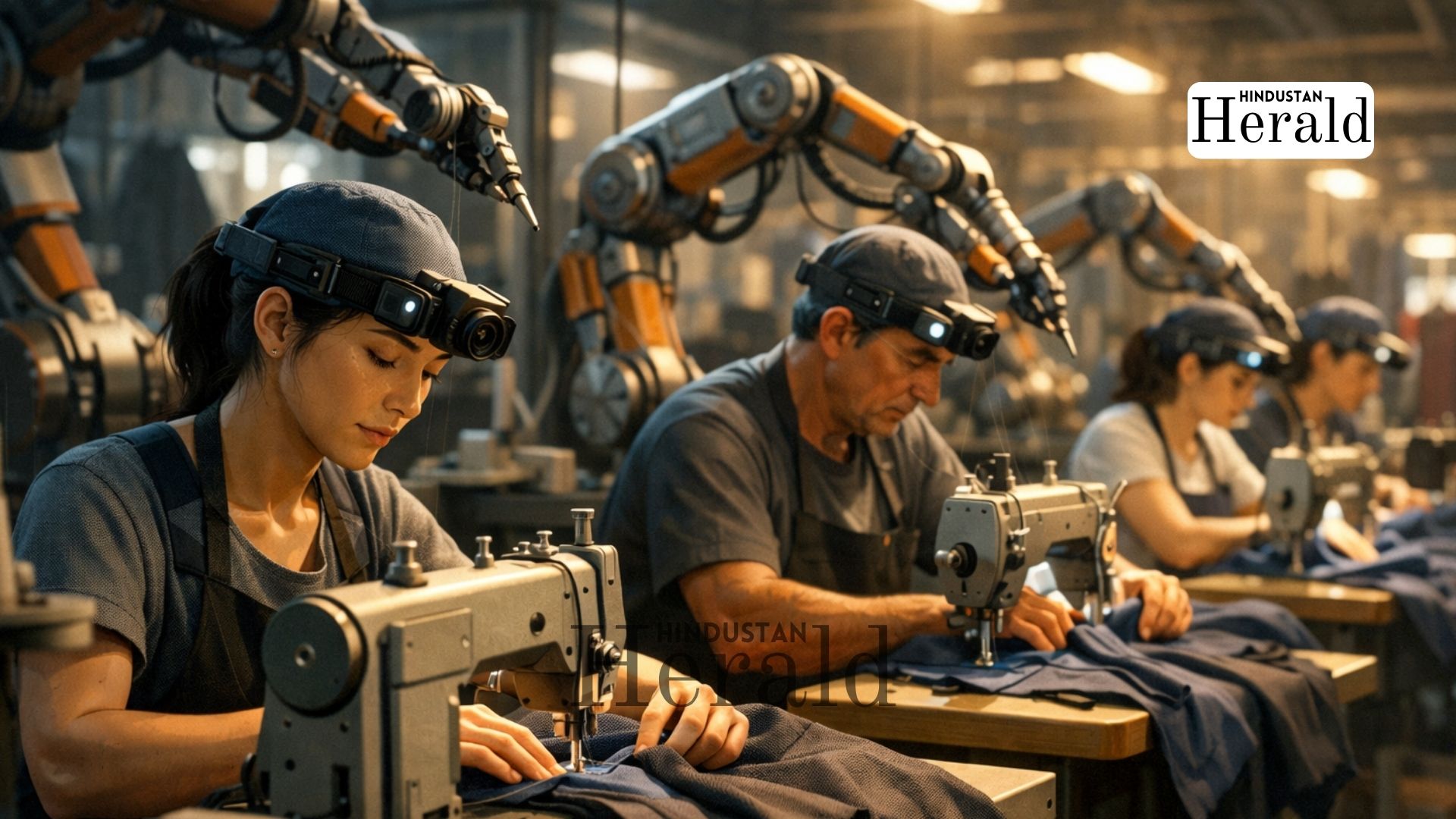
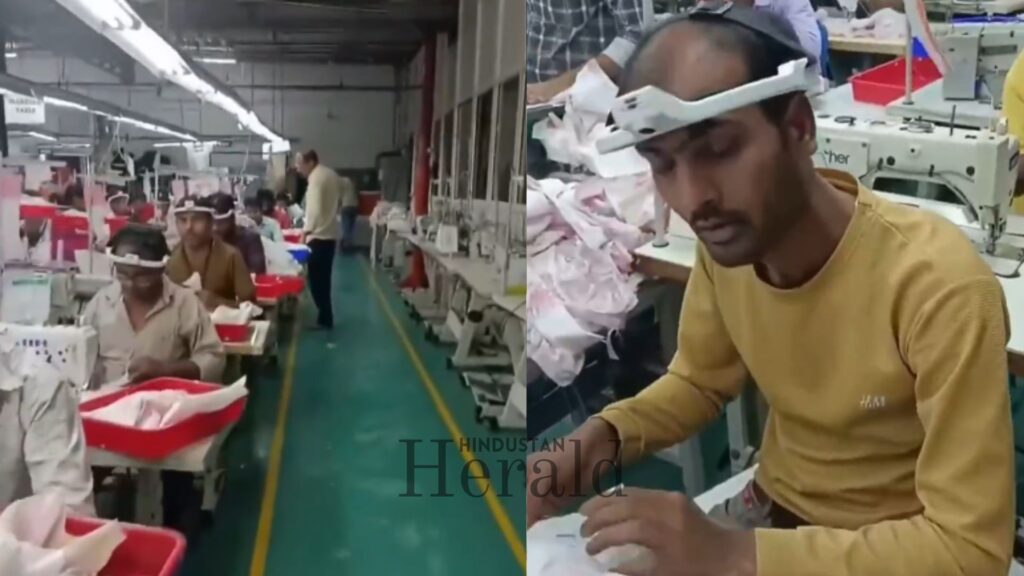
New Delhi, April 14: The cameras are small, white, and strapped firmly to a worker’s forehead. The hands below them move with practised ease, threading needle through fabric in the rhythmic, repetitive way that only years of factory work can produce. But these workers, seated in rows inside what appear to be large garment factories somewhere in India, are not just stitching clothes anymore. Whether they fully know it or not, they are producing something far more consequential: the raw training data that could one day teach a machine to do exactly what they do.
Videos of these workers began flooding social media platforms around April 12, triggering a debate that has since spilled well beyond India’s borders. The footage is unsettling in its mundanity. Nothing looks exceptional on the surface. Workers are simply doing their jobs. And that, for millions of people watching, is precisely the point.
The Cameras, the Data, and What It All Means
The original social media posts suggested the head-mounted cameras might reflect rising workplace surveillance inside Indian factories. But most responses, including those from technology professionals, pointed in a different direction: the cameras are likely egocentric devices capturing first-person footage of hand movements and tasks.
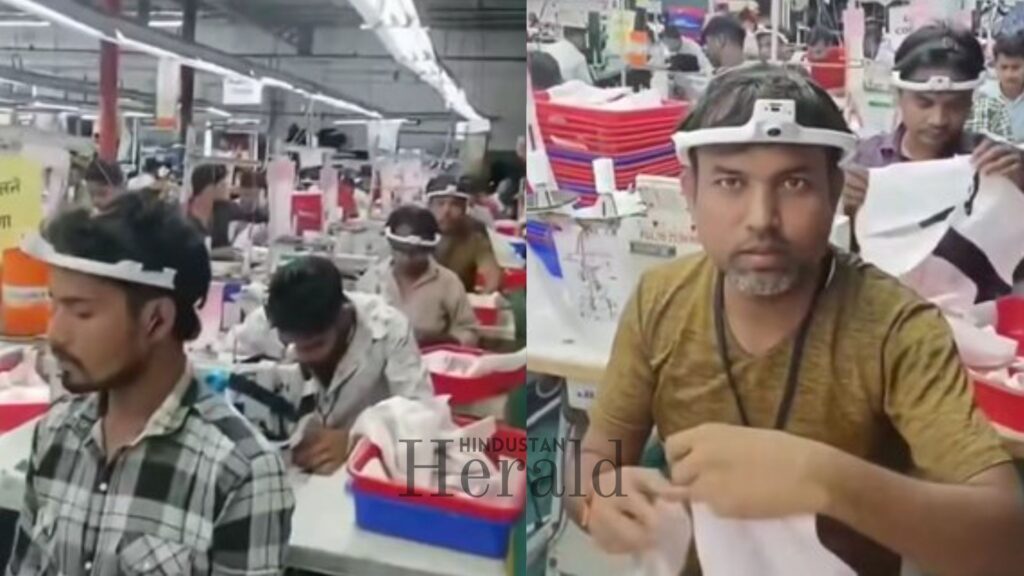
The most widely circulated theory holds that these factories are collecting first-person perspective video data to train AI models and robots. By capturing detailed hand movements from the worker’s point of view, machines can learn to handle fabric and perform similar sewing tasks through imitation.
This approach, often called egocentric data collection, is not new to the AI research world. Training robotic systems to replicate fine motor skills has been one of the field’s most persistent challenges. Human hands, after all, are extraordinarily dexterous. They adjust grip pressure instinctively, feel fabric texture, and course-correct in milliseconds. Getting a machine to do the same requires vast amounts of visual data captured from the worker’s own perspective, not from overhead cameras or sensors placed at a distance.
Workers are often paid extra to record high-quality footage, helping AI and robotics systems learn garment-making tasks. That detail matters. These are not covert operations. Many workers are, at least in part, willing participants in the process, often incentivized with additional pay.
That said, willingness and full understanding are not the same thing.
“They Are Training Their Own Replacements”
The video ignited a fierce debate about the future of labour. Several users argued that the workers were unknowingly contributing to automation systems designed to eventually replace them, with some describing the practice as exploitative. “They are being made to train their own replacements,” one widely shared comment read. Others took a different view, arguing that workers and management must adapt in step with evolving technology to remain relevant.
The tension in those two positions captures something real about the moment India finds itself in. The country’s textile and garment sector is one of its largest employers, particularly for women with limited formal education and few alternative livelihood options. The global textile industry employs over 75 million people worldwide, and approximately 80% of garment workers are women. India accounts for tens of millions of those jobs. According to the India Brand Equity Foundation, the Indian textile industry is expected to reach $350 billion by 2030 and employs more than 45 million people.
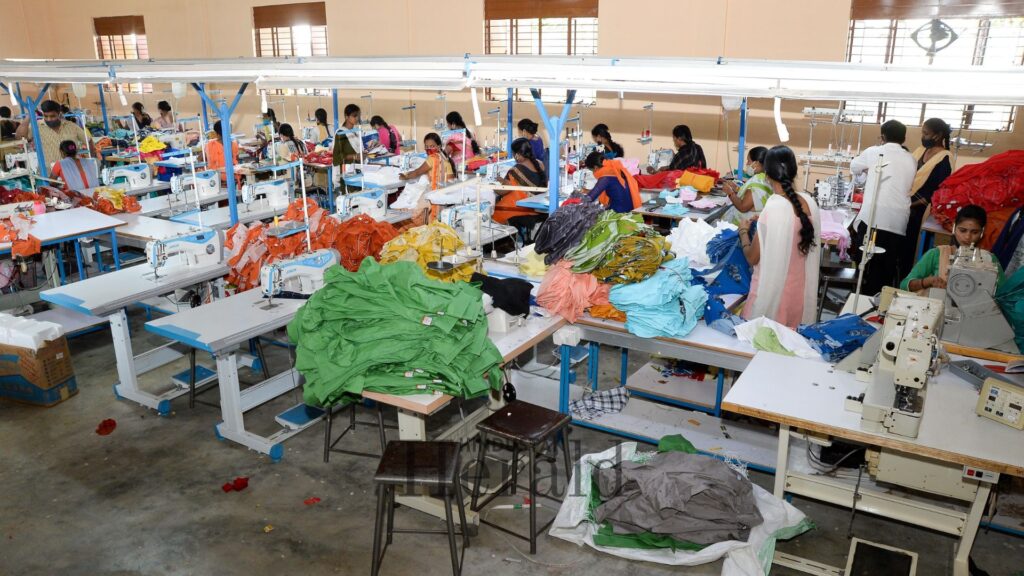
These are not abstract numbers. In factory towns like Tirupur, Bengaluru, Surat, and Ahmedabad, the garment sector is the economy. A tailoring job, however modestly paid, often represents a family’s only source of stable income. The women who sit at those sewing machines did not grow up thinking about artificial intelligence. They grew up thinking about survival. And now, without being fully told, some of them appear to be feeding data into systems designed to automate their livelihoods.
As we move deeper into 2026, the story behind these cameras is not just about surveillance. It is about the digitization of human skill and the controversial race to build the next generation of humanoid robots.
How Hard Is It, Really, to Automate Sewing?
The robotics industry has been trying to crack garment automation for decades. Fabric is the problem. Unlike metal or glass, it is limp, unpredictable, and deforms under the slightest pressure. When the industry has looked at automation in the past, it was unable to overcome the difficulties in getting robots to manipulate and handle pliable materials.
Progress has been made in recent years. In 2026, sewing robots range from compact retrofit units for niche tasks to fully automated systems capable of running lights-out shifts. They excel in high-volume apparel, heavy-duty upholstery, and precision custom tailoring. Challenges remain with delicate or stretchy fabrics, complex patterns, and material handling, but advances in vision systems and no-code controls are closing the gap.
Still, closing a gap is not the same as crossing it. A sewing robot capable of replacing the breadth of what a skilled garment worker does, across different fabrics, patterns, and production conditions, remains out of reach for most manufacturers. What these egocentric camera projects are attempting to do is accelerate that process dramatically. By collecting hundreds or thousands of hours of real-world footage from actual workers performing actual tasks, AI developers can train computer vision models and robotic systems far more efficiently than through simulation alone.
Proponents of this theory say the approach could extend well beyond garment manufacturing. Once the technique works for sewing, the same methodology, attaching cameras to skilled workers and capturing first-person training data, could be deployed across carpentry, cooking, surgical assistance, construction, and dozens of other manual trades.
The implications are staggering.
The Numbers Behind the Fear
The anxiety visible in the comment sections of those viral videos is not irrational. Global job displacement linked to AI and automation is estimated to reach 85 million roles by the end of 2026. Approximately 40% of global employers expect workforce reductions due to AI, and companies planning to replace workers with AI are now reported at 37%.
Automation threatens to displace up to 15% of the textile workforce in Southeast Asia over the coming decades. For India, the research is even starker. A paper published in The Indian Journal of Labour Economics found that while robotics could technically displace up to 80% of labour in the Indian garment sector, the actual displacement is likely to be much lower, as automation will be economically feasible only for a select few production processes.
That caveat, “economically feasible for now,” is doing a lot of work in that sentence. Unaffordable technology today is often mainstream within a decade. The question is not whether automation will come to India’s garment factories. Most analysts accept that it will. The question is how fast, and what happens to the workers caught in between.
India’s Economic Survey of 2025-26 noted that early evidence from advanced economies has begun to temper some of the more extreme job-loss predictions, providing some reassurance for labour-abundant economies like India. But reassurance is not the same as a plan.
India’s Broader Automation Anxiety
The garment factory footage did not emerge in a vacuum. It arrived at a moment when India is simultaneously racing to become an AI power and grappling with what that transformation means for its enormous, largely low-skilled workforce.
A World Bank report from October 2025 highlighted that, unlike previous waves of automation, AI has the potential to displace a range of non-routine, white-collar service sector jobs. Insight matters especially for India, where the IT and BPO sector has historically served as the country’s gateway to middle-class employment for millions of graduates. Now, even that sector faces disruption.
But blue-collar workers, particularly those in manufacturing, are in a more immediately precarious position. An IMF analysis revealed that nearly 40% of global employment is exposed to AI-driven changes. In India, that exposure skews heavily toward the informal economy, where workers lack contracts, union protection, and social safety nets.
For a worker wearing a camera on her head in a Tirupur factory, none of those macro-level statistics have much meaning. She has a rent to pay, children to feed, and a job she is good at. Whether that job survives the decade depends on decisions being made in boardrooms and government offices she has never set foot in.
The Ethical Dimension Nobody Is Talking About Loudly Enough
There is a question at the heart of this story that mainstream coverage has been slow to ask plainly: is it ethical to collect workers’ skilled labour as data without their informed, meaningful consent?
Paying someone a small bonus to wear a camera while they work is not the same as explaining to them, in language they understand, that their hand movements are being used to build a robotic system designed to replace their job category. Consent requires comprehension. In most garment factories operating at the lower end of the wage scale, workers are not in a position to negotiate the terms of their participation, question the purpose of equipment strapped to their heads, or refuse without risking their employment.
Tech professionals commenting on the viral video were quick to reframe the footage as simply the routine collection of training data. And technically, they are right. But there is a difference between what is technically legal and what is morally defensible. The global AI industry has been running on cheap data, much of it extracted from people who did not fully understand what was being taken from them.
As it turns out, this is not the first time India has found itself at the extractive end of the global technology supply chain. The country’s early data labelling boom saw thousands of workers manually tagging images and text for pennies, feeding AI systems they would never own or benefit from. The cameras in the garment factories are a more sophisticated version of the same arrangement.
What Happens Next
India’s fastest-growing AI adoption is concentrated in textile hubs like Surat, Ahmedabad, and Tirupur, where factories are actively deploying predictive maintenance and AI scheduling tools. The government’s smart manufacturing push is accelerating this shift.
For now, full automation of sewing tasks remains technically challenging enough that mass displacement is not imminent. But the data being collected today is the foundation of the systems that will arrive tomorrow. Every hour of footage captured from those head-mounted cameras shortens the timeline.
Most mills report that workforce headcount is stabilizing through natural attrition rather than sudden displacement, and that productivity per remaining worker is increasing significantly. That framing, comfortable as it sounds, conceals a harder truth: natural attrition means that when a worker retires or leaves, her position is not filled by another human being. It is filled by a machine trained, in part, on footage of her own hands.
India’s policymakers have been largely absent from this conversation. There is no national framework governing the collection of workers’ movement data for AI training. There is no requirement that workers be informed of what the footage will be used for. There is no revenue-sharing mechanism through which workers might benefit if the AI systems trained on their data generate commercial value.
These are not hypothetical policy gaps. They are live failures, happening right now, in factories that millions of Indian families depend on.
The workers in those videos are doing what they have always done: showing up, putting in the hours, and doing their jobs with quiet dignity. That they are now also, inadvertently or otherwise, building the infrastructure of their own displacement is one of the more uncomfortable facts of the world we have built.
Stay ahead with Hindustan Herald — bringing you trusted news, sharp analysis, and stories that matter across Politics, Business, Technology, Sports, Entertainment, Lifestyle, and more.
Connect with us on Facebook, Instagram, X (Twitter), LinkedIn, YouTube, and join our Telegram community @hindustanherald for real-time updates.

Regional journalist bringing grassroots perspectives and stories from towns and cities across India.
- Sandeep Verma

- Sandeep Verma
- Sandeep Verma
- Sandeep Verma





Tech writer passionate about AI, startups, and the digital economy, blending industry insights with storytelling.
- Neeraj Kapoor
- Neeraj Kapoor
- Neeraj Kapoor
- Neeraj Kapoor




 Ananya Sharma
  Herald Desk