
 By Arvind Rao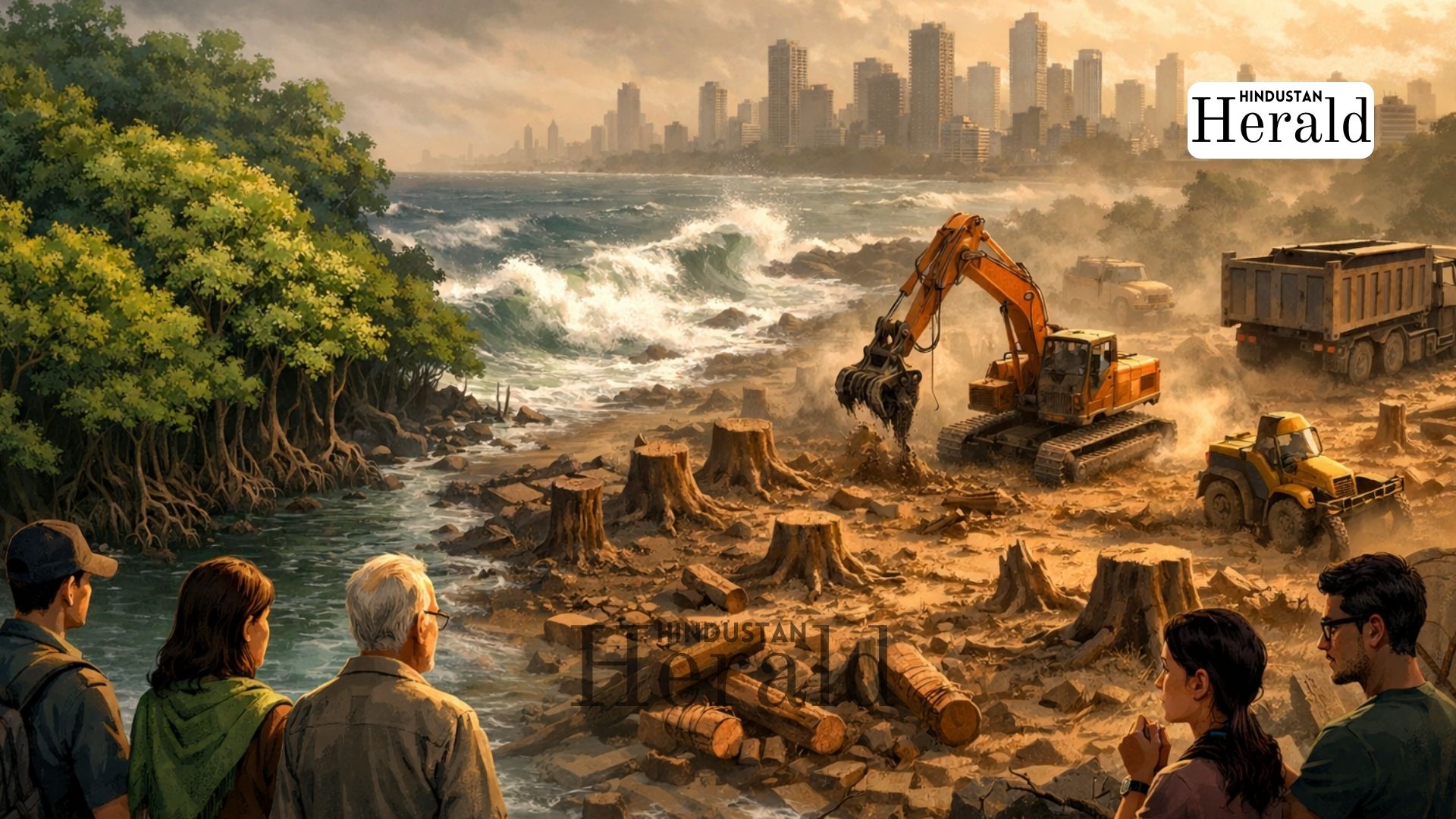
Mumbai, April 15: Start with this. A photograph. Just a photograph. Rows of chopped stumps where a thick wall of mangroves used to stand near Versova on Mumbai’s western coast. The ground is soft and exposed. The roots are torn open. Whatever birds lived there, gone. Someone posted it with four words: This is what development looks like.
It spread. Fast.
By the time most people saw it in March 2026, the hashtag #SaveMangrovesSaveMumbai had already been shared hundreds of thousands of times. People who had never given a mangrove a second thought in their lives were suddenly asking: wait, what exactly are we destroying here? And more importantly, why?
Those are the right questions. And they deserve honest answers, not the kind governments give in press releases, but the kind you arrive at when you actually sit with the numbers.
So Let’s Sit With the Numbers
The Brihanmumbai Municipal Corporation, better known as the BMC, wants to build a 26.3-kilometre coastal road from Versova up to Mira Bhayandar. Total cost: Rs 22,000 crore. The promise: cut a brutal two-hour commute down to about 18 minutes.
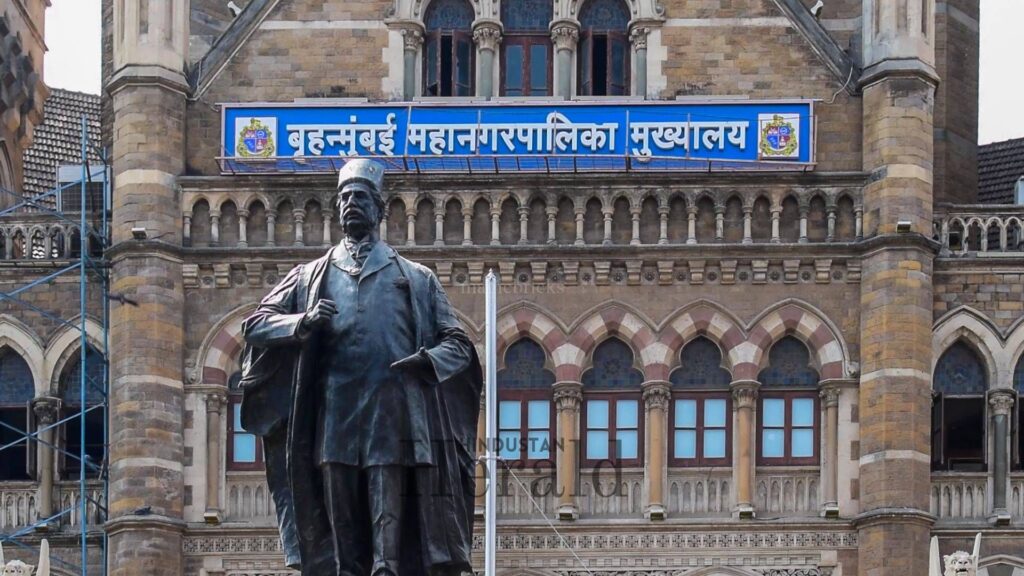
To do that, more than 45,000 mangrove trees have to go. Around 9,000 of them permanently. The rest, officials say, will be “rejuvenated” in the same spot after a four-year construction period, which is the kind of sentence that sounds reassuring until you think about it for more than thirty seconds.

Activist groups went to court. NGO Vanashakti served legal notices arguing the cutting had begun without the required Stage II forest clearance from the Union environment ministry. The Bombay High Court was not persuaded. Then, in March this year, the Supreme Court also refused to intervene. A bench led by Chief Justice Surya Kant said the project serves “overriding public interest” and that sufficient safeguards, mainly a promise to plant 1.3 lakh saplings near Tadoba in interior Maharashtra, had been imposed.
And with that, the matter was, legally speaking, closed.
Except it is not closed. Not really. Because the legal question and the honest question are two entirely different things.
What a Mangrove Actually Does
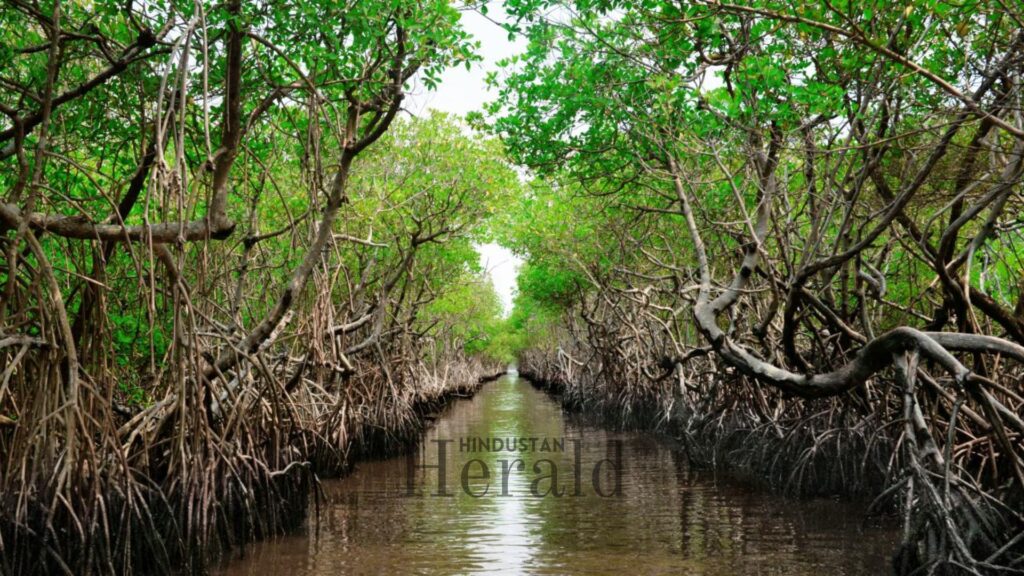
Most people, when they picture a mangrove, think of tangled roots in muddy water. Swampy. Mosquito-filled. Dispensable. That image has done more damage to coastal India than any single policy decision.
Here is what a mangrove actually does, in plain language.
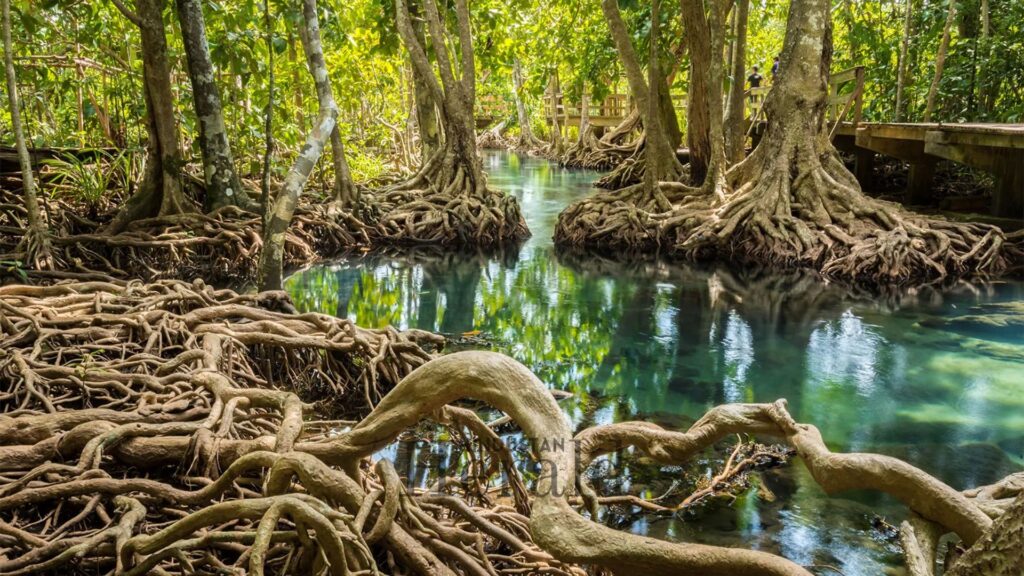
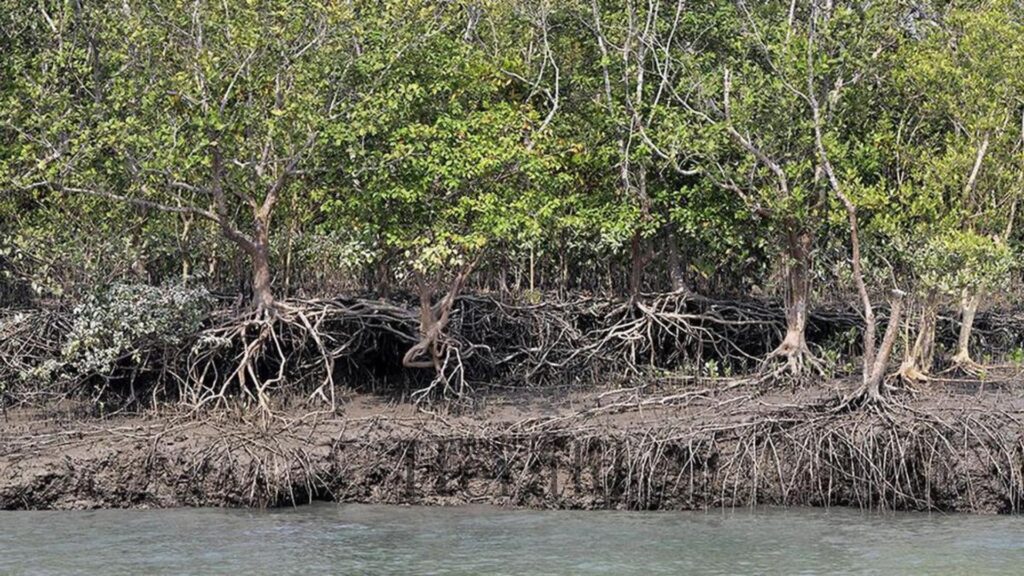
It stands between a city and the sea. Its roots, thick and interlocked, slow down waves during a storm. Studies have found that a healthy mangrove belt can reduce wave energy by 60 to 70 per cent during cyclones. It can cut flood depth by 15 to 20 per cent. During Cyclone Amphan in 2020, which tore through the Bay of Bengal and hit the coast with terrifying force, the Sundarbans in West Bengal absorbed a significant portion of that impact before it could reach inland communities. Scientists have said clearly that without the Sundarbans, the destruction would have been far worse.
India’s mangroves also pull carbon from the air at a rate that shames most other forests. According to data from multiple environmental research bodies, mangroves store three times more carbon than ordinary tropical forests of the same size. Some estimates put it even higher, at five times more when the carbon buried deep in the coastal mud is included.
And then there is the sea level question, which nobody in the BMC’s project documents seems particularly eager to highlight. A 2024 study by the Centre for Study of Science, Technology and Policy found that Mumbai has experienced the steepest sea level rise of any major Indian city, 4.44 centimetres between 1987 and 2021. The same study projected that more than 10 percent of Mumbai’s land area could be underwater by 2040.
Read that again. Ten percent of the city. By 2040. That is fourteen years away.
In that context, removing Mumbai’s coastal mangroves to build a road is not just an environmental decision. It is a bet on the city’s future. And it is a bet being made without the citizens who will actually live with the consequences having much say in it.
The Counterargument Is Real, But Incomplete
This is not the kind of opinion piece that pretends the other side has nothing to say. It does.
Mumbai’s traffic is genuinely, miserably bad. The Western Express Highway moves at a crawl for most of the day. Fuel burned in bumper-to-bumper traffic is an environmental cost, too. The case that faster-moving vehicles produce less carbon per kilometre is not invented. It is real.
And if you talk to the BMC, they will tell you about the 1.3 lakh compensatory saplings being planted near Tadoba. Three trees for every one cut, court-mandated, with annual reports for ten years to check survival rates. On paper, it sounds like due diligence.
But here is where the argument breaks down.
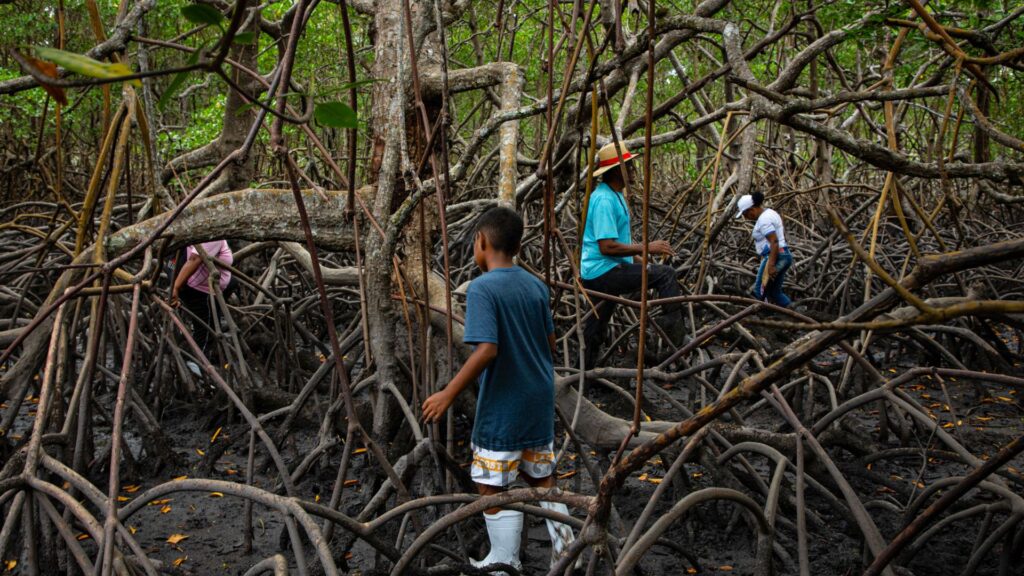
The people who will use that coastal road are mostly private car owners. The people who will live with the consequences of lost mangroves are the fishing communities of Charkop, the residents of low-lying western suburbs who deal with flooding every single monsoon, and the informal settlements built on reclaimed coastal land that have nowhere to go when the water rises. These are not the same people. The road benefits one group. The environmental cost is absorbed by another. That asymmetry does not make it into the BMC’s project pitch.
And the compensatory plantation argument has a basic ecological flaw that even a non-scientist should be able to follow. A mangrove planted near Tadoba, deep in the interior of Maharashtra, will never protect a single home in Andheri from a storm surge. It will absorb some carbon. It will not slow down a wave. The function of a coastal mangrove is location-specific. You cannot replace a coastal forest with an inland one and call it even. That is not conservation. That is accounting.
Protester Gaurang Vora said it without jargon at the March march in Kandivali: “They say they will do afforestation in inland areas. This is not fair. How can you cut mangroves here and do afforestation somewhere else? An inland forest is not a coastal shield.” He is not a scientist. He does not need to be. He is simply right.
The Law Exists. The Gap Is in Applying It.
Here is what makes this particularly frustrating for anyone who has followed environmental policy in India for any length of time.
The protections for mangroves are already written into law. The Coastal Regulation Zone Notification 2019 classifies mangroves under CRZ-IA, the highest level of protection in India’s coastal legal framework. No construction within 50 metres. No reclamation. No alteration. Projects that damage mangroves beyond 1,000 square metres are supposed to require a 50-metre buffer and compensatory replanting at three times the affected area.
The law is not absent. The will to enforce it against a Rs 22,000 crore project, that is what goes missing.
This pattern is not new in Indian environmental opinion. An infrastructure project arrives. Environmental clearances get challenged. The project is declared of public interest. Compensatory conditions get attached. The forest comes down. Years later, nobody checks whether the compensatory plantation survived. Independent researchers have documented this cycle repeatedly. It is not a conspiracy. It is the predictable outcome of a system that treats ecological services as a soft variable and concrete as a hard one.
What the Government Is Doing Right
Honest commentary requires this section.
The MISHTI scheme, full name Mangrove Initiative for Shoreline Habitats and Tangible Incomes, launched under the 2023-24 Union Budget, is a genuine attempt to reverse the damage. It targets restoration of 540 square kilometres of mangroves across nine coastal states and four union territories. Environment Minister Bhupender Yadav has spoken about it as a programme that ties coastal restoration to income generation for fishing and coastal communities, which is the right instinct. Conservation that does not involve local communities almost always fails.
There is also the SAIME initiative, focused on sustainable aquaculture within mangrove ecosystems, designed to give fisherfolk a reason to protect rather than exploit mangroves. And the National Coastal Mission has been funding mangrove management action plans in coastal states for years.
These are nothing. India’s mangrove cover has actually increased by 54 square kilometres since the previous forest survey, which suggests that where the will and the resources align, restoration is possible.
The problem is that the right hand and the left hand are not talking to each other. The same government that launches MISHTI to restore mangroves is simultaneously approving a project that fells 45,000 of them in one city alone. Both things are happening at the same time. That contradiction needs to be named publicly, not buried in the footnotes of a court filing.
What Actually Needs to Happen
Four things, stated plainly.
One. Compensatory plantation rules must be rewritten to require ecological equivalence, not just numerical substitution. Replacing a coastal mangrove with an inland tree is not a replacement. The law should say so explicitly, and courts should hold project proponents to that standard.
Two. Any infrastructure project affecting a coastal ecosystem must be required to include a full valuation of ecosystem services in its cost-benefit analysis. If Mumbai’s mangroves prevent billions of rupees of flood damage every year, that figure belongs in the project appraisal document, on the same table as the construction estimates.
Three. Communities that carry the environmental risk must have real standing in the approval process. The fisherfolk of Charkop are not bystanders. They are the people whose lives and livelihoods sit downstream of these decisions. The current process does not treat them as primary stakeholders. It should.
Four. MISHTI’s implementation needs to be tracked with the same bureaucratic urgency as road construction milestones. Infrastructure delivery gets ministerial dashboards and weekly review meetings. Ecological restoration gets a report filed once a year. That imbalance reflects a choice, and it is a choice India can reverse.
The City and the Sea
The stumps at Versova are still there. The Supreme Court has spoken. The road will be built.
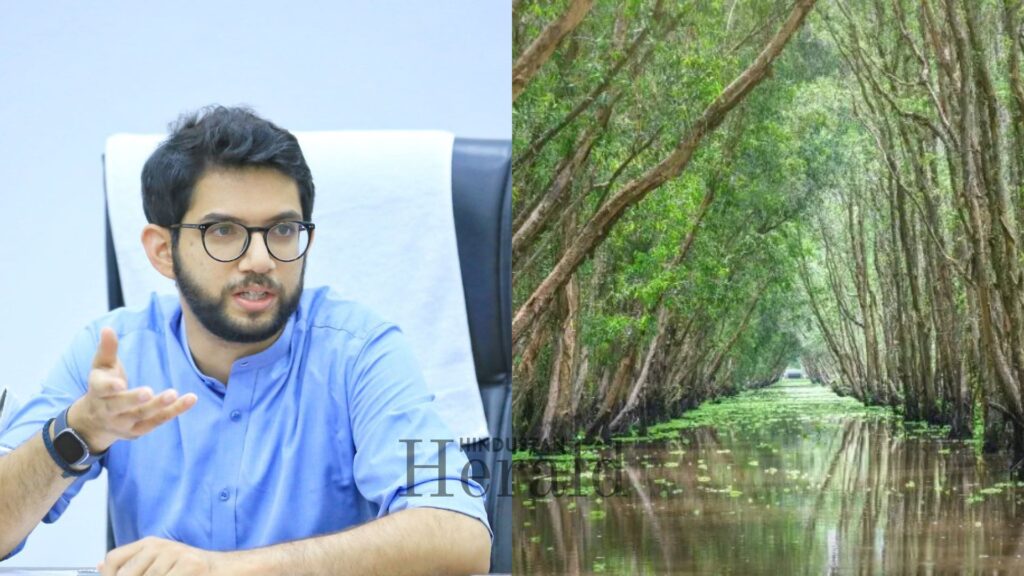
But the conversation that erupted on social media in March 2026, the photograph, the march in Kandivali, Dia Mirza standing in the mud at Versova, Aaditya Thackeray carrying the issue to the Assembly floor, the tens of thousands of ordinary Mumbaikars who shared that image because something about it felt wrong to them, that conversation is not over.
Public awareness is slow medicine. It rarely stops a project already in motion. But it changes what comes next. It changes what future governments feel permitted to do quietly. It changes what citizens know to demand. And eventually, if it builds into sustained political pressure, it changes the law.
Mumbai is a city built at the edge of rising water. The people who live there deserve decision-makers who count the cost of the sea, not just the cost of the road.
Right now, that accounting is missing. Naming the absence is where the argument has to start.
Stay ahead with Hindustan Herald — bringing you trusted news, sharp analysis, and stories that matter across Politics, Business, Technology, Sports, Entertainment, Lifestyle, and more.
Connect with us on Facebook, Instagram, X (Twitter), LinkedIn, YouTube, and join our Telegram community @hindustanherald for real-time updates.

Veteran columnist and social commentator offering sharp perspectives on politics, policy, and society.
- Arvind Rao

- Arvind Rao