
 By Neeraj Kapoor and Ananya Sharma
Mumbai, April 15: There is something particularly unsettling about the way both of these stories broke. Not with a bang, not with a whistleblower press conference or a dramatic leak, but quietly, the way serious institutional failures almost always begin. A family notices their daughter has changed. A post goes up on X. A woman finally walks into a police station.
By the time anyone in a corner office thought to respond, the damage to reputations, to trust, to the lives of young women who had simply gone to work had been accumulating for years.
India’s IT sector is facing a reckoning this week, and it is not the kind that can be managed with a press release.
When A Family’s Worry Became A Police Case
The TCS Nashik story did not begin with a whistleblower or a journalist. It began in February, when the Nashik City Police received a complaint alleging that a young Hindu woman had started practising Islam due to workplace influence. When police contacted her family, they said their daughter’s lifestyle had changed after she began working at the TCS BPO unit.
That complaint from a worried family, not a rights organisation or a union, is what set the entire machinery in motion. Police began a quiet, meticulous investigation. Officers spent several weeks inside the facility disguised as housekeeping staff, closely observing workplace interactions. That undercover operation helped substantiate several allegations and ultimately led to the registration of multiple FIRs and arrests.
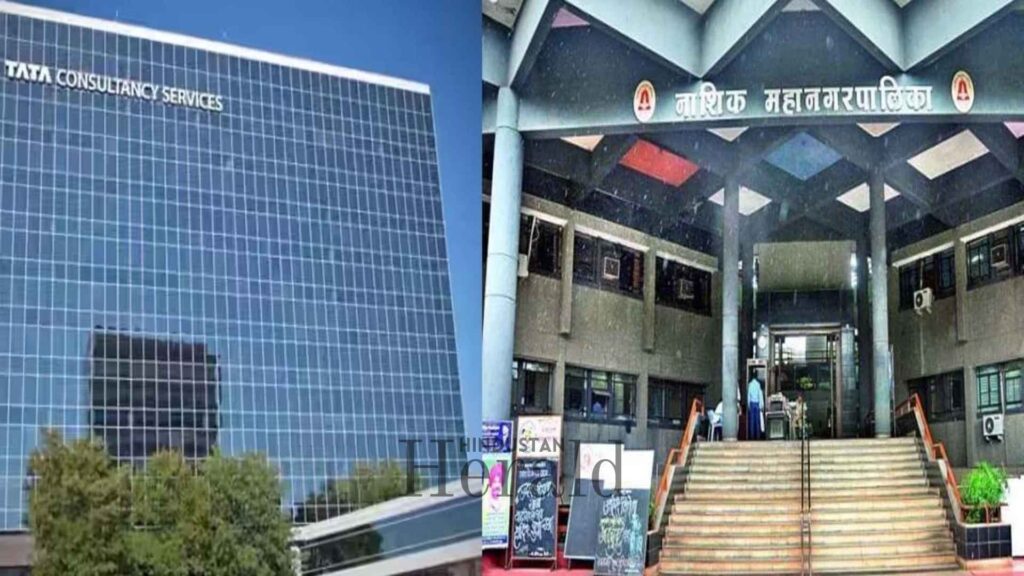
By late March 2026, a female employee filed a formal complaint at the Deolali Camp police station. That single report triggered a domino effect. By the end of it, a total of eight women and one male employee had come forward with allegations of sexual harassment, stalking, and sustained mental pressure misconduct they said had been going on, in some form, since 2022.
Four years. Inside one of India’s most recognised corporate campuses.
What The Complaints Actually Say
Nine FIRs have now been filed. Reading through them is not easy. The allegations are specific, sustained, and deeply personal which makes them harder to dismiss as vague grievances or misunderstandings.
The victims are young women between the ages of 18 and 25. The alleged misconduct spans two to three years, beginning around 2022. The accused are named, their actions documented across multiple FIRs in clinical legal language that cannot quite conceal how disturbing the underlying conduct was.

In one complaint, the accused Danish Shaikh, Tausif Attar, and Nida Khan are alleged to have made offensive remarks about Hindu deities over a period stretching from July 2022 to February 2026. Tausif Attar allegedly promised marriage and engaged in a physical relationship with the complainant on that basis. Danish Shaikh allegedly grabbed her within the company premises.
In another case, between 2022 and March 2026, Tausif Attar, Danish Shaikh, Shahrukh Shaikh, and Raza Memon are accused of using abusive language targeting Hindu deities, compelling a complainant to perform Namaz, and making attempts to convert her religion.
Then there is the account of the first survivor, who spoke to India Today in detail. She said she first met Danish Shaikh in January 2022 they had graduated from the same college, and a friendly bond developed. He told her he could help her secure a job at the company. What followed, she alleged, was years of coercion. Both Danish and Tausif allegedly pressured her on matters of religion, at one point threatening to upload her private photographs on social media if she refused to convert. In February 2026, she received a message from a woman who turned out to be Danish Shaikh’s wife. When she confronted him, he denied everything.
Danish Shaikh has since been charged with rape.
Investigators say this was not random or opportunistic. The accused allegedly created multiple WhatsApp groups and internal communication circles to build influence with colleagues, with victims reportedly targeted based on personal vulnerabilities, emotional stress, family problems, and financial instability.
That detail matters. It shifts the narrative from workplace misconduct to something considerably more calculated.
The HR Manager Who Was Supposed To Help
For all the gravity of the individual complaints, the arrest that has drawn the sharpest attention is not of any of the accused employees. It is of a senior HR official a woman who sat on the very committee mandated to protect complainants.
The arrested official, an Assistant General Manager, was remanded to police custody till April 15 by a Nashik court. She is accused of abetting sexual harassment by allegedly ignoring repeated complaints made by a woman employee against two colleagues. The SIT arrested the 51-year-old from her Pune residence on April 10.
According to the SIT’s remand report, not only did the AGM allegedly fail to act she reportedly discouraged the complainant from pursuing the matter. Call records examined by investigators indicate multiple conversations between the AGM and the accused employees themselves, raising serious questions about where her loyalties lay. Authorities are also examining bank records to identify any possible financial links.
Police have seized at least 78 emails and chat records from official devices. Bank transactions are under review. Call records, CCTV footage, and internal communication logs are all being analysed.
Several victims claimed that despite submitting over 78 emails and multiple phone calls to HR, no concrete action was taken.
Seventy-eight emails. Think about what it takes emotionally, practically, for a young woman to send seventy-eight communications about her own harassment and still receive no meaningful response. That is not a compliance failure. That is a systematic suppression of grievance.
The arrest of an Internal Committee member under POSH, the Act specifically designed to create accountability, is almost without precedent in Indian corporate history. It also renders the entire defence of “we have processes in place” structurally hollow. A process that the gatekeepers weaponise against complainants is not a safeguard. It is a trap.
Tata’s Response, And Why It Was Not Enough For Some
Tata Sons Chairman N Chandrasekaran addressed the matter on April 13, calling the allegations “anguishing” and announcing that TCS COO Aarthi Subramanian would lead the internal investigation.

TCS stated it has a long-standing zero-tolerance policy towards harassment and coercion. All employees under investigation have been suspended, and the company said it is cooperating fully with law enforcement.
That said, the corporate response has not gone unchallenged. As reported by Goodreturns, former Rajya Sabha member Priyanka Chaturvedi said Chandrasekaran’s statement came only after a poorly worded initial press release drew fierce criticism and that reassurances from the top carry limited weight when the misconduct allegedly went unaddressed for four full years.
Maharashtra Chief Minister Devendra Fadnavis called the incident “extremely serious” and commended the Nashik police for their undercover work. Legislative Council Deputy Chairperson Neelam Gorhe has called for a fast-track trial. The Nashik district administration has ordered a POSH compliance review within TCS and signalled that similar audits may be extended to other IT firms.
Meanwhile, In Pune
While Nashik was dominating headlines, a different and still unfolding situation surfaced 200 kilometres away.
Posts on X flagged alleged incidents involving women employees at Infosys’s Pune BPM unit. One of those posts tagged Maharashtra political leaders directly, prompting cabinet minister Nitesh Rane to respond, saying the matter had been “noted.”
Infosys issued a statement affirming its zero-tolerance approach to any form of harassment or discrimination. The company said it is committed to a safe, inclusive, and respectful workplace, that any issue reported is treated seriously and investigated by an independent committee, and that it has proactive multi-channel preventive programmes, including a speak-up culture.

The Pune situation has not reached the level of formal complaints or police action. The original social media posts have reportedly since been deleted. But the political attention it attracted and the speed with which the company moved to respond suggest the matter will not simply disappear.
What it has done, coming when it did, is widen the conversation. This is no longer a question about one company, or one city, or one HR department that looked the other way. It is a question about an entire industry’s relationship with the people who work inside it.
The POSH Problem The Industry Has Been Avoiding
The Prevention of Sexual Harassment Act has been on the books since 2013. Thirteen years is a long time. Most large IT companies will tell you without hesitation that they have Internal Complaints Committees, trained panel members, anonymous reporting channels, and sensitivity workshops.
What the Nashik case demonstrates is that none of that matters if the people running those committees are, allegedly, in communication with the accused.
India’s Labour Ministry is now closely monitoring how IT companies are adhering to POSH rules. The Nascent Information Technology Employees Senate has called for a comprehensive audit of POSH compliance at TCS and across the sector, citing concerns about the real effectiveness of grievance redressal systems.

The structural problem, though, runs deeper than audit checklists. The complaints cover a period from 2022 to early 2026, painting a picture of something systematic, not isolated. That conduct of this alleged scale could operate for nearly four years inside a globally recognised brand is a question every major IT and BPO employer in India now needs to answer.
It is also a question about who actually files complaints, and under what conditions. Young employees, financially dependent on the job, working directly under the supervisors they would need to report to, often already know that the system is not designed with them in mind. The seventy-eight unanswered emails are evidence of what happens when that suspicion turns out to be correct.
Where Things Stand Today
For TCS, the probe is clearly not done. Three more survivors were preparing to file FIRs as of April 15, adding to the nine already lodged. Multiple employees, including senior staff, have been arrested. One accused remains absconding.

For Infosys, the situation remains in an early, uncertain stage politically sensitive, publicly visible, but legally unresolved.
For the sector as a whole, this is a moment that cannot be walked back. Zero-tolerance sounds serious. It looks good in annual reports and on compliance slides. But it is only as meaningful as what a company actually does when an employee walks in with a complaint or sends seventy-eight emails and waits to see if anyone will act.
In Nashik, they waited for years. Some of them are still waiting for justice.
The SIT continues its probe. More arrests have not been ruled out. And somewhere in this story, buried under the corporate statements and the legal proceedings and the political posturing are the young women who started all of this simply by deciding they had waited long enough.
Stay ahead with Hindustan Herald — bringing you trusted news, sharp analysis, and stories that matter across Politics, Business, Technology, Sports, Entertainment, Lifestyle, and more.
Connect with us on Facebook, Instagram, X (Twitter), LinkedIn, YouTube, and join our Telegram community @hindustanherald for real-time updates.

Tech writer passionate about AI, startups, and the digital economy, blending industry insights with storytelling.
- Neeraj Kapoor

- Neeraj Kapoor
- Neeraj Kapoor
- Neeraj Kapoor





Covers Indian politics, governance, and policy developments with over a decade of experience in political reporting.
- Ananya Sharma
- Ananya Sharma
- Ananya Sharma
- Ananya Sharma




 Ananya Sharma
  Ayesha Khan