
 By Herald Desk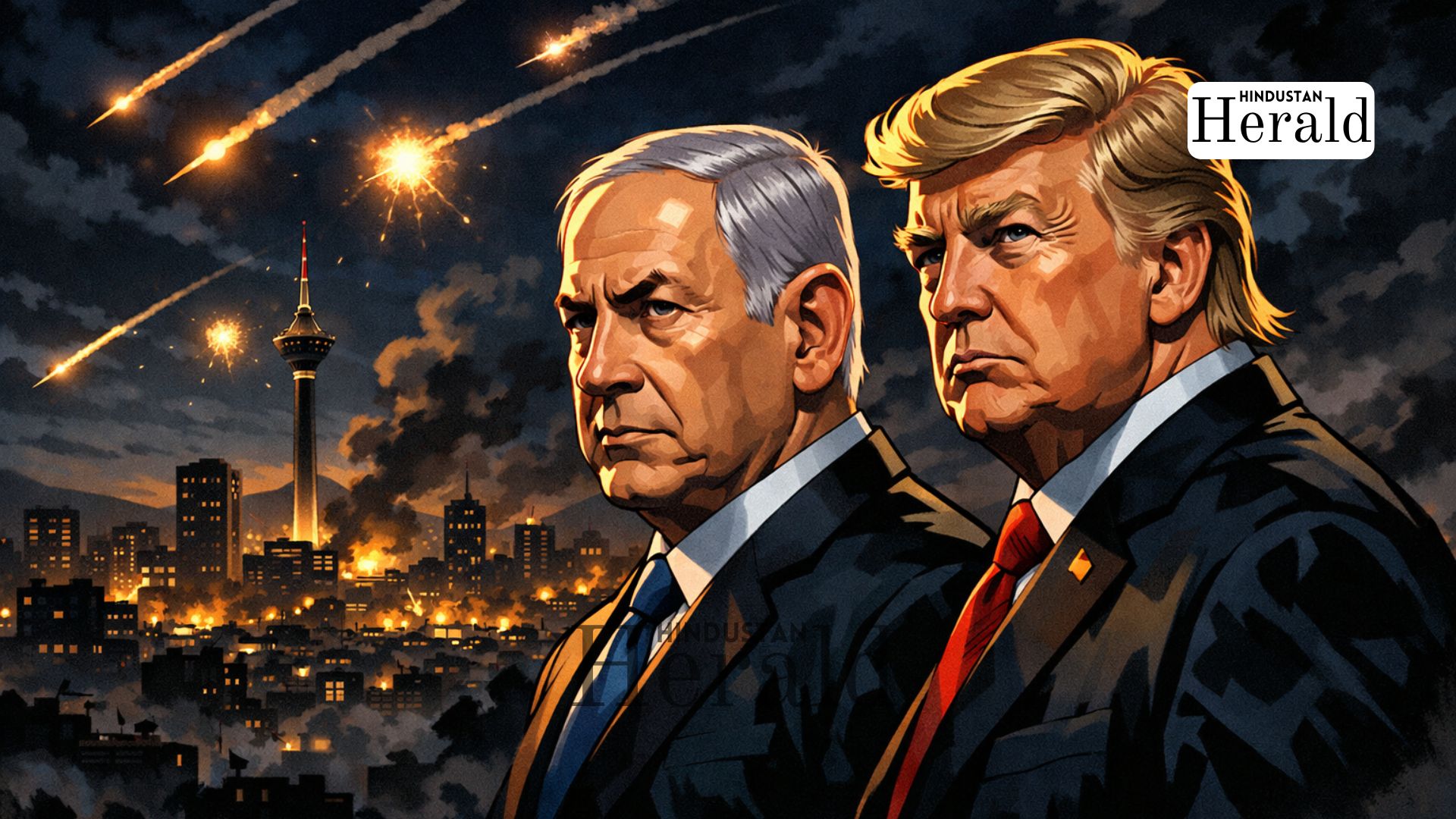
New Delhi, February 28: The phones started lighting up before sunrise. First came scattered reports of explosions in Tehran. Then, confirmation from Western agencies. Then the statements. By the time most of the world had poured its first cup of tea, it was clear that something far bigger than a “limited strike” had unfolded overnight.
Israel and the United States have launched a coordinated military offensive against Iran. Not covert, not deniable, not incremental. Openly. Publicly. And with language that suggests this is only the beginning.
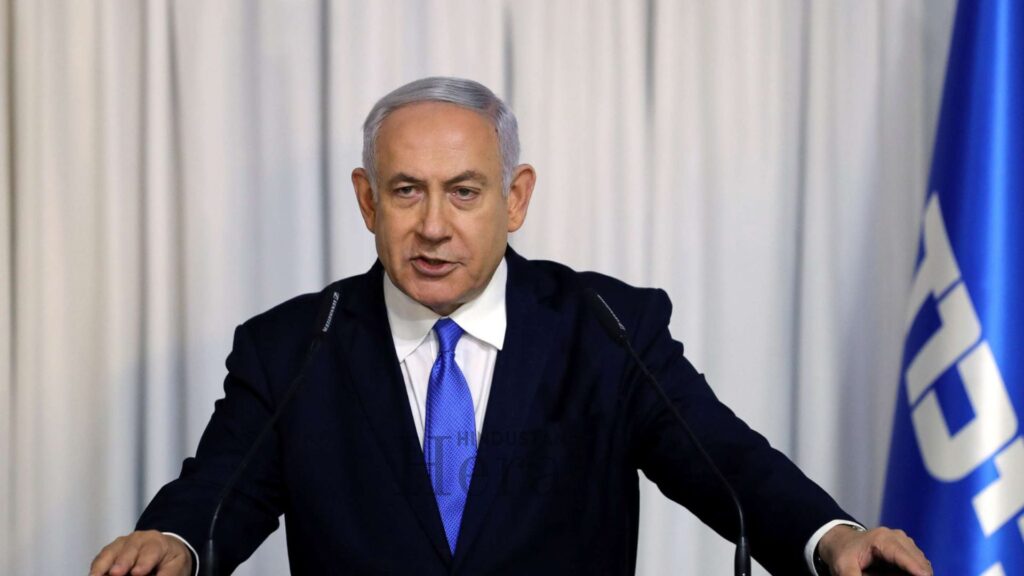
Israeli Prime Minister Benjamin Netanyahu addressed his country in a recorded message, looking stern, measured, and deliberate. He announced Operation Lion’s Roar, describing Iran’s leadership as a murderous regime that must not be allowed to acquire nuclear weapons. He framed the assault as a pre-emptive act of survival.
Then he pivoted. The strikes, he said, would create the conditions for the Iranian people to take their fate into their own hands.
It was a remarkable line. Military action fused with political aspiration.
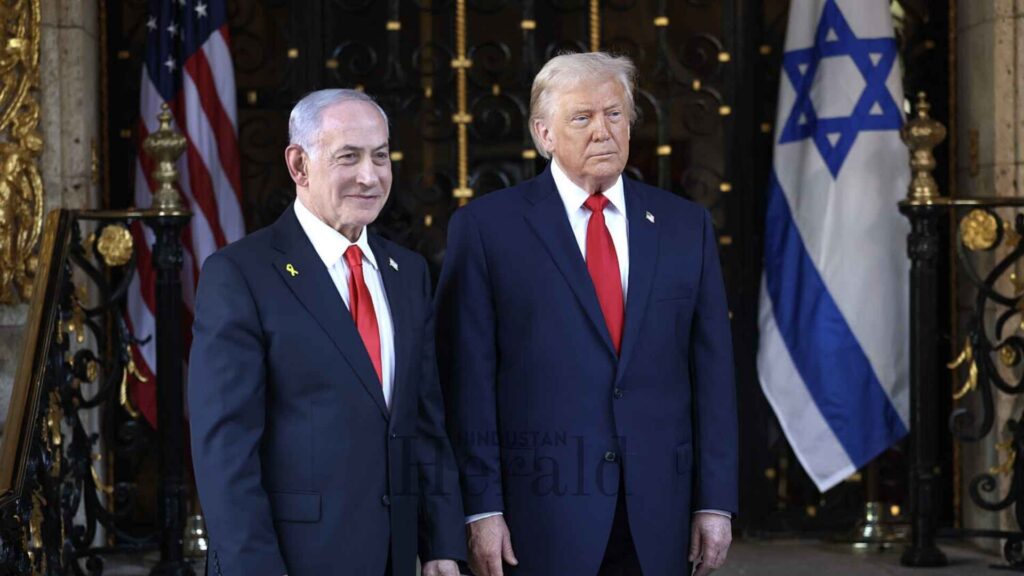
A few hours later, U.S. President Donald Trump confirmed America’s role. The American side of the operation, he said, was Operation Epic Fury. He called it a “major combat operation” and acknowledged that U.S. casualties were possible. He also addressed Iranians directly, urging them to rise once the strikes had achieved their objective.
For years, Washington avoided openly speaking about regime change in Tehran. On Saturday, the restraint was gone.
The First Blows
According to Reuters and Al Jazeera, multiple Iranian cities were hit in the opening hours. Explosions were reported in Tehran, Isfahan, Qom, and Kermanshah. Western defence officials indicated that facilities linked to the Islamic Revolutionary Guard Corps and missile production sites were among the targets.
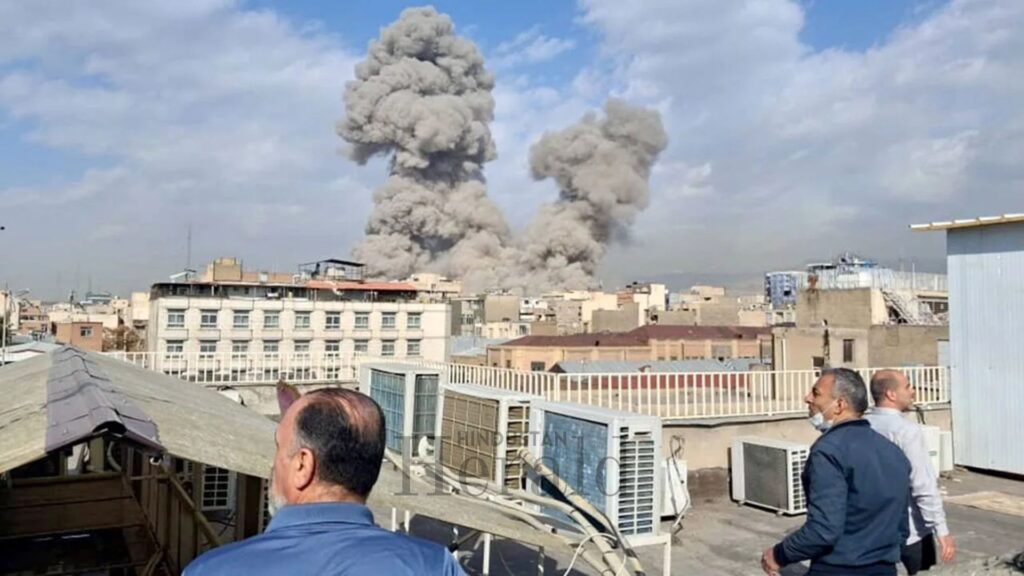
Iranian state media acknowledged the attacks but offered few specifics. Videos circulating online showed columns of smoke rising against the early light. Airspace was quickly closed. Airports suspended operations. The message was unmistakable. This was not symbolic.
Striking across several cities in one coordinated sweep requires preparation. Intelligence, surveillance, timing. Whatever negotiations may have still been technically alive between Washington and Tehran now feel like relics of another week.
Tehran Answers
Iran’s retaliation came swiftly.
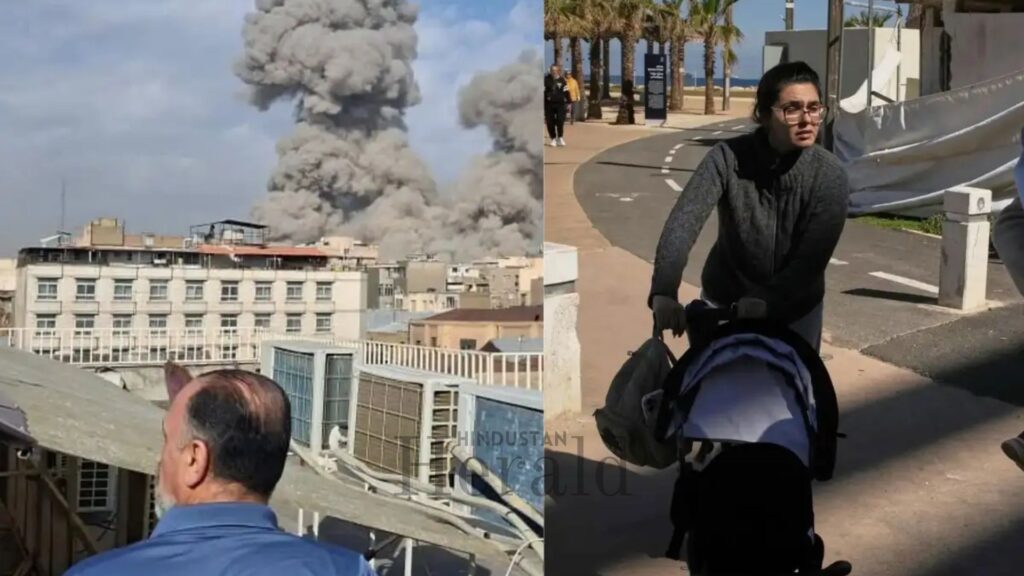
Ballistic missiles were launched toward Israel. Sirens sounded in Jerusalem. Interceptors from Israel’s air defence systems rose into the sky. Explosions echoed as incoming missiles were engaged.
At the same time, missiles were fired toward U.S. military bases in Bahrain, Qatar, and the United Arab Emirates. American officials told international outlets that damage assessments were underway. Tehran’s Foreign Ministry promised a crushing response and accused both Israel and the United States of attacking despite ongoing diplomatic channels.
Escalation rarely pauses to consider nuance. Once the first strikes land, momentum takes over.
The Region Tightens
Commercial aviation across parts of the Middle East was thrown into disarray. Flights were diverted mid-route. Several Gulf states issued urgent advisories. The United Kingdom told its citizens in affected areas to shelter in place.
In Tehran, reports described residents queuing at petrol stations and stocking up on essentials. There was tension in the air, correspondents said, but not panic. Yet that line can shift quickly if strikes continue or infrastructure is hit.
In Israel, the mood was equally taut. Missile alerts have become grimly familiar in recent years, but this confrontation feels different. Iran is not acting through intermediaries this time. It is direct.
Oil And The Wider Shock
Markets do not wait for clarity.
The Strait of Hormuz sits like a nerve at the centre of this crisis. Roughly one-third of global seaborne oil moves through it. Even a hint of disruption pushes prices upward. Energy analysts speaking to global outlets said traders were already pricing in risk.
For India, the implications are immediate. A sustained rise in crude prices feeds inflation. It complicates fiscal planning. It seeps into daily life. Conflicts in distant skies end up reflected in household budgets.
The Nuclear Core
At the heart of Israel’s justification is Iran’s nuclear programme. Israeli officials have long argued that Tehran was edging closer to weapons capability. Iran insists its programme is peaceful. Intelligence assessments vary across capitals, but Israel clearly concluded that waiting carried greater danger than acting.
Military strikes can set back infrastructure. They can also entrench political resolve. Whether this operation delays Iran’s programme significantly or accelerates a hardened stance is uncertain.
The Regime Question
Perhaps the most unpredictable element is the overt call for Iranians to rise against their government.
Iran has seen repeated waves of domestic unrest in recent years, driven by economic strain and political repression. But foreign military attacks often generate nationalist solidarity, even among those critical of the regime.
Appeals from Washington and Jerusalem, delivered alongside airstrikes, may land differently than intended.
History offers mixed lessons. None offers guarantees.
What Now
The first day of open hostilities rarely tells the whole story.
Iran retains regional allies capable of widening the conflict. Hezbollah in Lebanon, militia groups in Iraq and Syria, and armed factions elsewhere could enter the equation. Cyberattacks targeting infrastructure are also likely.
President Trump’s acknowledgement of possible American casualties signals that Washington is preparing for something more than a single night of action.
Russia has condemned the strikes, according to international agencies, and called for diplomatic intervention. European governments are urging restraint, though carefully.
For now, the skies have quieted in some places and flared in others. Leaders speak of necessity and defence. Ordinary families wait for sirens or for the next notification to flash across their screens.
A line has been crossed. Whether it becomes a contained confrontation or the opening chapter of a wider regional war depends on decisions still being made in real time.
In the Middle East, uncertainty is familiar. But even by its standards, this is a dangerous moment.
Stay ahead with Hindustan Herald — bringing you trusted news, sharp analysis, and stories that matter across Politics, Business, Technology, Sports, Entertainment, Lifestyle, and more.
Connect with us on Facebook, Instagram, X (Twitter), LinkedIn, YouTube, and join our Telegram community @hindustanherald for real-time updates.

- Herald Desk

- Herald Desk
- Herald Desk
- Herald Desk




 Sandeep Verma
  Ananya Sharma