
 By Ananya Sharma and Kavita Iyer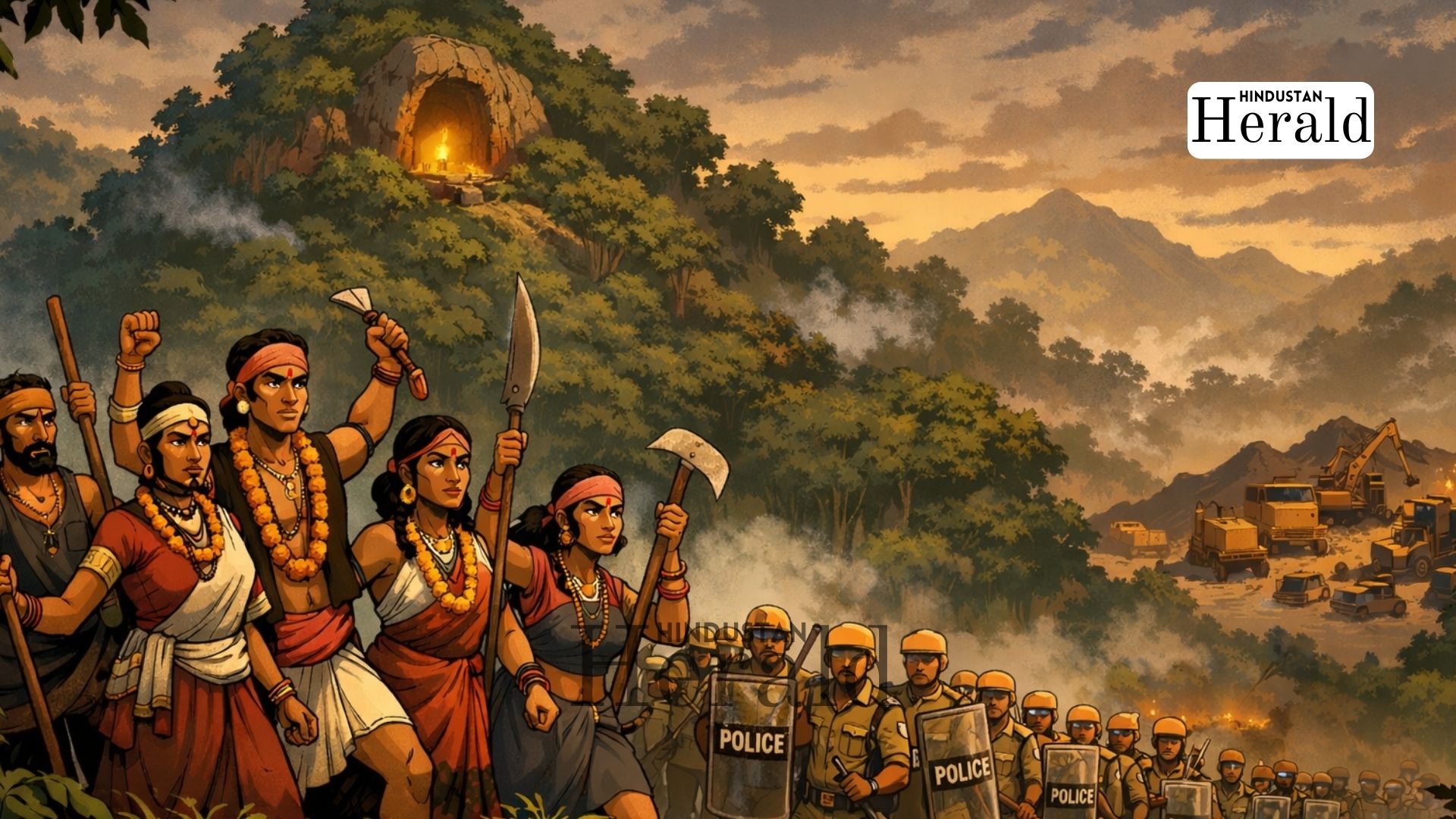
Rayagada, April 15: Nobody who has spent time in the Sijimali hills would describe them as a “resource.” The word belongs to boardrooms and clearance files. Up here, in the forested ridges of southern Odisha, where Rayagada bleeds into Kalahandi, the hills are something else entirely. They are the reason people wake up in the morning. They are where the dead are remembered. At the very peak of Sijimali, tucked inside a cave, lives Tijiraja, the deity of the Adivasi communities below, worshipped not as history or tradition but as present, living fact.

That cave, and the forest around it, and the people who have kept vigil over both for generations, are now at the centre of what has become one of the most raw and unresolved conflicts in India. Eight days ago, on the morning of April 7, 2026, it stopped being merely a legal dispute and became something bloodier.
A Three-Kilometre Road, and Everything Behind It
What broke open that morning was, technically, a road. Three kilometres of access track are being laid between Purulang and Sagabari Ghati in the Kashipur block, designed to ferry equipment up toward the proposed Sijimali bauxite mine that Vedanta Ltd. plans to operate.

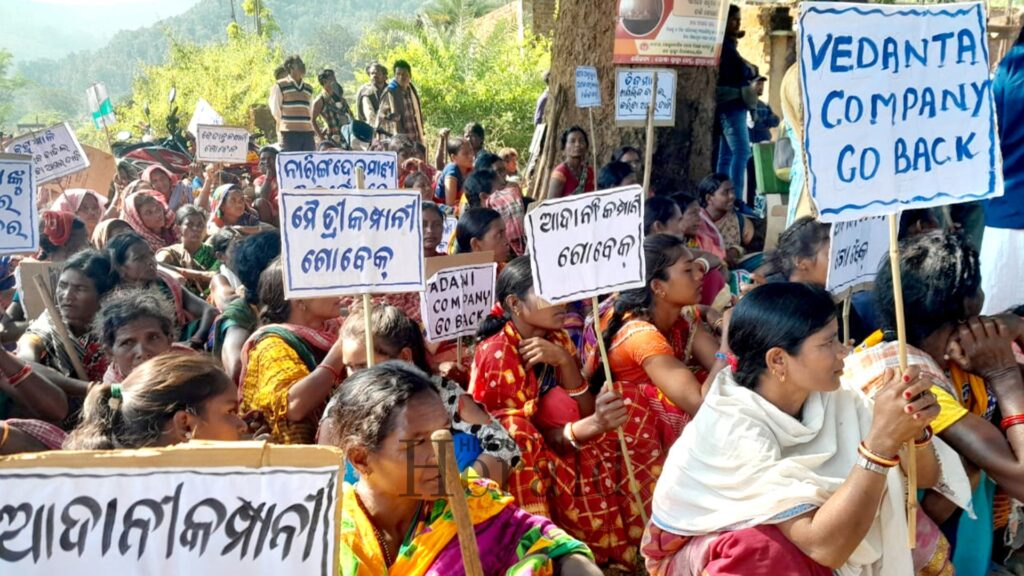
The tribal communities of Kantamal, Sagabari, Bantej, Bondel, and the villages around them did not see a road. They saw what comes after a road. And they blocked it.
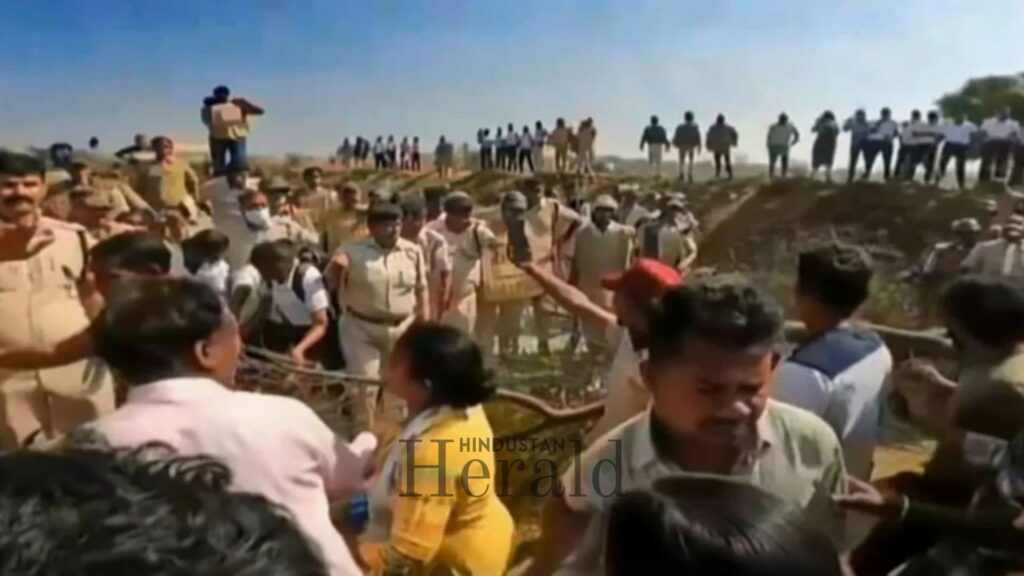
Clashes broke out between tribal villagers and police in Rayagada district, leaving around 70 people injured. Police stated that villagers attacked officers with stones, axes, and sharp weapons, forcing authorities to resort to lathi charges and tear gas. Six injured personnel were shifted to Visakhapatnam for advanced treatment.
The administration’s account ends more or less there. The villagers’ account is longer and uglier. Protesters allege that police entered the area in the early hours of April 7, cut off the electricity supply, broke down doors, and conducted raids on the homes of residents opposing the mining project. A cow reportedly died from tear gas exposure. Vehicles were smashed. Families say they woke up to darkness and boots on the floor.
Rayagada Collector Kulkarni Ashutosh C had attempted to negotiate with the agitators the previous day. When those talks collapsed, the administration imposed prohibitory orders under Section 163 of the Bharatiya Nagarik Suraksha Sanhita in Shagabari village.
Two versions. One morning. The gap between them is where three years of accumulated rage and fear had been quietly building.
How You Get to April 7
This did not start with a road. It started in 2023, when the Odisha government handed Vedanta Ltd. the Sijimali bauxite block, a mining lease spanning roughly 1,549 hectares across Rayagada and Kalahandi, sitting on an estimated 311 million tonnes of high-grade ore. The company subsequently engaged another firm, Mythri, to set up and operate the mine. According to residents, the intimidation, violence, and arrests began almost immediately after.
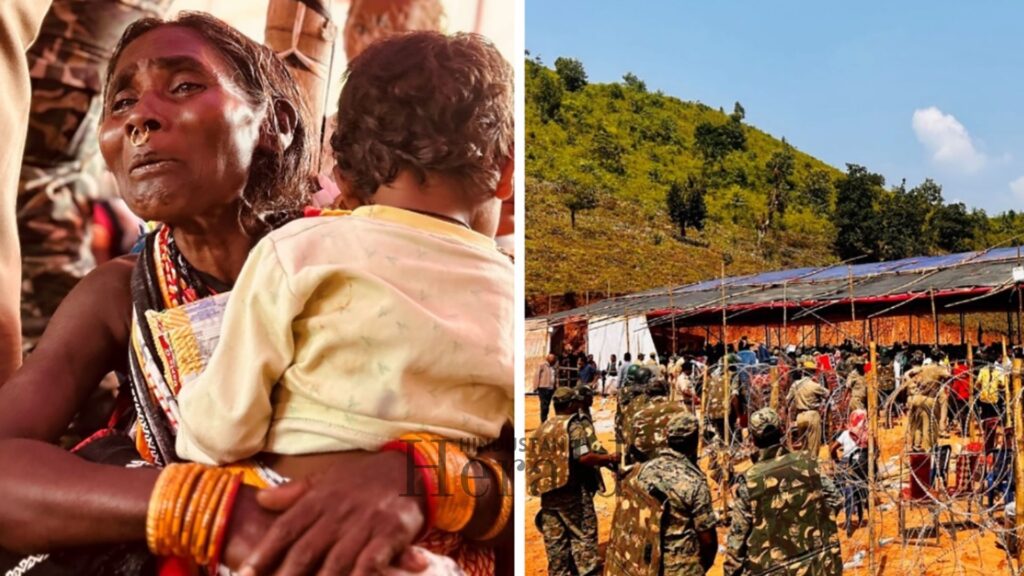
Villagers set up a makeshift tent at the top of Sijimali hill as early as 2023, not to camp, but to watch. To make sure company officials could not slip in quietly and begin preparatory work. Women collected daily wages and pooled money to keep the protest alive. Communities organised watch schedules through the night.
Still, the pressure came. Midnight raids, arbitrary detentions, and criminal cases against protest leaders accumulated over the years, with some charged under serious provisions of the erstwhile Indian Penal Code, and some under the Unlawful Activities (Prevention) Act. A tribal woman’s activist, Naringi Dei Majhi, was detained by Rayagada police in August 2025 while accompanying her daughter-in-law to the hospital during labour. On March 25, 2026, protest leaders Lingaraj Azad and Suresh Sangram were arrested in Kalahandi, both of them long associated with the fight for Adivasi land and forest rights.

Laxman Majhi, another anti-mining voice who spent months in jail before being released, said what many in the villages feel but rarely say out loud. “We are being called Maoists, but ours is a completely non-violent protest. The police do not hesitate to pick up young children and beat them up. No wonder most families prefer to put their children in hostels. Sometimes I wonder if I am living in a free country. India has become a large prison.”
The Consent That Was Never Given
This is where the story gets into territory that should trouble anyone who believes India’s constitutional protections mean something.
The Odisha government insists that Gram Sabhas, the village-level democratic councils whose consent is legally required before any forest land can be diverted for mining, were held across eight affected villages on December 8, 2023. That consent, the state says, was properly obtained under the Forest Rights Act, 2006.
The villagers say that is fabricated. All of it.
A Congress fact-finding team that visited the region found strong allegations that the eight Gram Sabhas were false and fabricated, with the Sarpanch allegedly signing resolutions for all eight on the same day. That is not a procedural irregularity. If true, it is fraud dressed in the language of democratic process.
The documentary record adds weight to those allegations. RTI disclosures reveal discrepancies in attendance and consent records, including signatures of deceased individuals and mismatches between thumbprints and signatures. Villagers also claim that outsiders were falsely presented as local residents in the Gram Sabha records.
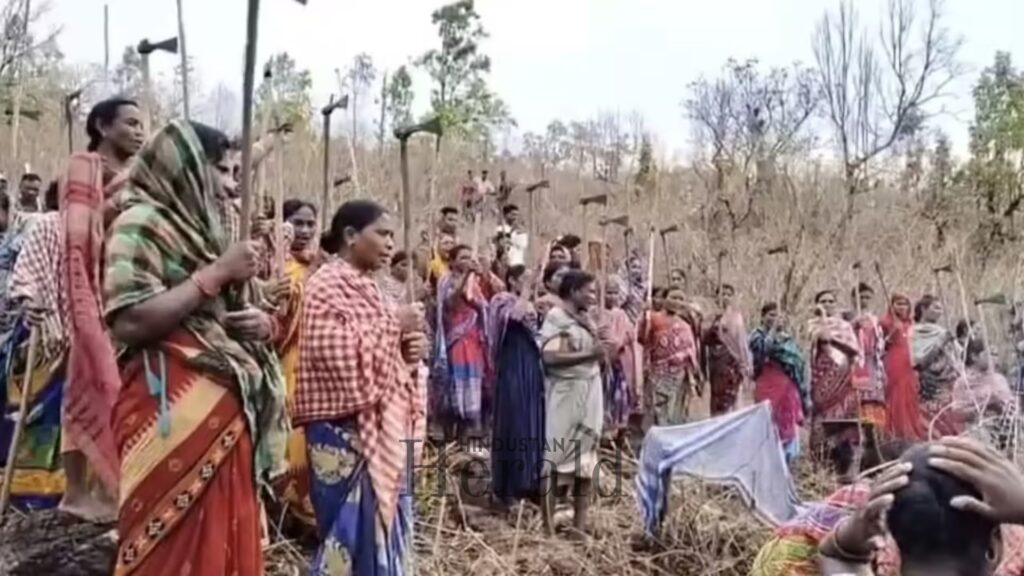
Communities from ten affected villages told the Odisha High Court directly that they never provided consent for clearing the forest land.
The legal pressure eventually forced the central government’s hand. On July 30, 2025, the Union government temporarily halted Vedanta’s plan to clear the forestland after evidence surfaced that consent may have been fraudulently obtained. The Odisha High Court had directed the Union government to review the forest clearance and ensure community rights were respected before any project approval.
That pause did not hold long. By December 2, 2025, the Forest Advisory Committee had recommended State-level Stage 1 clearance for diversion of 708.24 hectares of forest land for the Sijimali project. Construction of the access road began shortly after. And that road is what brought police and villagers to a violent face-off on a dark April morning.
Samajwadi Jan Parishad’s Aflatoon, who has been closely tracking the legal dimensions of the case, framed the constitutional breach plainly. “The mining area covers more than 18 tribal-dominated villages, which fall under Schedule Five of the Constitution, which allows Adivasis the right to self-governance and cultural autonomy. Under PESA and FRA, no private mining can take place without the prior consent of the Gram Sabhas. But no prior consent was sought from the local villagers before leasing out the hills.”
What a Hill Means When It Is Not Just a Hill
It is easy, from a distance, to reduce Sijimali to a conflict over mineral extraction and regulatory compliance. The numbers help with that. Three hundred and eleven million tonnes of bauxite. Seven hundred and eight hectares of forest. Nine million tonnes of annual output. Fifty-year lease. The figures are clean and manageable.
What they do not capture is a cave at the top of a hill where a deity lives.
In the writ petition filed by villagers before the High Court, they stated that diversion of forest land would affect their religious and cultural rights, that their deity Tijiraja’s abode is within the proposed mining lease area, and that villagers worship Tijiraja. This is not sentiment being deployed as a legal strategy. These are communities telling a court what everyone around them already knows: that the hill is not separable from who they are.
The proposed mine would generate approximately 18 million tonnes of waste each year and draw over 700 kilolitres of water per day from a region already marked by ecological stress. Beyond the water and the waste, the forest that sustains daily life, the medicinal plants, the seasonal food sources, the watershed that feeds the fields below, all of it sits within the project footprint.
Human rights activist Narendra Mohanty, who has documented conditions in the villages over the past two years, did not mince words. “The Odisha government has unleashed untold miseries on its own tribal people since 2023 to push for a mining project of a private company. Several innocent tribals, including pregnant women, have been arrested by the police to crush the protest. The government is working like an agent of the company.”
Niyamgiri Proved Something. Sijimali Is Testing Whether It Stuck.
Vedanta has been here before. Literally, geographically, almost identically.
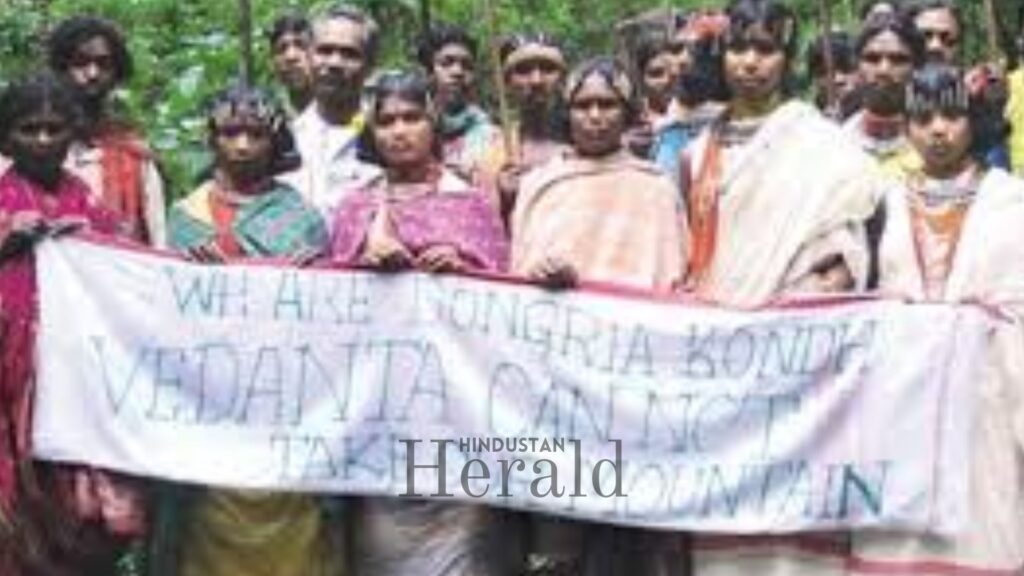
Starting around 2003, the company sought to extract 72 million tonnes of bauxite from the Niyamgiri Hills, also in Odisha, to feed its Lanjigarh alumina refinery. For the Dongria Kondh, a Particularly Vulnerable Tribal Group, the hills were the sacred home of Niyam Raja. The struggle drew global attention, the Church of England divested from the company, and international rights groups rallied behind the Kondh communities.
The Supreme Court, in 2013, ruled that the cultural and religious rights of the tribal communities had to be protected. It mandated an environmental referendum through local Gram Sabhas. All 12 village councils voted unanimously against the mine. The Niyamgiri project has never recovered. The hills remain untouched.
That verdict is the legal backbone of what is happening in Sijimali today. Every activist, every lawyer, every villager blocking a road in the Kashipur block knows the Niyamgiri judgment. They know what it said. They know it worked.
What they are also watching, carefully, is whether the Odisha government has figured out how to go around it. Instead of seeking genuine Gram Sabha consent, the allegation is that consent was manufactured. Instead of holding the kind of transparent, judicially supervised village referendum that Niyamgiri produced, eight Gram Sabhas were reportedly held in a single day, with a single sarpanch signing all eight resolutions.
When communities resisted, consultation gave way to coercion. The aim, as multiple observers have noted, is not conviction but exhaustion: to fracture collective resistance through fear, surveillance, and legal harassment.
A Country Responding, District by District
The April 7 violence has reverberated well beyond Rayagada.
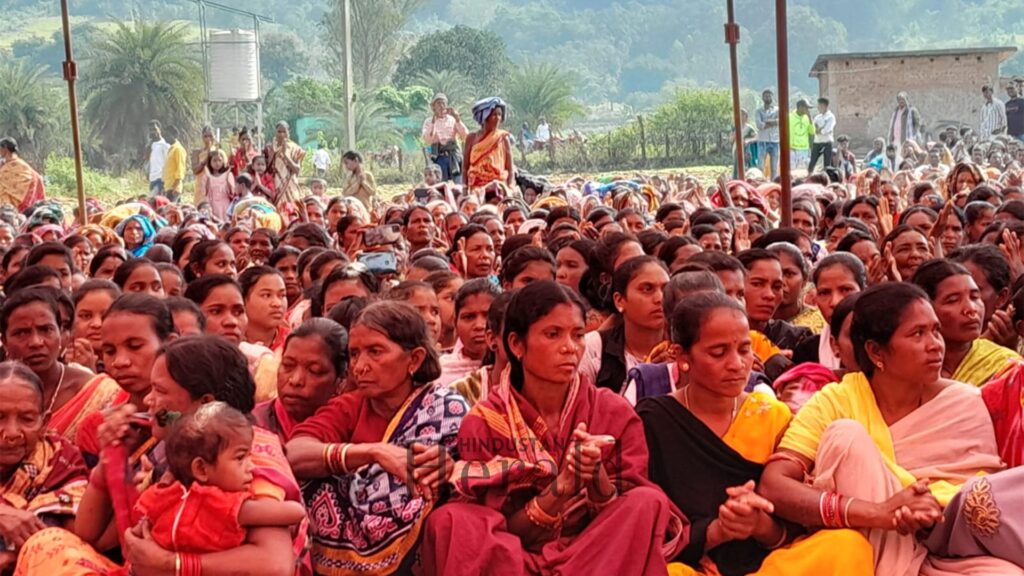
On April 8, people from across civil society gathered in Bhubaneswar, despite heavy rain, to demonstrate in solidarity with the communities of Sijimali. Former ministers, political leaders, lawyers, human rights defenders, farmer organisations, labour groups, and students all joined the rally.
In December 2025, more than 125 lawyers from across India had already signed a petition to the Governor of Odisha, alleging intimidation of villagers and calling for protection of Schedule V lands.
Four Left parties have called for April 17 to be observed as a Protest Day across Odisha, with demands that include a judicial inquiry into police conduct, withdrawal of all cases against detained villagers, full implementation of FRA and PESA provisions, and outright cancellation of the Sijimali bauxite project.
As it turns out, the political class is also beginning to pay attention. A Congress fact-finding team toured the affected villages and submitted its findings to the District Collector, calling for a fair and transparent Gram Sabha process modelled on Niyamgiri, monitored under judicial supervision, before any further project activity proceeds.
The Question India Keeps Refusing to Answer
Odisha holds an extraordinary share of the country’s mineral wealth. The state accounts for 41 percent of India’s bauxite resources and contributed approximately 73 per cent of national bauxite output in 2021-22. Add iron ore, coal, nickel, and graphite, and you have one of the richest mineral geographies on earth.
Almost all of it sits under the feet of people who have no meaningful stake in what is extracted, no proportionate share of what is earned, and no real protection from what is destroyed. The communities of Sijimali are among the poorest and most constitutionally protected groups in the country. That contradiction does not resolve itself through better PR or improved resettlement packages. It demands a genuine rethinking of who gets to decide what happens to land that people have not just lived on but lived within, for longer than any company’s business plan can imagine.
The Rayagada clashes expose deep fault lines between state-led development and tribal rights, where questions of consent under the Forest Rights Act remain unresolved and bitterly contested on the ground.
For now, security remains heightened across the Rayagada district. Police patrols have not let up. Restrictions on gatherings remain in force. The road construction, the immediate cause of April 7, remains a live dispute.
And, by every available account, the communities of Sijimali have not moved. Not from the hills. Not from the protest. Not from the position that a cave at the top of a mountain, where a deity has always lived, is not negotiable at any price, Vedanta or the Odisha government is prepared to offer.
Tijiraja still watches. The people have not gone anywhere.
Stay ahead with Hindustan Herald — bringing you trusted news, sharp analysis, and stories that matter across Politics, Business, Technology, Sports, Entertainment, Lifestyle, and more.
Connect with us on Facebook, Instagram, X (Twitter), LinkedIn, YouTube, and join our Telegram community @hindustanherald for real-time updates.

Covers Indian politics, governance, and policy developments with over a decade of experience in political reporting.
- Ananya Sharma

- Ananya Sharma
- Ananya Sharma
- Ananya Sharma





Former financial consultant turned journalist, reporting on markets, industry trends, and economic policy.
- Kavita Iyer
- Kavita Iyer
- Kavita Iyer
- Kavita Iyer




 Herald Desk
  Ayesha Khan