
 By Kavita Iyer and Arun Upadhayay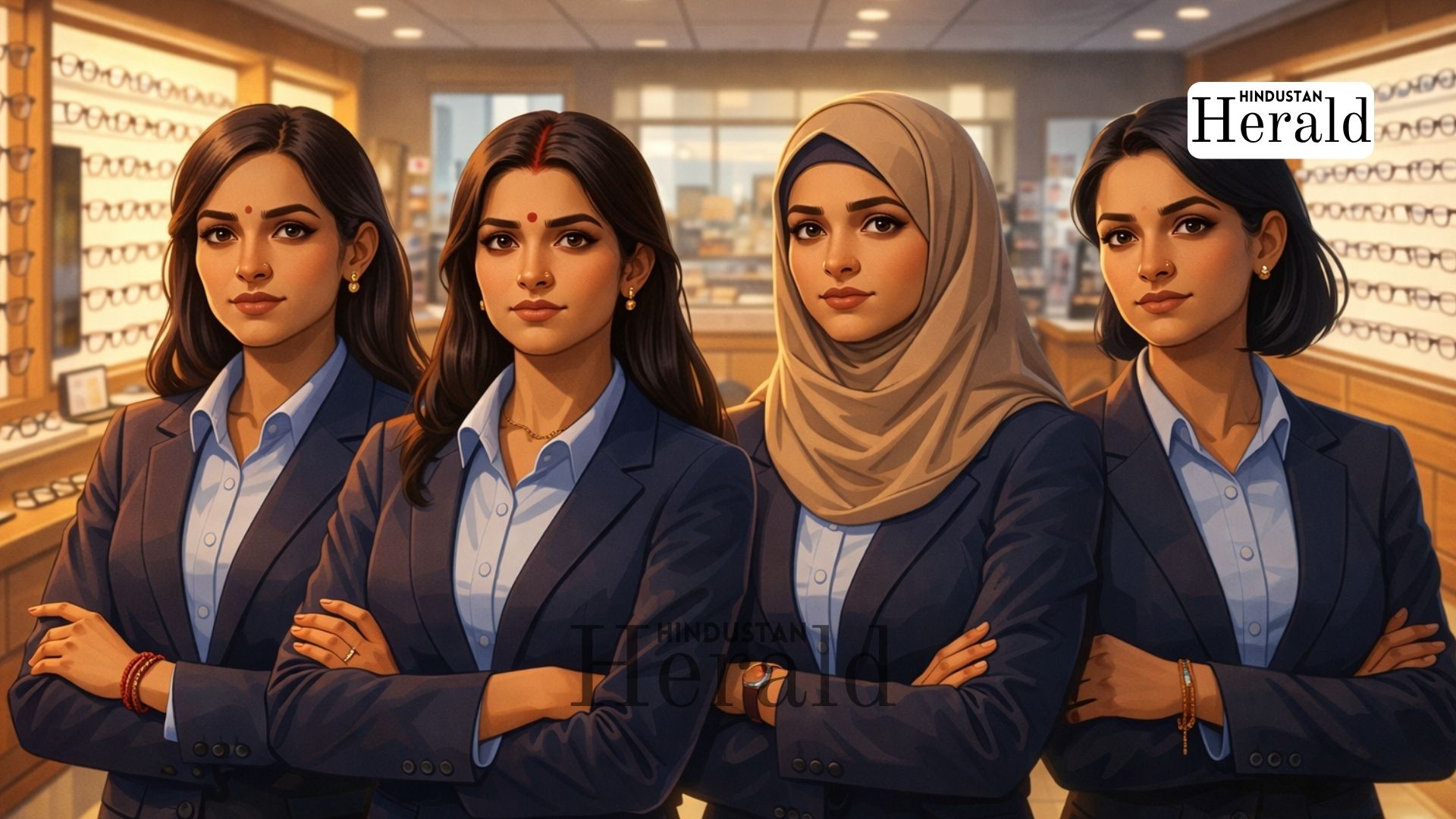
New Delhi, April 15: Somebody leaked a document. That is really where this whole thing begins.
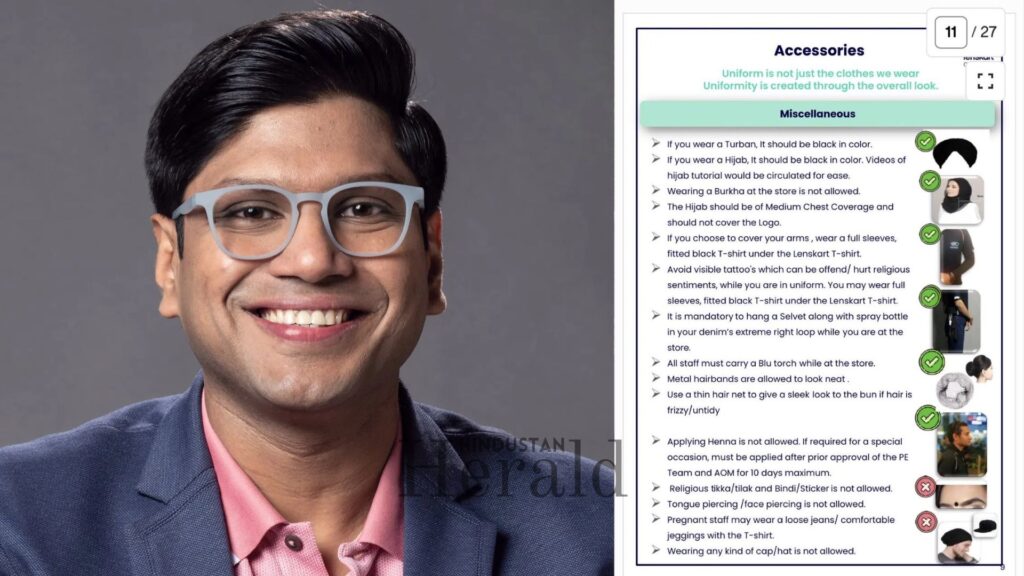
A screenshot, reportedly from Lenskart’s internal employee handbook, started making the rounds on X and WhatsApp groups sometime last week. These things usually fizzle out. Most of the time, a viral HR screenshot turns out to be misread, decontextualised, or just plain fake. But this one did not fizzle. It kept spreading, kept getting screenshotted and reshared, and by Tuesday, it had stopped being a social media curiosity and turned into something the company probably wishes had never surfaced at all.
By Wednesday, “boycott Lenskart” was a live conversation. And the company had still not said a word.
What The Document Claims
The specific provisions that lit the fuse are, on the face of it, straightforward. The leaked guidelines allegedly restrict certain Hindu cultural symbols, specifically the bindi, sindoor, and the sacred thread, for customer-facing employees. At the same time, the same document reportedly makes allowances for other religious attire, including the hijab and turban, under defined conditions.
That asymmetry is the whole problem. If the document is authentic and accurately reported, it means Lenskart has a policy that treats Hindu cultural markers differently from other religious expressions. And in a country as culturally layered as India, that is not the kind of thing people let slide.
A quick note here: the document’s authenticity has not been independently verified. Lenskart has not confirmed it. But the company has also not denied it, and the absence of any pushback whatsoever has given the story legs it might not otherwise have had.
Why These Symbols Specifically Are Not Just “Accessories”
It is worth pausing on what exactly is being talked about here, because this is where the debate gets personal very quickly.
The bindi is not a decoration. For hundreds of millions of Hindu women across India, it carries spiritual meaning, regional tradition, and in many communities, a marker of marital identity. The same goes for sindoor, the vermilion powder applied along the hair parting that a married woman typically wears every day, often beginning as part of her wedding ceremony itself. Asking an employee not to wear sindoor to work is not a minor HR adjustment. For many women, it is a request to physically set aside a symbol of their marriage and their faith before walking through the door.
The sacred thread, or mauli, tied around the wrist, is similarly not an ornament. It is worn after prayer, after visiting a temple, after a ritual. Some people wear it for weeks. It is not something you take off for a shift and put back on afterwards.
None of this means that workplaces cannot have dress codes. They can and do. But there is a material difference between a uniform dress code applied consistently to all employees and a policy that restricts one community’s religious expression while accommodating another’s. That is what critics are pointing at.
The Reaction, Which Was Fast and Fairly Angry
The backlash built quickly. By Tuesday evening, opinion was all over social media, much of it pointed, some of it heated. The phrase “selective secularism” started circulating, capturing something that a lot of people clearly felt: that a policy claiming professional neutrality while drawing distinctions between religious expressions is not really neutral at all.
Several posts asked the obvious question: if a hijab is permitted with defined guidelines, why is a bindi not? Both are religious expressions. Both are visible. The logic that allows one and restricts the other is not obvious, and Lenskart has not explained it.
Boycott calls followed, as they almost always do in these situations. Whether they translate into anything real is a different matter. India has seen plenty of boycott trends that generate enormous noise online and virtually no impact at the cash counter. Still, for a retail brand that depends on Indian consumers walking into stores in Indian cities, the optics of being associated with perceived anti-Hindu bias are genuinely damaging. This is not the kind of controversy that fades in a news cycle.
Some of the angrier posts went further, framing this as part of a broader pattern rather than an isolated HR misstep. “Today it is bindi and sacred threads, tomorrow it could be something else,” read one widely shared comment. That may or may not be fair to Lenskart specifically, but it speaks to a real anxiety that Indian corporate culture sometimes imports frameworks that do not fit the cultural terrain they are applied to.
The Silence That Made It Worse
Here is the thing about corporate controversies in the social media era: the response matters almost as much as the original issue. Sometimes more. A prompt, honest clarification can contain a story before it becomes a wildfire. Silence does the opposite.
Lenskart has been silent. Not a statement, not a tweet, not an informal comment through a spokesperson. Nothing.
That silence has done real damage. In its absence, people have filled in their own interpretations, and they have not been charitable. This is not a new lesson. Companies learn it over and over, and somehow still choose to go quiet when a fast response would serve them far better.
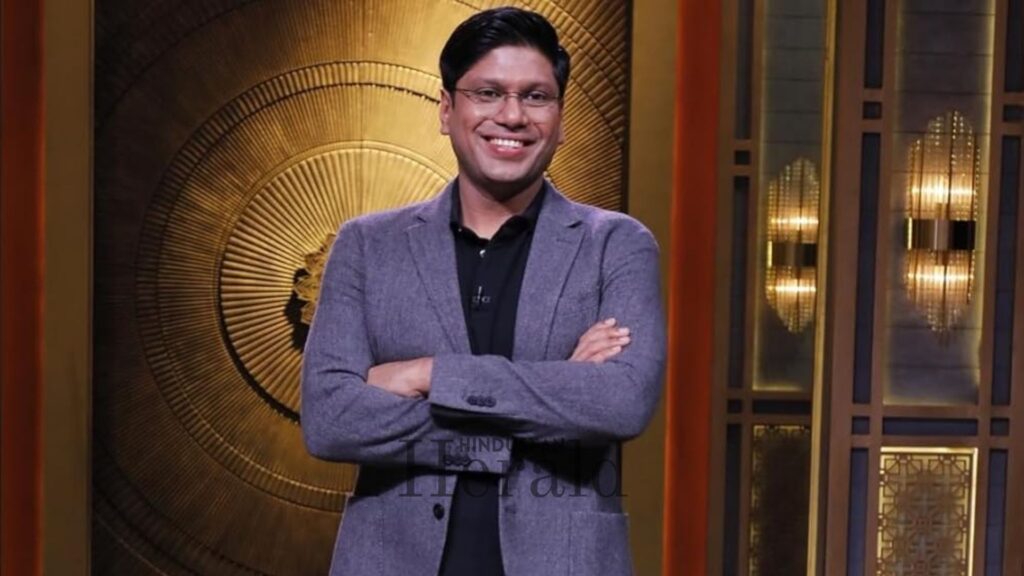
This is also not the first time Lenskart has navigated a public relations crisis of its own making. Back in January 2022, co-founder and CEO Peyush Bansal made an off-the-cuff remark on Shark Tank India, suggesting entrepreneurs should stay away from chartered accountants. The CA fraternity erupted. Boycott trends started. A petition gathered tens of thousands of signatures. Bansal apologised relatively quickly, calling it a lighthearted comment taken out of context, and the storm passed. The lesson from that episode was that engaging quickly and directly works. The lesson apparently did not fully stick.
The Legal Tangle Underneath All This
Beyond the optics, there is a substantive legal and ethical question here that Indian workplaces have genuinely not resolved. How much can an employer regulate the religious and cultural expression of its employees? And what standard of consistency does the law expect?
Article 25 of the Indian Constitution protects the right to freely profess and practice religion. That right does not disappear when someone walks into their workplace. It does not have to be unlimited; courts have allowed restrictions in specific institutional contexts, but those restrictions have consistently been expected to be applied uniformly, not selectively.
The Karnataka hijab controversy of 2022 went all the way to the Supreme Court and produced no clean resolution, which tells you how contested this ground is. What it did establish, fairly clearly, is that a policy which accommodates some religious expressions while restricting others is constitutionally fragile. It invites challenge. It invites exactly the scrutiny that Lenskart is now receiving.
Industry watchers who have commented on the situation have been careful but pointed. Dress codes in corporate environments are standard, nobody is arguing otherwise. But the standard they are held to is one of cultural sensitivity and fairness. A policy that asks some employees to set aside their religious identity while letting others keep theirs does not meet that standard.
The Larger Problem Behind the Specific One
There is something worth saying here that goes beyond Lenskart as a company. Indian corporations, particularly those that have grown quickly and attracted global capital, have a habit of adopting HR frameworks that were designed for very different cultural environments. These frameworks tend to prize a certain clean, visually uniform kind of professionalism that makes sense in the contexts where it was developed. In India, it often does not translate cleanly.

The bindi is not a fashion statement. Sindoor is not a cosmetic. The sacred thread is not jewellery. When an HR policy treats them as such, as optional add-ons that can be regulated or removed without much consequence, it reveals a gap between the people writing the policy and the people it is written about.
India’s workforce is not a blank slate that can be dressed into a template. It is a workforce shaped by centuries of tradition, regional diversity, and lived religious practice. Companies that do not account for this tend to find out the hard way, usually through exactly the kind of public backlash Lenskart is experiencing right now.
Where Things Stand
The company has three options at this point. It can come out and say the document was misrepresented, clarify what the actual policy says, and provide enough detail to let people judge for themselves. It can acknowledge the policy was poorly designed, apologise, and announce it is being revised. Or it can keep saying nothing and wait for the storm to pass on its own.
The third option carries the most risk. This story has enough substance to it and enough emotional resonance that it is unlikely to just exhaust itself. The longer Lenskart waits, the more the silence looks like confirmation.
Lenskart is a major brand. It did not get there by being careless with its customers. What it may have been careless with, at least in this instance, is its employees and the cultural realities they carry with them to work every day. That is a correctable mistake. But it requires the company to actually show up and correct it.
For now, it has not. And people are watching.
Stay ahead with Hindustan Herald — bringing you trusted news, sharp analysis, and stories that matter across Politics, Business, Technology, Sports, Entertainment, Lifestyle, and more.
Connect with us on Facebook, Instagram, X (Twitter), LinkedIn, YouTube, and join our Telegram community @hindustanherald for real-time updates.

Former financial consultant turned journalist, reporting on markets, industry trends, and economic policy.
- Kavita Iyer

- Kavita Iyer
- Kavita Iyer
- Kavita Iyer





- Arun Upadhayay
- Arun Upadhayay
- Arun Upadhayay
- Arun Upadhayay




 Ananya Sharma
  Herald Desk
  Ayesha Khan