
 By Ananya Sharma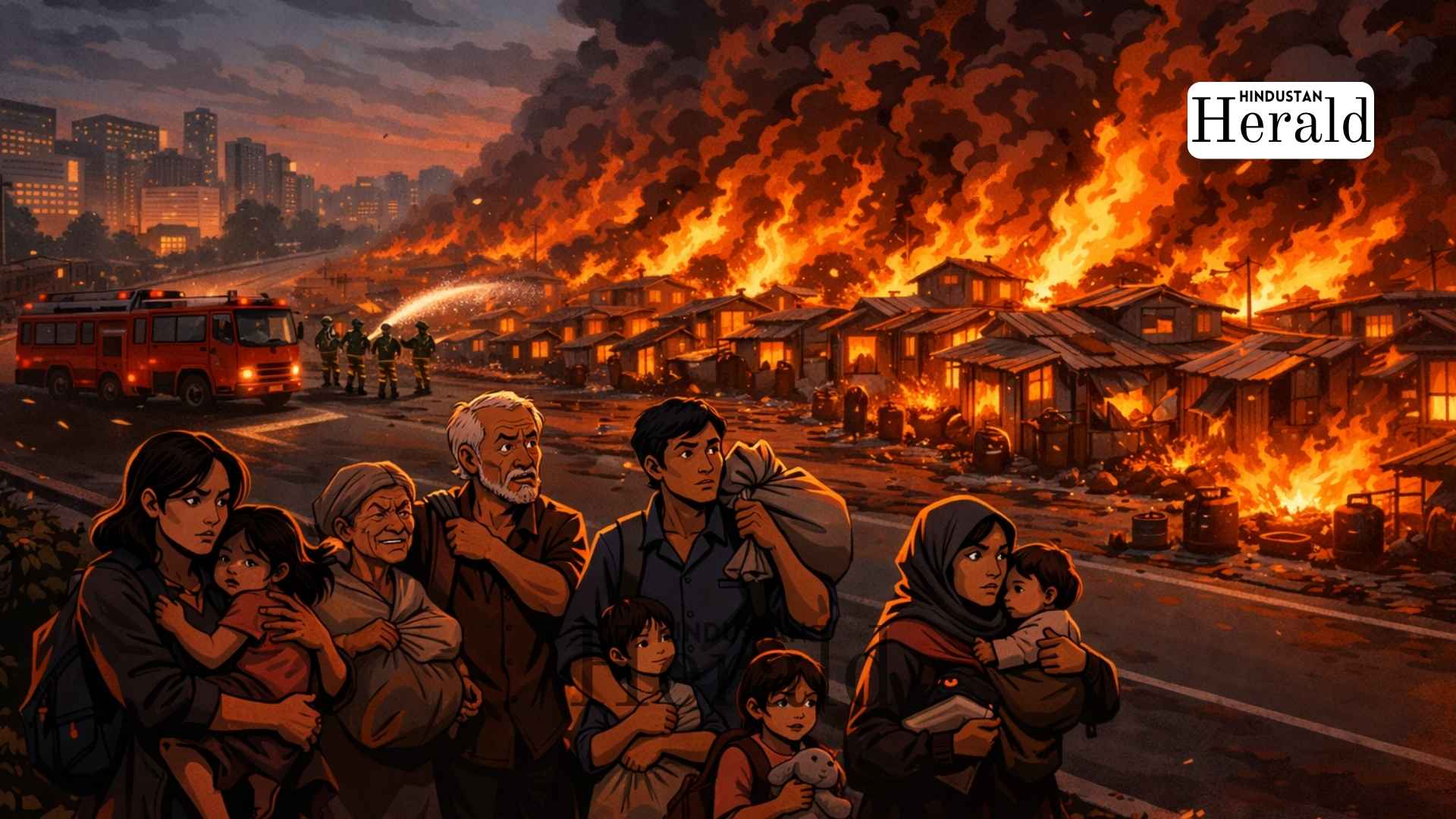
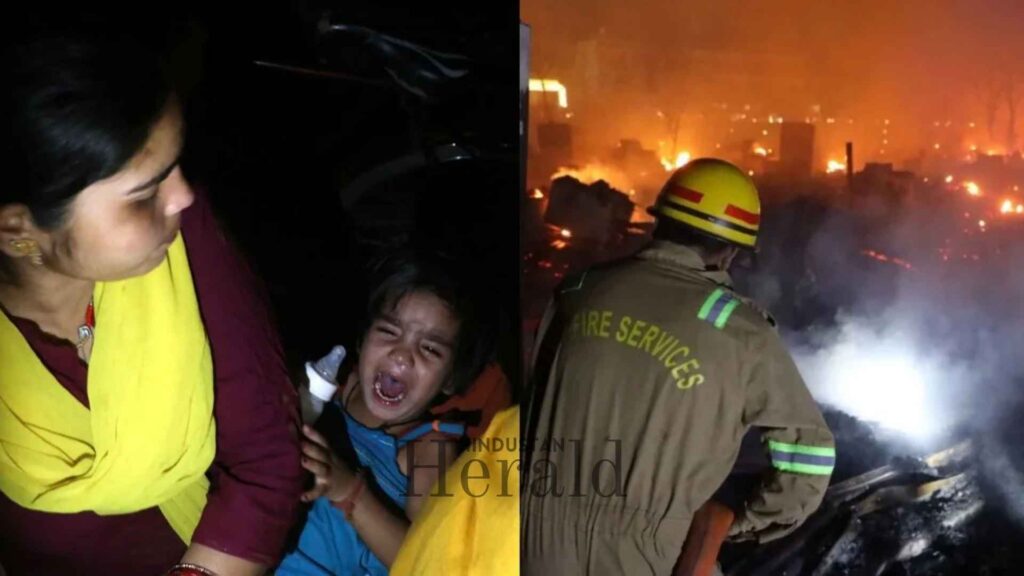
Lucknow, April 16: The smoke was visible long before anyone knew the full extent of what had happened. A thick, black column rising over the Vikas Nagar skyline on Wednesday evening, the kind you see from across the city and immediately know is not small. By the time fire tenders reached the jhuggi cluster near the Ring Road, the blaze had already moved through dozens of homes. Then dozens more.
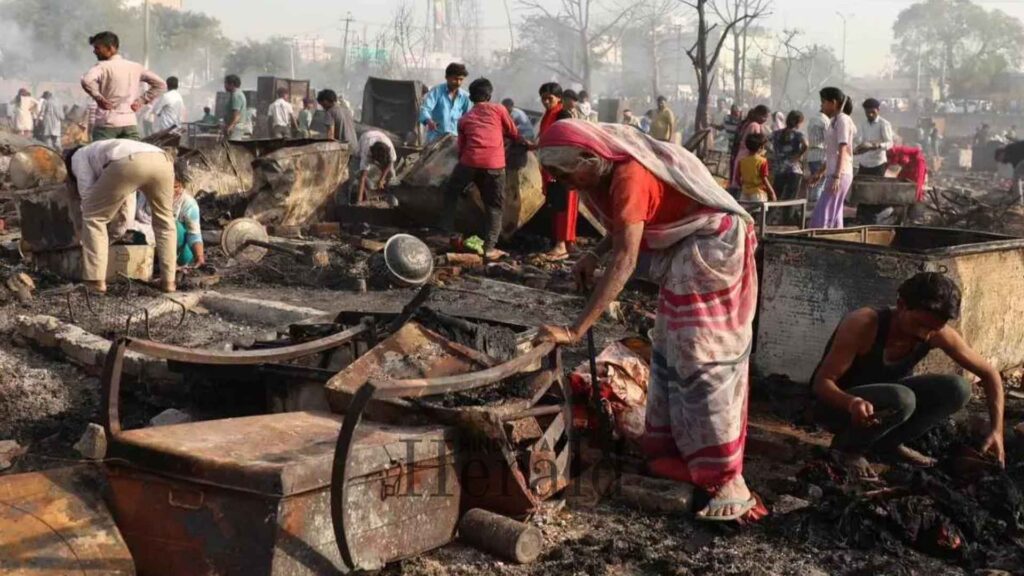
When it was finally brought under control, roughly 200 shanties were gone.
That number needs a moment to land. Two hundred homes. Not structures in any formal sense, no concrete, no registered addresses, no insurance policies. Just the places where people kept their things, fed their children, and slept at night. All of it ash by Wednesday evening.
What Actually Happened
The fire started around late afternoon in a vacant plot near the Ring Road and moved fast, helped along by strong winds and the kind of materials that jhuggi settlements are built from, lightweight, cheap, and in summer heat, practically ready to burn. There was very little anyone could do once it caught.
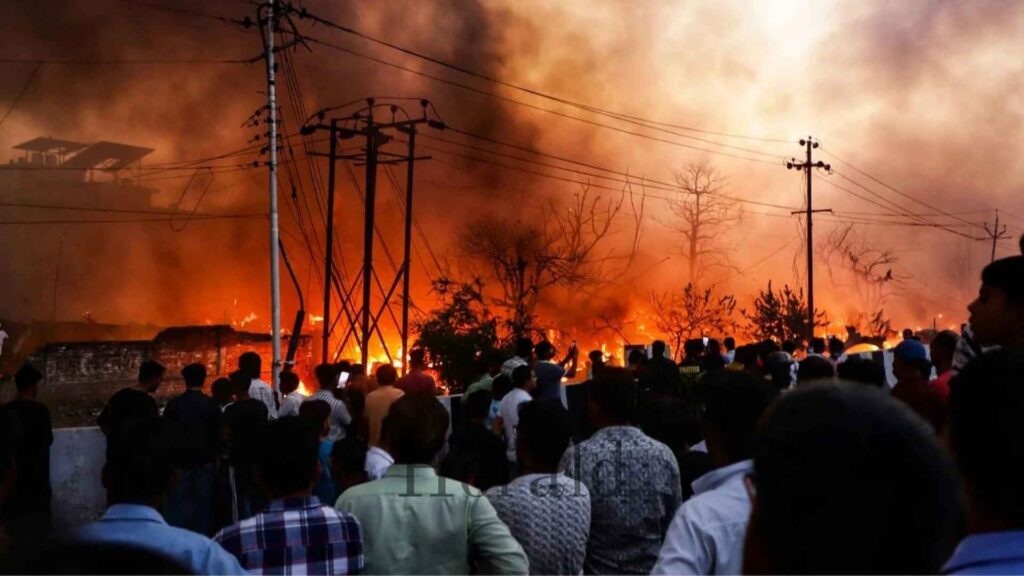
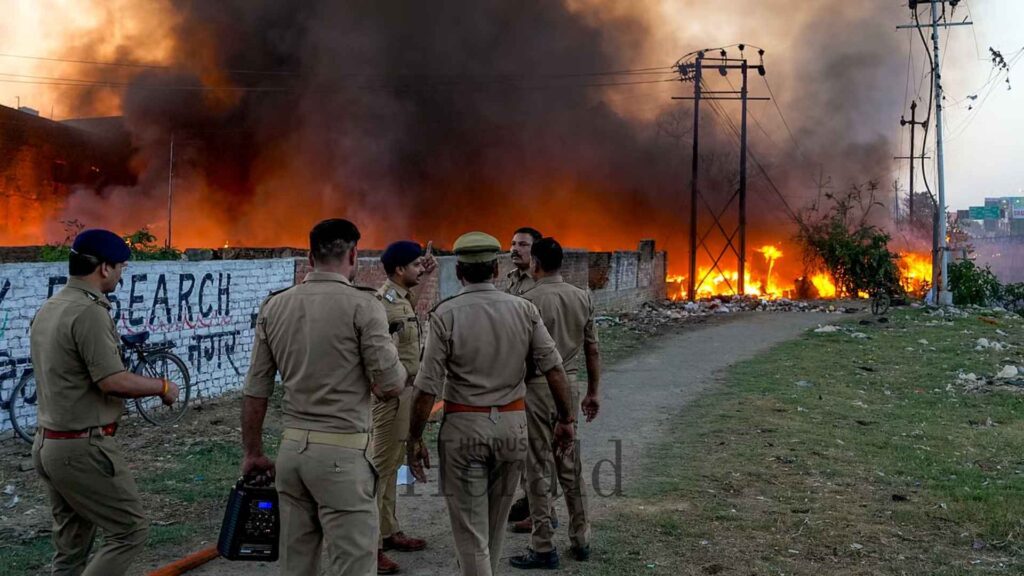
Emergency services got the call around 5:30 in the evening. Tenders were dispatched quickly. The response was not slow by any standard measure. But the fire had its own momentum by then, and the layout of the settlement huts, packed tightly together with almost no space between them, meant that containing it was never going to be straightforward.
What made it worse was what was inside those huts. Small cooking gas cylinders exploded repeatedly as the fire moved through the cluster, forcing firefighters to fall back each time and reassess before moving forward again. People nearby said they heard several LPG blasts, though officials did not formally confirm the number. Each explosion sent burning debris outward, opening new fronts in a fire that was already difficult to track.
The smoke could be seen from kilometres away. Hotels and automobile showrooms sit adjacent to that stretch of Vikas Nagar, which tells you something about where this cluster was located right on the edge of the city’s commercial activity, visible to everyone, yet somehow still without the basic protections that might have slowed what happened Wednesday.
The People Who Lost Everything
Here is what did not happen: nobody died. Officials said in their initial assessment that there was no loss of life or serious injuries. Given the scale of the destruction and the density of the population in that cluster, that is genuinely remarkable.
But relief at the survival count should not be allowed to do too much heavy lifting. Hundreds of families walked out of that settlement on Wednesday evening with whatever they could grab in the seconds before the fire reached them. Documents. A change of clothes if they were lucky. Cash, if it had not already burned. Children’s school bags, kitchen utensils, tools for work, most of it is gone.
These are daily-wage workers. Migrant families. People who do not have a savings account to fall back on, let alone alternate housing. By nightfall, they were sitting by the roadside outside what used to be their homes, in the middle of a city that mostly drove past.
This is the part of these stories that tends to get flattened by the numbers. The 200 figure captures the scale. It does not capture a family of five trying to figure out where they are going to sleep that night, in April, in Uttar Pradesh, when the temperature does not drop much even after dark.
What the Politicians Said
The political response came quickly, as it usually does after something this visible.
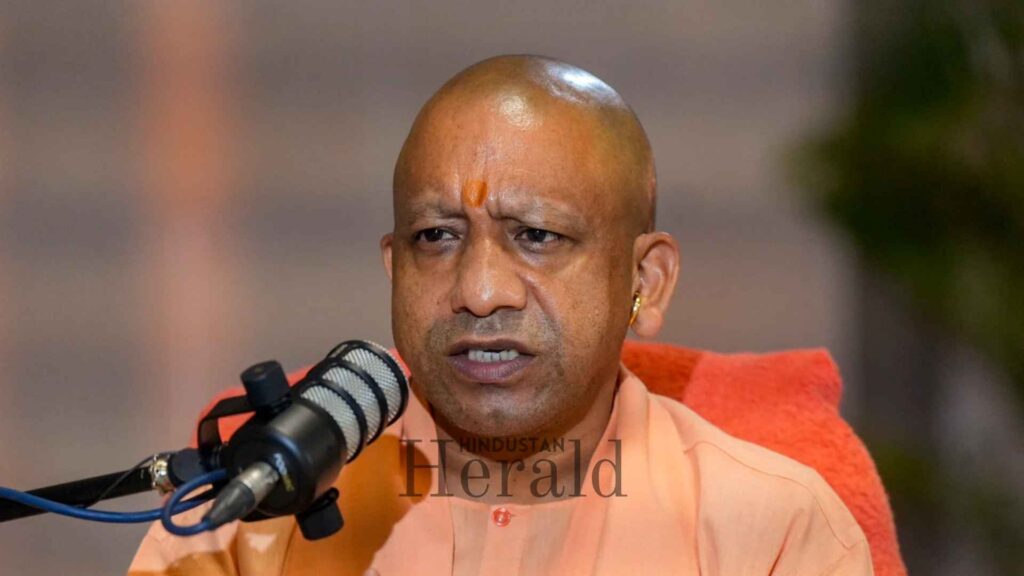
Chief Minister Yogi Adityanath took cognisance of the incident and directed officials to reach the spot and expedite relief operations. Defence Minister Rajnath Singh, who holds the Lucknow Lok Sabha seat, reportedly called the District Magistrate directly, asked for a full picture of the situation, and directed that all possible help be extended to affected families. He also stressed that anyone injured should receive proper medical attention.
Samajwadi Party chief Akhilesh Yadav weighed in too, calling for an immediate support package of food, water, and alternative housing for the displaced residents, and demanding a high-level inquiry into how the fire started.
Statements were made. Instructions were issued. The district administration was working through the night to douse remaining embers and account for all residents of the cluster. Whether the relief that follows lives up to the urgency of the moment is a question that will be answered over the next few days, not the next few hours.
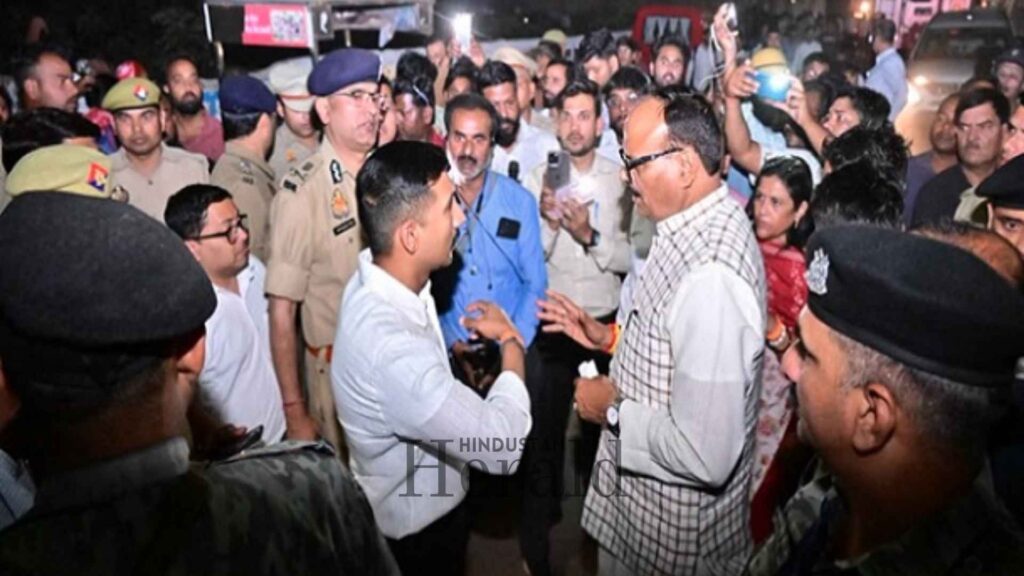
That said, the speed of political attention here was nothing. It signals that the scale registered. The follow-through is what matters now.
The Older, Harder Problem
This fire did not happen in a vacuum. Slum cluster fires in Indian cities, particularly in the summer months, happen with a regularity that has long stopped being shocking and started being, in a grim way, expected. Lucknow has seen them. Delhi has seen them. Mumbai, Patna, Kanpur, the pattern repeats, and the reasons are almost always the same.
Jhuggi settlements are built from what is available and affordable: bamboo, tarpaulin, thin wood, plastic sheeting. These materials cost less. They are also the first things to catch when a fire starts nearby. There is no mystery to why these fires spread as fast as they do. The settlements themselves are the fuel.
Add to that the LPG cylinders that millions of low-income households now have, courtesy of government welfare schemes like the Pradhan Mantri Ujjwala Yojana. The scheme was genuine in its intent to move families away from wood-burning stoves that damage lungs and eyes, particularly for women who spend the most time cooking. It has worked, in that sense. But a pressurised gas cylinder in a tightly packed hut with no fire-safety awareness and no designated storage space becomes something quite different when a fire breaks out nearby. Wednesday’s explosions were a product of exactly that situation.
None of this is to say the welfare programme was wrong. It is to say that distributing cylinders without building fire-safety infrastructure in the same settlements was always going to create a risk that would eventually show up in an incident like this.
Why Vikas Nagar, Why Now
Vikas Nagar is the kind of area that explains a lot about how Indian cities actually grow. On one side: hotels, showrooms, and commercial infrastructure tied to the Ring Road. On the other: an informal settlement where migrant workers and urban poor have been living for years, in proximity to the jobs those commercial zones generate.
Lucknow has been expanding for two decades. People come in from smaller towns across Uttar Pradesh looking for construction work, domestic work, driving, and loading, the whole informal economy that keeps a growing city running. They settle where they can. Vacant plots near main roads, beside railway lines, at the edges of new development. The settlement in Vikas Nagar was one of those places.
These clusters are not going anywhere. They exist because the city needs the people in them. The fiction that they are temporary, that they will be cleared and relocated neatly at some point, is one that planners and administrators have maintained for a long time, and it has real costs. Treating a settlement as illegal does not make it disappear. It just means the people living there have no claim to fire safety infrastructure, adequate water access, proper roads, or any of the other things that would make a disaster like Wednesday’s less catastrophic.
As it turns out, being located near commercial zones did help in one way on Wednesday. Better road access meant fire tenders could get there faster than they might in a more interior settlement. The visibility of the smoke quickly drew attention. These are nothing. But they are also not a substitute for the structural changes that would have prevented the fire from consuming 200 homes in the first place.
What Happens Now
The immediate question is shelter. Summer nights in Lucknow are hot, but they are not safe for large numbers of people, including elderly residents and children sleeping on roads or in open areas without protection.
Government relief is expected to move in the direction of food and water first, temporary materials second, compensation discussions much later, if at all. Chief Minister Adityanath’s instructions to expedite relief operations are on record. The District Magistrate has been briefed by one of the country’s most senior cabinet ministers. There is political attention on this.
Whether that attention translates into something meaningful, a proper temporary housing arrangement, a real compensation package, and a genuine inquiry into the fire’s cause, as Akhilesh Yadav has demanded, is the test that follows every one of these incidents. Most of the time, the attention fades before the test is completed.
For the families sitting outside what used to be their homes in Vikas Nagar, the smoke has cleared. The political statements have been made. The fire tenders have left. What comes next for them, actually, for them, not in press releases, is the only part of this story that matters now.
Stay ahead with Hindustan Herald — bringing you trusted news, sharp analysis, and stories that matter across Politics, Business, Technology, Sports, Entertainment, Lifestyle, and more.
Connect with us on Facebook, Instagram, X (Twitter), LinkedIn, YouTube, and join our Telegram community @hindustanherald for real-time updates.

Covers Indian politics, governance, and policy developments with over a decade of experience in political reporting.
- Ananya Sharma

- Ananya Sharma
- Ananya Sharma
- Ananya Sharma




 Ayesha Khan
  Sandeep Verma