
 By Ananya Sharma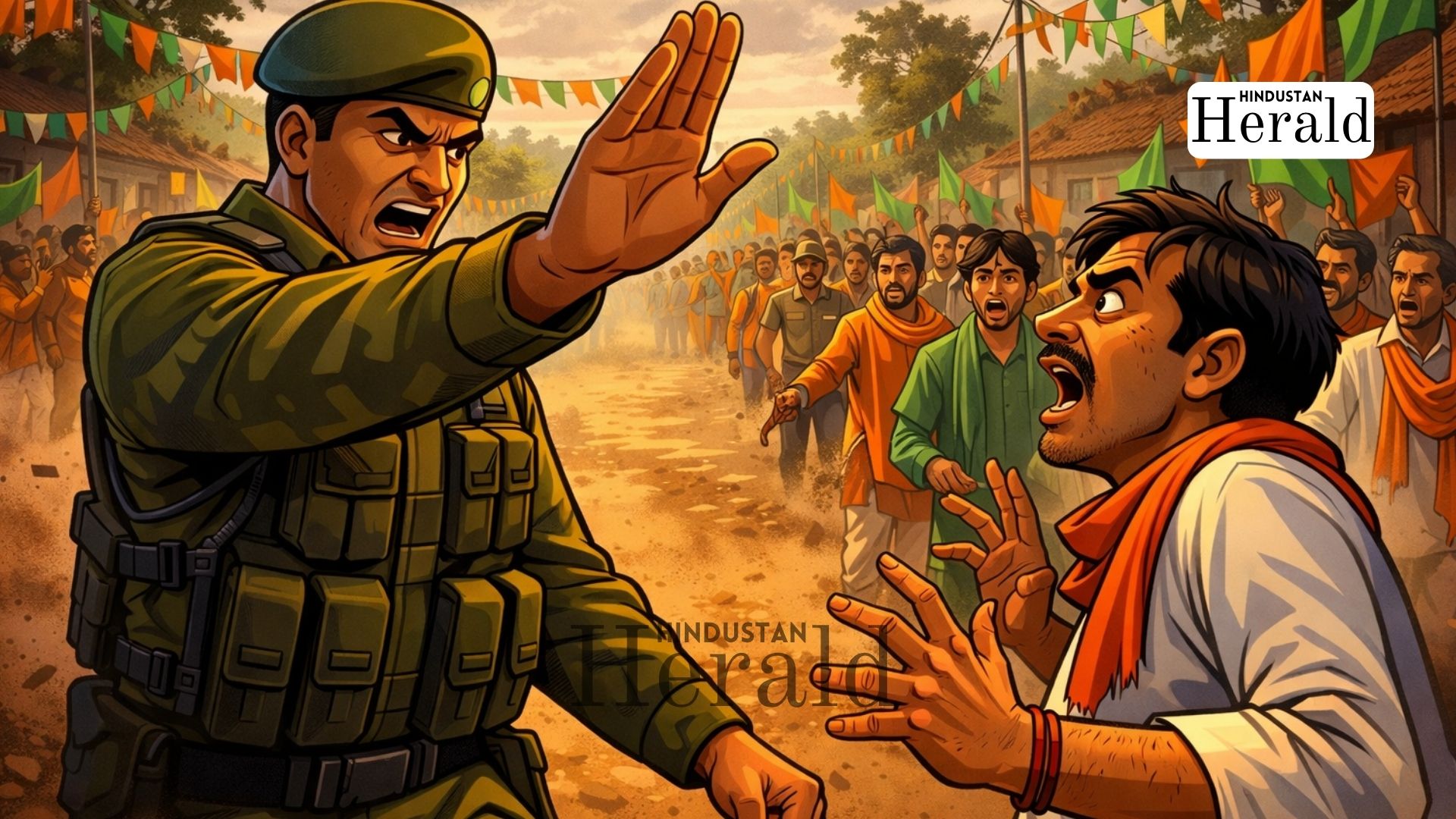
Kolkata, April 17: A sharp, jarring image from Sabang in Paschim Medinipur district has cut through the noise of West Bengal’s 2026 Assembly election campaign: a uniformed officer from the Central Armed Police Forces (CAPF) striking a local Trinamool Congress (TMC) leader across the face while protecting a Bharatiya Janata Party (BJP) campaign procession. The incident, reported on April 16 and confirmed by TV9 Bangla, has quickly spiralled into a fresh political flashpoint, raising uncomfortable questions about the mandate and conduct of central security forces in the state’s deeply polarised election season.
What Happened in Sabang
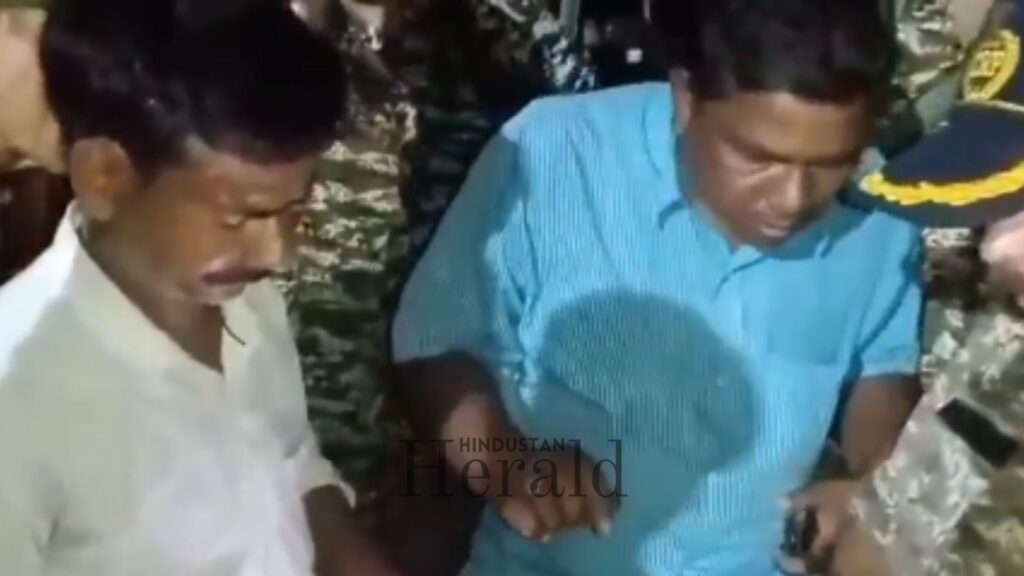
As per sources, the incident unfolded when BJP workers were conducting an election campaign in the Sabang Assembly constituency of Paschim Medinipur, one of the seats where the ruling TMC is fielding a prominent candidate. A local TMC worker reportedly attempted to block or disrupt the procession. According to the report by TV9 Bangla, a CAPF officer on duty intervened physically, slapping the TMC worker to stop him.
The Sabang Block TMC president, Abu Kalam Box, wasted no time in going public. He alleged that the CAPF officer had acted with deliberate intent, describing the physical assault as “motivated.” Box also pointedly questioned whether a central force officer had any legal authority to physically assault a civilian in this manner. The TMC leadership has since filed a written complaint against the CAPF personnel at the local police station, demanding accountability and action.
No immediate response or rebuttal from the CAPF officer’s side, the Election Commission of India (ECI), or the Union Home Ministry had come in by the time this report was filed.
The Bigger Picture: CAPF, West Bengal, and a Fraught History
This incident does not happen in a vacuum. It lands in the middle of one of the most tension-charged state elections India has seen in recent years, where the presence of central forces has itself become a political battleground.
The Election Commission of India finalised an extensive security deployment strategy for the 2026 West Bengal Assembly polls, with over 2,400 companies of central forces, amounting to nearly 1.9 lakh personnel, deployed across the state. The stated objective was to prevent voter intimidation, booth capturing, and electoral malpractice, particularly in constituencies flagged as sensitive. The Commission also emphasised that strict action would be taken against any attempt to disrupt the electoral process.
That scale of deployment reflects how deeply distrusted the state’s own police machinery has become in the eyes of the central government and the ECI. West Bengal’s ruling party, the TMC, and the BJP have been locked in a bitter proxy war over who controls the ground on polling day. The CAPF presence is, in the eyes of the BJP and the Opposition, the one guarantee that state police will not be used to suppress their campaigns. For the TMC, however, the same forces are seen as instruments of the Centre’s political will, deployed to tilt the playing field.
The Sabang incident feeds directly into that suspicion.
A Pattern of Pre-Poll Violence and Accusations

This confrontation is only the latest in a string of incidents that have marked the campaign period. In Raghunathganj and Jangipur, 30 people were arrested and Section 144 was imposed, with heavy deployment of police and CAPF continuing across those areas after electoral violence broke out. Both sides traded blame, with the BJP pointing to it as evidence of state administration’s failure, while Chief Minister Mamata Banerjee accused the BJP of instigating the clashes.

Separately, a former TMC councillor from Bidhannagar, Nirmal Dutta, was arrested by police after a viral video showed him claiming that voter IDs are linked to Aadhaar and votes can be tracked, widely perceived as an attempt to intimidate voters. He was produced before court and remanded to judicial custody till April 24.
Mamata Banerjee also alleged at a rally in Paschim Medinipur that the BJP, with the help of the Election Commission, attempted to cancel her candidature from Bhabanipur through false cases, and further accused the BJP of forcefully deleting the names of 90 lakh voters from electoral rolls during the Special Intensive Revision.
These are not fringe grievances. They reflect how combustible the atmosphere has become in the weeks ahead of voting.
The Legal and Constitutional Question
Abu Kalam Box’s question deserves to be taken seriously on its own merits, separate from the politics: does a CAPF officer have the authority to physically assault a civilian?
The short answer is no, not without a legally defined trigger. CAPF personnel deployed during elections operate under the ECI’s directives and are empowered to maintain order, prevent obstruction of election-related activities, and use proportionate force if necessary. But “proportionate force” has clear legal contours. Slapping a civilian, even one who may have been creating a disturbance, does not automatically fall within the lawful exercise of duty. If anything, such an act could expose the officer to disciplinary proceedings and, depending on how the complaint is pursued, to criminal liability under relevant provisions of the Indian Penal Code or the Bharatiya Nyaya Sanhita.
The fact that a written complaint has been filed at the local police station means there is now a formal record. What the police do with that complaint, and how quickly the ECI responds, will define whether this becomes a case of accountability or another episode that is quietly buried after the votes are counted.
TMC and BJP’s Tactical Responses
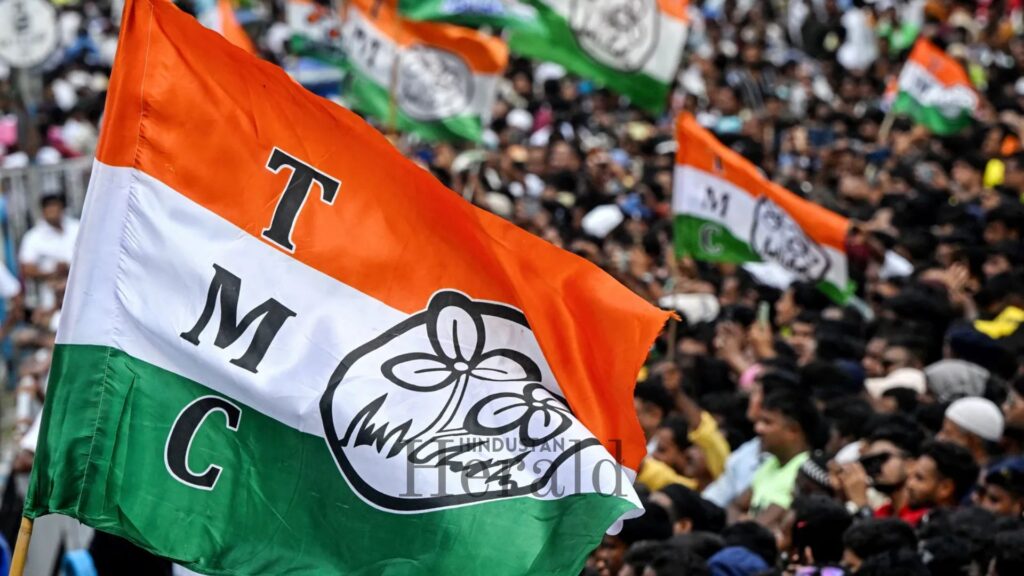
For Trinamool Congress, this incident is politically convenient in one sense. The party has consistently argued that CAPF deployment in Bengal is not neutral but tilted in the BJP’s favour, that the forces are used to suppress TMC workers while facilitating BJP campaigns. A CAPF officer physically assaulting a TMC worker during a BJP procession plays directly into that narrative. The party’s decision to file a complaint, rather than simply protest on TV, suggests it intends to pursue this formally.
That said, the BJP’s counter-position is equally predictable. The party is likely to argue that the TMC worker was disrupting a lawful campaign activity and that the officer acted to restore order. In the BJP’s framing, any pushback against their campaigns in Bengal is evidence of TMC’s iron grip on the ground, and CAPF is the only shield between the party and mob obstruction.
What neither side is particularly interested in discussing is what this moment says about the broader ecosystem of electoral violence in the state, one that both parties have contributed to over years of competitive muscle-flexing.
Sabang in Context
Sabang Assembly constituency sits within Paschim Medinipur, a district that has been contested terrain for decades. Just days earlier, on April 14, Chief Minister Mamata Banerjee addressed a rally at Kanchdihi Stack Yard ground in Paschim Medinipur in support of TMC’s Sabang candidate Manas Bhunia.The TMC has clearly invested in this seat. The BJP, by running a campaign procession through the same zone, was staking its own claim. That these two activities converged in a confrontation involving central forces is not a coincidence of geography; it is an outcome of the pressure both parties have placed on every single constituency in this election.
What Comes Next
The ECI and the CAPF’s parent ministry owe a clear public response. If the officer acted without lawful justification, that must be established, and consequences must follow. If the TMC worker was indeed obstructing a campaign in violation of model code norms, that too must be addressed on its own track. The two issues are not mutually exclusive.
For voters watching this unfold, the optics are troubling regardless of which side’s version of events is correct. Central forces are supposed to be the one element in West Bengal’s election machinery that stands above local political feuds. When an officer of those forces is seen physically striking a political worker in the middle of a campaign, it corrodes that neutrality, real or perceived.
The Union Home Ministry had deployed 480 companies of paramilitary forces in West Bengal before the election, informing the State Chief Secretary, Home Secretary, and Director General of State Police of the decision. That deployment was meant to guarantee a level playing field. One slap, caught and reported, has put the entire premise under scrutiny.
With Phase 1 polling on April 23 still days away, this is unlikely to be the last incident of its kind. The question is whether the institutions responsible for managing this election have the will to send a clear signal that no one, in uniform or out of it, gets to act above the law in Bengal’s villages.
Stay ahead with Hindustan Herald — bringing you trusted news, sharp analysis, and stories that matter across Politics, Business, Technology, Sports, Entertainment, Lifestyle, and more.
Connect with us on Facebook, Instagram, X (Twitter), LinkedIn, YouTube, and join our Telegram community @hindustanherald for real-time updates.

Covers Indian politics, governance, and policy developments with over a decade of experience in political reporting.
- Ananya Sharma

- Ananya Sharma
- Ananya Sharma
- Ananya Sharma




 Herald Desk
  Sandeep Verma