
 By Shelesh Joshi and Kavita Iyer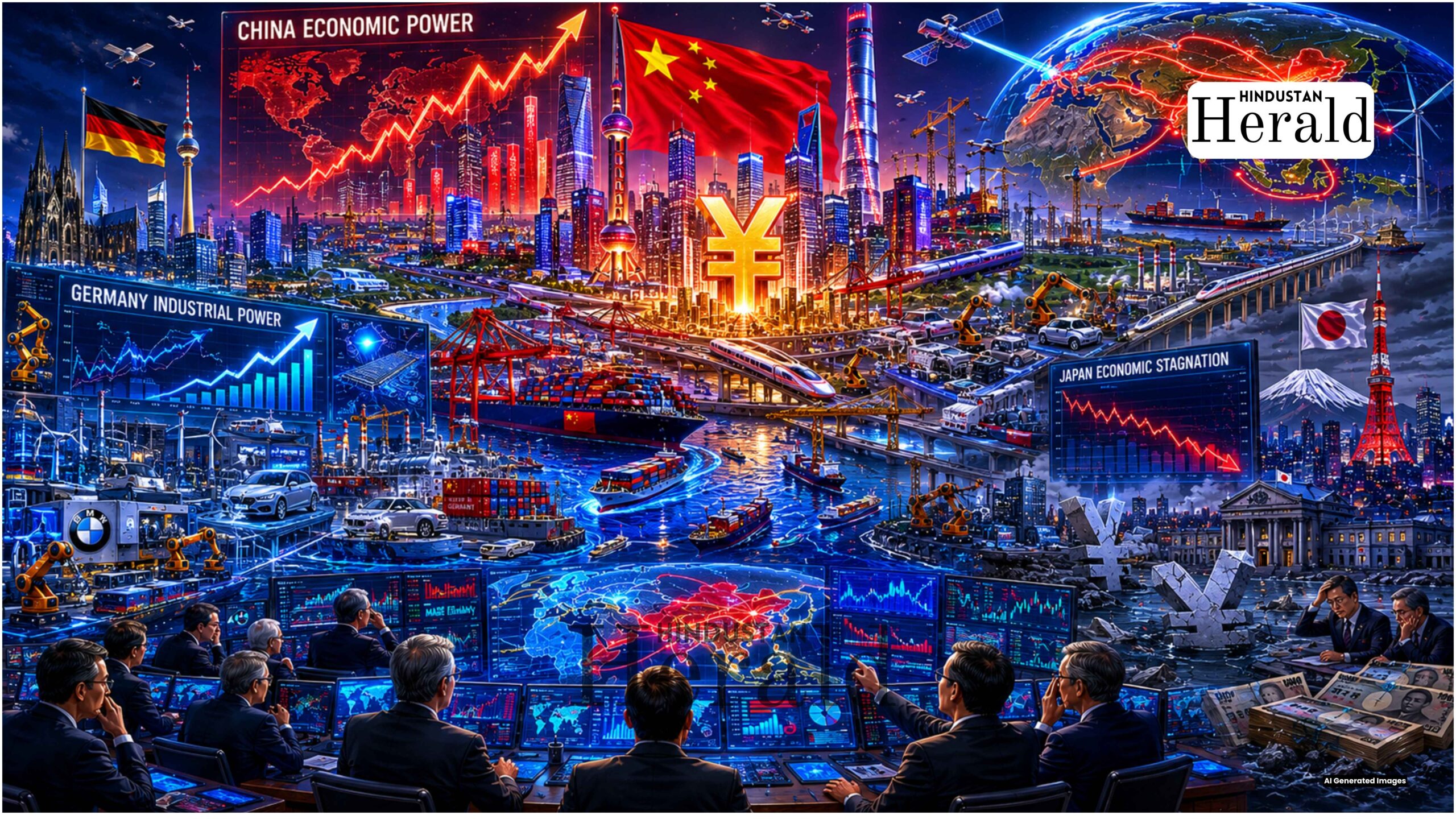
New Delhi, May 26: Japan creditor status has never told a stranger story than it does today. There is a number sitting inside Tuesday’s data release from Japan’s Ministry of Finance that tells two completely different stories depending on which line you read. Read the first line: Japan’s overseas wealth hit an all-time high of 561.75 trillion yen at the end of 2025. Eighth straight year of growth. A record.
Read the second line: Japan is now the world’s third-largest creditor nation. Behind Germany. Behind China. A ranking it has never occupied before in over three decades. Both lines are true. That is precisely what makes this story worth sitting with.
Japan Creditor Crown Lost in Just Two Years
Japan first climbed to the top of the global creditor table in 1991, the year it overtook Germany. It held that position through every crisis the world threw at it the Asian financial collapse, the dot-com bust, the 2008 meltdown, Fukushima, years of deflation, multiple recessions. No matter what happened at home or abroad, Japan’s creditor standing kept growing and no one caught it.
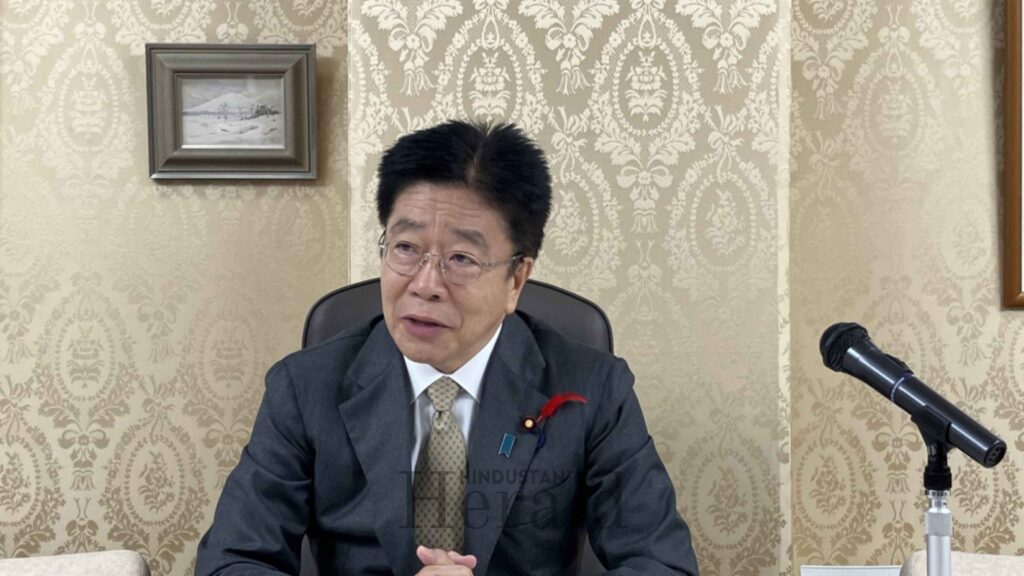
Then, in 2024, Germany did. Japan’s net external assets that year were a record 533.05 trillion yen. Germany’s were 569.7 trillion yen. The 34-year streak was over. Finance Minister Katsunobu Kato played it cool at the time. “Given that Japan’s net external assets have also been steadily increasing, the creditor ranking alone should not be taken as a sign that Japan’s position has changed significantly,” he told reporters. That was a reasonable thing to say. It was also the kind of statement that ages badly when the next year’s data comes in worse.
In 2025, China moved past Japan too. China’s net external assets grew to 636.3 trillion yen. Japan’s grew to 561.75 trillion yen a new record, yes, but 74.5 trillion yen short of China. Germany, still the top creditor nation, finished the year at 675.5 trillion yen. Japan went from first to third in 24 months. Records every year. Falling rank every year.
Why Growing Richer Can Still Mean Losing Creditor Ground
The honest answer to how this happens involves the side of Japan’s balance sheet that rarely makes headlines. Japan’s overseas assets what its companies, government, and citizens own abroad rose 8.5 percent from the previous year to roughly 1.806 quadrillion yen, according to Tuesday’s Finance Ministry data. That growth was driven by increased business investment abroad, particularly into the United States and Switzerland, with finance, insurance, transportation equipment, and nonferrous metals among the sectors attracting the largest flows.
But Japan’s external liabilities what foreigners own inside Japan climbed even faster. They rose 10.5 percent to 1.244 quadrillion yen. Subtract one from the other and you get the net creditor figure: 561.75 trillion yen. Impressive in isolation. Not impressive enough to keep up with Germany or China in the creditor rankings.
The single biggest reason liabilities jumped so fast? The Nikkei 225 rose 26 percent in 2025, crossing 50,000 for the first time. Foreign investors hold a large chunk of Japanese equities. When those stocks surge, the yen-value of foreign claims on Japan rises alongside them. That feeds the liability side of the external balance sheet whether Japan likes it or not. By some estimates, the equity-driven liability increase alone eroded tens of trillions of yen from Japan’s net creditor position over the year. It is one of global finance’s more uncomfortable ironies: a booming domestic stock market can simultaneously be good news for investors and bad news for the country’s net creditor standing.
The Yen’s Role in All of This
The currency adds another layer that is hard to ignore. For years, Japan’s weak yen inflated its overseas assets in yen terms foreign-currency holdings look bigger when converted back at a weaker exchange rate. That dynamic padded Japan’s creditor figures significantly, particularly after the yen fell sharply following the Bank of Japan’s pivot away from negative rates in early 2024.
The BOJ raised its benchmark rate to 0.75 percent in December 2025, the highest level since 1995. Governor Kazuo Ueda has framed every move as gradual and data-dependent, and for good reason: Japan is sitting on top of one of the most sensitive financial structures in global markets the yen carry trade.
For two decades, investors borrowed cheaply in yen and deployed that money into higher-yielding assets in the United States, Europe, and across emerging markets. That trade worked because Japanese rates were near zero while rates elsewhere offered real returns. As those rates converge, the trade unwinds.
When the BOJ surprised markets with a hike in July 2024, the Nikkei fell 12 percent in days and the yen spiked sharply as leveraged positions were liquidated in a rush. The December 2025 hike was better telegraphed and more absorbed. But the direction is set. Japan is slowly withdrawing the cheap-yen funding it has supplied to global markets for a generation, and fund managers from New York to Mumbai are watching that process with real anxiety.
Germany: Boring in the Best Possible Way
Germany’s path to the number-one creditor position is not the kind of story that sells newspaper space. There is no crisis, no dramatic pivot, no single moment where it all changed. Germany runs a very large trade surplus. It has done so for over two decades. Exports of industrial machinery, cars, chemicals, and precision equipment consistently exceed imports. The surplus gets invested abroad. The pile grows. Every year. That is essentially the whole story.
The Deutsche Bundesbank confirmed Germany’s current account surplus for 2025 came to 197.4 billion euros, down from 251.5 billion euros in 2024 but still one of the largest creditor surpluses in the world in absolute terms. Germany’s net international investment position now exceeds 50 percent of its own GDP an extraordinary figure for an economy of its size.
The IMF has argued for years that Germany’s surplus is a problem. The argument goes that it suppresses domestic consumption, limits imports from eurozone partners, and creates structural imbalances that weaker economies end up absorbing. German policymakers have listened respectfully and largely continued doing what works for their creditor position. Looking at the creditor rankings now, the numbers do not make that position easy to argue against.
Germany also benefits from something Japan simply does not have: a relatively stable currency. The euro does not swing the way the yen does. What Germany earns abroad, it earns steadily. No currency-driven distortion on either side of the creditor ledger. The pile compounds reliably.
China Is Moving at a Speed That Should Make Everyone Pay Attention
China’s move from third creditor to second place in a single year is the part of this story that carries the most weight beyond the numbers. According to data from China’s State Administration of Foreign Exchange, the country’s current account surplus for 2025 hit a record $735 billion 3.7 percent of GDP. Exports of goods grew 6.5 percent in the final quarter of 2025, defying US tariffs that were supposed to slow them. The goods trade surplus hit $310.3 billion in that quarter alone.
China’s net external assets as recorded by Japan’s Finance Ministry stood at 636.3 trillion yen at end-2025. By some measures, using SAFE’s own data on gross assets and liabilities, the creditor figure in dollar terms is even larger.
Yang Delong, chief economist at Shenzhen-based First Seafront Fund, was quoted this week saying China’s rise “is not due to short-term market volatility, but rather the long-term structural outcome of a solid domestic economic foundation, continuous optimization of cross-border asset allocation, and steady advancement of financial opening-up.” That is, predictably, the kind of quote a Chinese analyst gives to a state-aligned outlet. But the numbers behind it are not fabricated.
The Belt and Road Initiative continues to build China’s creditor base through state-directed capital deployment across Asia, Africa, and the Middle East. BRI investment and construction contracts in the first half of 2025 reached $124 billion more than all of 2024 combined. At that pace, China’s gap with Germany could close within two to three years. That would put China at the top of the global creditor table for the first time in modern financial history.
Japan Is Not Weak. It Just Is Not Growing Fast Enough.
To be fair to Japan, this is not a story of creditor collapse. Japan remains the largest single foreign holder of US Treasury bonds, with holdings around $1.3 trillion. Its foreign exchange reserves stood at roughly $1.41 trillion earlier this year, near a four-year high. The country’s multinationals are actively buying businesses abroad, particularly in the US and Switzerland, where finance, insurance, and industrial sectors have absorbed significant Japanese capital.
The IMF’s 2026 Article IV mission noted that Japan’s current account surplus is expected to moderate somewhat over the medium term, partly because the rate of return on external assets is normalising as global interest rates shift. The fund also noted Japan’s commitment to invest $550 billion in the US economy a figure that will boost outward investment numbers but may crowd out investment in other regions to some extent.
The deeper problem is structural and slow-moving. An ageing population is gradually drawing down the savings pool that powered decades of overseas investment. A domestic equity market that, when it does well, paradoxically inflates foreign-held claims on Japanese assets. A yen that is only now beginning a cautious recovery from years of undervaluation. And a central bank navigating the most delicate normalisation process in modern monetary policy history, knowing that a wrong move could trigger the very capital-flow disruption it is trying to avoid. None of that reverses quickly. None of it will be fixed by a ministerial press conference.
One More Thing About Japan: India Just Overtook It Too
This is not directly related to the creditor ranking data, but it belongs in this story. As reported by news agencies earlier in 2025 and confirmed by the IMF’s April 2025 World Economic Outlook, India has overtaken Japan to become the world’s fourth-largest economy by nominal GDP. India’s GDP reached approximately $4.187 trillion, just edging past Japan’s $4.186 trillion.
NITI Aayog CEO BVR Subrahmanyam confirmed the development publicly, calling it a significant milestone in India’s economic trajectory. Put that alongside the creditor ranking data and a picture emerges of Japan losing relative economic ground on multiple fronts simultaneously not because Japan is doing badly in absolute terms, but because others, including India and China, are doing significantly better.
What This Shift Means for India’s Capital Environment
For India, the reshuffling at the top of the global creditor table is not abstract. The question of who holds the world’s surplus capital and on what terms they deploy it shapes the environment in which India borrows, builds infrastructure, and navigates its neighbourhood. German capital reaches India through private institutional channels and development finance institutions. It arrives on commercial terms, with no geopolitical strings attached. German investors have been active in Indian infrastructure bonds and clean energy projects, and that relationship is built on decades of commercial reliability from a consistent creditor nation.
Chinese capital is a different story entirely. India has explicitly refused to join the Belt and Road Initiative, citing sovereignty concerns over the China-Pakistan Economic Corridor running through territory India disputes. As China’s creditor position grows, its leverage over South Asian and Southeast Asian neighbours deepens. Countries with fewer options than India find themselves in creditor financing relationships that come with dependencies they are still learning to manage.
Japan’s bilateral presence in India remains substantial and strategically important regardless of the creditor ranking shift. JICA-funded loans have underwritten the Mumbai-Ahmedabad High Speed Rail corridor, multiple metro systems, and significant industrial infrastructure. Those commitments do not dissolve because Japan dropped a couple of spots in a global creditor table. But over the medium term, a Japan with relatively slower-growing surplus wealth to deploy abroad is a Japan with slightly less financial reach and India has benefited from that reach over the past two decades.
India’s own foreign exchange reserves stood near $697 billion as of early May 2026, a strong buffer. But with a firmly negative NIIP of its own, India continues to be a net borrower from a world whose creditor balance is shifting toward Germany and China. Knowing how that capital behaves what it wants, what it avoids, what conditions it comes with is not a theoretical exercise for policymakers in New Delhi. It is practical daily work.
The Bigger Picture
Japan’s 34-year reign at the top of the global creditor table was never just about Japan. It was about who showed up as the world’s patient, long-duration creditor lender. Japanese pension funds and insurance companies were the kind of investors who bought when others sold, held through volatility, and did not attach political conditions to their capital. That presence was a quiet but real stabilising force in global bond markets for three decades. The yen carry trade that funded so much of global leverage was only possible because of Japan’s unique creditor posture. As the BOJ normalises, that posture is changing slowly, carefully, but irreversibly.
Germany’s surplus is patient and commercially rational. It flows through private markets. It does not carry conditions beyond a return. A stable creditor at the top. China’s surplus is large, fast-moving, and state-directed. It flows through bilateral channels calibrated to serve Beijing’s strategic interests as much as financial ones. A creditor with conditions attached.
The world’s developing economies are learning to live in a financial order shaped by both. That is a more complicated world than the one Japan quietly anchored for a generation. One number went up in Tokyo on Tuesday. One rank went down. Both things are true. And the gap between those two facts is where the real story lives.
Stay ahead with Hindustan Herald — bringing you trusted news, sharp analysis, and stories that matter across Politics, Business, Technology, Sports, Entertainment, Lifestyle, and more.
Connect with us on Facebook, Instagram, X (Twitter), LinkedIn, YouTube, and join our Telegram community @hindustanherald for real-time updates.

Tracking world politics, global markets, trade movements, policy decisions, and the changing balance of economic power.
- Shelesh Joshi

- Shelesh Joshi
- Shelesh Joshi
- Shelesh Joshi





Former financial consultant turned journalist, reporting on markets, industry trends, and economic policy.
- Kavita Iyer
- Kavita Iyer
- Kavita Iyer
- Kavita Iyer




 Ananya Sharma and Kavita Iyer
  Arun Upadhayay