
 By Kavita Iyer
New Delhi, April 21: It started with a reel. Less than two minutes long. A woman talking about namaz, prayer postures, digestion, and mental calm. Posted on a festive evening after Eid, framed as health content. And then the internet did what it does now.
Three weeks later, Namita Thapar was sitting in a car on her way to Bombay at 7 in the morning, filming herself through tears, asking the country to please start speaking up.
What She Actually Said
To understand why any of this happened, you have to go back to March 24. That is when Thapar, Executive Director of Emcure Pharmaceuticals and one of the more recognisable faces from Shark Tank India, posted a short video on Instagram. The context was Eid. The tone was curious. She had been talking to friends who offered namaz regularly, and what struck her was the physical discipline of it. The postures. The rhythm. The stillness it required.
She spoke about it the way a healthcare professional would. The posture of Vajrasana, she noted, aids digestion. The repetitive, meditative quality of namaz has a calming effect on the nervous system. The community aspect of it, particularly during Eid gatherings, reduces isolation. None of it was revolutionary. None of it was even particularly religious in framing. It was, by any honest reading, the kind of content she had been producing for years about yoga, about Surya Namaskar, about breathing exercises and mindful eating.
That is what makes what happened next so worth examining.
Then It Turned
The comments came first. Then the quote-tweets. Then the coordinated replies. Sections of social media, particularly voices aligned with Hindu nationalist positions, accused Thapar of promoting Islam, of selective sympathy, of using her platform to push a religious agenda. The word “appeasement” appeared frequently. So did far worse words, directed at her personally.
The trolling did not peak and fade in a news cycle the way these things sometimes do. It kept going. For three weeks, by her account, she and her mother were subjected to sustained abuse. The kind that is specific enough to know someone has put thought into being cruel. The kind that lands differently when it involves an elderly parent who had nothing to do with any of it.
She said, later, that she had learned long ago that silence is not always a virtue. That lesson apparently took three weeks to reach its breaking point.
7 AM, Pulled Over, Recording
On the morning of April 20, Thapar left home at 6:30 am. She was heading to work. About half an hour into the drive, she stopped the car and pulled out her phone.
The video she recorded is uncomfortable to watch in the way honest things often are. She is visibly emotional but not undone. She is angry but not reckless. She says she has been dealing with online hate since Shark Tank India began, five years ago, and that she is used to it. The personal attacks on her do not particularly shake her anymore. But her mother. That crossed a line.
She pushed back with a question that cut to the core of the entire controversy: when she made videos about Surya Namaskar, about yoga asanas, every single Yoga Day, nobody said a word. No outrage. No boycott calls. No abuse directed at her family. So what exactly changed? The wellness angle was identical. The healthcare framing was identical. The only variable was the religion associated with the practice.
She did not leave that as a rhetorical question. She named it. Called it selective outrage. Said it plainly.
She also invoked something that not everyone expected. She identified herself as a proud Hindu and reminded her trolls that Hinduism has a concept called karma. Then she told them, with something close to calm, that God is watching. It was not a threat. It landed more like a warning from someone who has genuinely stopped being afraid.
She ended the video with a direct appeal to educated Hindus who believe, as she was taught, that “R for religion stands for R for respect.” Many of her negative reels had gone viral, she said. She asked them to make this one go viral instead.
The Market Noticed
Here is where the story gets a dimension that goes beyond social media noise. Whatever your read on the controversy itself, what happened to Emcure Pharmaceuticals on the Bombay Stock Exchange that Monday is a fact that requires no interpretation.
Shares fell as much as 3.12 percent intra-day, touching a low of Rs 1,618. The stock recovered somewhat by close, finishing at Rs 1,628, down Rs 44 on the day. Market capitalisation slipped to around Rs 30,823 crore.
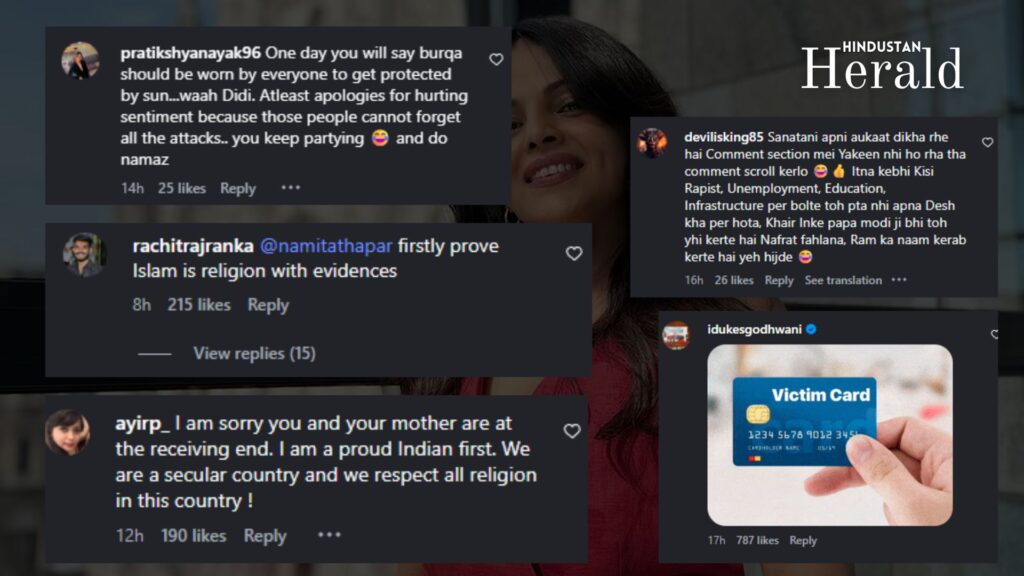
The trigger was not a regulatory issue. Not an earnings miss. Not a product recall. It was a #BoycottEmcurePharma hashtag, and the organised consumer pressure that came with it. A pharmaceutical company that operates across 70 countries, that employs thousands, that makes medicines people depend on, saw its market value take a hit because its Executive Director made a health reel about a prayer during a festival.
Think about that for a moment.
This Is Not the First Time
It would be easy to treat this as an isolated incident, one woman, one video, one particularly bad stretch of weeks online. But it is not isolated at all.
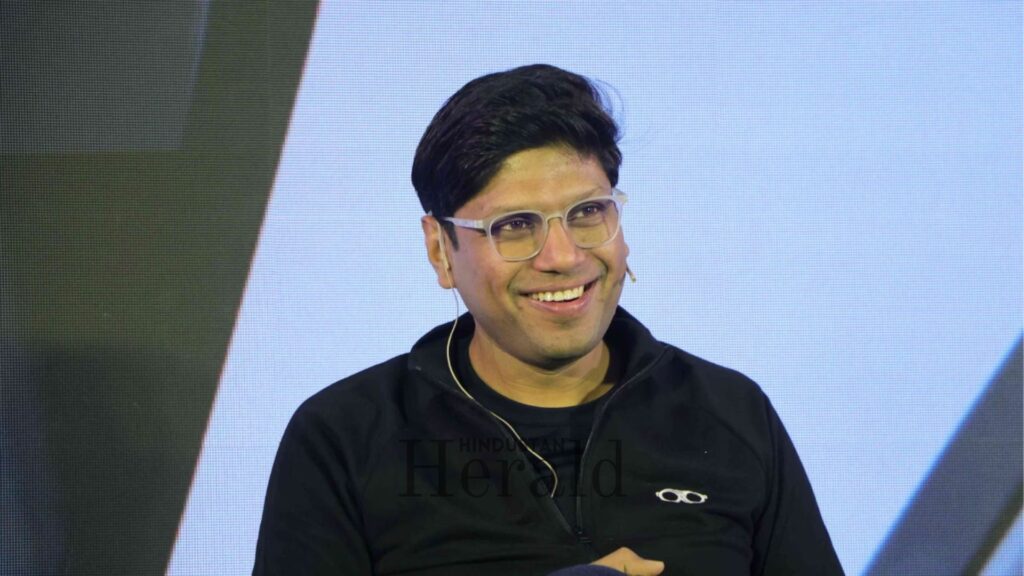
Just weeks earlier, Peyush Bansal, CEO of Lenskart and another familiar face from Shark Tank India, found himself in the middle of his own religion-adjacent controversy after an internal company document related to grooming standards began circulating online. Bansal clarified that the document was outdated. The outrage came anyway. #BoycottLenskart trended. His inbox presumably looked familiar.
Two judges from the same television programme, two controversies tied to religion, within weeks of each other. That is not a coincidence. It is a pattern. And the pattern tells you something about where India’s online discourse is right now and what it costs people who live in the public eye.
Who She Is, For Those Asking
Thapar is not a minor figure suddenly thrust into the spotlight. She was born in Pune in 1977, into the family that built Emcure Pharmaceuticals. Her father, Satish Mehta, founded the company. She is a Chartered Accountant, holds an MBA from Duke University’s Fuqua School of Business, spent time working in the United States, and came back to grow Emcure into what it is today, a pharmaceutical operation with presence in over 70 countries.

Her visibility jumped sharply when she joined Shark Tank India. She became known for a particular kind of investing sensibility, cautious, growth-focused, not easily moved by a good pitch alone. She has backed dozens of startups. Her personal net worth sits at an estimated Rs 600 crore, drawn from her executive salary, her Shark Tank earnings, and a wide portfolio of investments across healthtech, edtech, and consumer brands.
She has, by her own account, been dealing with online abuse since the show launched. That is not a detail she volunteers as a complaint. She mentions it almost as a point of fact, the way someone who has been in a noisy room for long enough stops noticing it. What she noticed this time was different.
The Real Question This Raises
Here is what the Namita Thapar controversy is actually about, underneath the outrage and the hashtags and the stock ticker and the viral reel.

India has a loud, active, increasingly coordinated segment of online opinion that applies different standards depending on which religion is being discussed. Wellness commentary about Hindu practices is celebrated, shared, and used as content. The same frame applied to Islamic practices draws three weeks of abuse, boycott calls, and a mother being targeted with slurs. There is no version of that double standard that holds up to honest examination.
At the same time, the people defending Thapar most loudly are not all motivated purely by a commitment to consistency. Some are using this moment for their own positioning. That is how social media controversies work. Everyone finds the angle that suits them.
What Thapar herself did was something rarer. She named what was happening. She did it without pretending she was unaffected, without performing invulnerability, without making it purely about principle. She said she was used to the trolling. She said her mother’s name being dragged through the abuse was something else. She asked, directly, why the rules are different when the religion changes.
And then she went to work.
That, more than any hashtag or stock movement, is probably the detail that will stay with people. She stopped the car, said what she had to say, and kept driving.
Stay ahead with Hindustan Herald — bringing you trusted news, sharp analysis, and stories that matter across Politics, Business, Technology, Sports, Entertainment, Lifestyle, and more.
Connect with us on Facebook, Instagram, X (Twitter), LinkedIn, YouTube, and join our Telegram community @hindustanherald for real-time updates.

Former financial consultant turned journalist, reporting on markets, industry trends, and economic policy.
- Kavita Iyer

- Kavita Iyer
- Kavita Iyer
- Kavita Iyer




 Shelesh Joshi and Kavita Iyer
  Ananya Sharma