 By Shelesh Joshi and Rajiv Menon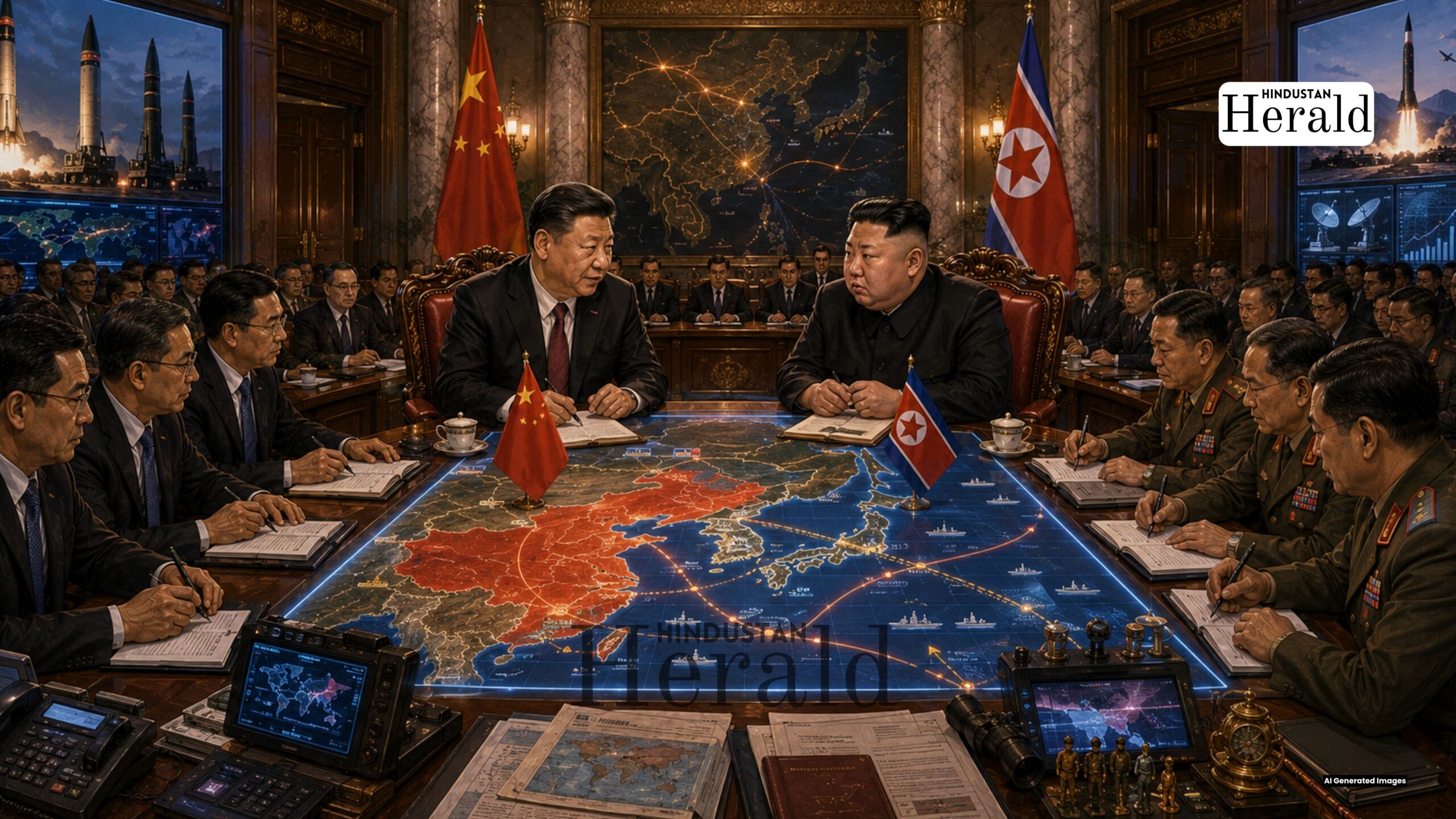
New Delhi, June 5: Xi Jinping’s Pyongyang Visit Was Nobody’s Prediction for His First Trip of the Year The Xi Jinping Pyongyang visit caught a lot of people off guard on Friday. Xinhua dropped the announcement. KCNA matched it a few hours later. Xi Jinping is flying to Pyongyang on June 8. Two days. Sits with Kim Jong Un. Comes home. Short announcement. Big implications. He has not been there since June 2019. Nearly seven years of staying away, of sending other people, of managing North Korea from a comfortable distance in Beijing. And now he is going himself. That shift is worth sitting with before anything else.
Quick Summary
- Xi Jinping flies to Pyongyang on June 8 for two days with Kim Jong Un, confirmed by Xinhua and KCNA on Friday. He last visited in June 2019, close to seven years ago.
- China handles the vast majority of North Korea’s foreign trade and remains its most important economic and diplomatic backer by a wide margin, per the Associated Press.
- Days before Xi was due to arrive, Kim Jong Un personally walked through a facility making weapons grade nuclear material and told the world, publicly, that North Korea would grow its nuclear forces at an exponential rate as CNN reported from North Korean state media.
- The American Enterprise Institute’s June 2, 2026 Korean Peninsula Update found China has not once publicly called for denuclearisation of the peninsula since the September 2025 Beijing summit. Analysts read that as Beijing quietly accepting Kim’s nuclear programme as permanent.
- Xi has already received 17 world leaders in Beijing this year alone, per CNN. Him personally flying to Pyongyang stands out sharply against that backdrop.
- The Brookings Institution’s April 2026 analysis confirmed North Korea has formally walked away from any idea of unification with the South and has not responded to a single approach from Seoul.
Why the Xi Jinping Pyongyang Visit Makes No Sense Without Going Back to 2019
Hanoi had just blown up. Trump and Kim walked out of Vietnam without a deal in February of that year, and the weeks after were full of both sides explaining loudly why the other side was to blame. Familiar stuff after a failed summit. But even with all that noise, people were still at it. Phones were being picked up. There was still a shared assumption that some kind of deal between Washington and Pyongyang was findable, eventually.
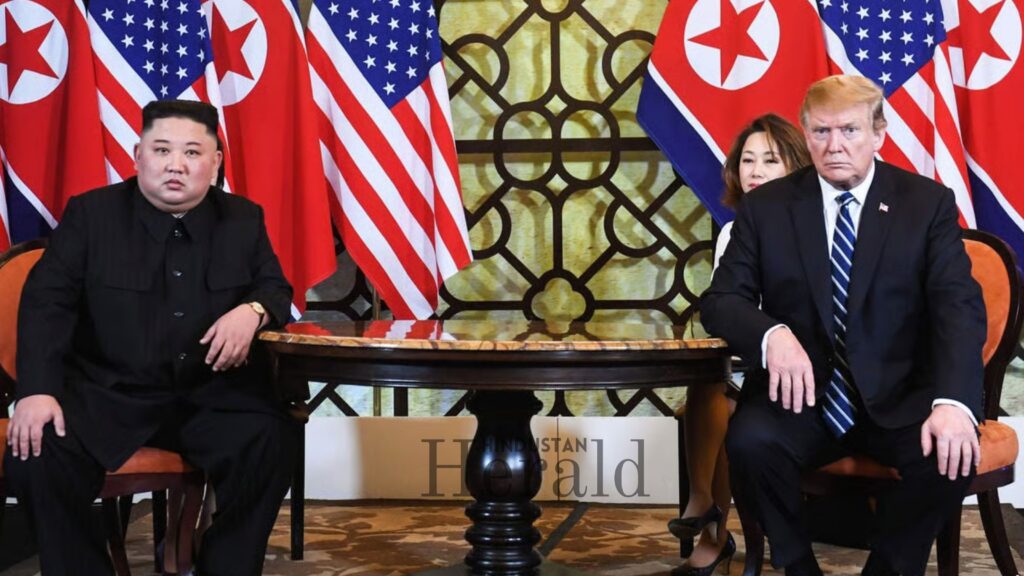
The Xi Jinping Pyongyang visit that June fit neatly into that picture. Beijing doing what it had done for years, keeping Kim settled, making sure North Korea did not do something rash while diplomacy was technically still alive. Standard management. Nothing surprising about it. The years that followed changed everything about that picture.
After Hanoi, Kim stopped pretending. The Associated Press tracked this carefully. He went home and built. Missiles, warheads, delivery systems, steadily and without interruption. No talks with Washington, no gestures, no back channel conversation that led anywhere real. The whole diplomatic infrastructure, the envoys, the frameworks, the carefully crafted agreed language both sides had invested years in, it just stopped working. Nobody flipped it back on. Russia walked into the space that left open.
North Korean soldiers fighting in Ukraine. Shells and rockets going west from Pyongyang to Moscow. A formal defence pact when Putin visited North Korea. Western intelligence agencies confirmed the troops. The Associated Press confirmed the weapons transfers. The relationship between Kim and Putin, always cold, always mostly transactional, turned into something with actual military weight behind it.
Then September 2025 came and gave everyone the photograph that said plainly what was happening. Xi hosting Kim at a military parade in Beijing, Putin standing right there with them. All three in the same frame, unhurried, deliberate, completely aware of what the image would communicate to every government watching. CNN called it unprecedented. Governments around the world had it on their screens before the parade ended. Everything about the current Xi Jinping Pyongyang visit grows directly out of that photograph.
Here Is What Beijing Has Been Quietly Stressed About
The simple version of this story writes itself. China, Russia, North Korea one solid bloc, same interests, same direction. That version is wrong in a way that actually matters.
Beijing is genuinely unsettled by how deep the Kim-Putin relationship has gone. Not in a diplomatic performance kind of way. Actually unsettled. And that is sitting right at the centre of why Xi decided to fly to Pyongyang himself rather than send someone else for the fourth time.
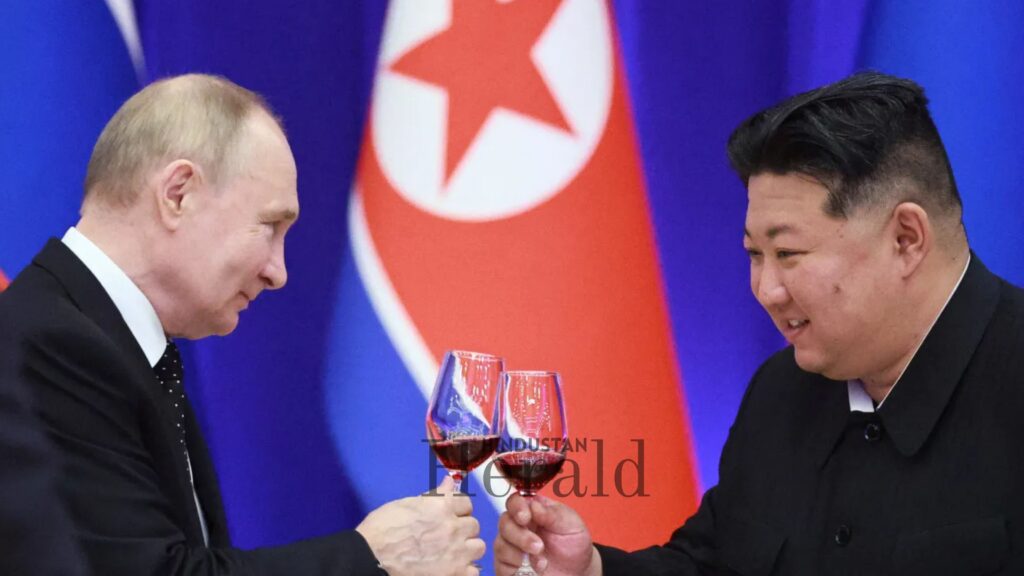
Here is how China managed North Korea for three decades: it worked because Pyongyang needed Beijing. Genuinely, deeply. The trade kept the North Korean economy from collapsing. The oil kept things running at a basic level. The food assistance covered gaps the domestic system could never fill. The Chinese veto at the UN Security Council was the thing standing between North Korea and sanctions that could have become truly crippling.
All of that dependence gave Beijing something real to work with. Not control over Kim nobody has ever had that, and anyone who tells you otherwise has not been paying attention but the ability to make certain choices look expensive. That quiet leverage mattered more than it ever got credit for. The Russia-North Korea defence pact has been chipping away at that foundation.
A Kim who has a working military alliance with Moscow, who has soldiers back from actual combat in Ukraine, who has Russian weapons technology feeding into his defence sector, is a Kim with room to push back against Beijing that he simply did not have five or six years ago. He has a second serious patron now. A real one. He does not have to be as careful about what Beijing thinks, and he knows that, and Beijing knows he knows that.
William Yang of the International Crisis Group, talking to the Associated Press, was not diplomatic about it. China is using this visit to reassert its influence over Pyongyang and protect its position in northeast Asia. Which means, without the careful framing stripped away, Beijing is flying to Pyongyang to have a direct conversation with Kim about which relationship is actually keeping his country alive.
The Brookings Institution noted that Wang Yi had already been to Pyongyang in April 2026, sitting down with Kim and foreign minister Choe Son Hui months before this visit. You do not run advance trips at that level without a clear reason.
Kim Knew Exactly What He Was Doing With That Announcement
A few days before Xi was due to land, Kim Jong Un personally walked through a facility producing weapons grade nuclear material. Stood in front of cameras. Said through state media, reported directly by CNN, that North Korea was going to expand its nuclear forces at an exponential rate. Publicly. Days before Xi arrived. Fully aware of the timing.
If you have followed Kim for any reasonable length of time, you already know this about him. He does not make careless public statements. There is no such thing as an accidental remark from this man. Everything that goes out publicly is a deliberate decision, and this one had multiple audiences in mind at once.
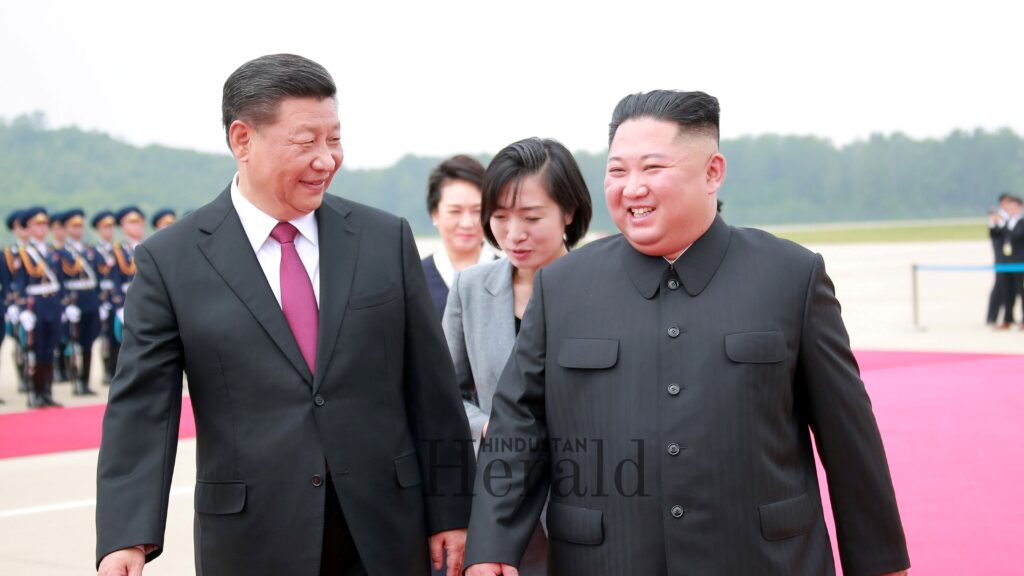
To Xi, days from landing: the nuclear programme is not something we are here to discuss. To Washington: whatever gets said in those Pyongyang rooms, Kim giving ground on weapons is not one of the outcomes on offer. To Seoul and Tokyo: here is a leader confident enough to say exactly what he wants right before the most powerful figure in his diplomatic world walks through his front door. That confidence tracks once you see what the American Enterprise Institute put out on June 2, 2026.
China has not made a single public call for denuclearisation of the Korean Peninsula since the September 2025 Beijing summit. Not once, not in passing, not in a joint statement, not at a multilateral meeting. The last time Beijing formally put that demand on the table was at a trilateral with South Korea and Japan back in May 2024. That is over two years of complete and consistent public silence on the one question the international community has treated as the central and non negotiable demand of North Korea diplomacy for two decades.
The AEI assessed that Pyongyang reads that silence as acceptance of its nuclear status as a permanent fact. Try arguing with that reading. It is difficult to do.
If the country holding more real leverage over North Korea than any government alive has quietly stopped asking Kim to give up his weapons, then the official international position on North Korea and what is actually being practised on the ground are two very different things right now.
The Theory That Xi Is Carrying Something Between Kim and Trump
This is being seriously discussed not just in newspaper columns, but in actual diplomatic circles. CNN has reported on the speculation, and the timing gives it some genuine logic.
Trump meets Xi in Beijing in May. A few weeks pass. Xi then personally flies to Kim in Pyongyang. If Beijing can position itself as the functioning channel between two leaders who have both said they want to talk but cannot agree on what the talking is actually for, the payoff for China’s global standing would be significant and lasting.
There is real material on both sides. SIPRI, in a March 2026 commentary, reported Kim saying in February 2026 that North Korea has no real problem getting along with the United States so long as Washington drops what Pyongyang calls its hostile posture and accepts North Korea as a nuclear state, which is precisely what its own constitution now formally says it is.
That is not someone who has decided dialogue is permanently impossible. That is someone who has named a price and is sitting on it. Trump wants to meet Kim. Has said so multiple times and with what reads as genuine intent. But wanting a meeting and agreeing on what the meeting is actually for are two different things, and that gap has not closed.
Kim’s price is American recognition of North Korean nuclear status before any talks even begin. CNN reported that Trump launched military action against Iran specifically to dismantle its nuclear programme. Picturing the same administration, in the same period, turning around and accepting North Korean nuclear status as a precondition for even starting a conversation involves overlooking quite a lot.
The Brookings Institution laid it out plainly in its April 2026 analysis. North Korea is not as hungry for a deal with Washington as it was during Trump’s first term. Russian military backing. Chinese economic support. Beijing no longer publicly pushing denuclearisation. The things that once created real pressure on Pyongyang to come to a table have softened considerably. Kim knows it and is operating accordingly. A deal at some point is not permanently off the table. But nothing in the current picture suggests it is coming anytime soon.
Seoul Has Been Having a Rough Time With All of This
South Korea’s position has been uncomfortable for a while and this week does not make it easier. As NBC News reported in January 2026, President Lee Jae-myung had his own meeting with Xi in Beijing earlier this year. Both sides talked about reducing tension and finding some path to dialogue with North Korea. Lee has been trying to keep the US alliance in reasonable shape while not letting the relationship with Beijing deteriorate past the point of usefulness a difficult balance at the best of times, and these are not the best of times.
Xi flying personally to Pyongyang shortly after sitting down with Lee in Beijing does not make what Lee is trying to hold together any simpler. The Brookings Institution was plain about it. Kim has formally given up on unification. He has not responded to a single diplomatic approach from Seoul. He is not interested in what Lee Jae-myung is offering, and the current regional picture gives him no incentive to become interested. Seoul has been talking into a silence that shows no signs of breaking.
Japan has its own version of difficult here. Tokyo has watched North Korean missiles fly over Japanese territory. Any development that increases Kim’s sense of external security whether through deeper Chinese economic backing or the simple symbolic weight of a personal visit from the Chinese president moves the needle in a direction Tokyo finds genuinely alarming. Japan says so through every available channel.
The Brookings Institution described the structural problem directly. The US Japan South Korea alignment and the China Russia North Korea axis have both hardened to where practical multilateral solutions have become genuinely difficult to construct. Both sides are increasingly defined against each other. The space for the kind of cross bloc diplomacy that resolved earlier versions of this problem has shrunk considerably.
What India Keeps Underplaying
India rarely opens its foreign policy conversations with Korean Peninsula news. China’s border behaviour, Pakistan, the more immediate neighbourhood these fill the room in New Delhi first. The peninsula gets treated as something to monitor from a distance rather than something requiring a clear public position. That habit probably deserves a second look right now.
The Act East Policy depends on a stable Indo-Pacific to work as intended. When the Korean Peninsula becomes a sustained site of nuclear posturing backed openly by two major powers, it holds American strategic attention northward attention India needs pointed at the broader Indo-Pacific, including the specific places where China’s behaviour presses directly against Indian interests.
There is also the non proliferation question New Delhi has been underplaying publicly. If the country holding the most practical leverage over a nuclear armed state outside the NPT has quietly stopped asking that state to give up its weapons, that does not stay neatly contained to one peninsula. It erodes the broader international norms around nuclear acquisition that took decades to build. India spent years establishing itself as a responsible nuclear state after developing its own programme outside the NPT framework. Whether those norms hold or keep eroding matters directly to New Delhi, whether or not the government is comfortable saying so at this particular moment.
New Delhi has ties with both Koreas. Its trade relationship with Seoul has grown meaningfully. A northeast Asia that hardens permanently into two armed and uncommunicating blocs is bad for Indian interests in ways that go well beyond the peninsula itself.
Step Back and Look at What Xi Has Been Building All Year
Pull back from this one trip and the pattern of what Beijing has been constructing through 2026 becomes readable. Seventeen world leaders through Beijing this year, per CNN. Trump came. Putin came. Now Xi travels personally to Kim. Nobody else currently operating on the world stage holds working relationships across that particular combination at the same time. Washington, Moscow, and Pyongyang all reachable through the same capital. That did not happen by accident. It was built deliberately over many months.
Beijing wants to be the address that no government can go around when the world’s genuinely hard problems need managing. Whether that ambition produces concrete results in any specific situation is a separate question from whether the ambition itself is serious. It is.
The June 8 and 9 meetings will be picked apart carefully by everyone paying attention. A joint statement that shifts language around Kim’s nuclear status even slightly. Economic agreements that pull Pyongyang’s dependence back toward Beijing and away from Moscow. Something concrete Xi can bring back to Washington as evidence that China’s relationship with Kim is a variable American policymakers need to take seriously. None of that is confirmed. None of it is guaranteed.
What is confirmed is that the most consequential conversations about security in northeast Asia next week will not happen in Washington. Will not happen at the United Nations. Will not happen in Seoul or Tokyo or anywhere that journalists or outside diplomats can observe.
They will happen in a city almost nobody from the outside world can freely enter, between two men who answer to nobody and explain their reasoning to even fewer, in rooms whose real content will take months to piece together from the fragments that eventually surface.
It did not get here suddenly. It got here through years of quiet choices, each one individually manageable, collectively producing exactly this moment. June 8 is just the day it all becomes visible at once in a single frame, from a city the world is not allowed to see.
Stay ahead with Hindustan Herald — bringing you trusted news, sharp analysis, and stories that matter across Politics, Business, Technology, Sports, Entertainment, Lifestyle, and more.
Connect with us on Facebook, Instagram, X (Twitter), LinkedIn, YouTube, and join our Telegram community @hindustanherald for real-time updates.

Tracking world politics, global markets, trade movements, policy decisions, and the changing balance of economic power.
- Shelesh Joshi

- Shelesh Joshi
- Shelesh Joshi
- Shelesh Joshi




Specializes in South Asian geopolitics and global diplomacy, bringing in-depth analysis on international relations.
- Rajiv Menon
- Rajiv Menon
- Rajiv Menon
- Rajiv Menon