 By Shelesh Joshi and Rajiv Menon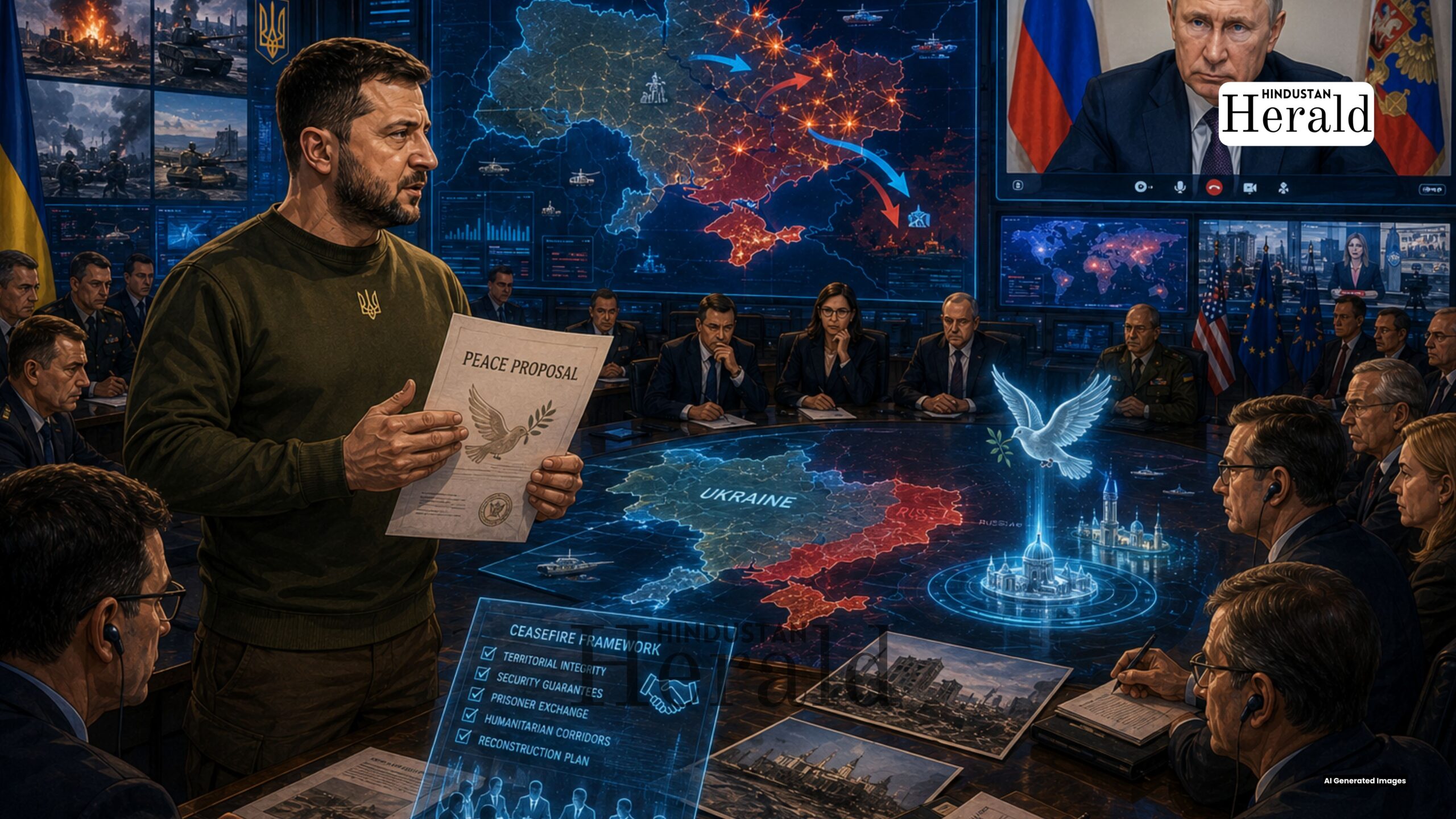
New Delhi, June 5: War does strange things to language. The Zelenskyy Putin talks proposal, when it came, did not arrive through back channels or carefully managed diplomatic corridors.
After four and a half years of briefings, condemnations, and carefully worded non-answers, Volodymyr Zelenskyy sat down and wrote a letter. Not a press release workshopped by a communications team. Not a statement read out by a foreign ministry spokesperson while journalists scribble in a basement briefing room. A letter. His name on it. Addressed to the man whose military has been bombing his country since February 2022. He published it on June 4, 2026, for the world to read.
Whatever you make of Zelenskyy, whatever you think of this war, whatever corner of the political map shapes how you follow these things a sitting president writing directly and publicly to the leader who ordered the destruction of his cities is not ordinary. It does not happen often. And the fact that it happened now, at this specific moment, says something about where things actually stand.
He proposed a face-to-face meeting. He offered a full ceasefire for the duration of negotiations. He named neutral countries. And in language that was neither diplomatic nor particularly cautious, he told Vladimir Putin that continuing this war is now a choice that belongs to one person.
Quick Summary
- Zelenskyy published an open letter on June 4, 2026, addressing Putin directly and proposing face-to-face talks. According to the Associated Press, this was the first such direct public message from Zelenskyy to Putin since Russia’s full-scale invasion began in February 2022.
- Ukraine stated that Russia lost more than 30,000 soldiers killed or seriously wounded in May 2026 alone, with Zelenskyy claiming video confirmation of those figures, as reported by the Associated Press.
- Kremlin spokesman Dmitry Peskov told reporters Putin had not yet been shown the letter and suggested Zelenskyy could travel to Moscow, as quoted by France 24.
- Zelenskyy named Switzerland, Turkey, and Arab states as potential neutral venues, ruling out both capitals, according to the Associated Press.
- US President Donald Trump said a direct meeting would be “great” but declined to specify what compromises he had urged on either side, per AP reporting.
- A 32-hour Easter ceasefire was observed in April 2026, one of the very few pauses in active fighting since 2022, as documented in records of the 2026 Russo-Ukrainian truce.
He Wrote the Zelenskyy Putin Talks Letter the Day After His Drones Hit Putin’s Hometown
Start with the timing, because the timing is the whole story. On June 3, Ukrainian drones struck Saint Petersburg. They hit an oil terminal. They hit military targets. They did this while Putin was physically present in the same city, welcoming foreign heads of state and business delegations to his annual St. Petersburg International Economic Forum the event Russia uses every year to tell the world it is open, confident, and unbothered by Western sanctions. The strikes came in the morning, as the Kyiv Independent reported, while delegations were still arriving.
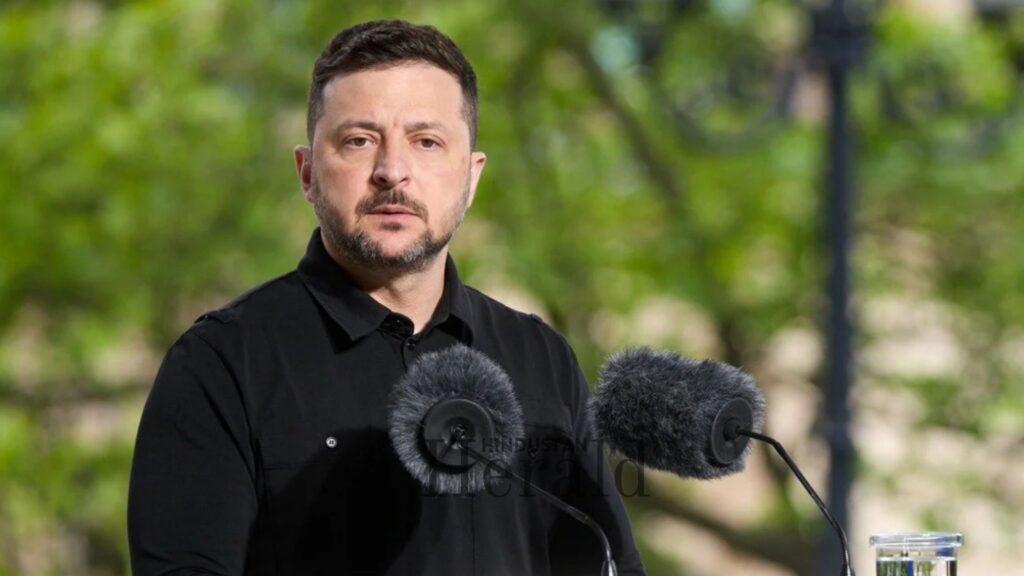
The next morning, Zelenskyy published a peace offer. Nobody serious reads that sequence as coincidental. It was a message inside a message. Ukraine can find you. Ukraine can hit you at home, during your most important public event, while your allies watch from the next room. And Ukraine is still choosing to extend a hand rather than keep swinging.
The Associated Press reported that Ukraine has spent recent months rebuilding real battlefield leverage through expanded long-range strike capabilities, making Russian territorial advances harder to consolidate and Russian soil less insulated than Moscow’s official narrative suggests. Russia, for its part, has kept up a relentless aerial campaign against Ukrainian cities. Ukrainian officials describe near-nightly waves of drones and ballistic missiles targeting power infrastructure, apartment buildings, hospitals.
Four and a half years in, neither side has broken the other. That grinding stalemate is not just a military reality it is the entire political context inside which every diplomatic move is now being made.
The Letter Itself Deserves to Be Read Carefully
The Office of the President of Ukraine released the letter personally addressed to Putin. The Associated Press confirmed it was the first time Zelenskyy had written to Putin publicly since the invasion began. That single fact generated headlines before anyone had read a word. But the words matter.
He did not open with outrage or accusations, though he had enough material for both. He opened with something more disarming acknowledging that when Putin first came to power over 26 years ago, a significant number of Ukrainians did not view him as an enemy. Relations between the two countries had not always looked like this. As Kyiv Post reported, Zelenskyy walked through how completely that relationship had collapsed, from trade and economic exchange to a fixation on body counts and territorial control, noting that nearly half of Putin’s time in power has now been consumed by war with Ukraine.
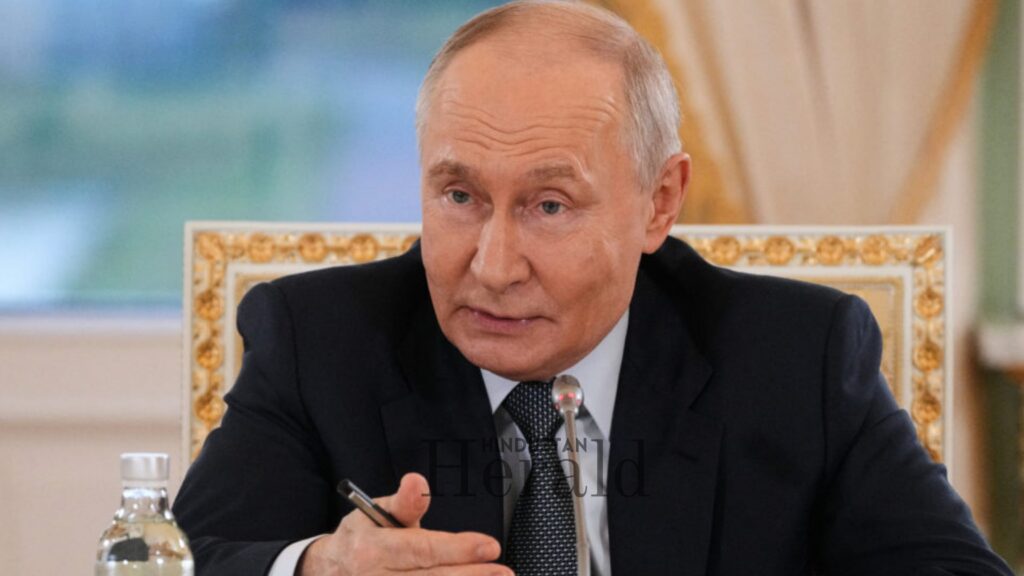
Then came the numbers. Zelenskyy stated that Russia suffered more than 30,000 soldiers killed or seriously wounded in May 2026 alone, and said Ukraine held video confirmation of those losses, as the Associated Press reported. Independent verification is difficult. But the inclusion was not accidental. Zelenskyy was building a case from inside the letter itself: Russia is bleeding, the costs are real, and no territorial gain changes what this war is doing to ordinary Russian families.
As Kyiv Post reported, the core proposal read: “Ukraine proposes ending this war through direct engagement between us and you. I am proposing a meeting. I propose to set a clear date for such a meeting. Ukraine is ready for a full ceasefire for the duration of the negotiations.”
The Kyiv Independent reported the line that cut through all the padding: “The front line now is the line from which diplomacy should begin.” Stop pretending negotiations can happen in abstraction. The map exists. Start from where things actually are.
And then the line that Outlook India reported and that most people ended up quoting: “Do not be afraid to take the path out of this war.” Followed immediately, without softening, by the warning that if Putin did not personally decide to end it, Ukraine would keep fighting for as long as necessary.
It was personal in a way that formal diplomatic language almost never is. Written to one man, about one man’s choices, in a tone that treated Putin not as a head of state to be addressed through protocol, but as a specific individual being held accountable.
Moscow’s Response Was Predictable. Still Worth Reading Carefully.
Dmitry Peskov handled the press questions with the practiced ease of a man who has spent years managing uncomfortable Kremlin optics. As quoted by France 24 and The Moscow Times, he confirmed the letter had arrived, said Putin had not yet been shown it, and offered that Zelenskyy was welcome to come to Moscow at any time.
Come to Moscow.
Zelenskyy had already rejected that in the letter itself. Sitting down in one of the two warring capitals is not neutrality it is symbolism, and not the kind that lets either side pretend they are being treated as equals. Asking the president of the country you have been bombing for four years to fly to your capital is not a peace offer. It is an aesthetic of surrender wrapped in diplomatic language.
The Moscow Times noted what has become Putin’s settled position on direct talks: he will meet Zelenskyy only to finalize an agreement that has already been negotiated at delegation level. Not to shape one. To sign one. The distinction is entirely deliberate. It means Russia can spend however long it wants in lower-level talks, extracting concessions and running out the clock, before Putin ever has to put his name to anything.
What is worth noting is that Peskov responded at all. A side that genuinely believes it is on an irreversible path to military victory has very little reason to engage with the framing of a peace letter. The response was dismissive. It was also a choice.
Istanbul Taught Everyone Something, and Nobody Liked the Lesson
To understand why this letter carries any weight, you have to remember how many times talks have collapsed.
Early in the invasion, delegations met in Belarus, then in Istanbul. Those rounds fell apart and neither side has ever fully agreed on why. Ukraine says a deal was within reach at Istanbul in 2022 before things fell through. Russia says Kyiv walked away on instructions from London and Washington. Both versions have been repeated so many times that separating them from political narrative is nearly impossible.
What followed was, as PBS NewsHour reported Zelenskyy describing it, “artificial diplomacy.” Staged rounds designed to give the appearance of engagement without any genuine intent to compromise. He called Russian proposals in the later Istanbul sessions “spam” documents that repeated the same ultimatums in slightly different formatting, as if changing the packaging made the demands less maximalist.
The one small exception was the April 2026 Easter ceasefire. A 32-hour pause, proposed by Zelenskyy and scheduled by Putin, as documented in records of the 2026 Russo-Ukrainian truce. It held, more or less. Nothing followed. No framework was built on it. But it demonstrated something that years of failed delegation talks had not: both sides were physically capable of stopping, if only briefly, when the political will existed.
Zelenskyy’s June letter is, in part, an argument that the entire lower-level negotiation structure is too broken to produce anything real. Only the two principals, he is saying, can cut through the procedural obstruction. Everyone else is either constrained by their instructions or using the process to run out the clock.
Trump Remains the Variable Nobody Can Calculate
Donald Trump came into office in January 2025 promising to end the war within 24 hours of taking office. The promise has since been repackaged several times. The war is still running.
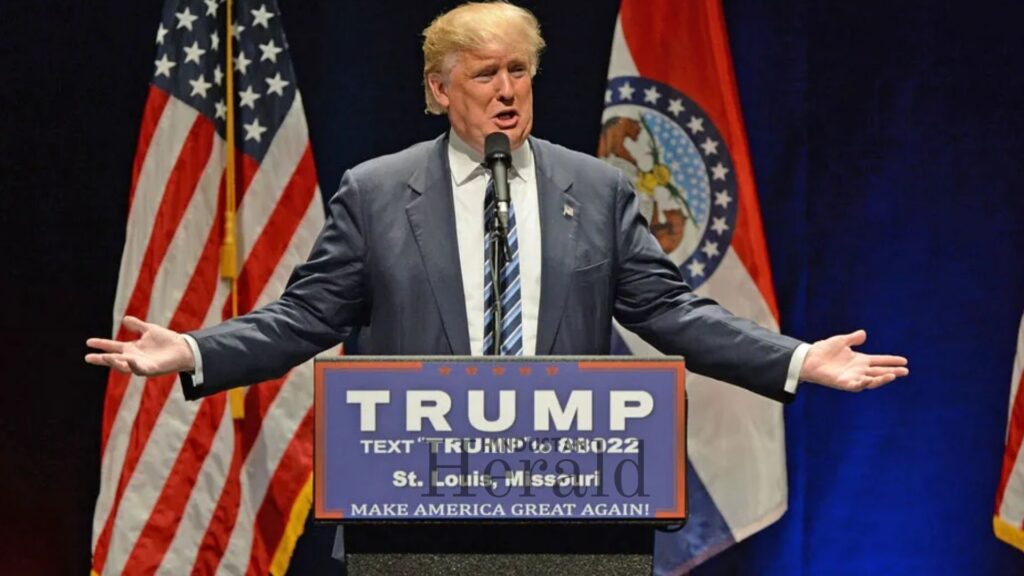
His posture on Ukraine has shifted enough times to make any consistent reading of it unreliable. He has leaned on Kyiv to negotiate in terms that, at moments, felt uncomfortably close to accepting Russian territorial gains as a starting point. He has also expressed genuine irritation with Moscow’s intransigence. He has suggested Ukraine needs to give things up. He has also said Russia needs to stop.
When Zelenskyy’s letter came out, Trump told reporters it would be “great” if the two leaders met directly, as the Associated Press reported. Asked to be specific about what concessions he had pushed each side toward, he declined. “They are going to both make compromises,” he said. “I suggested those compromises.”
That sentence is either the most important thing Trump has said about this conflict or a standard political non-answer. There is no way to know which, because Washington has not been transparent about what any of those suggested compromises actually are.
The underlying point is harder to argue with. An agreement that actually holds one that becomes peace rather than a pause needs more than two signatures. It needs enforceable guarantees, reconstruction funding, and sustained political pressure on both sides over years. None of that happens without the United States playing a serious and consistent role. Whether this administration is capable of that kind of seriousness, over the years it would require, is the question Europe and Kyiv have been sitting with quietly since the day Trump took office.
The Venue Question Is More Loaded Than It Looks
Zelenskyy proposed Switzerland, Turkey, or Arab states as possible hosts, ruling out both capitals, according to the Associated Press. Each carries political weight that goes beyond geography.
Switzerland means international law, humanitarian norms, and the language of European institutional legitimacy. It suits Ukraine’s goal of anchoring itself within European structures and framing any deal within the architecture of the rules-based order it has been fighting to defend.
Turkey is messier and more interesting. Erdogan has worked hard to make Ankara indispensable to this conflict. Turkey brokered the 2022 Black Sea Grain Initiative, which briefly restored Ukrainian grain exports. It hosted early delegation talks. It is a NATO member that has somehow kept functioning ties with Moscow throughout which makes it credible to both sides and fully trusted by neither. That awkwardness, paradoxically, is part of what makes it viable.
Gulf states, particularly Saudi Arabia and the UAE, have grown into genuine diplomatic operators rather than wealthy bystanders. Riyadh facilitated prisoner exchanges between Russia and Ukraine in 2023. The Gulf states have economic relationships with both sides and no ideological stake in the outcome, which is exactly what a neutral venue requires.
Russia’s offer of Moscow is not a venue. It is a statement. No Ukrainian leader can accept it without it reading, at home and internationally, as the kind of optics that end political careers.
India Is Sitting on an Asset It Has Not Fully Used
India’s relationship with this war has never fit neatly into any frame. As VOA News reported, India chose not to condemn the invasion, deepened its Russian crude oil purchases once Western sanctions cleared the field, and opted out of UN sanctions on Russia. The energy economics of that decision were real Russian oil at discounted prices made a genuine difference to India’s import bill during a period of global price instability. No serious analysis pretends otherwise.
But New Delhi has not been entirely passive on the peace question. Modi has spoken to both leaders through the conflict and called for dialogue consistently. In August 2024, he made his first trip to Kyiv, meeting Zelenskyy in a visit that VOA News reported was expected to produce several bilateral agreements a symbolic shift that Zelenskyy himself acknowledged, having previously criticized Modi’s Moscow trip earlier that year.
What came after was more revealing than the visit itself. As Deccan Herald reported, NSA Ajit Doval flew to St. Petersburg to brief Putin personally on what Modi and Zelenskyy had discussed. In response, Putin proposed a bilateral Modi-Putin meeting at the BRICS summit in Kazan. Read that sequence and what you see is India functioning as an informal but trusted back-channel between two sides that have no direct communication. Very few countries have that. India does.
A genuine resolution helps India in ways that go beyond energy pricing, important as that is. It removes the persistent discomfort India faces in multilateral rooms when Russia comes up. It eases commodity pressure on wheat, fertilizers, and cooking oil that has already filtered into domestic food prices. And it gives New Delhi a chance to make the case it has always wanted to make — that India is a serious diplomatic actor on the world stage without the shadow of appearing to quietly sustain a war economy.
India has not offered to formally mediate. Given the moment, and given what it uniquely has access to, that restraint is worth thinking about.
What the Letter Actually Is
Two readings of this letter exist, and both are probably partially right. The first: Zelenskyy knows Putin will not respond warmly. He knows the Kremlin will deflect and dismiss. He knows the letter will land better in Brussels, Washington, and New Delhi than it ever will in Moscow. On that reading, this is smart politics a communications exercise designed to position Ukraine as the reasonable party and Russia as the obstacle, at a moment when international attention spans are shrinking and Western political patience for open-ended military support has limits.
The second: a man who has been managing a war-exhausted country for four and a half years, watching his population absorb nightly missile strikes, decided that every lower-level diplomatic format has been tried and produced nothing, and that the only thing left is to speak directly to the one person whose decision actually changes the outcome. Both can be true simultaneously. In situations like this, they usually are.
The line that stays with you, as the Kyiv Independent reported from the letter’s closing section, is this: “We need to determine what the future will be for all future generations of Ukrainians and Russians.” Not governments. Not militaries. Generations.
That is not press release language. That is someone who has run out of diplomatic euphemism trying to say something real. Whether Putin sees it whether he is even shown the full letter, because France 24 reported the Kremlin said as of publication day he had not yet read it is one of the quieter, sadder details in this whole story.
The letter is out. The war is continuing. And after four and a half years, the question that has never been answered still sits there, unchanged: is there a version of this that ends before it absolutely has to? Nobody has figured that out yet.
Stay ahead with Hindustan Herald — bringing you trusted news, sharp analysis, and stories that matter across Politics, Business, Technology, Sports, Entertainment, Lifestyle, and more.
Connect with us on Facebook, Instagram, X (Twitter), LinkedIn, YouTube, and join our Telegram community @hindustanherald for real-time updates.

Tracking world politics, global markets, trade movements, policy decisions, and the changing balance of economic power.
- Shelesh Joshi

- Shelesh Joshi
- Shelesh Joshi
- Shelesh Joshi


Specializes in South Asian geopolitics and global diplomacy, bringing in-depth analysis on international relations.
- Rajiv Menon
- Rajiv Menon
- Rajiv Menon
- Rajiv Menon