
 By Ananya Sharma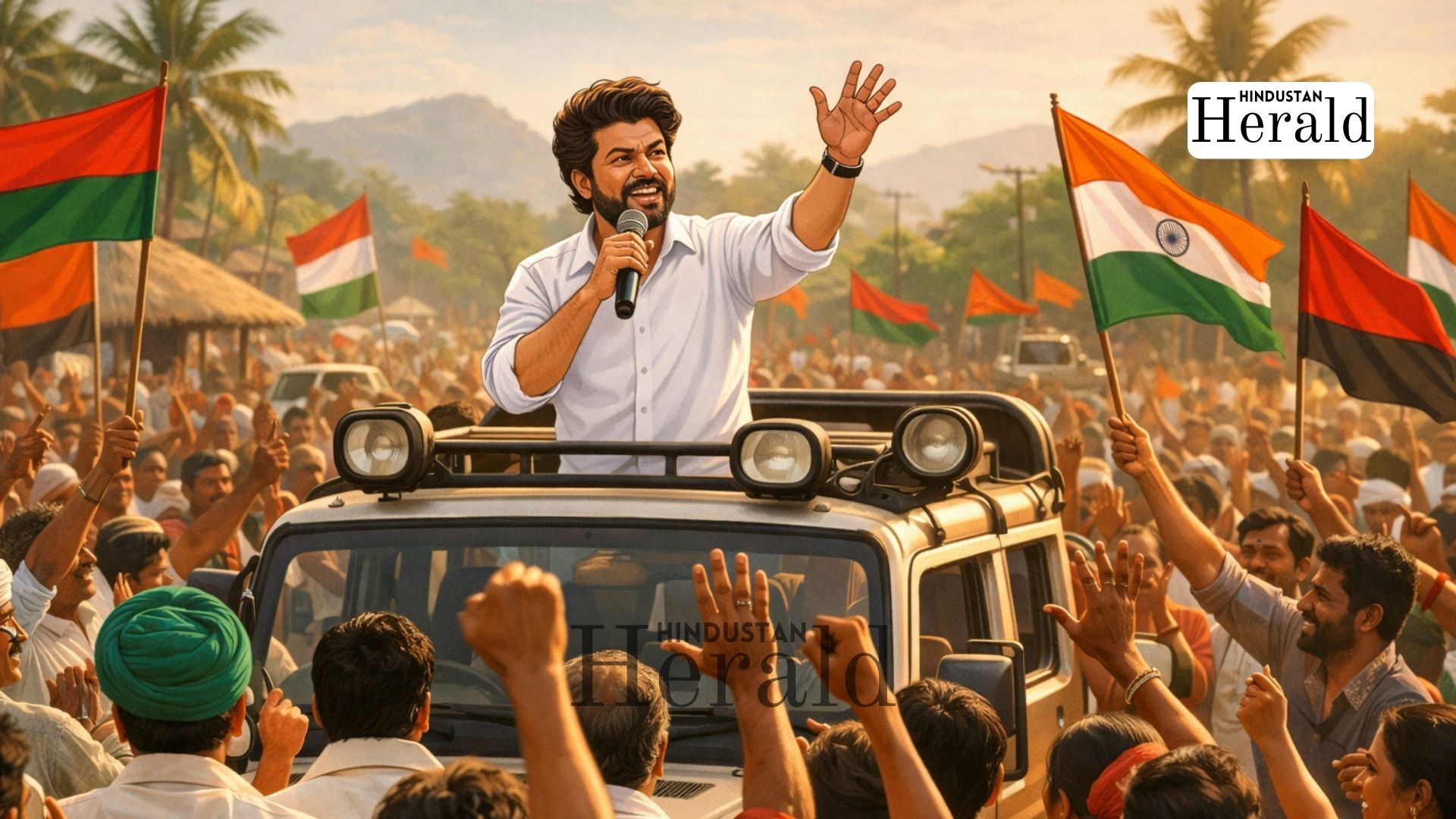
Chennai, April 14: There is something quietly audacious about what Vijay is attempting right now. Nine days before Tamil Nadu votes, he drove into Dharmapuri, not Chennai, not Coimbatore, but Dharmapuri, a dryland district where farmers grow groundnut and maize on borrowed money and borrowed time. The visit had 13 conditions attached to it by the district administration, a fixed time slot, a restricted headcount, and enough bureaucratic scaffolding to make it feel like a hostage negotiation. And still, people came.
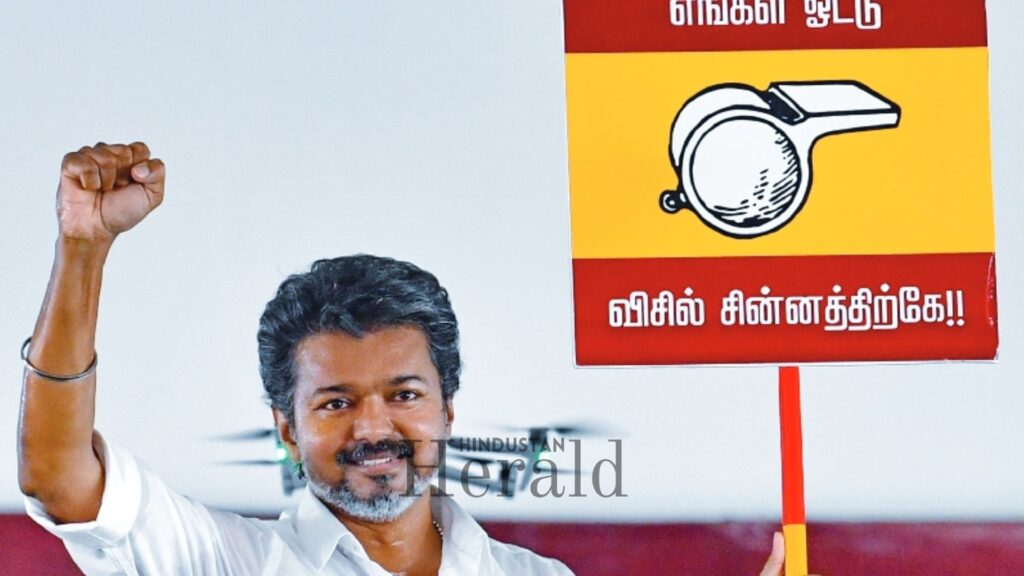
That is, in a sentence, the Vijay problem for everyone else in this election.
The farm loan promise came first, announced back in March at a party executive meet in Thanjavur. If TVK forms the government, crop loans taken from cooperative agricultural banks will be completely waived for farmers owning up to five acres. For those above five acres, the party says it will examine waiving up to 50 per cent. Straightforward, easy to communicate, and aimed precisely at the kind of voter who has been waiting for this from every party that has come and gone since the DMK won in 2021.
Vijay said something at the Thanjavur meet that stuck. He told the crowd that if he were born again, he would want to be born into a farmer’s family. He admitted he does not know farming. He said his identity as someone from the Cauvery Delta region connects him to the soil anyway. It was the kind of line that a communications team writes and a politician delivers, but the crowd did not seem to care about that distinction. They blew whistles.
The Old Pension Scheme promise is the quieter but arguably more dangerous move, at least from the DMK’s perspective.
Government employees in Tamil Nadu have been agitating over pensions for years. The New Pension Scheme, introduced by the Centre in 2004, replaced a guaranteed defined-benefit pension with a market-linked system that gives employees no certainty about what they will actually receive when they retire. Over six lakh state government employees, teachers, and sanitation workers have wanted this reversed. They have protested, petitioned, and organised.
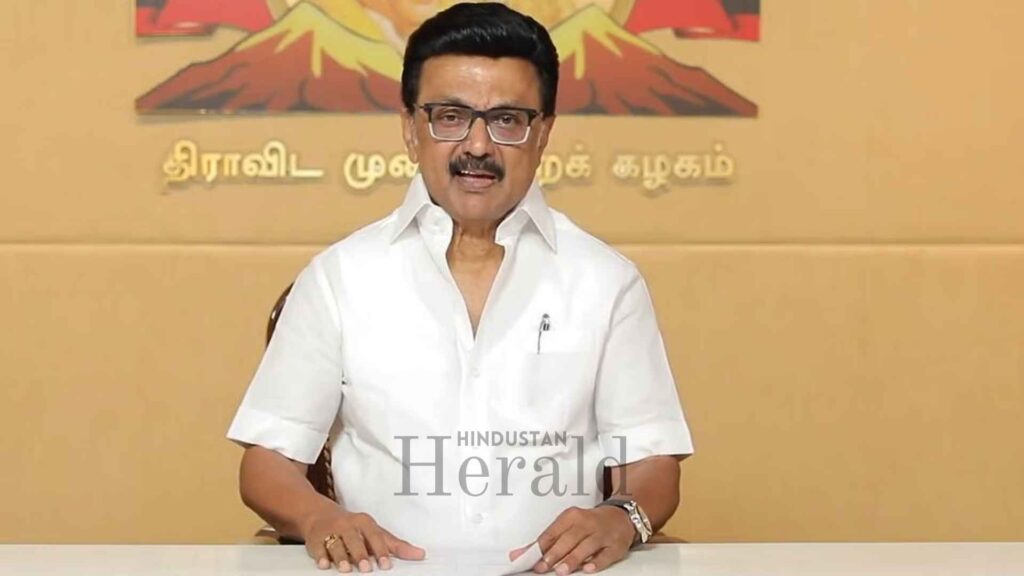
Chief Minister M.K. Stalin saw it coming. In January this year, he launched the Tamil Nadu Assured Pension Scheme, which promises 50 per cent of the last-drawn salary and a Rs 25 lakh gratuity. It was widely read as exactly what it was a pre-election move to take the wind out of the OPS agitation before it became a campaign liability. The Federal reported at the time that the announcement came directly because employee protests had been building in intensity.
TVK has promised to go further and restore the Old Pension Scheme outright. So have the AMMK, the PMK, and elements of the AIADMK alliance. The pension question, which the DMK thought it had answered in January, is back on the table and being raised by everyone simultaneously. That is not a good place for the ruling party to be in the final week.
Still, what makes TVK’s overall manifesto genuinely interesting is not any single promise. It is the architecture of the whole thing.
Tamil Nadu has about 5.67 crore voters. Of those, 12.51 lakh are first-time voters. Another 2.28 crore fall between the ages of 20 and 40, which is roughly 40 per cent of the entire electorate. Vijay did not stumble into these numbers. His team clearly studied them. Every major plank of the TVK platform is calibrated for this demographic in ways the DMK and AIADMK simply have not managed.
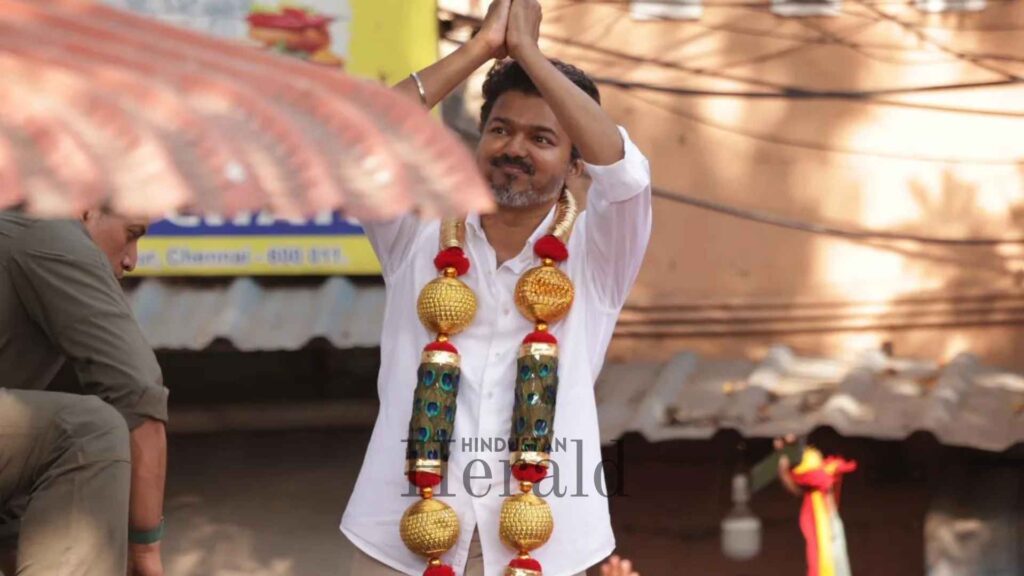
The unemployment allowance, Rs 4,000 a month for graduates above 29 still looking for work, Rs 2,500 for diploma holders, is not just welfare. It is an acknowledgement that Tamil Nadu’s educated unemployed exist and that the state owes them something while they wait. The collateral-free education loan up to Rs 20 lakh, covering Class XII through PhD, is aimed at families who currently have to choose between ambition and affordability.
The Tamil First Policy, which would require private companies to employ at least 75 per cent Tamil natives in exchange for GST concessions and lower electricity tariffs, is playing a different kind of politics, sub-nationalist, protective, and economically populist in a register that cuts across caste lines.
On governance, the April 13 Kanyakumari rally produced one announcement that deserves more attention than it has received. The Tamil Nadu Citizen Privilege Card is a single card for every household that would trigger automatic delivery of welfare entitlements without requiring applications, intermediaries, or the usual informal payments addresses something that nobody talks about openly, but everyone knows. The last mile of welfare delivery in Tamil Nadu is riddled with extraction. Vijay has named it and promised to fix it.
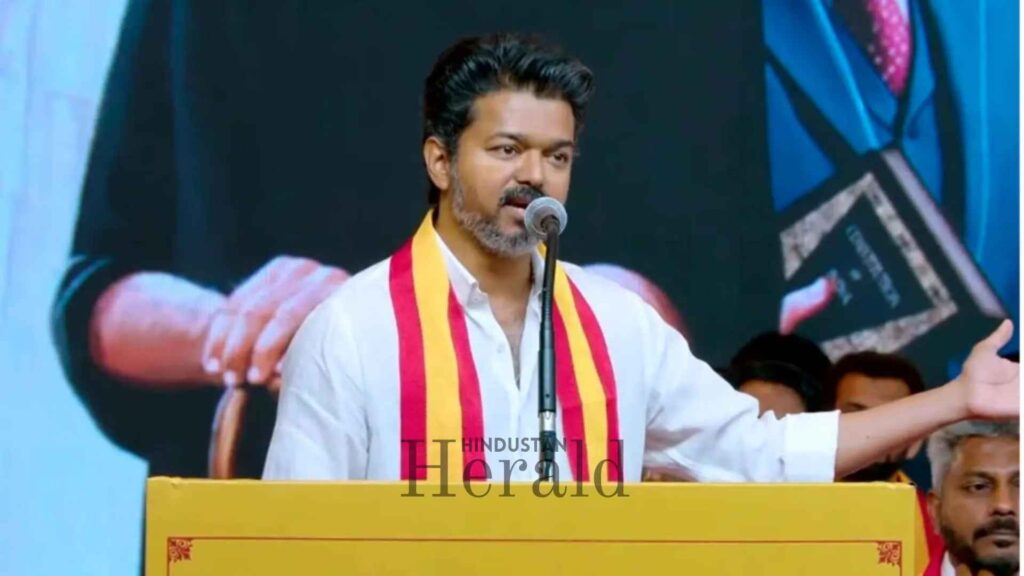
He also talked about making Tamil Nadu India’s AI and digital capital. An AI University. An AI City. Innovation hubs in Madurai, Coimbatore, Salem, and Tiruchy. A dedicated Department of Artificial Intelligence. It is ambitious to the point of sounding implausible for a party that has never governed, but it is also the first time any Tamil Nadu party has tried to build an election platform that reaches past immediate welfare into long-term economic identity. Whether voters respond to it is another matter.
Vijay is contesting from Perambur and Trichy East personally, both currently held by DMK legislators. Perambur, especially, is a statement an urban, working-class Chennai constituency, right in the middle of the DMK’s strongest geography. He has framed the entire election as a two-sided fight between TVK and the DMK, dismissing the AIADMK almost entirely.
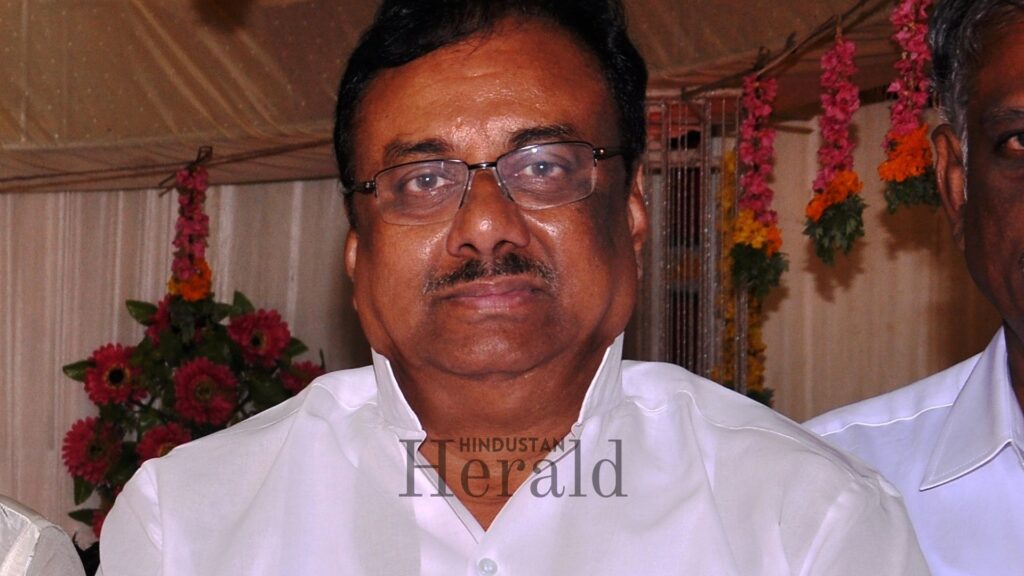
Political analyst K. Ilangovan, speaking to The Federal, said the youth clearly lean towards Vijay and that the results may reflect this. He also pointed out something that explains a lot about how TVK has operated, Vijay has managed to consolidate this support largely without spending money, using social media in ways that neither the DMK nor the AIADMK has figured out how to counter.
That said, there is a harder question underneath all of this, and senior journalist Swaminathan raised it plainly. TVK’s organisation is new and still developing. The campaign trail has shown that. Rallies get cancelled. Cuddalore was pulled back over safety concerns. Crowds are enthusiastic but crowd management has been patchy. When 41 people died in a crush at the Karur rally last September, it left a mark on the party’s image that has not fully healed.
Tamil Nadu has seen this kind of entry before. Vijayakanth’s DMDK once looked like it would crack the Dravidian binary open. Kamal Haasan’s Makkal Needhi Maiam generated enormous pre-election interest and then won nothing. The state has a way of absorbing new entrants and returning to its usual arithmetic.
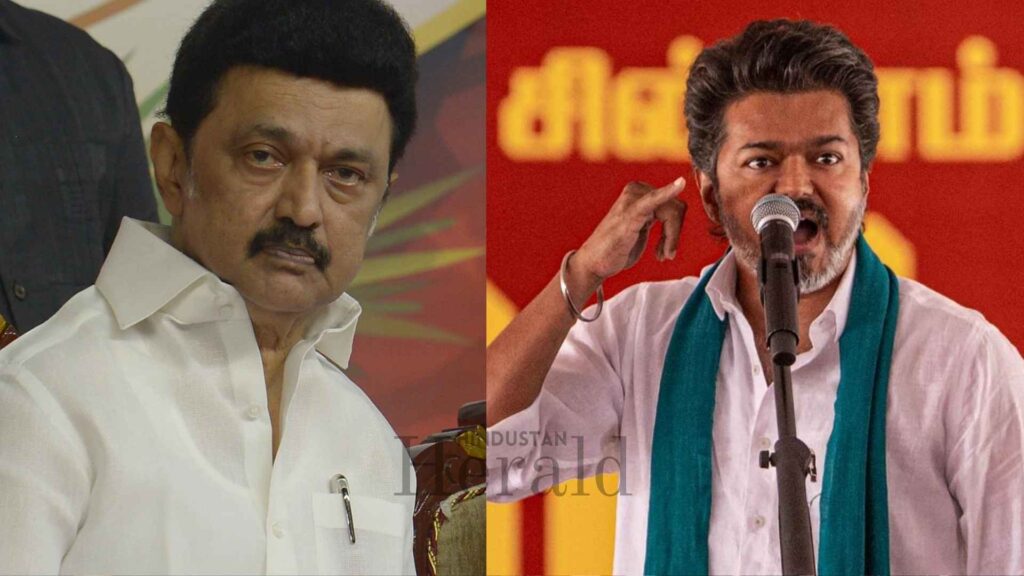
Vijay is different in some real ways. His fan base genuinely cuts across communities and generations. He built TVK over two years before contesting, not two months. The Vikravandi conference in October 2024 drew over eight lakh people, which is not a number you manufacture. And the demographic he is targeting, first-time voters, the 20-to-40 bloc is larger in this election than it has ever been.
As it turns out, the promises are almost secondary at this point. Farm loan waivers are on every manifesto. OPS is promised by half the field. Women’s cash transfers are being outbid from multiple directions. DMK is promising Rs 2,000 a month. AIADMK is promising Rs 2,000 a month plus Rs 10,000 one-time relief. TVK is promising Rs 2,500.
The race stopped being about what is being promised some time ago. It is now about who the voter believes is capable of delivering it, and who they trust enough to try.
Tamil Nadu votes on April 23. The count is May 4.
Stay ahead with Hindustan Herald — bringing you trusted news, sharp analysis, and stories that matter across Politics, Business, Technology, Sports, Entertainment, Lifestyle, and more.
Connect with us on Facebook, Instagram, X (Twitter), LinkedIn, YouTube, and join our Telegram community @hindustanherald for real-time updates.

Covers Indian politics, governance, and policy developments with over a decade of experience in political reporting.
- Ananya Sharma

- Ananya Sharma
- Ananya Sharma
- Ananya Sharma




 Sandeep Verma